
Protein Supplements Market Outlook: Size, Share, Trends, Growth Analysis, Competitive Landscape & Forecast, 2026-2033

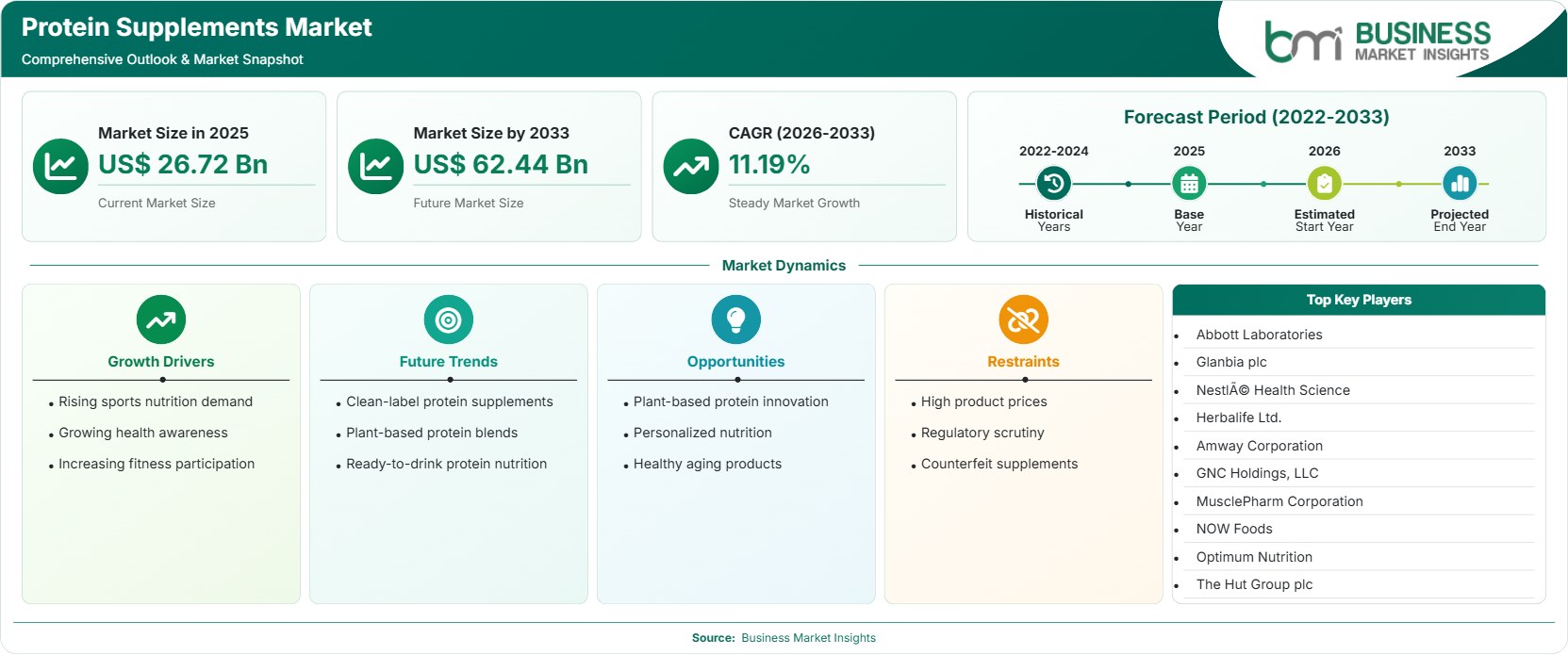
The Protein Supplements Market size was valued at US$ 26.72 billion in 2025 and is projected to reach US$ 62.44 billion by 2033, growing at a CAGR of 11.19% during 2026–2033, driven by rising sports nutrition demand, growing health awareness, increasing fitness participation, plant-based protein innovation, personalized nutrition, and healthy aging solutions.

Report Coverage
  • Source: Plant-Based, Animal-Based, Others
  • Product: Protein Powder, RTD, Protein Bars, Others
  • Functionality: Performance and Recovery, Weight Management, General Health and Well-being, Medical Nutrition, Others
  • Distribution Channel: Supermarkets and Hypermarkets, Pharmacies/Drug Stores, Online Retail, Others
US$ 26.72 Bn Market size in 2025
US$ 62.44 Bn Market Size by 2033
11.19% CAGR, 2026 - 2033
2026-2033 Forecast Period

AI Overview

Protein Supplements Market Summary

  • North America Region: North America accounts for an estimated 34%–38% share in 2025 and is projected to grow at a CAGR of 10.5%–11.0% during 2026–2033. Sports nutrition adoption, fitness culture, wellness spending, and product innovation create opportunities. The U.S. market remains a major contributor with a CAGR of 10.6%–11.2%, supported by strong supplement consumption and expanding online retail channels.
  • Fastest Growing Region: Asia Pacific holds approximately 24%–28% Protein Supplements Market share in 2025 and is expected to expand at a CAGR of 12.2%–12.8% through 2033. Rising fitness participation, urbanization, increasing disposable income, and growing awareness of preventive health support regional expansion.
  • Leading Segment: Animal-Based Protein represents around 58%–62% share in 2025 and is expected to grow at a CAGR of 10.8%–11.3%. Whey and casein demand remains strong due to sports performance benefits, nutritional value, and consumer familiarity.
  • High Growth Segment: Plant-Based Protein accounts for approximately 28%–32% share in 2025 and is projected to expand at a CAGR of 12.5%–13.2%. Vegan lifestyles, sustainability preferences, and innovation in soy, rice, and wheat protein formulations support growth.
  • Key Market Opportunity: Plant-based protein innovation, personalized nutrition platforms, healthy aging products, and functional supplement development create opportunities for companies targeting expanding wellness-focused consumers.
  • Major Market Players: Abbott Laboratories, Glanbia plc, Nestlé Health Science, Herbalife Ltd., Amway Corporation, GNC Holdings, LLC, MusclePharm Corporation, NOW Foods, Optimum Nutrition, The Hut Group plc.
Strategic Insights

Protein Supplements Market: Strategic Insights

Protein Supplements Market Strategic Framework
FREE PDF
Request your free sample
Request free sample
Stakeholder View

Key Takeaways

  • The protein supplement ecosystem is becoming increasingly diversified, with manufacturers, ingredient suppliers, retailers, and digital platforms focusing on nutrition innovation and consumer engagement.
  • Sports nutrition, weight management, and healthy aging categories represent major growth opportunities as consumers seek targeted products supporting different wellness goals.
  • Innovation is shifting toward plant-based proteins, personalized nutrition solutions, clean-label formulations, and convenient consumption formats.
  • Asia Pacific presents strong investment potential due to rising fitness awareness, expanding middle-class populations, and increasing adoption of nutritional supplements.
  • Companies are pursuing strategic partnerships, portfolio expansion, and digital commerce investments to strengthen positions in rapidly growing nutrition categories.
Geographic Outlook

Protein Supplements Market Regional Highlights

North America Protein Supplements Market

North America represented approximately 34%–38% of the global Protein Supplements market in 2025 and is projected to expand at a CAGR of 10.5%–11.0% during 2026–2033. The region benefits from established fitness industries, strong sports nutrition adoption, advanced retail infrastructure, and high consumer awareness. The Protein Supplements share remains significant due to widespread supplement usage, premium product demand, and strong brand presence across the United States and Canada.

  • The United States remains the largest regional contributor due to strong fitness participation, sports nutrition demand, and extensive supplement retail networks.
  • Canada supports market expansion through increasing wellness awareness, active lifestyles, and growing interest in functional nutrition products.
  • Online supplement sales continue expanding through digital platforms offering convenience, product variety, and consumer education.
  • Manufacturers are investing in clean-label formulations, sustainable ingredients, and personalized nutrition solutions.

US Protein Supplements Market

The United States accounted for approximately 30%–34% of global revenue in 2025 and is expected to register a CAGR of 10.6%–11.2% through 2033. The country remains a leading market due to strong sports culture, gym participation, wellness trends, and supplement consumption. The Protein Supplements market growth is supported by innovation in functional products, digital commerce expansion, and increasing consumer focus on preventive health.

  • Sports nutrition remains a major application area driven by athletes, fitness enthusiasts, and active lifestyle consumers.
  • Plant-based protein adoption is increasing as consumers seek sustainable and alternative nutrition sources.
  • Retailers and brands are expanding personalized recommendations and subscription-based supplement services.

Europe Protein Supplements Market

Europe held an estimated 26%–30% share in 2025 and is forecast to grow at a CAGR of 10.0%–10.6% between 2026 and 2033. The region benefits from rising health consciousness, increasing sports participation, and demand for premium nutritional products. Germany, the United Kingdom, France, and the Netherlands represent important markets due to developed wellness sectors and growing interest in functional foods and supplements.

  • Germany remains a major market due to strong health awareness and demand for performance nutrition products.
  • The United Kingdom demonstrates increasing adoption of sports supplements through fitness communities and online channels.
  • France shows rising interest in plant-based nutrition and clean-label supplement formulations.
  • European companies are focusing on sustainable sourcing and improved ingredient transparency.

Asia Pacific Protein Supplements Market

Asia Pacific accounted for approximately 24%–28% of the Protein Supplements market in 2025 and is expected to achieve the fastest growth with a CAGR of 12.2%–12.8% through 2033. Rising fitness participation, urbanization, changing dietary habits, and increasing disposable income are supporting regional demand. China, India, Japan, South Korea, and Australia represent key growth markets with expanding nutrition awareness.

  • China is experiencing increased supplement adoption through fitness centers, e-commerce platforms, and wellness-focused consumers.
  • India represents strong growth potential due to expanding fitness culture and rising awareness of protein intake.
  • Japan supports demand through healthy aging products and functional nutrition solutions.
  • Australia demonstrates strong adoption of sports nutrition products due to active lifestyle trends.

Rest of World Protein Supplements Market

The Rest of World segment was responsible for about an 8%–12% share in 2025 and is expected to record a CAGR of 10.8%–11.5% over the forecast period. There has been a rise in demand from Latin America, the Middle East, and Africa owing to increased fitness consciousness, greater availability in the retail market, and a rise in wellness products. Emerging markets are creating opportunities through improved distribution networks and digital commerce adoption.

  • Brazil represents a key Latin American market due to sports culture, fitness participation, and supplement consumption growth.
  • Mexico supports regional expansion through increasing health awareness and modern retail development.
  • Middle Eastern markets are showing demand for premium wellness and performance nutrition products.
  • African markets provide emerging opportunities through urbanization and expanding access to nutritional products.
  • Regional companies are developing affordable supplement solutions to reach broader consumer segments.
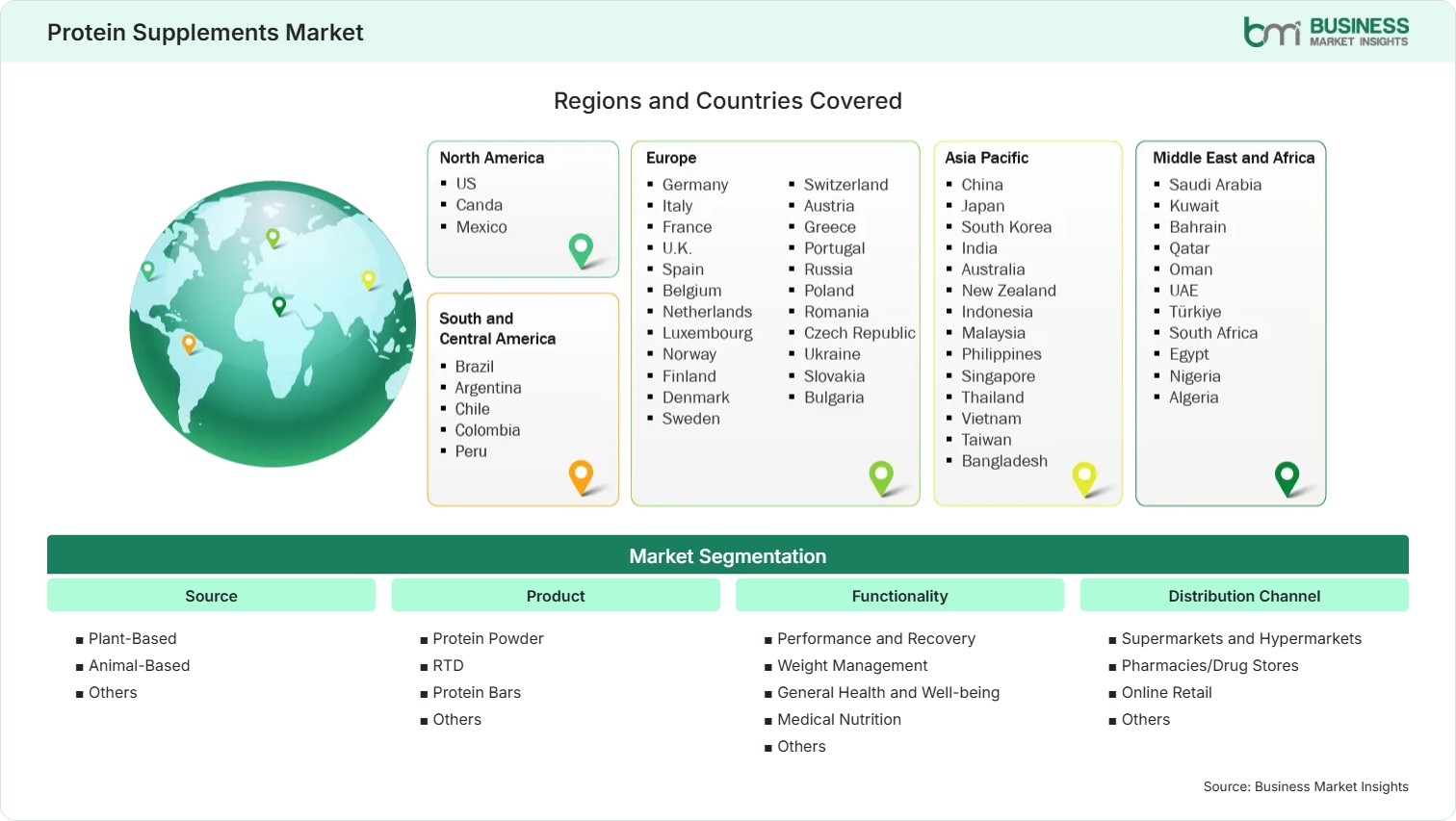
Global Market Geography
FREE PDF
Request your free sample
Request free sample
Segment Analysis

Protein Supplements Market Segmentation

Source

Source constituted around 94% to 96% of the revenue generated by the Protein Supplements Market in 2025 and is expected to expand at a CAGR of 10.9% to 11.4% from 2026 to 2033. Nutritional value, dietary preferences, sustainability, and functionality have become significant factors for choosing protein sources. More products are being developed in the animal and plant protein categories to cater to different consumer groups.

  • Plant-Based: Plant-based proteins are gaining adoption due to increasing vegan preferences, sustainability awareness, and innovation in alternative protein formulations. Manufacturers are improving taste, texture, and nutritional profiles.
  • Soy: Soy protein remains widely used due to complete amino acid profiles, affordability, and established applications across sports nutrition and general wellness products.
    • Rice: Rice protein adoption is increasing among consumers seeking allergen-friendly and plant-based alternatives with improved digestibility and compatibility with clean-label formulations.
    • Wheat: Wheat protein continues serving specialized nutrition applications due to functional properties, availability, and use in blended plant protein formulations.
  • Animal-Based: Animal-based proteins maintain leadership due to high nutritional value, established consumer acceptance, and strong demand from sports and fitness segments.
  • Whey: Whey protein represents a major category due to rapid absorption, muscle recovery benefits, and widespread use among athletes and fitness consumers.
    • Casein: Casein protein supports demand through slow digestion characteristics and applications in sustained protein delivery products.
    • Egg: Egg protein is preferred for high-quality amino acid content and suitability among consumers seeking alternative animal-based nutrition sources.
  • Others: Other protein sources include emerging ingredients developed to address specialized dietary requirements and expanding consumer preferences.

Product

The Product section held a market share of about 90%–94% in 2025 and is forecast to grow at a CAGR of 10.8%–11.3% through 2033. Consumers' preferences are changing towards easy-to-use, transportable, and utilitarian sources of protein. Companies are introducing varied products that can serve different purposes, such as athletes, weight control, and general nutrition.

  • Protein Powder: Protein powders remain the leading format due to versatility, high protein concentration, customization options, and popularity among fitness-focused consumers.
  • RTD: Ready-to-drink protein products are expanding due to convenience, portability, and increasing demand for quick nutrition solutions among busy consumers.
  • Protein Bars: Protein bars are gaining traction as convenient snack alternatives offering protein intake during travel, workouts, and daily activities.

Functionality

The Functionality segment accounted for approximately 86%–90% of the Protein Supplements Market in 2025 and is projected to grow at a CAGR of 11.0%–11.5% through 2033. Consumers are increasingly selecting products based on specific health objectives rather than general supplementation. Companies are developing targeted formulations addressing performance, recovery, weight control, wellness, and medical nutrition requirements.

  • Performance and Recovery: Performance and recovery products remain highly demanded among athletes and fitness consumers seeking muscle support, endurance improvement, and post-workout nutrition.
  • Weight Management: Weight management supplements are expanding as consumers seek protein-based solutions supporting satiety, healthy weight goals, and balanced nutrition plans.
  • General Health and Well-being: General wellness products are gaining adoption among consumers incorporating protein supplements into daily nutrition and preventive health routines.
  • Medical Nutrition: Medical nutrition applications are increasing through specialized formulations supporting clinical dietary requirements and nutritional support needs.

Distribution Channel

The Distribution Channel segment held about 88%-92% market share in 2025 and is expected to expand at a CAGR of 11.1%-11.6% until 2033. Distribution patterns are evolving as more people buy supplements through digital, specialty, pharmacy, and supermarket channels. According to Protein Supplements Market trends, companies are increasingly using an omnichannel strategy.

  • Supermarkets and Hypermarkets: Supermarkets and hypermarkets provide broad consumer access through established retail networks, product visibility, and convenience-based purchasing.
  • Pharmacies/Drug Stores: Pharmacies and drug stores support supplement adoption through health-focused positioning, consumer trust, and availability of specialized nutrition products.
  • Online Retail: Online retail is rapidly expanding due to convenience, subscription models, wider product selection, and direct-to-consumer supplement strategies.
Market Forces

Protein Supplements Market Dynamics

Key Market Drivers

Rising Sports Nutrition Demand

Increasing participation in sports, fitness activities, and strength training is driving demand for protein supplements among athletes and recreational users. Consumers are increasingly using protein products to support muscle growth, recovery, endurance, and performance improvement. The proliferation of gyms, fitness centers, and online fitness communities is raising awareness of the benefits of sports nutrition. This has led manufacturers to develop supplements that cater to specific activity levels, food types, and performance needs. The rise in the popularity of customized fitness and health technology is also shaping consumer behavior towards the use of protein supplements. These developments are supporting Protein Supplements Market growth as consumers increasingly integrate protein products into regular wellness routines rather than limiting usage to professional athletes.

Growing Health Awareness

Increasing awareness of nutrition, preventive healthcare, and balanced diets is encouraging consumers to incorporate protein supplements into daily wellness practices. Consumers are becoming more informed about the role of protein in maintaining muscle health, metabolism, and overall well-being. Healthcare professionals, fitness experts, and technology websites are playing a role in raising nutrition awareness across broader demographic groups. Manufacturers are adding more products other than those used in sports by formulating supplements for health, anti-aging, and lifestyle nutrition needs. Ingredients, sourcing, and product formulation have become key purchase considerations. The trend towards preventative health care has increased demand in various consumer categories worldwide.

Increasing Fitness Participation

Increased global interest in fitness has created an ongoing demand for protein-rich nutritional products. Higher gym enrollments, home workout culture, sport-related activities, and overall healthy living habits have led consumers to explore protein-based supplements. Young consumers, in particular, are increasingly using supplements owing to the active lifestyle enabled by the fitness community available on social media. Supplement companies are attracting such consumers through innovative flavoring and performance-driven marketing. The development of fitness infrastructure in developing nations also provides more growth prospects for these supplements. Women and elderly participants are further expanding the consumer base.

Key Market Opportunities

Plant-Based Protein Innovation

Consumer interest in sustainable and alternative proteins is driving the development of innovative plant-based supplement solutions. Improved extraction techniques, taste improvement, amino acid profile optimization, and mixed proteins are among the areas manufacturers are focusing on to address previously identified shortcomings. The use of soy, rice, wheat, and other plants is being done in order to create products that are compatible with various eating habits. Sustainability is playing an increasingly important role in consumers' purchasing decisions. Those brands that manage to merge performance with clean labeling will be able to capitalize on growing demand. Innovation in plant-based proteins is also enabling brands to target consumers beyond vegan segments, including flexitarians and health-focused individuals seeking varied protein options.

Personalized Nutrition Development

Personalized nutrition presents an emerging opportunity, as consumers have shown growing interest in following diets that align with their health objectives and needs. The development of technologies in areas such as health technologies, consumer data analytics, and nutritional profiling is enabling personalized supplement advice. Protein supplement firms are exploring the possibility of offering personalized supplement packs, subscription packages, and formulations tailored to age and exercise goals. This marketing method not only increases consumer engagement but also ensures continued consumption of the products. Health-minded consumers who emphasize personalized wellness plans may view personalized protein supplements as a key point of differentiation.

Healthy Aging Product Expansion

Increasing focus on healthy aging is creating opportunities for protein supplement manufacturers to develop products targeting older populations. Protein intake is increasingly recognized as important for maintaining muscle health, mobility, and overall wellness among aging consumers. Such companies are formulating products that offer high bioavailability, functional ingredients, and nutritional benefits. The increased longevity of people, coupled with the concept of active aging, is helping to expand the market beyond the fitness-oriented consumer group. The development of products for older consumers, medical nutrition needs, and general wellness routines offers growth opportunities. Companies need to reevaluate nutritional needs and have opportunities among newer consumers to maintain convenient solutions for maintaining health and independence.

Market Restraints and Challenges

High Product Prices

Factor: Premium ingredients, advanced formulations, specialty proteins, and processing requirements contribute to higher production costs for protein supplements.

Impact: Increased product costs can limit acceptance among price-sensitive consumers, thereby constraining market penetration in emerging markets. The cost of procuring premium proteins and special-formulation products may be high. For a company to remain competitive, it needs to be innovative while ensuring its products are affordable for many consumers. Pricing can push consumers to opt for less expensive options. Companies are now focusing on efficiency and diversifying their products to address affordability challenges while maintaining product quality.

Regulatory Scrutiny and Counterfeit Supplements

Factor: Increasing regulatory oversight and counterfeit supplement availability create challenges related to product authenticity, safety, and compliance.

Impact: More regulation will increase testing, expenses, and the time required for product development. Fake dietary supplements can harm consumers and reduce consumer confidence due to the presence of unknown ingredients and low-quality production processes. Companies must invest in quality control procedures, product authentication methods, and proper labeling. It is crucial to protect both consumers and brands, as regulatory compliance and supply chain monitoring have become vital as dietary supplements continue to penetrate global markets.

Company Analysis

Competitive Landscape

The competitive environment comprises international nutrition firms, specialized sports supplements manufacturers, innovative ingredient firms, and consumer health care brands that compete through product diversification, clean-label product development, online distribution, and functional nutrition products. The Protein Supplements market analysis highlights the rising competition among firms offering plant-based protein supplements, performance nutrition, customized formulations, and convenient delivery formats such as ready-to-drink supplements and protein bars.

Company Name

Overview

Products and Services relevant to this market

Abbott Laboratories

Global healthcare company offering science-based nutrition products across consumer and medical categories.

Protein nutrition products, performance nutrition solutions, adult health supplements, medical nutrition, and wellness formulations.

Glanbia plc

International nutrition company specializing in sports nutrition ingredients and consumer products.

Protein powders, whey protein products, performance nutrition solutions, nutritional ingredients, and supplement formulations.

Nestlé Health Science

Health nutrition company focused on science-backed nutrition products and wellness solutions.

Protein supplements, medical nutrition products, healthy aging solutions, nutritional beverages, and wellness formulations.

Herbalife Ltd.

Global nutrition company providing wellness and weight management products.

Protein shakes, meal replacement products, weight management supplements, sports nutrition products, and nutrition programs.

Amway Corporation

Direct-selling company offering health and wellness products globally.

Protein supplements, nutritional powders, sports nutrition products, wellness supplements, and personalized nutrition solutions.

GNC Holdings, LLC

Specialty retailer and supplement brand focused on health and fitness nutrition.

Protein powders, sports supplements, vitamins, nutritional products, and performance-focused formulations.

MusclePharm Corporation

Sports nutrition company specializing in performance and fitness supplements.

Protein powders, recovery products, athletic nutrition supplements, performance formulations, and fitness products.

NOW Foods

Natural products company providing supplements and health-focused nutrition products.

Protein powders, plant-based proteins, sports nutrition supplements, natural health products, and wellness solutions.

Optimum Nutrition

Sports nutrition brand known for protein products and fitness supplements.

Whey protein, plant-based protein, recovery products, performance supplements, and nutritional products.

The Hut Group plc

Digital consumer health and wellness company with global online retail capabilities.

Online nutrition products, sports supplements, protein products, wellness brands, and direct-to-consumer solutions.

Industry Activity

Recent Developments

June 2026

TruNativ raised US$30 million in a funding round led by OrbiMed Advisors LLC to expand nationwide distribution, broaden its clean-label nutrition portfolio, establish a new R&D centre, and accelerate its B2B2C ingredients business.

June 2026

Myprotein (THG Nutrition) launched BOUNTY Impact Whey Protein in collaboration with Mars Wrigley, expanding its licensed protein supplement portfolio. The new product delivers 20 g of whey protein per serving while combining Myprotein's bestselling Impact Whey formula with the iconic BOUNTY flavor.

June 2026

Ambrosia Collective announced the launch of Planta Powered by Solein, the first food product and protein powder in the United States formulated with Solein, a groundbreaking air-based protein developed by Finnish food technology company Solar Foods.

April 2026

Plenish (Carlsberg Britvic) expanded beyond drinks with the launch of Madagascan Vanilla and Cocoa & Sea Salt vegan protein powders, formulated with seven naturally sourced ingredients and 20 g of pea protein per serving, available direct-to-consumer from April 20, 2026.

Trust & Transparency

Research Methodology

The market analysis combines proprietary research with secondary data from government agencies, company disclosures, regulatory filings, industry databases and expert interviews. Market estimates are validated through data triangulation, cross-market benchmarking and analyst review.

View Full Research Methodology

Questions Answered

Frequently Asked Questions

What does the Protein Supplements Market Report cover?

The market report covers market size, segmentation, regional analysis, competitive landscape, industry trends, drivers, opportunities, challenges, and strategic developments through 2033.

How are companies improving protein supplement products?

Companies are focusing on plant-based formulations, clean-label ingredients, personalized nutrition solutions, improved flavors, functional benefits, and convenient formats such as RTD beverages.

Which region has the strongest growth potential?

Asia Pacific offers significant growth potential due to increasing fitness awareness, rising disposable income, expanding e-commerce channels, and growing adoption of wellness products.

Which protein source dominates the market?

Animal-based proteins, particularly whey protein, dominate due to high nutritional value, consumer familiarity, rapid absorption characteristics, and widespread use in sports nutrition products.

What factors are driving the Protein Supplements Market growth?

The market is driven by rising sports nutrition demand, increasing fitness participation, growing health awareness, plant-based protein innovation, and demand for convenient nutritional products.

Access the Full Protein Supplements Market Report

Get segment-level forecasts, regional estimates, competitive benchmarking, company profiles and downloadable Excel datasets.

Access the full Protein Supplements Market Report
350 pages PDF & Excel | 2026-07-29