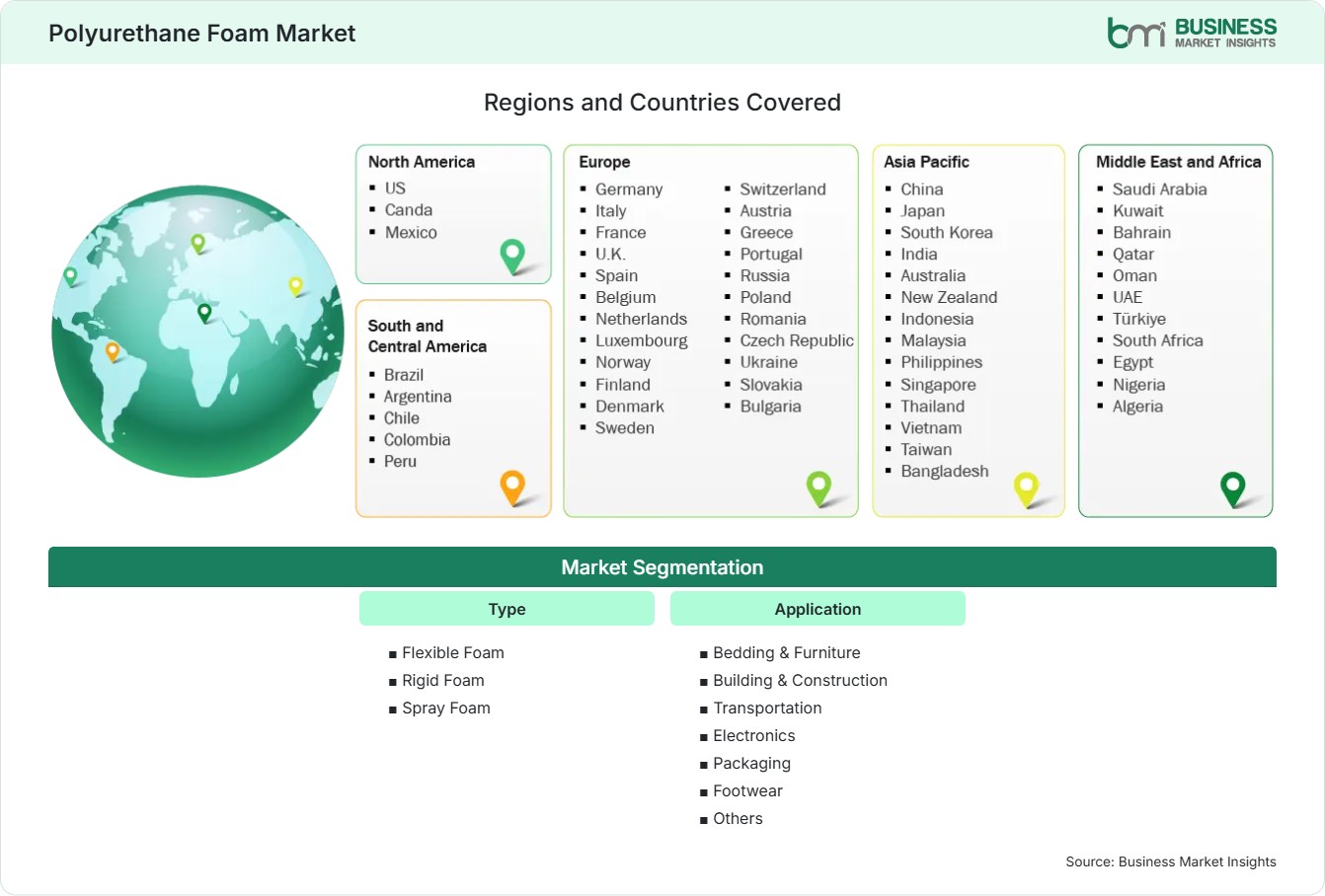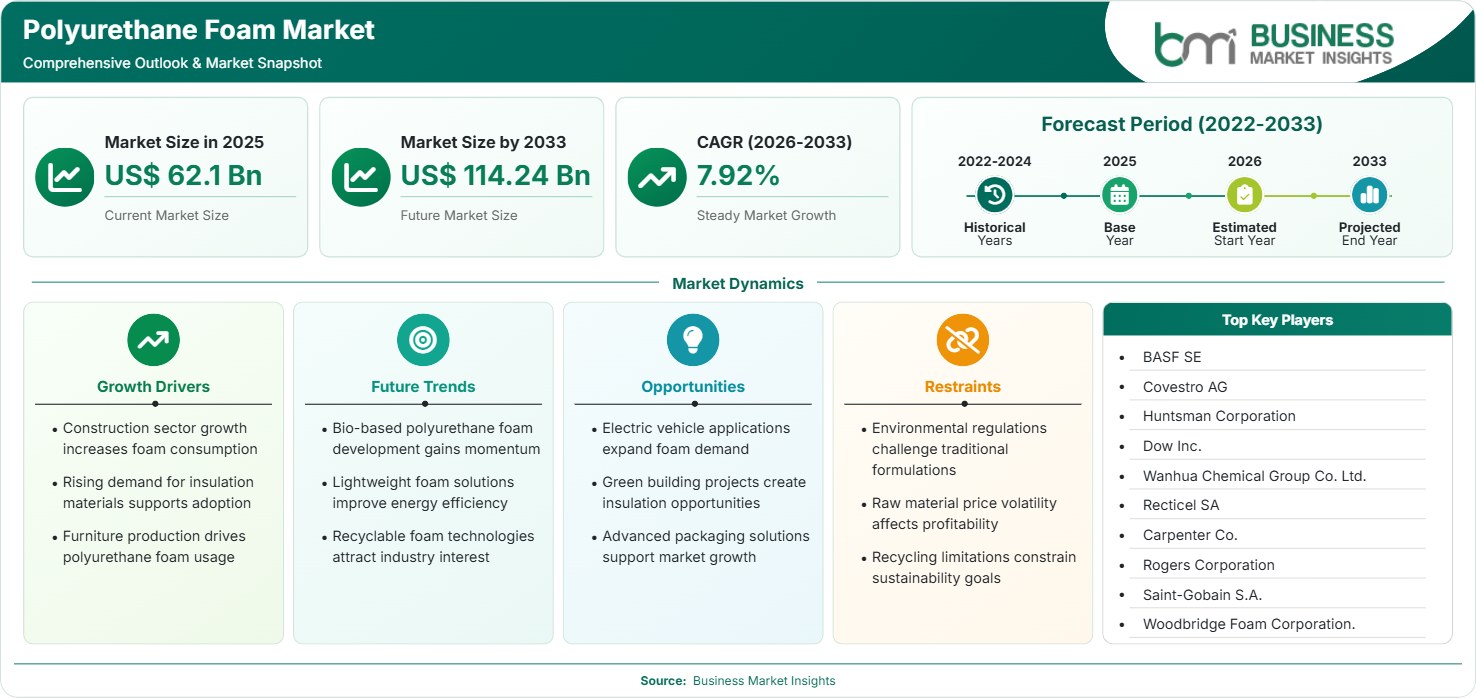
Polyurethane Foam Market Regional Highlights
North America Polyurethane Foam Market
North America accounted for 33%–36% of worldwide demand in 2025 and is expected to witness a CAGR of 6.8%–7.3% during 2033. Building renovation activities, high-quality furniture, and automobile manufacturing contribute to the consumption within the region. The Polyurethane Foam Market is highly dominated by the U.S., due to its stringent energy-efficiency and renovation regulations, which are driving increased insulation applications.
- Building-energy codes continue increasing demand for advanced insulation products across residential and commercial renovation markets.
- Growth in electric and conventional vehicle production supports expanding consumption of lightweight interior cushioning materials.
- Recycling and circular-economy initiatives encourage development of low-carbon formulations and recovered polyol technologies.
- High disposable income supports premium bedding and furniture purchases, strengthening demand across flexible foam applications.
US Polyurethane Foam Market
The United States has an 82%-86% share in the North America region and shows a CAGR growth of 6.9%-7.4%. Factors such as industrial output, construction activity, and energy-efficient building renovations affect the market. Manufacturing capacity and innovation efforts are contributing to competitiveness in product development. Diversification of demand across industries such as furniture, transport, construction, packaging, and electronics is providing resilience to economic cycles.
- Federal and state energy-efficiency initiatives continue supporting adoption of insulation foam systems.
- Advanced manufacturing investments strengthen domestic production capabilities and supply-chain reliability.
- Expanding e-commerce packaging requirements create additional application opportunities for specialty foam products.
- Automotive suppliers prioritize lightweight components to improve efficiency and extend vehicle range.
Europe Polyurethane Foam Market
Europe accounted for 24%-27% market share in 2025 and is estimated to grow at a CAGR of 6.9%-7.5% through 2033. Germany has been found to be the dominant country market, whereas Eastern European countries show higher growth trends. Sustainability policies, renovations, and industrial energy efficiency programs affect buying decisions. Manufacturers are more focused on recycling and environmentally efficient production processes. Polyurethane Foam Market share remains supported by advanced furniture and automotive industries across the region.
- Germany leads regional consumption, supported by automotive manufacturing and insulation demand.
- Poland and Romania record stronger growth rates, benefiting from industrial expansion and construction investment.
- Circular-economy policies accelerate innovation in recycling and sustainable raw-material development.
- Premium furniture exports continue generating steady demand for flexible foam applications.
Asia Pacific Polyurethane Foam Market
Asia-Pacific accounts for 29%-32% of worldwide consumption in 2025, with a compound annual growth rate of 8.8%-9.4% through 2033, making it the fastest-growing region. China is the largest consumer, while India has high growth potential. Urbanization, construction, electronics, and shoe manufacturing fuel the market growth. The key drivers of the Polyurethane Foam Market growth include higher incomes, homeownership, and industrial output.
- China maintains leadership through manufacturing scale and extensive downstream industry presence.
- India records the strongest regional expansion driven by housing, infrastructure, and industrial investments.
- Electronics manufacturing growth increases need for protection, insulation, and packaging solutions.
- Footwear production across Asia strengthens consumption of specialty and flexible formulations.
- Urban development programs continue stimulating building-insulation demand throughout the region.
Rest of World Polyurethane Foam Market
Rest of World represents a 10%–13% share in 2025 and is projected to advance at a CAGR of 7.5%–8.1% through 2033. South and Central America benefit from construction development and bedding consumption.
The Middle East and Africa benefit from investments in infrastructure development, tourism-related building projects, and industry diversification programs. Brazil is the largest market in Latin America, and Saudi Arabia and the UAE remain significant growth markets in the Middle East.
- Brazil benefits from residential development and increasing furniture manufacturing activity.
- Mexico's export-oriented industrial base supports demand across transportation and packaging applications.
- Saudi Arabia expands building and infrastructure projects supporting insulation-product adoption.
- UAE sustainability initiatives encourage use of energy-efficient construction materials.
- Industrial diversification strategies strengthen regional manufacturing and downstream consumption.