
Clinical Laboratory Services Market Outlook: Size, Share, Trends, Growth Analysis, Competitive Landscape & Forecast, 2026-2033

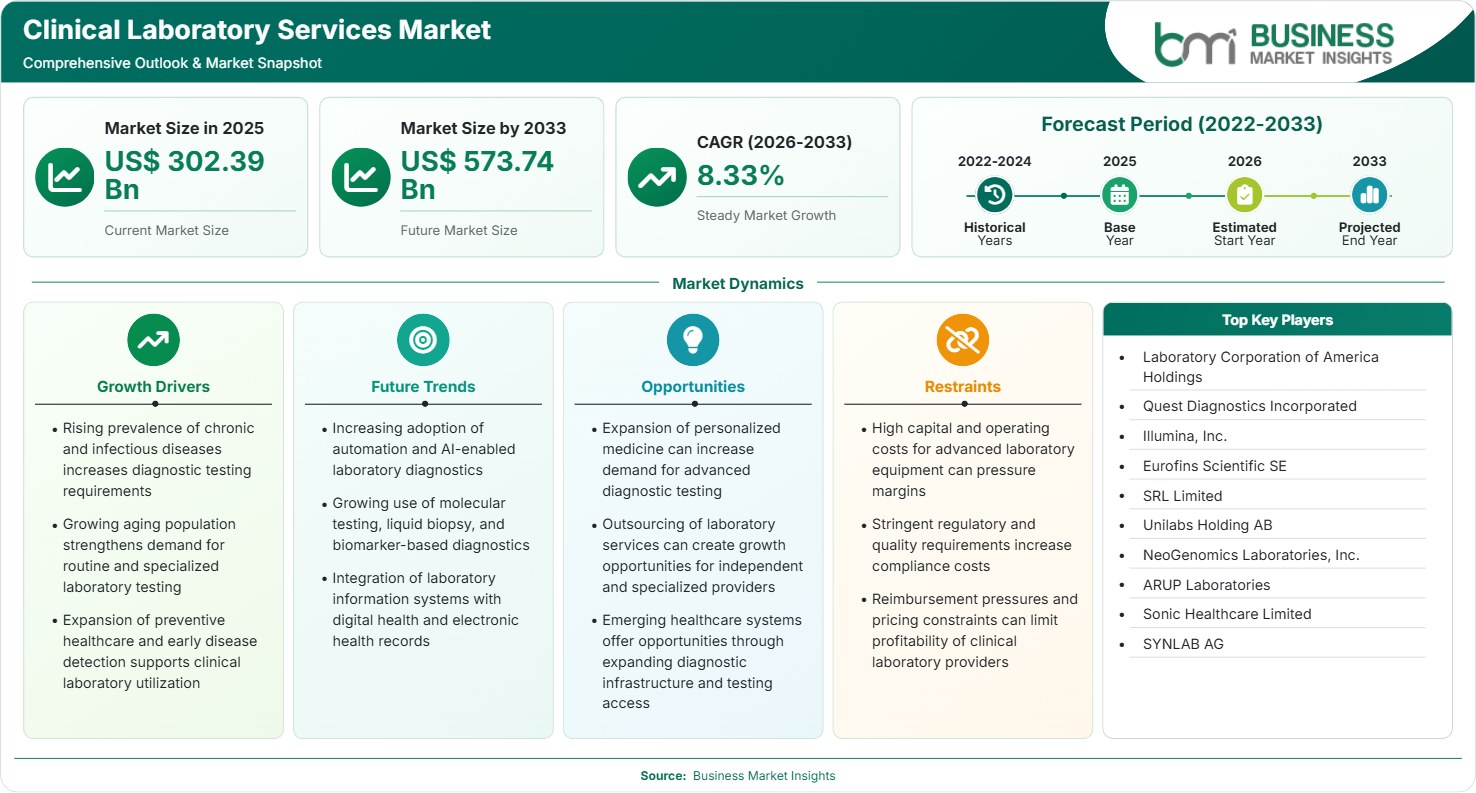
The Clinical Laboratory Services Market size was valued at US$ 302.39 Billion in 2025 and is projected to reach US$ 573.74 Billion by 2033, growing at a CAGR of 8.33% during 2026–2033. Rising chronic disease prevalence, expanding molecular diagnostics adoption, increasing preventive healthcare testing, and growing investments in precision medicine create substantial opportunities across developed and emerging healthcare systems.

Report Coverage
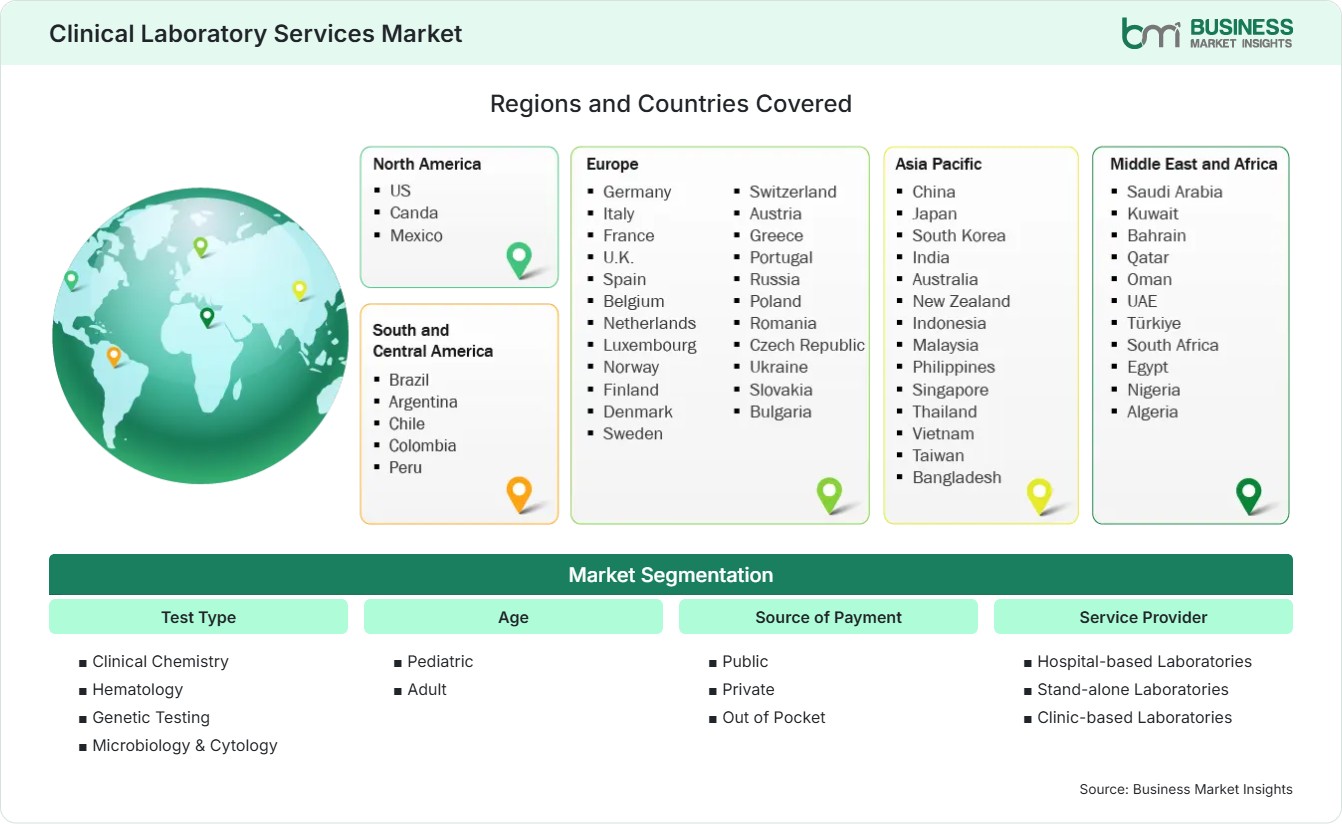
  • Test Type: Clinical Chemistry, Hematology, Genetic Testing, Microbiology & Cytology
  • Age: Pediatric, Adult
  • Source of Payment: Public, Private, Out of Pocket
  • Service Provider: Hospital-based Laboratories, Stand-alone Laboratories, Clinic-based Laboratories
US$ 302.39 Bn Market size in 2025
US$ 573.74 Bn Market Size by 2033
8.33% CAGR, 2026 - 2033
2026-2033 Forecast Period

AI Overview

Clinical Laboratory Services Market Summary

  • North America Region: North America holds a market share range of 38%–41% in 2025, growing with a CAGR range of 7.6%–8.1% during 2026–2033. Robust reimbursement frameworks, preventive testing, precision medicine, oncology diagnosis, digital pathology, and automation in laboratories keep on aiding in the creation of market growth opportunities in the healthcare network. The U.S. dominates regional revenues and advances at a CAGR of 7.8%–8.3% through precision diagnostics expansion and laboratory automation.
  • Fastest Growing Region: Asia Pacific holds a market share range of 24%–27% in 2025, growing with a CAGR range of 10.1%–10.8% during 2026–2033. Development of medical facilities, improvements in diagnostic services, prevalence of chronic diseases, government spending on health care, growth of private laboratories, and use of molecular testing increase the demand in the region.
  • Leading Segment: Clinical Chemistry holds a market share range of 31%–34% in 2025, growing with a CAGR range of 7.8%–8.4% during 2026–2033. Regular disease screening requirements, high volume testing, automation capability, widespread adoption by hospitals, chronic disease monitoring needs, and cost-effectiveness contribute to maintaining dominance in the segment.
  • High Growth Segment: Genetic Testing holds a clinical laboratory services market share range of 16%–19% in 2025, growing with a CAGR range of 11.2%–12.0% during 2026–2033. Adoption of increased genomic sequencing, personalized medicine growth, need for testing of hereditary diseases, increased use of biomarkers in oncology, reduction in sequencing cost, and technological advancement drive fast segment growth.
  • Key Market Opportunity: The opportunities that precision medicine programs, decentralized diagnostics, AI-assisted interpretation platforms, population health screening, and wider access to genomics tests provide laboratories include differentiation of services internationally.
  • Major Market Players: Laboratory Corporation of America Holdings; Quest Diagnostics Incorporated; Illumina, Inc.; Eurofins Scientific SE; SRL Limited; Unilabs Holding AB; NeoGenomics Laboratories, Inc.; ARUP Laboratories; Sonic Healthcare Limited; SYNLAB AG.
Strategic Insights

Clinical Laboratory Services Market: Strategic Insights

Clinical Laboratory Services Market Strategic Framework
FREE PDF
Request your free sample
Request free sample
Stakeholder View

Key Takeaways

  • The industry value chain is increasingly integrating, where laboratory service providers, diagnostic equipment producers, software developers, and health care facilities work together in order to enhance efficiency of testing and health outcomes.
  • Genomics testing and precision diagnostics become the greatest sources of growth as health care systems continue to develop personalized treatment routes which require sophisticated molecular data.
  • Artificial intelligence, automation solutions, robotics in sample processing, and digital pathology technology are transforming laboratory practices and bringing higher throughput and accuracy to them.
  • Asia-Pacific region is a good location for investment as there is a rapid development of healthcare access, increasing awareness about diagnostics, growing disposable incomes, and support from governments to healthcare system modernization.
  • Strategic acquisitions remain an important tool of competitive advantage as big laboratories seek new markets, specialty testing services, and strong position in growing diagnostics segments.
  • Preventive health care and population-based screening programs generate sustainable demand for tests which contributes to utilization growth.
Geographic Outlook

Clinical Laboratory Services Market Regional Highlights

North America Clinical Laboratory Services Market

North America accounted for a market share of 38%–41% in 2025 and is projected to register a CAGR of 7.6%–8.1% through 2033. The region benefits from advanced healthcare infrastructure, widespread reimbursement coverage, high diagnostic awareness, and substantial investments in precision medicine. Clinical Laboratory Services Market share remains highest in North America due to extensive adoption of molecular diagnostics, strong oncology testing demand, and rapid implementation of automation technologies. Growing utilization of preventive screening programs continues supporting testing volumes across hospital and independent laboratory networks.

  • The use of next-generation sequencing technologies at large contributes to precision medicine approaches and helps in the detection of biomarkers for hereditary, oncological, and rare diseases.
  • The investments in automation improve the laboratory workflow efficiency and allow processing of growing numbers of tests due to aging population and chronic disease management programs.
  • The rising need for companion diagnostics increases the cooperation between pharmaceutical firms and laboratories, which helps in the development of targeted therapies.
  • The growth of consumer-oriented testing programs helps increase accessibility of diagnostic procedures and motivates patients to use preventive healthcare management approaches.
  • The regulatory focus on quality assurance and laboratory accreditation promotes the investments in high-tech testing facilities and information systems.

US Clinical Laboratory Services Market

The United States represented approximately 76%–80% of regional revenue in 2025 and is anticipated to expand at a CAGR of 7.8%–8.3% through 2033. Strong healthcare expenditure, broad insurance penetration, and continuous innovation in diagnostic technologies support market leadership. Demand remains elevated across oncology, infectious disease testing, genetic screening, and chronic disease monitoring applications. Major laboratory organizations continue expanding specialized testing portfolios while investing in automation and artificial intelligence-supported workflows.

  • Precision medicine programs supported by academic institutions and healthcare systems increase utilization of advanced genomic testing and biomarker analysis services.
  • Rising cancer incidence drives demand for molecular diagnostics, liquid biopsy testing, and personalized treatment monitoring solutions in clinical laboratory services market.
  • Integration of artificial intelligence in pathology and laboratory operations enhances workflow efficiency and diagnostic accuracy across large testing networks.
  • Growing emphasis on value-based healthcare encourages preventive testing and early disease detection initiatives across multiple therapeutic areas.

Europe Clinical Laboratory Services Market

Europe held a market share of 27%–30% in 2025 and is projected to record a CAGR of 7.4%–7.9% during the forecast period. Strong public healthcare systems, established diagnostic networks, and increasing investments in molecular testing support regional growth. Germany leads regional revenues, while Eastern European markets demonstrate faster expansion. Clinical Laboratory Services Market growth is supported by increasing adoption of personalized medicine, aging populations, and demand for advanced disease screening solutions across healthcare providers.

  • Germany maintains regional leadership through advanced laboratory infrastructure, strong healthcare funding, and high utilization of diagnostic services.
  • The United Kingdom benefits from national screening programs that encourage consistent testing volumes across multiple disease categories.
  • Spain and Poland are among the faster-growing markets, supported by healthcare modernization and expanding private diagnostic investments.
  • Increasing implementation of digital pathology platforms enhances efficiency and supports specialist diagnostic consultations across geographic regions.
  • Growing demand for genetic and molecular diagnostics supports development of specialized laboratory testing capabilities.

Asia Pacific Clinical Laboratory Services Market

Asia Pacific captured 24%–27% of global revenue in 2025 and is expected to achieve a CAGR of 10.1%–10.8% through 2033. Expanding healthcare infrastructure, growing middle-class populations, increasing chronic disease prevalence, and rising awareness of preventive healthcare are driving regional demand. China represents the largest market, while India demonstrates some of the strongest expansion rates. Public healthcare investments and growing private laboratory networks continue strengthening regional testing capacity and service accessibility.

  • China leads regional revenue generation through extensive healthcare infrastructure investments and rapid expansion of diagnostic service networks.
  • India experiences strong growth due to increasing healthcare spending, expanding laboratory chains, and growing demand for preventive diagnostics.
  • Japan maintains substantial demand for advanced testing services associated with aging demographics and chronic disease management in clinical laboratory services market.
  • Southeast Asian countries continue investing in healthcare modernization programs, supporting broader diagnostic accessibility and laboratory expansion.
  • Growing adoption of molecular diagnostics and automated laboratory systems enhances testing quality and operational scalability.

Rest of World Clinical Laboratory Services Market

Rest of World accounted for 8%–11% of global revenue in 2025 and is forecast to grow at a CAGR of 8.5%–9.1% through 2033. South and Central America continue benefiting from expanding private healthcare investments and improved diagnostic accessibility. Meanwhile, Middle East and Africa markets are supported by healthcare infrastructure development, medical tourism initiatives, and increasing government healthcare expenditure. Rising demand for specialized testing services is encouraging laboratory expansion throughout developing healthcare ecosystems.

  • Brazil remains the leading South American market due to established healthcare networks and increasing utilization of diagnostic testing services.
  • Mexico demonstrates expanding opportunities supported by healthcare infrastructure upgrades and growing private healthcare participation.
  • Saudi Arabia continues investing in healthcare transformation initiatives that include modernization of diagnostic and laboratory capabilities in clinical laboratory services market.
  • The United Arab Emirates benefits from medical tourism growth and adoption of advanced laboratory technologies across healthcare facilities.
  • South Africa maintains an important regional position through expanding diagnostic services and increasing investments in healthcare accessibility.
Global Market Geography
FREE PDF
Request your free sample
Request free sample
Segment Analysis

Clinical Laboratory Services Market Segmentation

Test Type

Test Type accounted for approximately 36%–39% market share in 2025 and is projected to expand at a CAGR of 8.4%–8.9% through 2033. Demand is driven by rising chronic disease prevalence, broader preventive screening initiatives, and increasing integration of molecular diagnostics into routine workflows. Clinical Laboratory Services Market scope continues expanding as laboratories adopt automation and high-throughput platforms that improve turnaround times while maintaining analytical precision across diverse diagnostic categories and patient populations.

  • Clinical Chemistry: Clinical chemistry testing remains fundamental for metabolic, endocrine, renal, and cardiovascular assessments, supported by high testing volumes, standardized methodologies, and broad reimbursement coverage across healthcare systems.
  • Hematology: Hematology services benefit from increasing incidence of blood disorders, oncology monitoring requirements, and routine complete blood count testing performed across hospitals, clinics, and reference laboratories.
  • Genetic Testing: Genetic testing adoption is accelerating through precision medicine initiatives, hereditary disease screening programs, and expanding utilization of next-generation sequencing technologies for personalized therapeutic decision-making.
  • Microbiology & Cytology: Microbiology and cytology services support infectious disease surveillance, cancer detection, and antimicrobial stewardship efforts, aided by advanced culture methods and digital pathology integration.

Age

Age-based segmentation highlights adult patients as the largest contributor, representing nearly 69%–72% market share in 2025 with an estimated CAGR of 8.1%–8.6% through 2033. Population aging, increasing incidence of chronic diseases, and higher diagnostic testing frequency support segment expansion. Clinical Laboratory Services Market trends indicate growing investment in age-specific testing panels, preventive diagnostics, and personalized healthcare pathways that improve disease management outcomes while optimizing healthcare resource utilization.

  • Pediatric: Pediatric testing demand is supported by newborn screening initiatives, infectious disease diagnostics, developmental disorder assessments, and growing awareness regarding early intervention strategies among caregivers.
  • Adult: Adult testing dominates due to higher prevalence of cardiovascular disorders, diabetes, cancer, and routine health monitoring programs requiring frequent laboratory evaluations throughout treatment journeys.

Source of Payment

Private payment mechanisms generated approximately 42%–45% market share in 2025 and are expected to register a CAGR of 8.8%–9.3% through 2033. Expansion of employer-sponsored healthcare plans, private insurance penetration, and premium diagnostic service offerings continue strengthening segment performance. Laboratories increasingly collaborate with insurers to improve patient access, streamline claims processing, and support value-based healthcare models that emphasize preventive and outcome-oriented diagnostic strategies.

  • Public: Public funding supports essential diagnostic services through government healthcare systems, disease surveillance programs, and national screening initiatives designed to improve population health outcomes.
  • Private: Private payment channels facilitate access to advanced diagnostic technologies, specialized testing services, and faster reporting capabilities, particularly in developed healthcare markets and urban centers.
  • Out of Pocket: Out-of-pocket spending remains relevant for wellness testing, specialized diagnostics, and elective screening procedures where reimbursement availability remains limited or restricted.

Service Provider

Hospital-based laboratories held approximately 46%–49% market share in 2025 and are anticipated to grow at a CAGR of 8.0%–8.5% through 2033. Their leadership stems from integrated care delivery, proximity to acute care settings, and continuous testing requirements. Growing digital connectivity between laboratories and clinical departments enhances operational efficiency, supports multidisciplinary care pathways, and enables rapid diagnostic decision-making across emergency, inpatient, and specialty healthcare environments.

  • Hospital-based Laboratories: Hospital-based facilities deliver comprehensive testing services linked directly with inpatient care, emergency medicine, surgery, oncology, and critical care treatment pathways.
  • Stand-alone Laboratories: Stand-alone laboratories benefit from economies of scale, extensive testing menus, specialized expertise, and strong logistics networks supporting regional and national diagnostic coverage.
  • Clinic-based Laboratories: Clinic-based laboratories enhance accessibility by providing localized diagnostic services, shorter travel requirements, and streamlined patient management within ambulatory healthcare environments.
Market Forces

Clinical Laboratory Services Market Dynamics

Key Market Drivers

Rising Global Burden of Chronic and Infectious Diseases

Chronic illnesses and infectious ailments are key drivers of laboratory testing demand on a global scale. Based on statistics from the World Health Organization, noncommunicable diseases are responsible for up to three-quarters of global mortality rates, which ensures ongoing demand for testing and diagnostics in disease management. Illnesses like diabetes, heart disease, cancer, and lung disease all require repeated testing during the process of treatment. At the same time, surveillance of new infectious illnesses drives up testing demands.

Expansion of Precision Medicine and Molecular Diagnostics

The precision medicine programs are revolutionizing the entire process of diagnosis in various disciplines such as oncology, rare diseases, and pharmacogenomics. The developments in the sequencing technology have resulted in substantial cost savings and increased efficiency in the analysis of samples. The healthcare professionals are depending more on the molecular diagnosis techniques for the identification of biomarkers.

Growing Adoption of Laboratory Automation and Digital Pathology

Laboratories are spending lots of money on automation platforms, artificial intelligence software and digital pathology solutions that will help them cope with increasing work load. Automation of sample handling and workflow optimization solutions, as well as integrated laboratory information management platforms, increase efficiency while minimizing mistakes. Digital pathology allows conducting teleconsultations and improving communication between experts. Healthcare facilities pay a lot of attention to turnaround time improvement and quality assurance.

Key Market Opportunities

Expansion of Preventive Healthcare and Wellness Testing

Preventive healthcare programs are generating many opportunities for diagnostic services organizations. Increasingly, governments, employers, and insurance companies are promoting regular screening programs designed to reduce overall treatment costs and improve health outcomes. Demand for wellness testing panels, metabolic testing, cardiovascular risk assessments, and cancer screening services is continually growing within various age groups. Clinical Laboratory Services Market Forecasts indicate that preventive diagnostics will become an increasingly important revenue stream as healthcare systems shift from reactive treatment models toward proactive disease management.

Untapped Potential Across Emerging Healthcare Economies

The emerging markets in Asia-Pacific, Latin America, the Middle East, and Africa offer many expansion possibilities owing to the improvements in their health infrastructure, as well as their growing healthcare spending. Urbanization, increased insurance penetration, and larger middle classes provide a good opportunity for increased usage of diagnostic services. Investments in lab networks from both public and private sectors are making these services more available in underdeveloped areas. There are also increasing efforts from governments to improve their disease surveillance and preventative health care efforts. Such trends make it favorable for foreign labs that are looking for geographic diversification.

Integration of Artificial Intelligence in Diagnostic Workflows

AI applications are creating possibilities to improve efficiency, prediction analysis, and clinical decision-making. The use of AI technologies helps laboratories interpret images, perform quality control tasks, prioritize workflows, and detect abnormalities. The integration of machine learning algorithms within lab management systems allows for optimal allocation of resources. Diagnostic organizations that implement AI-driven solutions can increase accuracy of their reports and decrease processing time.

Market Restraints and Challenges

Factor: Regulatory Compliance Complexity | Impact: Higher Operating Costs

Factor: Clinical laboratories function under very strict regulations due to accreditation rules, quality control measures, and data protection laws for patient information. The compliance challenges increase as new technologies are developed that are becoming more complex and internationally interlinked. Impact: Compliance involves making significant amounts of investment in training of staff, documentation, QA, and technology validation. Small labs are likely to incur more costs relative to their bigger counterparts.

Factor: Skilled Workforce Shortages | Impact: Capacity Constraints

Factor: Laboratory technologists, molecular biologists, pathologists, and diagnostic specialists are lacking in many healthcare facilities. Issues related to the workforce are complicated by rising complexity of testing and increased demand for laboratory services. Impact: A lack of personnel may delay turnaround times, raise the cost of labor, and limit lab capacity despite increased demands. Problems relating to recruitment and retention tend to be especially common in developing countries and remote areas. There is a need for substantial investments in terms of work force development and automation.

Company Analysis

Competitive Landscape

Clinical Laboratory Services Market analysis indicates that competition is centered on testing breadth, technological capabilities, molecular diagnostics expertise, automation investments, and geographic laboratory network expansion.

Company Name

Overview

Products and Services Relevant to this Market

Laboratory Corporation of America Holdings

Global diagnostics company operating extensive laboratory networks supporting clinical testing, drug development, and healthcare analytics services.

Routine diagnostics, esoteric testing, genomic services, clinical trial laboratory support, pathology solutions, and population health programs.

Quest Diagnostics Incorporated

Leading diagnostic information services provider with broad testing capabilities and nationwide laboratory infrastructure.

Clinical diagnostics, advanced pathology, molecular testing, employer health services, and preventive screening programs.

Illumina, Inc.

Major genomics technology provider enabling next-generation sequencing applications across healthcare and research sectors.

Sequencing platforms, genomic analysis solutions, precision medicine diagnostics, and molecular testing technologies.

Eurofins Scientific SE

International laboratory services organization operating across clinical, environmental, pharmaceutical, and food testing markets.

Clinical laboratory diagnostics, specialty testing, biomarker analysis, molecular diagnostics, and laboratory outsourcing services.

Agilus Diagnostics Limited (formerly SRL Diagnostics)

Large diagnostic services provider with extensive laboratory and collection center presence across India.

Pathology testing, preventive health packages, molecular diagnostics, radiology support, and specialty laboratory services.

Unilabs Group Services

European diagnostics provider focused on laboratory testing, imaging, and pathology services.

Clinical diagnostics, genetics testing, pathology services, screening programs, and healthcare diagnostic solutions.

NeoGenomics, Inc.

Specialized oncology diagnostics company supporting precision medicine and cancer care pathways.

Cancer testing, molecular diagnostics, companion diagnostics, cytogenetics, and pathology services.

ARUP Laboratories

Academic reference laboratory providing specialized testing and consultative diagnostic expertise.

Esoteric testing, infectious disease diagnostics, genetics services, pathology support, and clinical consultation.

Sonic Healthcare Limited

Global healthcare diagnostics company operating laboratories, pathology centers, and specialized testing facilities.

Clinical pathology, molecular diagnostics, genetics testing, and laboratory management services.

Trust & Transparency

Research Methodology

The market analysis combines proprietary research with secondary data from government agencies, company disclosures, regulatory filings, industry databases and expert interviews. Market estimates are validated through data triangulation, cross-market benchmarking and analyst review.

View Full Research Methodology

Questions Answered

Frequently Asked Questions

Why are stand-alone laboratories expanding rapidly in emerging economies?

Stand-alone laboratories benefit from scalable business models, broad testing menus, centralized operations, and expanding healthcare access, enabling efficient service delivery across growing urban and semi-urban populations.

What does the Clinical Laboratory Services Market Report evaluate?

The Clinical Laboratory Services Market Report examines industry size, growth dynamics, segmentation trends, regional performance, competitive positioning, technological developments, and future investment opportunities across diagnostic services ecosystems.

How is artificial intelligence influencing laboratory operations?

Artificial intelligence improves workflow automation, quality control, image analysis, predictive diagnostics, and laboratory resource optimization, helping providers increase efficiency while maintaining diagnostic accuracy and consistency.

Which testing category generates the highest revenue contribution?

Clinical chemistry remains the largest testing category due to its extensive application in routine health assessments, chronic disease monitoring, metabolic evaluations, and preventive healthcare screening programs worldwide.

What factors are accelerating demand for clinical laboratory services?

Growing chronic disease prevalence, precision medicine adoption, preventive healthcare initiatives, expanded insurance coverage, and increasing utilization of molecular diagnostics are strengthening laboratory testing demand globally across multiple healthcare settings.

Access the Full Clinical Laboratory Services Market Report

Get segment-level forecasts, regional estimates, competitive benchmarking, company profiles and downloadable Excel datasets.

Access the full Clinical Laboratory Services Market Report
350 pages PDF & Excel | 2026-09-03