
Telepsychiatry Services Market Outlook: Size, Share, Trends, Growth Analysis, Competitive Landscape & Forecast, 2026-2033

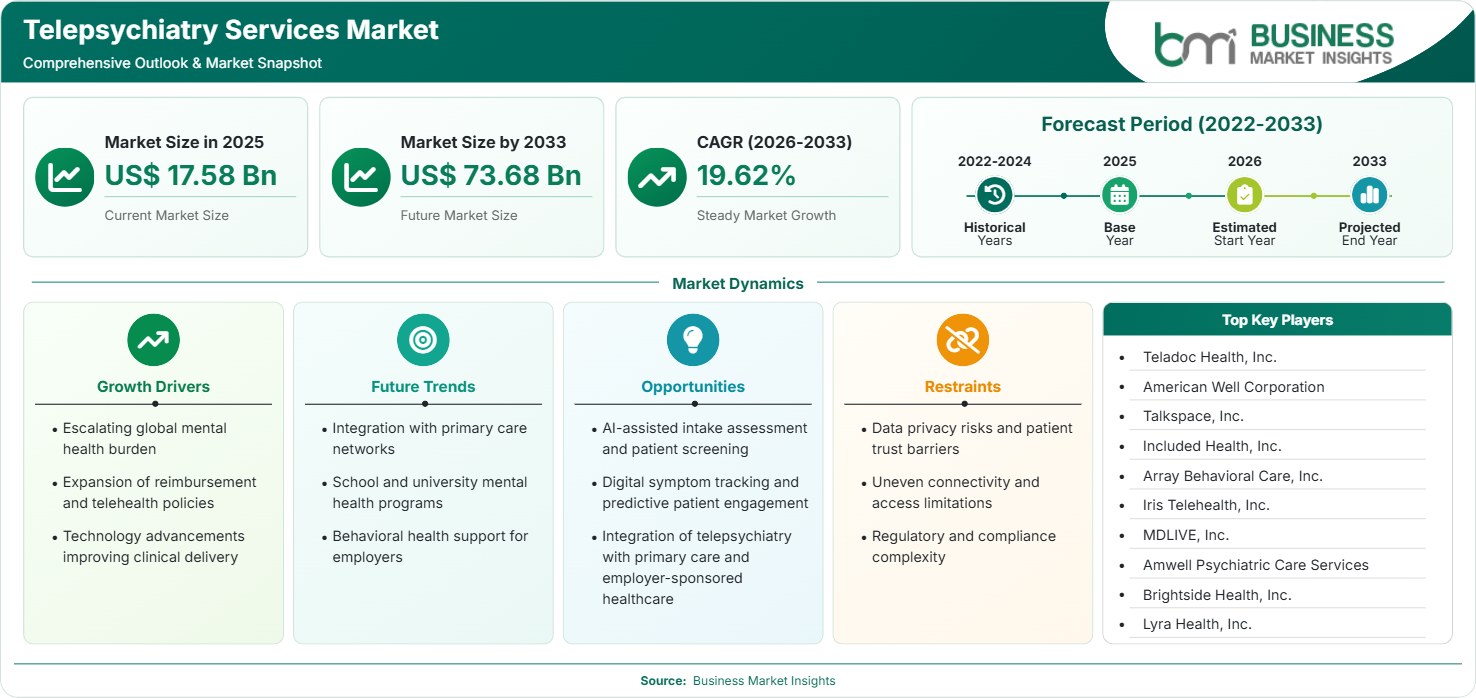
The Telepsychiatry Services Market size was valued at US$ 17.58 Billion in 2025 and is projected to reach US$ 73.68 Billion by 2033, growing at a CAGR of 19.62% during 2026–2033. Key growth catalysts include rising mental health burden, psychiatrist shortages, reimbursement expansion, digital health adoption, AI-enabled care pathways, and increasing demand for accessible behavioral healthcare across underserved populations.

Report Coverage
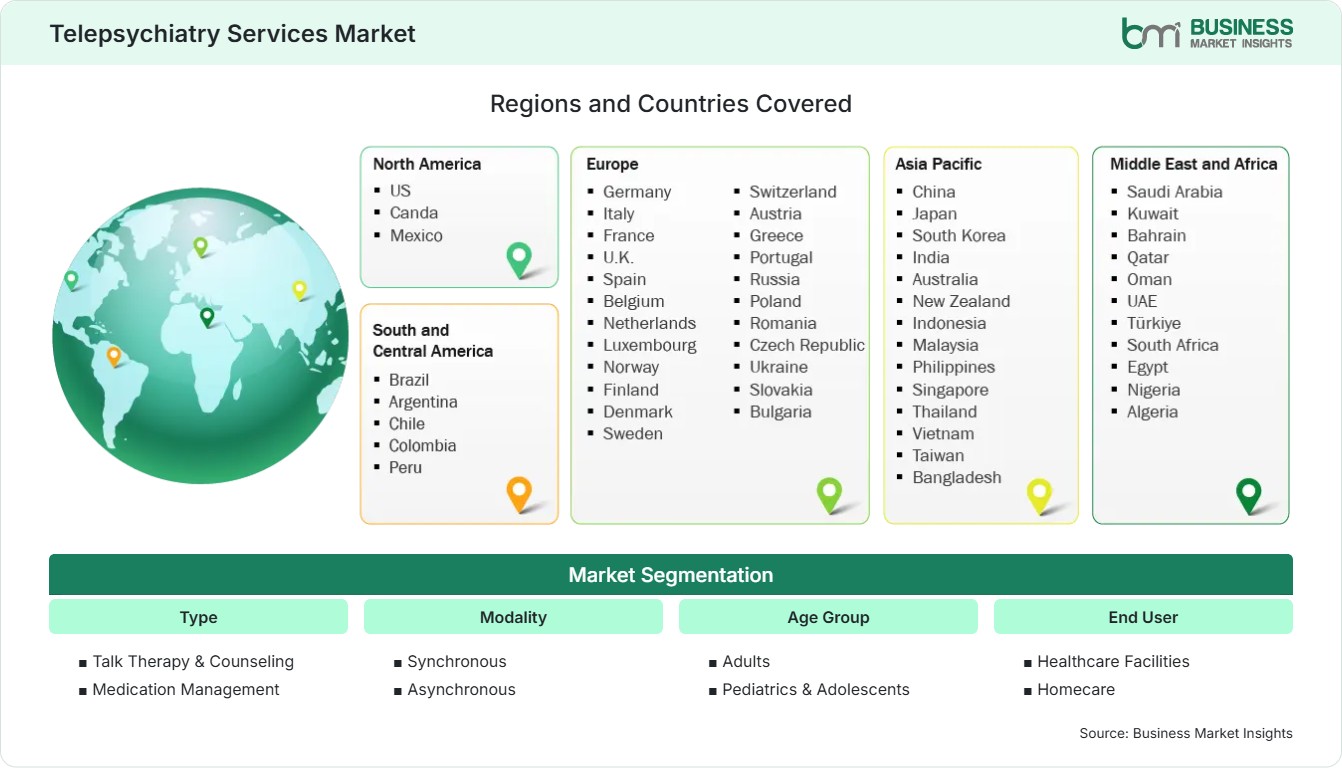
  • Type: Talk Therapy & Counseling, Medication Management
  • Modality: Synchronous, Asynchronous
  • Age Group: Adults, Pediatrics & Adolescents
  • End User: Healthcare Facilities, Homecare
US$ 17.58 Bn Market size in 2025
US$ 73.68 Bn Market Size by 2033
19.62% CAGR, 2026 - 2033
2026-2033 Forecast Period

AI Overview

Telepsychiatry Services Market Summary

  • North America Region: North America holds a market share of 45%–48% in 2025, growing at a CAGR of 18.0%–19.0% during 2026–2033. Demand is supported by strong reimbursement frameworks, provider network expansion, mental health workforce shortages, employer-sponsored care programs, and integrated virtual behavioral health platforms improving access and continuity. The U.S. remains the regional anchor, supported by payer adoption, regulatory flexibility, and digital behavioral health investment, advancing at 18.5%–19.5% CAGR.
  • Fastest Growing Region: Asia Pacific accounts for 20%–23% market share in 2025 and is expected to expand at 22.0%–24.0% CAGR. Increasing smartphone penetration, urban mental health awareness, government telehealth strategies, specialist shortages, growing healthcare infrastructure investment, and scalable cloud-based consultation platforms are accelerating adoption across major developing economies.
  • Leading Segment: Adults represent 68%–72% share in 2025 and are forecast to grow at 18.5%–19.5% CAGR. High prevalence of anxiety, depression, occupational stress, chronic disease-related behavioral conditions, and preference for remote consultations continue supporting sustained utilization across diverse healthcare settings globally.
  • High Growth Segment: Asynchronous modality holds 28%–32% share in 2025 and is projected to advance at 21.0%–23.0% CAGR. Flexible engagement models, improved provider efficiency, lower appointment barriers, digital messaging integration, and scalable triage workflows support adoption among healthcare organizations seeking cost-effective outreach.
  • Key Market Opportunity: Expanding telepsychiatry integration within primary care networks, schools, correctional facilities, and rural community health programs enables earlier intervention, better continuity of care, reduced wait times, and broader specialist access.
  • Major Market Players: Teladoc Health, Inc.; American Well Corporation; Talkspace, Inc.; Included Health, Inc.; Array Behavioral Care, Inc.; Iris Telehealth, Inc.; MDLIVE, Inc.; Amwell Psychiatric Care Services; Brightside Health, Inc.; Lyra Health, Inc.
Strategic Insights

Telepsychiatry Services Market: Strategic Insights

Telepsychiatry Services Market Strategic Framework
FREE PDF
Request your free sample
Request free sample
Stakeholder View

Key Takeaways

  • The industry value chain increasingly integrates technology vendors, behavioral health providers, payers, and health systems, enabling scalable psychiatric service delivery through interoperable digital ecosystems.
  • Pediatric and adolescent mental healthcare represents a strong expansion opportunity as school-based mental health programs and family-centered virtual care models gain broader adoption.
  • AI-enabled intake assessment, digital symptom tracking, and predictive patient engagement tools are becoming important differentiators across virtual behavioral health platforms.
  • Asia Pacific presents a compelling investment destination due to specialist shortages, strong mobile connectivity growth, and supportive telehealth modernization initiatives.
  • Venture capital activity and strategic acquisitions continue focusing on digital mental health, platform integration capabilities, care navigation solutions, and outcome-based reimbursement models.
  • Employer-sponsored behavioral healthcare programs are becoming an increasingly influential demand channel, particularly among large enterprises prioritizing workforce wellbeing and productivity outcomes.
Geographic Outlook

Telepsychiatry Services Market Regional Highlights

North America Telepsychiatry Services Market

North America accounts for 45%–48% Telepsychiatry Services Market share in 2025 and is projected to expand at 18.0%–19.0% CAGR through 2033. Strong reimbursement support, extensive broadband availability, mature virtual care ecosystems, and persistent mental health workforce shortages continue sustaining regional leadership. Large employers increasingly include behavioral telehealth benefits within healthcare packages. Provider organizations are expanding virtual psychiatry programs to enhance appointment capacity, reduce wait times, and improve continuity of care across urban and rural populations.

  • Mental health professional shortages continue driving digital consultation demand across hospitals, community clinics, and employer-sponsored healthcare programs.
  • Health systems increasingly integrate psychiatric consultations into telehealth platforms supporting multidisciplinary care delivery and coordinated treatment pathways.
  • Commercial insurers are expanding virtual behavioral health reimbursement policies, strengthening provider participation and patient access.
  • Artificial intelligence tools support triage, documentation workflows, and patient engagement, improving operational efficiency across care networks.

US Telepsychiatry Services Market

The United States represents approximately 82%–86% of regional revenue and advances at 18.5%–19.5% CAGR. Rising demand for behavioral services, growing digital health investment, and strong payer acceptance support expansion. Mental health conditions affect a significant portion of the population, while provider shortages create persistent access challenges. Virtual psychiatric care increasingly serves employers, schools, rural communities, and integrated healthcare networks.

  • Employer-sponsored behavioral health benefits continue expanding virtual psychiatry utilization across working-age populations.
  • Large health systems increasingly deploy integrated behavioral health pathways supported by teleconsultation capabilities.
  • Remote care adoption is strengthening among rural communities facing psychiatrist availability constraints.
  • Value-based care initiatives are encouraging utilization of scalable behavioral health technologies.

Europe Telepsychiatry Services Market

Europe holds 24%–27% share in 2025 and is anticipated to grow at 18.5%–20.0% CAGR. Healthcare digitization strategies, expanding telemedicine acceptance, and growing mental wellbeing awareness encourage adoption. Germany remains the largest regional market, while Spain demonstrates among the fastest growth profiles. Public health organizations increasingly deploy virtual psychiatric services to improve specialist access, reduce waiting times, and support long-term behavioral health management.

  • National digital health reforms are expanding reimbursement eligibility for virtual mental healthcare services.
  • Germany leads regional adoption, supported by advanced healthcare infrastructure and telehealth integration efforts.
  • Spain and selected Central European countries are exhibiting strong growth due to expanding digital health investment.
  • Cross-border telehealth capabilities support specialist availability improvements across underserved populations.

Asia Pacific Telepsychiatry Services Market

Asia Pacific captures 20%–23% share in 2025 and records the highest regional expansion at 22.0%–24.0% CAGR. Increasing mental health awareness, smartphone penetration, and healthcare digitization initiatives support rapid adoption. China remains the largest regional opportunity, while India demonstrates one of the highest growth trajectories. Technology-enabled care models address specialist shortages and geographic access barriers across densely populated and rural communities.

  • Government-supported telehealth programs are improving behavioral care accessibility across underserved populations.
  • China leads regional revenue generation due to scale, digital health investment, and urban healthcare modernization.
  • India is among the fastest-growing markets, supported by telemedicine policy development and rising mental health awareness.
  • Mobile-first healthcare delivery models facilitate patient engagement across geographically dispersed communities.
  • Expanding private-sector investment is accelerating digital behavioral health ecosystem development.

Rest of World Telepsychiatry Services Market

The Rest of World region accounts for 8%–10% market share and is expected to expand at 19.0%–21.0% CAGR. South and Central America benefit from improving telehealth infrastructure and growing awareness of behavioral healthcare needs. Meanwhile, Middle East and Africa markets are supported by digital transformation programs, healthcare modernization strategies, and expanding virtual care investments. Brazil leads Latin America, whereas Saudi Arabia demonstrates strong growth momentum.

  • Brazil remains a major regional adopter due to telemedicine expansion and urban healthcare demand.
  • Saudi Arabia continues investing in digital health infrastructure supporting broader virtual care deployment.
  • Mental health awareness campaigns improve patient engagement and treatment-seeking behavior.
  • Public-private healthcare modernization initiatives create favorable market expansion conditions.
Global Market Geography
FREE PDF
Request your free sample
Request free sample
Segment Analysis

Telepsychiatry Services Market Segmentation

Type

This segment accounts for approximately 38%–42% share and is projected to grow at 19.0%–20.0% CAGR. The Telepsychiatry Services Market scope continues expanding as virtual psychiatric consultations increasingly support diagnosis, treatment planning, counseling, and long-term behavioral health management across institutional and home-based care settings.

  • Talk Therapy & Counseling: Widely adopted for anxiety, depression, stress management, and behavioral intervention programs, supported by improved convenience, patient engagement, and continuity of treatment.
  • Medication Management: Supports prescription monitoring, follow-up assessments, and treatment optimization through regular virtual interactions between providers and patients.

Modality

Synchronous services maintain the largest presence with 68%–72% share in 2025, while the segment advances at 18.5%–19.5% CAGR. Healthcare organizations prioritize real-time interactions for clinical evaluations; however, asynchronous delivery is expanding rapidly because of workflow flexibility and provider efficiency benefits.

  • Synchronous: Real-time audio and video consultations remain essential for psychiatric assessments, crisis intervention, and therapeutic engagement requiring immediate clinician interaction.
  • Asynchronous: Store-and-forward communication models improve accessibility, scheduling flexibility, and specialist reach, especially in resource-constrained environments.

Age Group

The Telepsychiatry Services Market trends indicate adults hold 68%–72% share and grow at 18.5%–19.5% CAGR. Rising prevalence of depression, anxiety disorders, burnout, and substance-use conditions drives utilization, while younger populations increasingly access school-supported and family-centered virtual behavioral health services.

  • Adults: Strong demand originates from working professionals, chronic disease populations, and individuals seeking convenient access to specialists.
  • Pediatrics & Adolescents: Growing awareness of youth mental health concerns supports adoption across schools, clinics, and family-care environments.

End User

Healthcare facilities contribute 47%–50% share and are forecast to expand at 18.0%–19.0% CAGR. Hospitals and clinics increasingly deploy integrated psychiatric telehealth services to improve service coverage. Homecare deployment is also accelerating due to convenience, continuity, and remote monitoring capabilities.

  • Healthcare Facilities: Hospitals, clinics, and behavioral health centers utilize virtual psychiatric capabilities to address capacity constraints and specialist shortages.
  • Homecare: Remote service delivery improves treatment adherence, accessibility, and convenience for patients requiring ongoing psychiatric support.
Market Forces

Telepsychiatry Services Market Dynamics

Key Market Drivers

Escalating Global Mental Health Burden

WHO estimates indicate that mental health conditions affect hundreds of millions globally, while many countries continue experiencing shortages of trained psychiatric professionals. This structural care gap supports sustained Telepsychiatry Services Market growth. Virtual psychiatric services increase access, especially in rural areas and areas that are underserved, where specialist access is still lacking. The high number of diagnoses of anxiety disorders, depressive disorders, and substance use disorders leads to a higher demand for consultations. Healthcare providers utilize virtual healthcare services to ensure specialist access through minimal physical expansion.

Expansion of Reimbursement and Telehealth Policies

Regulatory modernization across major healthcare markets is accelerating the adoption of virtual behavioral healthcare services. Both public and private payers have been increasing the scope of reimbursing psychiatric consultations by telemedicine, which ensures economic viability for the providers and the patients. The increased flexibility in practice across state lines, e-prescribing, and telehealth parity laws ensure that there is better access to this mode of delivering psychiatric services, and their utilization will continue in the future. This, along with other policies, boosts market development and scalability.

Technology Advancements Improving Clinical Delivery

Technology advancements are significantly improving clinical delivery in psychiatric care. Secure video conferencing technology allows for easy remote meetings, while cloud-based systems make administration easier and improve collaboration between practitioners. AI-integrated intake systems allow the quick assessment of patients, and electronic health records improve documentation accuracy and coordination of care. Moreover, the increased accessibility to the internet and prevalence of mobile phones improve the availability of mental health services to different communities.

Key Market Opportunities

Integration with Primary Care Networks

The integration of psychiatric knowledge into Primary Care Networks (PCNs) can be considered an important opportunity for improving the access and quality of mental healthcare services. People who face mental health issues prefer to get assistance from general practitioners and not from specialized psychiatrists. Telepsychiatry and remote consultation methods allow for the early detection of patients with mental illnesses, more efficient referrals to treatment services, and better communication between PCPs and mental health specialists. As a result, Telepsychiatry Services Market Forecasts increasingly highlight the growing adoption of integrated behavioral healthcare models

School and University Mental Health Programs

Educational institutions are experiencing a growing demand for mental health support as anxiety, stress, depression, and other psychological challenges become more prevalent among adolescents and young adults. Virtual psychiatric services provide schools and universities with access to licensed mental health specialists without requiring significant investments in on-campus infrastructure. By expanding these programs, institutions can offer timely interventions, enhance crisis prevention efforts, improve access to care, and promote overall student wellbeing. This creates a strong long-term opportunity to support healthier, more successful student communities.

Behavioral Health Support for Employers

Employers increasingly recognize the significant productivity, engagement, and retention costs associated with untreated mental health conditions. The advent of virtual psychiatric programs is making it easier and more economical to deliver care to scattered employees, which would not only enhance accessibility but also help in fighting the stigma associated with such treatment. Virtual care will make sure that employees get their help whenever they need it irrespective of geographical barriers. This has opened up an avenue for behavioral health providers to leverage corporations as a means to achieve sustainable growth in business.

Market Restraints and Challenges

Data Privacy Risks and Patient Trust Barriers

Factor: Mental health records contain highly sensitive personal information that requires robust cybersecurity measures, secure data storage, and strict access controls to prevent unauthorized disclosure. Patients are often concerned about privacy breaches, misuse of health information, and potential stigma associated with behavioral health conditions.

Impact: This could delay the implementation of these solutions, impose regulatory requirements and compliance obligations on the developers, and necessitate considerable expenditures for encryption and security surveillance measures. The establishment of trust among patients is very important to ensure their use of the service and their continued engagement.

Uneven Connectivity and Access Limitations

Factor: Access to good broadband infrastructure is not always consistent in many remote, rural, and underserved areas. Poor internet connection, poor network speed, and poor connectivity may disrupt virtual consultations and disrupt the flow of information between the patient and provider, as well as limit the use of technology in delivering digital health services.

Impact: Thus, healthcare providers are constrained by several obstacles that make it difficult for them to provide a reliable experience to their patients in areas with poor economic conditions. Inaccessibility of connectivity results in reduced reach of healthcare providers, lower engagement levels among patients, and inadequate access to medical services. Therefore, the disparity in infrastructure poses a great operational problem, especially with rising demand for digital healthcare.

Company Analysis

Competitive Landscape

The Telepsychiatry Services Market analysis reflects a competitive environment characterized by digital platform innovation, provider network expansion, integrated behavioral healthcare models, and growing employer-focused service offerings.

Company Name

Overview

Products and Services relevant to this market

Teladoc Health, Inc.

Global virtual care provider with strong behavioral health presence and extensive payer relationships.

Virtual psychiatry, behavioral therapy, digital mental health programs, integrated telehealth platforms.

American Well Corporation

Telehealth technology provider supporting health systems and specialty care delivery.

Telepsychiatry platforms, virtual consultation infrastructure, provider network solutions.

Talkspace, Inc.

Digital mental health specialist serving consumers, employers, and health plans.

Online therapy, psychiatric consultations, medication management services.

Included Health, Inc.

Healthcare navigation and virtual care organization expanding behavioral health access.

Mental healthcare navigation, psychiatry services, integrated virtual care support.

Array Behavioral Care, Inc.

Specialized behavioral telehealth provider supporting healthcare institutions nationwide.

Telepsychiatry staffing, emergency psychiatry, inpatient consultation services.

Iris Telehealth, Inc.

Focused provider helping organizations expand psychiatric care capacity.

Psychiatrist networks, telebehavioral health solutions, consultation programs.

MDLIVE, Inc.

Established telehealth company with behavioral healthcare capabilities.

Virtual psychiatric visits, therapy services, medication management support.

Amwell Psychiatric Care Services

Behavioral health offering integrated within broader telehealth ecosystem.

Psychiatry consultations, digital care delivery tools, provider network access.

Brightside Health, Inc.

Technology-enabled mental health provider emphasizing outcomes-based care.

Virtual psychiatry, therapy, medication management and patient monitoring.

Lyra Health, Inc.

Employer-focused behavioral healthcare organization with growing market presence.

Workforce mental health programs, provider matching, psychiatric treatment services.

Trust & Transparency

Research Methodology

The market analysis combines proprietary research with secondary data from government agencies, company disclosures, regulatory filings, industry databases and expert interviews. Market estimates are validated through data triangulation, cross-market benchmarking and analyst review.

View Full Research Methodology

Questions Answered

Frequently Asked Questions

What does the Telepsychiatry Services Market Report typically evaluate?

A comprehensive Telepsychiatry Services Market Report assesses market size, competitive positioning, regulatory changes, regional performance, technology innovation, segment opportunities, and strategic growth factors.

How are technology innovations influencing the market?

AI-assisted screening, cloud-based care delivery, secure video consultations, electronic health record integration, and digital engagement tools improve operational efficiency and expand clinical reach.

Which patient group generates the highest demand?

Adults account for the largest revenue contribution because of higher diagnosis rates for anxiety, depression, burnout, chronic stress, and substance-use disorders requiring ongoing psychiatric support.

Which region leads the industry?

North America remains the leading regional market due to advanced telehealth infrastructure, favorable reimbursement policies, high awareness levels, and strong digital healthcare investment activity.

What is driving adoption of virtual psychiatric services?

Rising mental health disorders, psychiatrist shortages, reimbursement support, and demand for convenient access are increasing adoption across healthcare systems, employers, educational institutions, and home-based care environments.

Access the Full Telepsychiatry Services Market Report

Get segment-level forecasts, regional estimates, competitive benchmarking, company profiles and downloadable Excel datasets.

Access the full Telepsychiatry Services Market Report
350 pages PDF & Excel | 2026-08-28