
Cheese Analogue Market Outlook: Size, Share, Trends, Growth Analysis, Competitive Landscape & Forecast, 2026–2033

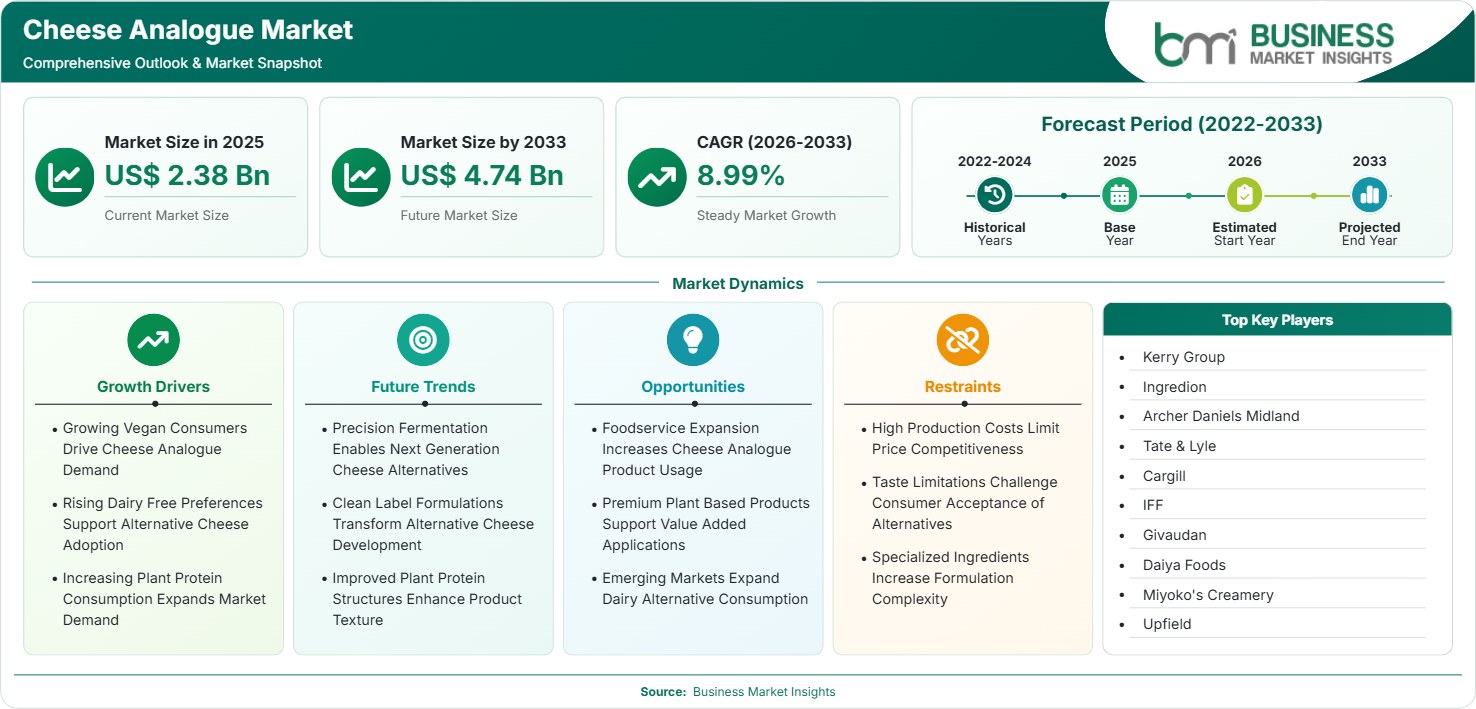
The Cheese Analogue Market size was valued at US$ 2.38 billion in 2025 and is projected to reach US$ 4.74 billion by 2033, growing at a CAGR of 8.99% during 2026–2033. Growing vegan adoption, dairy-free preferences, plant-based innovation, foodservice expansion, and increasing demand for sustainable food alternatives are creating opportunities across alternative dairy applications.

Report Coverage
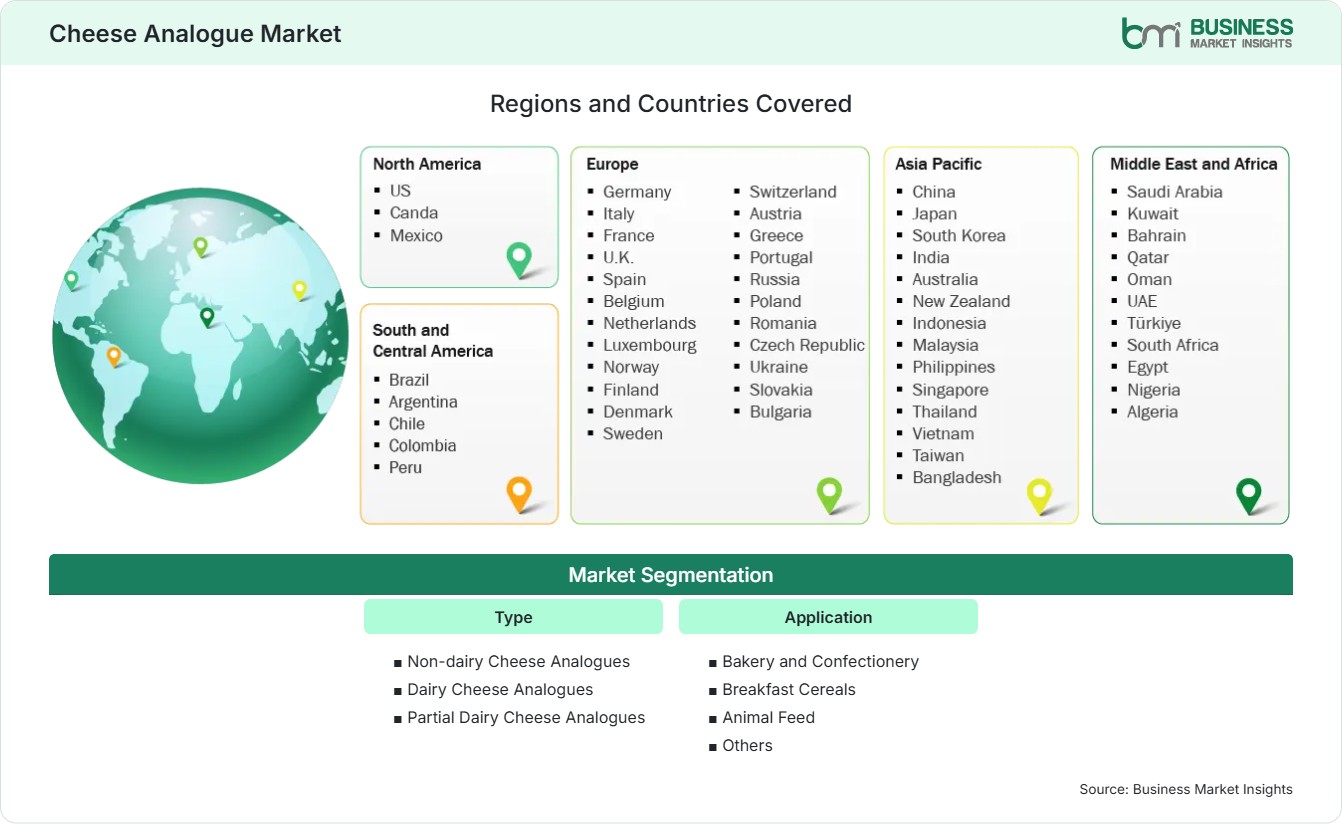
  • Type: Non-dairy Cheese Analogues, Dairy Cheese Analogues, Partial Dairy Cheese Analogues
  • Application: Bakery and Confectionery, Breakfast Cereals, Animal Feed, Others
US$ 2.38 Bn Market size in 2025
US$ 4.74 Bn Market Size by 2033
8.99% CAGR, 2026 - 2033
2026-2033 Forecast Period

01 AI Overview

Cheese Analogue Market Summary

  • North America Region: North America holds a leading position with a share ranging between 38%–42% in 2025 and is projected to grow at a CAGR of 8.2%–8.8% through 2033. Strong vegan consumer adoption, established alternative food ecosystems, product innovation, and foodservice penetration support regional demand. The U.S. contributes approximately 82%–86% of North America’s revenue and is expected to expand at a CAGR of 8.3%–8.9%, driven by plant-based product launches, retail availability, and increasing consumer interest in dairy alternatives.
  • Fastest Growing Region: Asia Pacific represents the fastest-growing region with a share ranging between 18%–22% in 2025 and is expected to expand at a CAGR of 9.5%–10.2% through 2033. Rising urbanization, changing dietary preferences, expanding foodservice channels, and increasing awareness of plant-based nutrition are supporting alternative cheese adoption across emerging economies.
  • Leading Segment: Non-dairy Cheese Analogues represent the leading type segment with a share ranging between 55%–59% in 2025 and are projected to grow at a CAGR of 9.2%–9.8% through 2033. Growing vegan populations, lactose intolerance awareness, and innovation in plant-based formulations are strengthening segment leadership.
  • High Growth Segment: Partial Dairy Cheese Analogues represent a high-growth segment with a share ranging between 18%–22% in 2025 and are expected to grow at a CAGR of 9.8%–10.5% through 2033. Hybrid formulations combining dairy characteristics with alternative ingredients are gaining attention among consumers seeking transitional products.
  • Key Market Opportunity: Foodservice expansion, premium plant-based product development, emerging market adoption, and improvements in texture and flavor technologies are enabling companies to expand cheese analogue applications across restaurants, retail, and packaged food categories.
  • Major Market Players: Kerry Group plc, Ingredion Incorporated, Archer Daniels Midland Company, Tate & Lyle PLC, Cargill Incorporated, International Flavors & Fragrances Inc., Givaudan SA, Daiya Foods Inc., Miyoko's Creamery, and Upfield Holdings B.V.
02 Strategic Insights

Cheese Analogue Market: Strategic Insights

Cheese Analogue Market Strategic Framework
FREE PDF
Request your free sample
Request free sample
03 Stakeholder View

Key Takeaways

  • The market ecosystem is becoming increasingly integrated, connecting ingredient suppliers, food manufacturers, retailers, restaurants, and technology providers focused on improving alternative cheese quality and availability.
  • Product innovation in non-dairy formulations, hybrid cheese alternatives, and protein-based solutions represents a major growth opportunity as consumers seek flexible options between conventional dairy and fully plant-based products.
  • Advanced food technology is shaping product evolution through improved emulsification, fermentation techniques, flavor systems, and texture enhancement approaches that help manufacturers achieve more authentic cheese experiences.
  • Asia Pacific provides strategic expansion potential due to rising disposable incomes, increasing awareness of alternative nutrition, growing foodservice networks, and changing dietary preferences among younger consumers.
  • Competitive activity is increasing through portfolio expansion, strategic partnerships, ingredient innovation, and investments aimed at improving scalability and reducing production challenges.
  • Companies that successfully combine taste improvement, affordable pricing, sustainable sourcing, and strong brand positioning are likely to gain stronger consumer acceptance in the evolving alternative dairy landscape.
04 Geographic Outlook

Cheese Analogue Market Regional Highlights

North America Cheese Analogue Market

North America accounted for approximately 38%–42% of the Cheese Analogue Market share in 2025 and is projected to grow at a CAGR of 8.2%–8.8% through 2033. The region benefits from strong plant-based food adoption, developed retail infrastructure, high vegan consumer penetration, and continuous product innovation. The U.S. represents approximately 82%–86% of regional demand, supported by foodservice expansion, alternative dairy acceptance, and increasing availability of innovative cheese analogue products.

  • Strong consumer interest in dairy-free lifestyles continues encouraging manufacturers to expand plant-based cheese portfolios across retail and foodservice channels.
  • Food companies are investing in formulation improvements to enhance melting, flavor, texture, and nutritional characteristics of alternative cheese products.
  • Established grocery networks and restaurant adoption are improving accessibility of cheese analogue products among mainstream consumers.
  • Sustainability-focused purchasing behavior is encouraging brands to introduce environmentally responsible alternatives to conventional dairy products.

US Cheese Analogue Market

The U.S. represented approximately 82%–86% of North America’s cheese analogue demand in 2025 and is expected to expand at a CAGR of 8.3%–8.9% through 2033. Strong vegan adoption, increasing lactose-free preferences, foodservice penetration, and continuous product launches are supporting market expansion. Manufacturers are focusing on improving product quality and consumer acceptance through advanced ingredient technologies.

  • Growing demand for plant-based meals is encouraging restaurants and packaged food companies to include alternative cheese options in product offerings.
  • Retail availability of dairy-free products is improving as supermarkets and online platforms expand alternative food categories.
  • Consumer preference for healthier and sustainable food choices is supporting adoption among younger demographics and urban households.
  • Food manufacturers are strengthening partnerships with ingredient suppliers to improve product functionality and scalability.

Europe Cheese Analogue Market

Europe represented approximately 30%–33% of the Cheese Analogue Market in 2025 and is projected to expand at a CAGR of 8.6%–9.2% through 2033. Germany, the United Kingdom, France, and the Netherlands are key contributors due to strong sustainability awareness, established alternative food markets, and increasing demand for dairy-free products. Regulatory focus on food innovation and environmentally responsible consumption supports regional development.

  • Growing adoption of vegan and flexitarian diets is increasing demand for alternative cheese products across European retail markets.
  • Food manufacturers are developing clean-label formulations to address consumer expectations regarding ingredients and sustainability.
  • Expansion of plant-based restaurants and specialty food retailers is improving market visibility and accessibility.
  • European companies are investing in research and development to improve taste, texture, and nutritional performance.

Asia Pacific Cheese Analogue Market

Asia Pacific accounted for approximately 18%–22% of the market in 2025 and is expected to register the fastest growth with a CAGR of 9.5%–10.2% through 2033. China, Japan, India, and Southeast Asian countries are emerging as important markets due to increasing urbanization, changing dietary patterns, expanding foodservice sectors, and growing awareness of dairy alternatives.

  • Rising interest in plant-based nutrition is encouraging manufacturers to introduce localized cheese analogue products for regional preferences.
  • Expanding middle-class populations are increasing demand for convenient packaged foods containing alternative dairy ingredients.
  • Foodservice operators are adopting alternative cheese solutions to address changing consumer preferences and menu diversification.
  • International companies are strengthening partnerships with regional distributors to improve product availability.

Rest of World Cheese Analogue Market

The Rest of World region contributed approximately 8%–10% of global demand in 2025 and is expected to grow at a CAGR of 8.7%–9.3% through 2033. Latin America is gaining momentum through increasing awareness of plant-based diets, while Middle Eastern markets are expanding through premium food imports, changing consumer preferences, and rising demand for innovative food products.

South America is witnessing gradual adoption of alternative dairy products through retail expansion and food innovation initiatives. Middle East and Africa markets are developing through urbanization, foodservice growth, and increased availability of international plant-based brands.

  • Brazil and Mexico are emerging markets where alternative food awareness is increasing through retail and restaurant expansion.
  • Middle Eastern consumers are showing greater interest in premium food alternatives and sustainable product categories.
  • Regional distributors are improving access by introducing international cheese analogue brands through established food channels.
  • Growing awareness of dietary diversity is supporting adoption across selected consumer segments.
Global Market Geography
FREE PDF
Request your free sample
Request free sample
05 Segment Analysis

Cheese Analogue Market Segmentation

Type

Non-dairy Cheese Analogues represented approximately 55%–59% of the market in 2025 and are projected to grow at a CAGR of 9.2%–9.8% through 2033. The Cheese Analogue Market scope is expanding as consumers increasingly seek dairy-free alternatives supported by vegan preferences, lactose-free requirements, and improved food technology that enhances taste, texture, and application performance.

  • Non-dairy Cheese Analogues: Plant-based cheese alternatives are gaining adoption through vegan demand, improved formulations, and wider use across retail and foodservice applications.
  • Dairy Cheese Analogues: These products provide cost-effective alternatives by modifying dairy-based formulations while maintaining familiar cheese characteristics for specific applications.
  • Partial Dairy Cheese Analogues: Hybrid solutions combine dairy and alternative ingredients, attracting consumers seeking reduced dairy consumption with familiar taste experiences.

Application

Bakery and Confectionery represented a significant application segment in 2025 and is projected to expand at a CAGR of 8.8%–9.4% through 2033. Growing use of alternative cheese ingredients in processed foods, prepared products, and specialty recipes is creating broader application opportunities. The Cheese Analogue Market trend reflects increasing integration across diverse food categories.

  • Bakery and Confectionery: Cheese analogues support innovative baked products, fillings, toppings, and specialty confectionery applications requiring functional performance.
  • Breakfast Cereals: Alternative cheese ingredients are being explored in savory cereal products and ready-to-eat food formats targeting changing consumer preferences.
  • Animal Feed: Cheese analogue ingredients provide potential applications in specialized animal nutrition formulations requiring functional food components.
  • Others: Additional applications include snacks, prepared meals, sauces, and convenience foods where alternative cheese solutions improve product variety.
06 Market Forces

Cheese Analogue Market Dynamics

Key Market Drivers

Growing Vegan Consumers Drive Cheese Analogue Demand

The growing popularity of veganism and evolving consumer tastes have led to increased efforts to provide viable substitutes for traditional dairy products. Food producers are now working to create cheese analogues that appeal to consumers for their superior flavor, texture, nutritional content, and ingredient composition. The Cheese Analogue Market growth is fueled by the growing popularity of a healthy, sustainable, and lactose-free lifestyle. Manufacturers are expanding their offerings through innovative approaches that incorporate plant proteins, vegetable fats, and other sophisticated formulation techniques. Retailers and food services also expand their range of cheese alternatives.

Rising Dairy Free Preferences Support Alternative Cheese Adoption

The increasing demand for dairy-free alternatives is affecting how consumers make purchase decisions, driven by dietary restrictions, intolerances, or sustainability concerns. Manufacturers are conducting studies to enhance sensory quality and develop products for various applications. Availability in supermarkets, online platforms, and even in restaurants is ensuring more consumers have access to cheese analogue products. The Cheese Analogue Market trend is a reflection of the changing trend in food consumption, where consumers adopt an alternative approach by mixing regular foods with plant-based products.

Increasing Plant Protein Consumption Expands Market Demand

The increased consumption of proteins from plant sources has also opened up more avenues for cheese analogues producers to make protein and function-based cheeses. Consumers have begun showing interest in foodstuffs that offer nutritional benefits and meet their sustainability requirements. Producers have used plant-based protein sources such as soy, pea, and nuts to make innovative types of cheese. The rise in health-oriented eating trends, fitness culture, and sustainable consumption is driving greater product diversity. Manufacturers are improving processing technologies to enhance texture, flavor, and performance in applications such as bakery goods, snacks, and convenience foods.

Key Market Opportunities

Foodservice Expansion Increases Cheese Analogue Product Usage

There are many new openings arising from the proliferation of restaurants, coffee shops, quick service restaurants, and institutional food suppliers for the cheese analogue products. More and more foodservice providers are making plant-based dishes to cater to consumers’ changing tastes. It becomes possible to increase the use of cheese analogues in pizzas, sandwiches, burgers, sauces, and other prepared dishes due to improved product functionality. According to the Cheese Analogue Market forecast, cooperation between producers and foodservice providers can boost industry development. Manufacturers of application-specific products with consistent meltability, flavor, and texture can benefit from the growing demand in the commercial food sector.

Premium Plant Based Products Support Value Added Applications

There are emerging premium options in plant-based products that offer manufacturers the chance to leverage premium ingredients, nutrition, and experience. Consumers have become more accepting of such options because they offer advantages in taste, functionality, and sustainability. Manufacturers are using advanced processes, ingredients, and formulations to manufacture premium cheese alternatives. These products have potential for use in gourmet food products, restaurants, and health-related categories in retail stores. The development of premium segments enables manufacturers to earn better margins while meeting consumer demand for high-quality alternative dairy products.

Emerging Markets Expand Dairy Alternative Consumption

New opportunities for growth are emerging in emerging markets due to increased demand for alternatives driven by urbanization, rising incomes, and shifting food preferences. More and more consumers in emerging economies are becoming aware of the need for plant-based nutrition and sustainable foods through digital platforms and expanding retail channels. These companies can capitalize on this trend by formulating products that are both economical and aligned with regional consumption trends. Opportunities for growth will arise through strategic collaborations with local distributors, food service companies, and retailers.

Market Restraints and Challenges

High Production Costs Limit Price Competitiveness

Factor: The manufacturing process of cheese analogues demands specific materials, sophisticated technologies, and formula knowledge, hence leading to relatively higher costs of manufacturing than other cheese products. Impact: High manufacturing costs may lead to uncompetitiveness on price and hinder use by cost-conscious consumers. Innovation should be balanced with cost considerations for the success of these products in the market. Cost reduction through supply chain and production efficiency improvements, as well as material selection, can help address high costs. Companies that do a good job balancing production economics with quality products will have a greater opportunity to grow in mainstream retail and foodservice channels.

Taste Limitations Challenge Consumer Acceptance of Alternatives

Factor: Differences in flavor, texture, melting behavior, and mouthfeel compared with traditional cheese can affect consumer acceptance of analogue products. Impact: Sensory limitations may slow adoption among consumers expecting similar experiences from conventional dairy cheese. Manufacturers are investing in flavor technologies, fermentation approaches, and ingredient combinations to improve product performance. Continuous innovation is required to address consumer expectations across different applications, including cooking, snacks, and prepared foods. Companies that achieve stronger sensory similarity and consistent quality can overcome acceptance barriers and improve long-term category growth.

07 Company Analysis

Competitive Landscape

The Cheese Analogue Market analysis highlights competition among ingredient suppliers, food technology companies, and alternative dairy manufacturers focusing on formulation innovation, sustainable sourcing, and product diversification. Companies are expanding capabilities across plant-based ingredients, flavor technologies, and application solutions to improve consumer acceptance. Strategic partnerships, research investments, and broader distribution networks are becoming important approaches for strengthening market presence.

Company Name

Overview

Products and Services relevant to this market

Kerry Group plc

Global food ingredient company providing taste and nutrition solutions.

Cheese analogue ingredients, flavor systems, nutritional solutions, and food application technologies.

Ingredion Incorporated

Ingredient solutions provider specializing in food formulation technologies.

Starches, texturizers, plant-based ingredients, and functional solutions for cheese alternatives.

Archer Daniels Midland Company

Global agricultural processor and ingredient supplier.

Plant proteins, oils, food ingredients, and alternative dairy formulation solutions.

Tate & Lyle PLC

Food ingredient company focused on specialty ingredient solutions.

Functional ingredients, sweeteners, fibers, and formulation support for food products.

Cargill Incorporated

Global food and agriculture company serving ingredient markets.

Plant proteins, oils, texturizers, and food manufacturing solutions.

International Flavors & Fragrances Inc.

Ingredient and flavor company supporting food innovation.

Flavors, taste solutions, and formulation technologies for alternative cheese products.

Givaudan SA

Flavor and fragrance company developing food taste solutions.

Flavor systems, natural ingredients, and sensory solutions for cheese analogues.

Daiya Foods Inc.

Plant-based food company specializing in dairy-free alternatives.

Dairy-free cheese products, frozen foods, and plant-based consumer products.

Miyoko's Creamery

Plant-based food company focused on cultured dairy alternatives.

Vegan cheese products, cultured alternatives, and specialty plant-based foods.

Upfield Holdings B.V.

Plant-based food company with global consumer product operations.

Plant-based spreads, alternative dairy products, and sustainable food solutions.

10 Trust & Transparency

Research Methodology

The market analysis combines proprietary research with secondary data from government agencies, company disclosures, regulatory filings, industry databases and expert interviews. Market estimates are validated through data triangulation, cross-market benchmarking and analyst review.

View Full Research Methodology

11 Questions Answered

Frequently Asked Questions

What does the Cheese Analogue Market report indicate about future competition?

The report indicates that competition will focus on taste improvement, ingredient innovation, production efficiency, and broader application development. Companies strengthening formulation capabilities, distribution networks, and consumer-focused product strategies are expected to improve their competitive positioning.

Why are plant-based ingredients becoming important in cheese alternatives?

Plant-based ingredients support consumer demand for sustainable, dairy-free, and flexible dietary options. Ingredients such as plant proteins, oils, and functional components enable manufacturers to develop alternatives that address nutritional, environmental, and lifestyle preferences.

How are food technologies improving cheese analogue products?

Food technologies are improving cheese analogues through advanced formulation techniques, plant protein optimization, flavor development, and texture enhancement. These innovations help manufacturers create products with better sensory qualities and broader application potential.

Which applications present the strongest opportunity for cheese analogue adoption?

Foodservice, bakery products, prepared meals, snacks, and premium plant-based foods represent strong opportunities. These applications benefit from increasing demand for dairy alternatives and require products with reliable melting, flavor, and functional performance characteristics.

What factors are improving Cheese Analogue Market return on investment?

Improved product innovation, expanding vegan demand, foodservice adoption, and increasing availability through retail channels are improving investment opportunities. Companies achieving better taste, texture, affordability, and sustainable positioning can capture stronger consumer acceptance across plant-based food categories.

Access the Full Cheese Analogue Market Report

Get segment-level forecasts, regional estimates, competitive benchmarking, company profiles and downloadable Excel datasets.

Access the full Cheese Analogue Market Report
350 pages PDF & Excel | 2026-08-11