Baby Apparel Market Regional Highlights
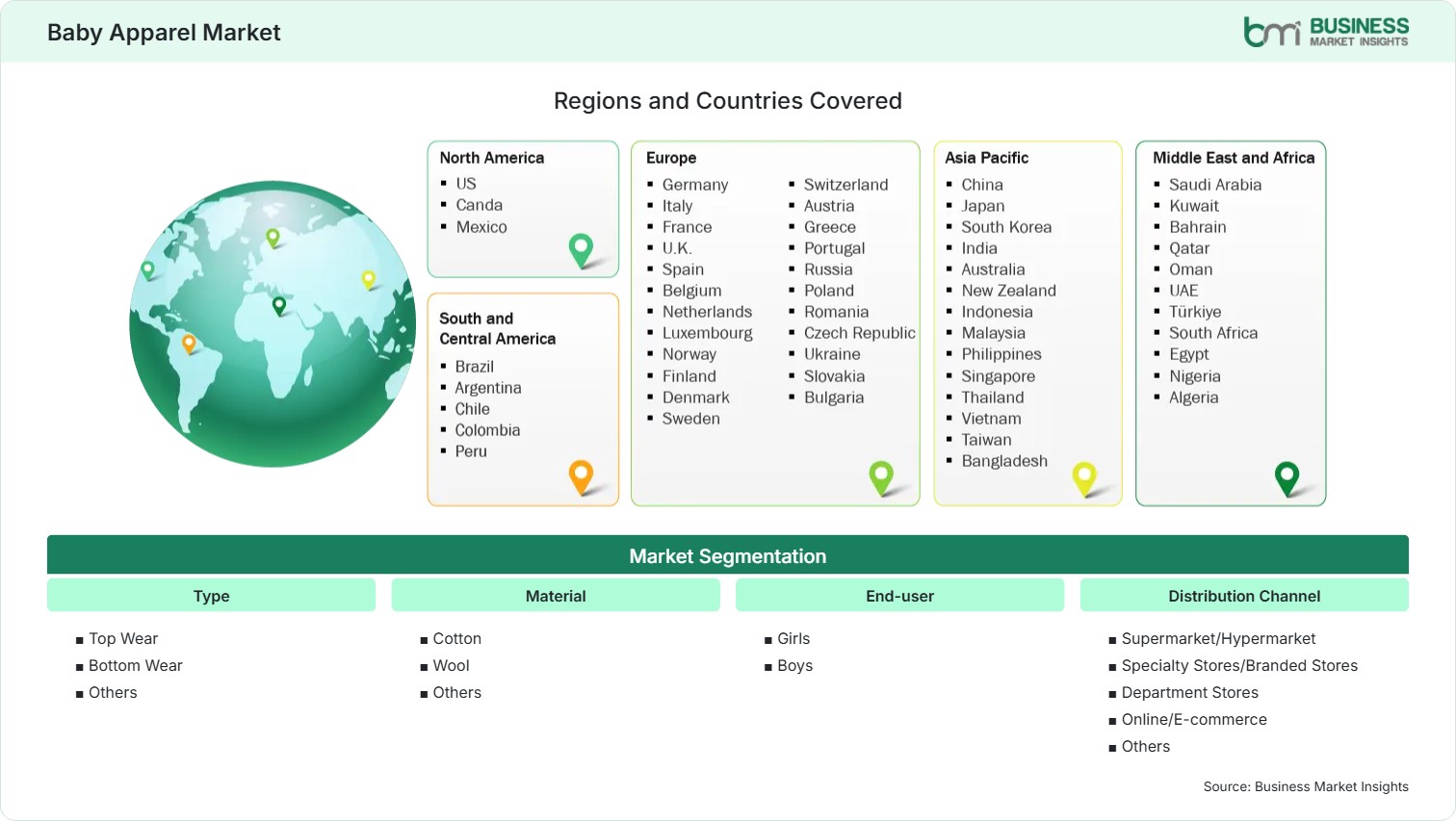
North America Baby Apparel Market
North America accounted for approximately 25%–29% of global demand in 2025 and is projected to grow at a CAGR of 5.8%–6.4% during 2026–2033. The region benefits from strong brand presence, premium product demand, organized retail channels, and high online shopping penetration. The Baby Apparel Market share in North America is supported by consumer preference for quality fabrics, fashionable designs, and trusted infant clothing brands. The United States remains the largest contributor due to strong purchasing power.
- The United States leads regional demand through branded apparel purchases, e-commerce adoption, and premium infant clothing preferences.
- Canada supports growth through sustainable baby clothing demand and expanding online retail participation.
- Retailers are increasing product variety through seasonal collections, organic fabrics, and customized infant wear.
- Premium brands are focusing on comfort, safety standards, and environmentally responsible manufacturing practices.
US Baby Apparel Market
The United States represented approximately 82%–86% of North America's baby apparel demand in 2025 and is expected to expand at a CAGR of 6.0%–6.5% during 2026–2033. Growth is supported by strong consumer spending, established apparel brands, online shopping adoption, and demand for premium infant clothing. The market benefits from diverse distribution channels, including specialty stores, department stores, and digital commerce platforms.
- Online purchasing is increasing due to convenience, product variety, and competitive pricing options.
- Parents are showing greater preference for organic, comfortable, and sustainable baby clothing materials.
- Branded apparel companies are expanding collections with innovative designs and functional features.
- Retail competition is encouraging companies to improve customer experience and product differentiation.
Europe Baby Apparel Market
Europe accounted for approximately 22%–26% of global demand in 2025 and is expected to grow at a CAGR of 5.5%–6.2% during 2026–2033. The region is influenced by sustainable fashion trends, premium infant clothing demand, and established retail infrastructure. Germany, the United Kingdom, France, and Italy represent key markets due to strong brand presence and consumer preference for high-quality apparel. Sustainability regulations are encouraging responsible production practices.
- Germany supports demand through premium clothing consumption and sustainability-focused apparel preferences.
- The United Kingdom is expanding online baby clothing purchases through digital retail platforms.
- France and Italy contribute through fashion-oriented infant apparel products and premium brands.
- European manufacturers are increasing adoption of eco-friendly materials and ethical production methods.
- Retailers are strengthening omnichannel strategies to improve consumer accessibility.
Asia Pacific Baby Apparel Market
Asia Pacific accounted for approximately 35%–39% of global demand in 2025 and is projected to expand at a CAGR of 7.8%–8.5% during 2026–2033. The region represents the fastest-growing market due to increasing birth rates, rising disposable incomes, urbanization, expanding organized retail, and growing acceptance of branded infant clothing. China, India, Japan, and Southeast Asian countries are major contributors as consumers increasingly shift toward comfortable, fashionable, and quality-focused baby apparel products.
- China leads regional demand through large consumer markets, expanding e-commerce platforms, and increasing preference for branded infant clothing.
- India is experiencing rising adoption due to growing middle-class income levels, retail expansion, and increasing awareness of quality baby products.
- Southeast Asian countries are supporting growth through urbanization, digital shopping adoption, and increasing organized apparel retail penetration.
- Japan and South Korea are driving premium product demand through advanced designs, quality materials, and innovative infant clothing solutions.
- Regional manufacturers are improving production capabilities to support domestic demand and international apparel exports.
Rest of World Baby Apparel Market
The Rest of World region accounted for approximately 8%–12% of global demand in 2025 and is forecast to grow at a CAGR of 6.2%–6.8% during 2026–2033. Latin America, the Middle East, and Africa are witnessing gradual expansion due to population growth, improving retail infrastructure, rising urbanization, and increasing consumer interest in branded infant products. Brazil, Mexico, Saudi Arabia, and South Africa represent important markets with growing apparel consumption.
Latin America is expanding baby apparel demand through increasing retail availability, rising household spending, and adoption of international clothing brands, while Middle Eastern and African markets are developing through improving distribution networks and increasing premium product accessibility.
- Brazil and Mexico are increasing baby apparel consumption through retail expansion and growing online shopping adoption.
- Middle Eastern countries are supporting premium infant clothing demand through higher purchasing power and modern retail development.
- African markets are gradually expanding through urbanization, population growth, and improved apparel distribution networks.
- International brands are strengthening regional presence through partnerships with local retailers and digital platforms.
- Manufacturers are exploring emerging markets to capture long-term consumer demand opportunities.