
Sports Apparel Market Outlook: Size, Share, Trends, Growth Analysis, Competitive Landscape & Forecast, 2026-2033

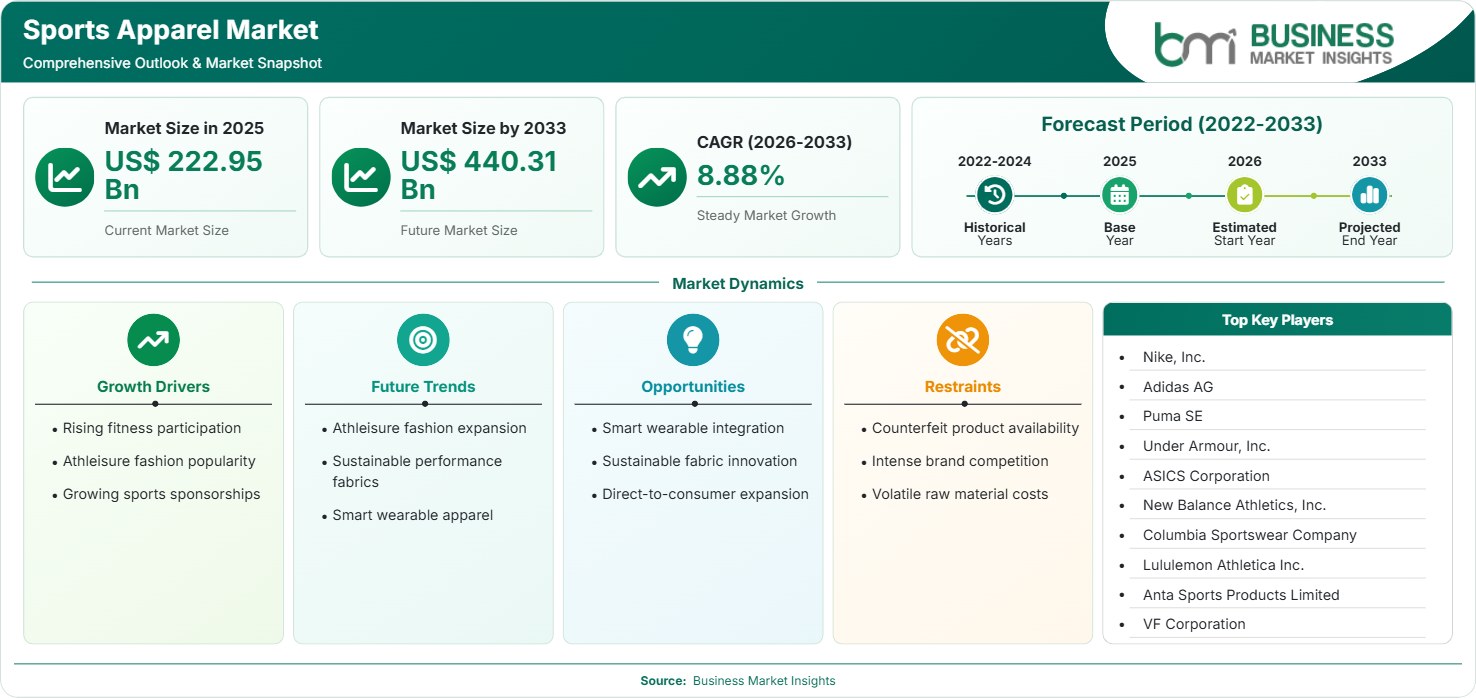
The Sports Apparel Market size was valued at US$ 222.95 billion in 2025 and is projected to reach US$ 440.31 billion by 2033, growing at a CAGR of 8.88% during 2026–2033. Growth is driven by rising fitness participation, athleisure fashion popularity, and growing sports sponsorships, while opportunities are emerging through smart wearable integration, sustainable fabric innovation, and direct-to-consumer expansion.

Report Coverage
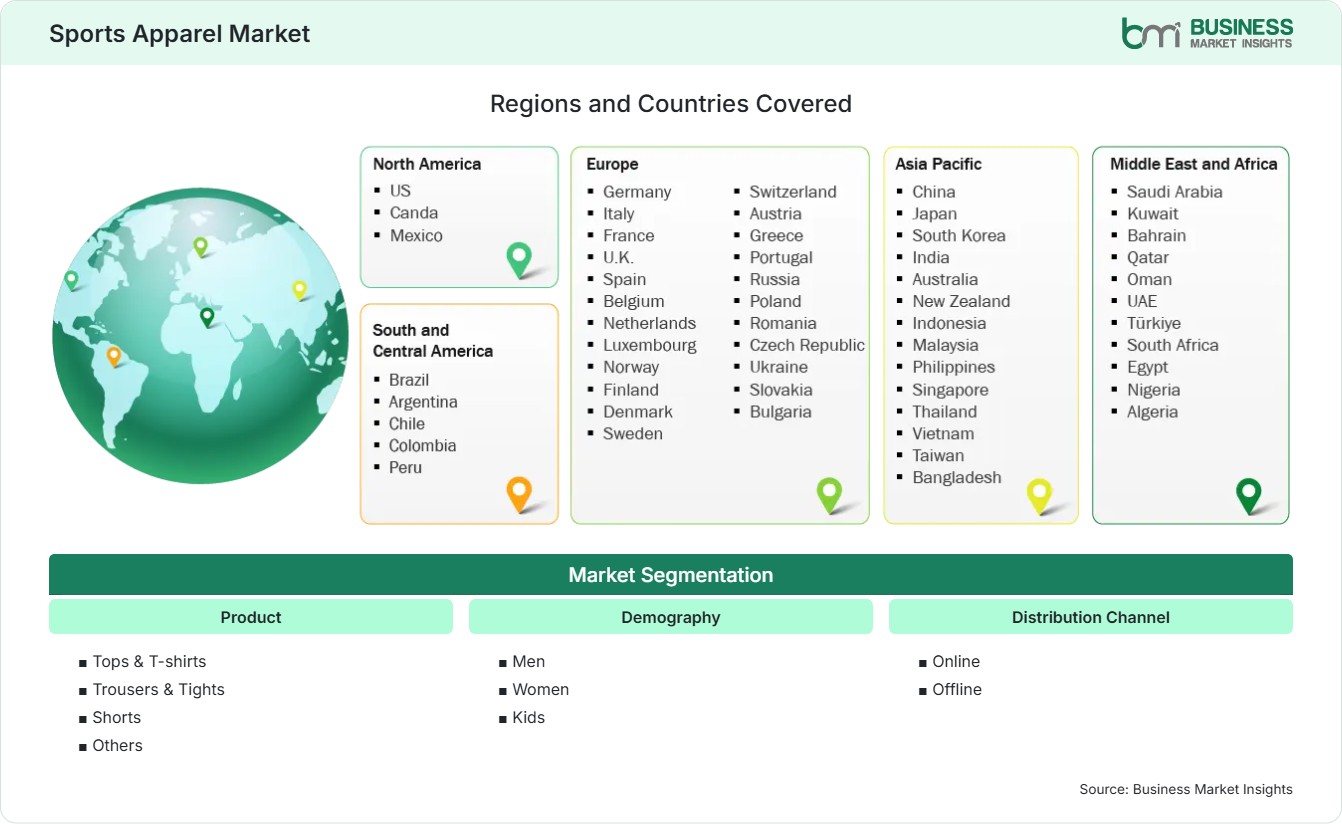
  • Product: Tops & T-shirts, Trousers & Tights, Shorts, Others
  • Demography: Men, Women, Kids
  • Distribution Channel: Online, Offline
US$ 222.95 Bn Market size in 2025
US$ 440.31 Bn Market Size by 2033
8.88% CAGR, 2026 - 2033
2026-2033 Forecast Period

AI Overview

Sports Apparel Market Summary

  • North America Region: North America accounts for approximately 32%–36% market share in 2025 and is projected to grow at a 8.0%–9.0% CAGR during 2026–2033. The region benefits from strong fitness culture, premium sportswear adoption, established athletic brands, and high consumer spending on performance apparel. The U.S. market is supported by active lifestyle trends and is estimated to grow at a CAGR of approximately 8.2%–9.2%.
  • Fastest Growing Region: Asia Pacific represents around 28%–32% of the global market in 2025 and is expected to expand at 9.5%–10.5% CAGR through 2033. Rising disposable incomes, increasing sports participation, expanding e-commerce platforms, and growing interest in athleisure fashion are accelerating regional demand.
  • Leading Segment: Tops & T-shirts hold approximately 38%–42% market share in 2025 and are expected to grow at a 8.5%–9.5% CAGR. High everyday usage, versatility across sports and casual wear, and strong consumer preference are supporting segment leadership.
  • High Growth Segment: Online Distribution Channel represents approximately 42%–46% market share in 2025 and is projected to grow at 10.0%–11.0% CAGR. Digital shopping adoption, direct brand platforms, personalized experiences, and wider product availability are accelerating online sales growth.
  • Key Market Opportunity: Integration of smart textiles, sustainable materials, personalized sportswear, and direct-to-consumer models is creating opportunities for brands to enhance consumer engagement and product differentiation.
  • Major Market Players: Nike, Inc., Adidas AG, Puma SE, Under Armor, Inc., ASICS Corporation, New Balance Athletics, Inc., Columbia Sportswear Company, Lululemon Athletica Inc., Anta Sports Products Limited, and VF Corporation.
Strategic Insights

Sports Apparel Market: Strategic Insights

Sports Apparel Market Strategic Framework
FREE PDF
Request your free sample
Request free sample
Stakeholder View

Key Takeaways

  • The market value chain is shifting toward integrated ecosystems involving apparel manufacturers, material innovators, digital retailers, athletes, and brand communities.
  • Performance-oriented tops, versatile athletic clothing, and lifestyle-focused apparel categories offer strong growth potential as consumers prioritize comfort and functionality.
  • Innovation is increasingly focused on sustainable fabrics, smart textiles, adaptive designs, and technology-enabled consumer experiences.
  • Asia Pacific provides attractive investment opportunities due to rising fitness participation, expanding middle-class populations, and growing digital retail adoption.
  • Leading companies are strengthening competitive positions through partnerships, athlete endorsements, acquisitions, and direct-to-consumer expansion strategies.
  • Sustainability and personalized product experiences are becoming important differentiators influencing future sportswear purchasing decisions.
Geographic Outlook

Sports Apparel Market Regional Highlights

North America Sports Apparel Market

North America accounted for approximately 32%–36% of the global market in 2025 and is projected to grow at a 8.0%–9.0% CAGR during 2026–2033. The region maintains a leading position due to strong fitness participation, established sportswear brands, high consumer spending, and widespread athleisure adoption. The Sports Apparel Market share is supported by demand for premium products, advanced retail infrastructure, and the strong influence of professional sports leagues and fitness communities.

  • The United States represents the largest regional contributor due to high sports participation and strong brand loyalty.
  • Canada is witnessing growth through outdoor recreation trends and increasing demand for performance-based apparel.
  • Consumers are increasingly adopting versatile sportswear products suitable for both exercise and everyday activities.
  • Brands are expanding digital channels and personalized shopping experiences to strengthen customer engagement.

US Sports Apparel Market

The United States represented approximately 28%–32% of the global market revenue in 2025 and is expected to expand at a 8.2%–9.2% CAGR through 2033. The country benefits from a developed fitness ecosystem, a strong sports culture, and high adoption of athletic lifestyle clothing. Increasing participation in gyms, running, outdoor recreation, and recreational sports activities is supporting demand. Premium sportswear brands continue investing in innovation, sustainability, and direct consumer engagement.

  • Fitness membership growth and wellness awareness are increasing the demand for performance-oriented apparel.
  • Athleisure adoption is expanding as consumers integrate sportswear into daily fashion choices.
  • Digital commerce growth is enabling brands to improve accessibility and customer personalization.

Europe Sports Apparel Market

Europe accounted for approximately 25%–29% of the global market in 2025 and is expected to grow at a 7.8%–8.8% CAGR between 2026 and 2033. Germany, the United Kingdom, France, and Italy represent key markets due to strong sports participation, fashion influence, and sustainability-focused consumers. Germany is estimated to grow at 8.0%–9.0% CAGR, while the United Kingdom is projected to expand at 8.1%–9.1% CAGR, supported by fitness trends and demand for premium sportswear.

  • Germany leads regional demand through strong athletic culture and advanced retail networks.
  • The United Kingdom benefits from growing fitness participation and influence of sports fashion trends.
  • France is expanding demand through premium apparel adoption and sustainability-focused purchasing.
  • European brands are emphasizing recycled materials and responsible production practices.

Asia Pacific Sports Apparel Market

Asia Pacific accounted for approximately 28%–32% of global revenue in 2025 and represents the fastest-growing region with a projected 9.5%–10.5% CAGR during 2026–2033. China, India, Japan, and South Korea are driving regional expansion through rising incomes, fitness awareness, sports participation, and e-commerce growth. China is projected to grow at 9.8%–10.8% CAGR, while India is expected to expand at 10.2%–11.2% CAGR due to increasing youth participation and lifestyle changes.

  • China is expanding sportswear demand through fitness trends and growing domestic athletic brands.
  • India is witnessing rapid adoption due to rising sports interest and increasing urban consumer spending.
  • Japan supports market growth through demand for technical apparel and active lifestyle products.
  • South Korea is benefiting from athleisure fashion influence and digital retail expansion.
  • Online shopping platforms are improving access to international sports apparel brands.

Rest of World Sports Apparel Market

Latin America, the Middle East, and Africa collectively represented approximately 7%–11% of global revenue in 2025 and are forecast to grow at a 8.5%–9.5% CAGR between 2026 and 2033. Brazil, Mexico, the UAE, and South Africa are emerging markets due to increasing fitness awareness, sports participation, and expanding retail infrastructure. The Sports Apparel Market growth in these regions is supported by urbanization, rising disposable incomes, and growing interest in international sports brands.

  • Latin American markets are developing through increasing sports participation and lifestyle fashion adoption.
  • Brazil and Mexico are expanding demand through organized retail and e-commerce development.
  • Middle Eastern countries are investing in fitness initiatives and premium sportswear consumption.
  • UAE is supporting market growth through tourism, wellness trends, and luxury retail expansion.
  • African markets are gradually developing through youth sports participation and improving retail accessibility.
Global Market Geography
FREE PDF
Request your free sample
Request free sample
Segment Analysis

Sports Apparel Market Segmentation

Product

Product segmentation accounted for approximately 92%–96% of global revenue in 2025 and is projected to grow at a 8.5%–9.2% CAGR between 2026 and 2033. Increasing fitness participation, athleisure adoption, and demand for versatile apparel are supporting product category expansion. Tops and T-shirts maintain a leading position due to frequent usage across sports, casual wear, and lifestyle applications. Manufacturers are focusing on performance fabrics, sustainable materials, and innovative designs to address evolving consumer preferences.

  • Tops & T-shirts: Tops and T-shirts represent a leading category due to everyday versatility, high consumer demand, and applications across sports and casual lifestyle activities.
  • Trousers & Tights: Trousers and tights are gaining traction through fitness activities, outdoor sports, and demand for flexible performance-oriented apparel.
  • Shorts: Shorts adoption is increasing due to warm-weather sports participation, gym activities, running, and lightweight athletic clothing preferences.

Demography

Demography segmentation accounted for approximately 94%–97% of market demand in 2025 and is expected to expand at a 8.6%–9.3% CAGR through 2033. Men currently represent a significant consumer base due to established sports participation patterns, while demand for women’s sportswear is expanding rapidly as fitness engagement and athleisure adoption increase. Kids’ sports apparel is also growing as parents prioritize active lifestyles and organized sports participation among younger consumers.

  • Men: Men’s sports apparel demand is supported by athletic participation, performance requirements, team sports, and increasing interest in fitness-oriented clothing.
  • Women: Women’s sportswear adoption is expanding through fitness participation, athleisure fashion trends, and increasing availability of specialized performance apparel.
  • Kids: Kids’ sports apparel is growing due to youth sports programs, active lifestyle promotion, and parental investment in quality athletic clothing.

Distribution Channel

Distribution Channel segmentation represented approximately 90%–94% of market demand in 2025 and is forecast to grow at a 8.8%–9.6% CAGR during 2026–2033. Offline retail remains important due to physical product evaluation, brand stores, and shopping experiences. However, online channels are expanding rapidly through digital platforms, direct-to-consumer models, personalized recommendations, and improved logistics. Brands are investing in omnichannel strategies to enhance customer engagement and market reach.

  • Online: Online channels are expanding through e-commerce growth, direct-to-consumer platforms, digital marketing, and convenient purchasing experiences.
  • Offline: Offline channels remain important through brand outlets, specialty stores, department stores, and consumer preference for physical product evaluation.
Market Forces

Sports Apparel Market Dynamics

Key Market Drivers

Rising Fitness Participation

Growing participation in fitness activities, recreational sports, running, yoga, and outdoor activities is driving demand for performance-oriented sports apparel worldwide. Consumers are increasingly prioritizing active lifestyles and investing in specialized clothing designed for comfort, durability, and enhanced performance. The Sports Apparel Market growth is supported by expanding gym memberships, wellness awareness, and increased participation in community sports programs. Brands have innovated with high-tech fabrics, lightweight fabrics, moisture-wicking technology, and sport-specific design options. In addition, fitness gurus and online wellness portals are promoting an active lifestyle to consumers. The new trend will help expand the consumer pool from professional athletes to common consumers.

Athleisure Fashion Popularity

The athleisure fashion trend is being witnessed nowadays because of an increasing inclination towards blending athletic features and fashion preferences. With the increasing acceptability of sportswear in workplaces and social places, the demand for such products is rising. Comfortable clothing for athletic and lifestyle use is what consumers desire, which encourages the production of aesthetically and functionally advanced products. The Sports Apparel Market trends reflect increasing convergence between fashion and fitness categories, with collaborations between sportswear companies and fashion designers gaining popularity. Companies are investing in innovative designs, premium materials, and lifestyle-focused collections to attract broader consumer groups beyond traditional sports participants.

Growing Sports Sponsorships and Brand Visibility

Investments in sports sponsorships, athletes’ partnerships, and global sporting events are contributing towards building brand awareness and consumer engagement. Sportswear brands are leveraging their sponsorship deals with athletes, teams, and events to increase their visibility and build stronger relationships with consumers. Global sporting events are used by brands to launch new products, introduce limited edition ranges, and reach more consumers. Marketing efforts through sponsorship are especially successful among younger generations impacted by sports and social media. Sportswear brands are using sports influencers and social media channels to promote themselves and increase demand for their products.

Key Market Opportunities

Smart Wearable Integration

The integration of smart technologies into sports clothing offers many opportunities driven by the demand for data-centric fitness experiences. Information obtained from smart fabrics, embedded sensors, and connected clothing may relate to movement, performance, physiology, and efficient training. Companies that develop products that integrate wearables will have an opportunity to distinguish themselves and offer innovative value propositions to their customers. The collaboration between apparel and technology firms enables the development of intelligent clothing with enhanced capabilities.

Sustainable Fabric Innovation

Fabric innovations for sustainability are generating business opportunities as customers increasingly prefer environmentally friendly products. Sports clothing companies are manufacturing garments using recycled polyester, bio-fabric, environmentally friendly dyes, and circular manufacturing. Sustainability measures are emerging as vital distinguishing factors among the brands as consumers consider ethical sourcing and manufacturing. Companies that invest in environmentally friendly fabrics not only meet the regulatory and environmental requirements but also generate loyalty among their customers. Innovation opportunities can arise from increased durability and performance features, as well as from the recycling of used clothing, according to sports apparel market forecasts.

Direct-to-Consumer Expansion

Growth in direct-to-consumer strategies offers new avenues for sporting apparel brands to enhance their relationships with consumers, boost margins, and gain insights into consumer behavior. With digital channels, brands can personalize their services through recommendation engines, exclusive releases, subscriptions, and tailored shopping experiences. Growth in e-commerce offers new brands an opportunity to compete with existing ones without a massive network of retail outlets, as it helps them target their audience digitally. Companies are using digital marketing tools, m-commerce, and consumer data analysis to drive engagement. Growth in DTC is also important for speeding up innovation.

Market Restraints and Challenges

Counterfeit Product Availability

Factor: Counterfeit sports apparel remains widely available through unauthorized online marketplaces and informal retail channels, undermining brand reputation and consumer trust.

Impact: The practice of counterfeiting undermines the revenue potential of legitimate producers, raises quality concerns, and limits the effectiveness of premium pricing strategies. In the sports apparel market, counterfeit items usually mimic popular brands by offering lower prices, attracting customers who prioritize cost over brand recognition. There is a growing trend in which corporations are employing authentication technology and digital verification tools to counter this problem. Nevertheless, with the growth of online retailing, there is always room for counterfeit goods to enter the market.

Intense Brand Competition

Factor: The sports apparel industry faces strong competition among global brands, regional manufacturers, and emerging direct-to-consumer companies.

Impact: Intense competition puts pressure on the pricing strategy, increases the marketing budget, and necessitates continuous innovation to retain consumer loyalty. Well-established brands have to continually innovate in designs, technology, and sustainable development programs to differentiate themselves. Competition in terms of gaining athlete endorsements and online visibility also increases the competitive pressure in the market. Though competition improves consumer options and drives product innovation, it also affects profitability.

Company Analysis

Competitive Landscape

The Sports Apparel Market analysis highlights a competitive landscape shaped by global sportswear brands, performance apparel manufacturers, lifestyle-focused companies, and digital-first retailers. The leading companies are working on sustainable materials, fabric innovations, partnerships with athletes, omnichannel distribution systems, and direct-to-customer marketing to establish themselves firmly in the market. The firms are now emphasizing product innovation, consumer experience customization, and expansion into new markets due to rising demand for athletic apparel.

Company Name

Overview

Products and Services relevant to this market

Nike, Inc.

Global sportswear company offering athletic footwear and apparel products.

Performance apparel, training wear, running clothing, sports uniforms, and lifestyle collections.

Adidas AG

International sportswear brand focused on athletic and lifestyle products.

Sports apparel, training clothing, football wear, athleisure products, and performance solutions.

Puma SE

Global sports brand specializing in sports and lifestyle products.

Athletic apparel, running wear, team sports clothing, and fashion-oriented sportswear.

Under Armour, Inc.

Performance apparel company focused on athletic innovation.

Compression wear, training apparel, sports clothing, and performance-focused garments.

ASICS Corporation

Japanese sports company specializing in athletic products.

Running apparel, performance clothing, training wear, and sports-specific apparel solutions.

New Balance Athletics, Inc.

Sports brand offering performance and lifestyle products.

Athletic apparel, running clothing, training garments, and active lifestyle products.

Columbia Sportswear Company

Outdoor apparel company focused on active lifestyle markets.

Outdoor sports apparel, performance clothing, hiking wear, and weather-resistant products.

Lululemon Athletica Inc.

Premium athletic apparel company focused on wellness and lifestyle consumers.

Yoga apparel, training clothing, activewear, and performance lifestyle products.

Anta Sports Products Limited

Chinese sportswear company serving global athletic markets.

Sports apparel, footwear, training wear, and professional sports products.

VF Corporation

Apparel company operating multiple lifestyle and outdoor brands.

Outdoor apparel, activewear, performance clothing, and lifestyle sports products.

Industry Activity

Recent Developments

July 2026

JSW Inspire renewed its partnership with the Indian Olympic Association as the official sports performance and lifestyle partner for Team India across multiple international sporting events in 2026, reinforcing its commitment to supporting elite athletes through performance apparel and sports lifestyle solutions.

July 2026

Lululemon announced its entry into the Indian market through a franchise partnership with Tata CLiQ. The company plans to launch its first retail store and local e-commerce platform, expanding the availability of its premium athletic apparel and activewear products in India.

June 2026

ANTA Sports entered into a definitive agreement to acquire a 29.06% stake in PUMA SE from Groupe Artemis for €1.5 billion, becoming PUMA's largest shareholder. The acquisition strengthens ANTA's global multi-brand sportswear portfolio and expands its presence in the international athletic apparel market.

January 2026

Ten X You, the sports and athleisure brand co-created by Sachin Tendulkar, launched on Myntra, expanding its retail presence with a portfolio of performance apparel and footwear designed for Indian consumers and everyday athletes.

Trust & Transparency

Research Methodology

The market analysis combines proprietary research with secondary data from government agencies, company disclosures, regulatory filings, industry databases and expert interviews. Market estimates are validated through data triangulation, cross-market benchmarking and analyst review.

View Full Research Methodology

Questions Answered

Frequently Asked Questions

What challenges affect sports apparel companies?

Counterfeit products, intense brand competition, rising marketing costs, and continuous demand for innovation create challenges for industry participants.

Why are online channels becoming important for sports apparel sales?

Online channels provide wider product access, personalized shopping experiences, direct brand interaction, and convenient purchasing options for consumers worldwide.

How is sustainability influencing sports apparel development?

Brands are adopting recycled materials, responsible manufacturing processes, and circular production models to address environmental concerns and changing consumer expectations.

Which product category dominates sports apparel demand?

In sports apparel market report, tops and t-shirts represent a leading category due to their versatility, everyday usage, sports applications, and strong consumer preference across demographics.

What factors are driving growth in the market?

Rising fitness participation, athleisure adoption, sports sponsorship growth, digital retail expansion, and increasing consumer focus on health and active lifestyles are driving market growth.

Access the Full Sports Apparel Market Report

Get segment-level forecasts, regional estimates, competitive benchmarking, company profiles and downloadable Excel datasets.

Access the full Sports Apparel Market Report
350 pages PDF & Excel | 2026-07-31