
Amino Acids Market Outlook: Size, Share, Trends, Growth Analysis, Competitive Landscape & Forecast, 2026-2033

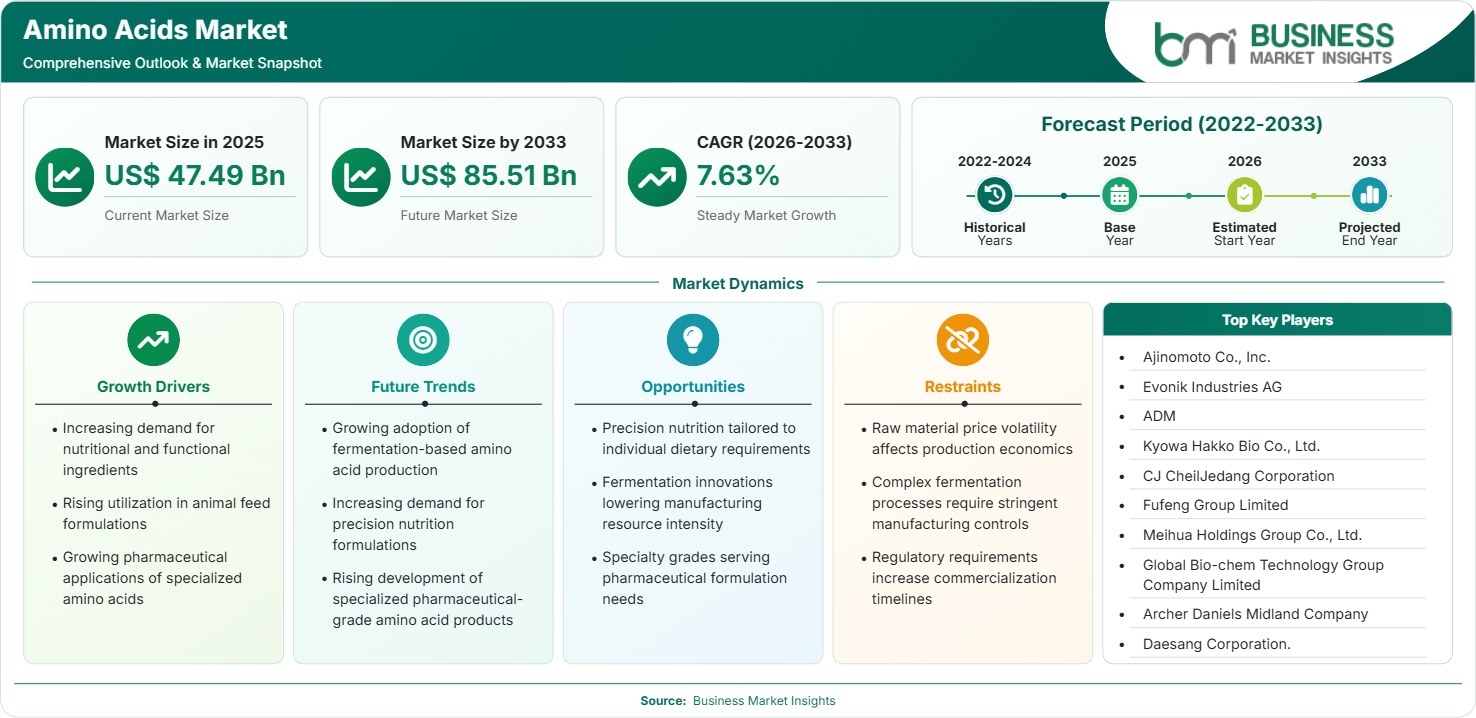
The Amino Acids Market size was valued at US$ 47.49 Billion in 2025 and is projected to reach US$ 85.51 Billion by 2033, growing at a CAGR of 7.63% during 2026–2033. Rising animal nutrition demand, expanding sports nutrition consumption, fermentation technology advancements, precision nutrition adoption, and pharmaceutical applications are accelerating industry expansion while sustainability-driven production investments create new opportunities.

Report Coverage
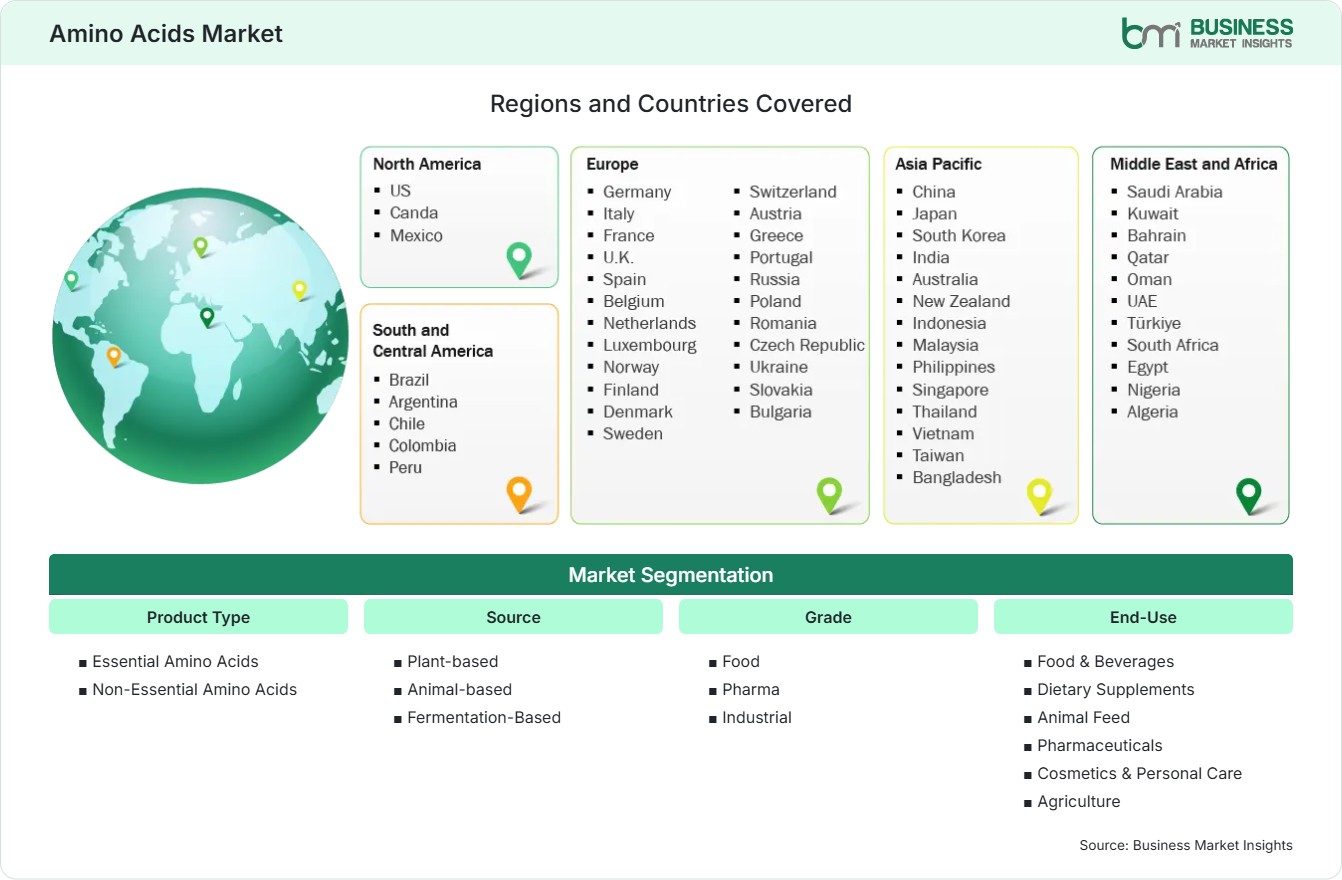
  • Product Type: Essential Amino Acids [Lysine, Methionine, Threonine, Leucine, Isoleucine, Tryptophan], Non-Essential Amino Acids [Alanine, Aspartic Acid, Asparagine, Cysteine, Glutamic Acid, Others]
  • Source: Plant-based, Animal-based, Fermentation-Based
  • Grade: Food, Pharma, Industrial
  • End-Use: Food & Beverages [Bakery & Confectionery, Dairy, Processed Foods, Meat Products, Functional Beverages], Dietary Supplements, Animal Feed, Pharmaceuticals, Cosmetics & Personal Care, Agriculture
US$ 47.49 Bn Market size in 2025
US$ 85.51 Bn Market Size by 2033
7.63% CAGR, 2026 - 2033
2026-2033 Forecast Period

AI Overview

Amino Acids Market Summary

  • North America Region: holds 24%–27% share in 2025, growing with a CAGR of 6.8%–7.4% during 2026–2033, supported by premium nutrition demand, livestock productivity enhancement, pharmaceutical formulation expansion, bio-based ingredient investments, personalized nutrition adoption, regulatory support, and advanced fermentation manufacturing capacity additions across major producers. Brief US analysis: Strong dietary supplement consumption and advanced bioprocessing infrastructure support sustained expansion, with 7.0%–7.6% CAGR anticipated through 2033.
  • Fastest Growing Region: Asia Pacific holds 40%–43% share in 2025, growing with a CAGR of 8.8%–9.4% during 2026–2033, driven by feed amino acid consumption, food fortification programs, manufacturing expansion, rising disposable income, pharmaceutical ingredient production, export competitiveness, and investment across China, India, Southeast Asia, and Japan.
  • Leading Segment: Animal Feed accounts for 35%–38% share in 2025, advancing at a CAGR of 7.5%–8.1%, supported by feed efficiency optimization, livestock productivity targets, poultry sector expansion, protein demand growth, sustainable farming initiatives, cost reduction strategies, and increasing adoption of precision nutrition formulations globally.
  • High Growth Segment: Dietary Supplements represent 15%–18% share in 2025, expanding at a CAGR of 9.2%–9.8%, supported by fitness participation, healthy aging trends, sports nutrition demand, personalized wellness programs, e-commerce accessibility, premium ingredient innovation, and growing consumer awareness regarding protein quality and recovery.
  • Key Market Opportunity: Development of fermentation-derived specialty ingredients for functional nutrition, pharmaceuticals, cosmetics, and sustainable food systems creates opportunities through higher product purity, supply security, lower environmental impact, and premium pricing potential.
  • Major Market Players: Ajinomoto Co., Inc.; Evonik Industries AG; ADM; Kyowa Hakko Bio Co., Ltd.; CJ CheilJedang Corporation; Fufeng Group Limited; Meihua Holdings Group Co., Ltd.; Global Bio-chem Technology Group Company Limited; Archer Daniels Midland Company; Daesang Corporation.
Strategic Insights

Amino Acids Market: Strategic Insights

Amino Acids Market Strategic Framework
FREE PDF
Request your free sample
Request free sample
Stakeholder View

Key Takeaways

  • The value chain in this industry is now more and more focused on fermentation technology, the availability of feedstock, biotechnology expertise, and downstream formulation capabilities, which in turn gives competitive advantages to manufacturers who have a vertically integrated structure.
  • Animal nutrition is still the main source of revenue, whereas dietary supplements and those of pharmaceutical quality offer the greatest potential for increasing margins because of their premium status.
  • The effort towards innovation is now being directed towards bio-based production, specialty blends of amino acids, precise nutrition formulations, and the production of high-purity ingredients for use in pharmaceutical and clinical applications.
  • The investment case for Asia Pacific is the strongest since it benefits from a concentration of manufacturing, growing demand for feed, expanding food processing activities, and supportive industrial biotechnology development programs.
  • As companies work to obtain raw materials, expand their presence in different regions, and enhance their range of specialty products, the number of strategic acquisitions, joint ventures, and increases in production capacity is rising.
  • Sustainability criteria are now an important factor when making purchases, which is prompting producers to use less emission-intensive fermentation processes and to adopt circular manufacturing models.
Geographic Outlook

Amino Acids Market Regional Highlights

North America Amino Acids Market

North America accounted for approximately 24%–27% share in 2025 and is projected to expand at a 6.8%–7.4% CAGR through 2033. Demand is supported by advanced animal nutrition practices, strong adoption of dietary supplements, and pharmaceutical manufacturing capabilities. The region benefits from a mature biotechnology infrastructure and increasing consumer preference for functional nutrition products. The Amino Acids Market share remains strengthened by innovation investments and premium product consumption. Producers increasingly focus on sustainable sourcing and specialty formulations targeting high-value nutrition and healthcare applications.

  • Strong sports nutrition and wellness product demand supports specialty ingredient adoption across retail, clinical, and performance-focused nutrition channels.
  • Livestock producers increasingly utilize optimized feed formulations to improve productivity while reducing nitrogen waste and feed conversion costs.
  • Biotechnology investment supports commercial-scale fermentation innovation and production efficiency improvements among major regional manufacturers.
  • Growing pharmaceutical applications increase demand for high-purity ingredients used in injectable therapies and advanced formulations.
  • Sustainability objectives continue encouraging adoption of lower-emission production methods and alternative feedstock utilization.

US Amino Acids Market

The United States represents roughly 74%–78% of the North American market and is forecast to grow at a 7.0%–7.6% CAGR through 2033. Robust consumer consumption of wellness products, superior agricultural technology, and substantial investments in biotechnology enable growth. Demand for pharmaceutical-grade ingredients continues to grow due to the development of biologics and nutritional needs. Superior research capacity and solid distribution channels help to boost commercialization prospects in the food, feed, and healthcare industry and create ideal circumstances for investment.

  • Sports nutrition brands continue introducing advanced recovery and performance formulations using specialized ingredient combinations.
  • Large-scale livestock operations enhance feed efficiency using scientifically formulated nutrient supplementation strategies.
  • Domestic biotechnology investments strengthen production capabilities and reduce dependency on imported specialty ingredients.
  • Regulatory confidence in nutritional ingredients supports product innovation across consumer and healthcare categories.

Europe Amino Acids Market

Europe maintains 21%–24% share in 2025 and is expected to register a 6.5%–7.1% CAGR through 2033. Policies regarding sustainability, developments in food production, and the increasing demand for nutrition-fortified products help in creating the market. Germany remains the dominant market at the national level, while Eastern European economies show strong growth potential. The continued focus on regulatory compliance for responsible agricultural practices helps drive feed optimization.

  • Germany leads regional demand due to advanced livestock production and strong industrial biotechnology capabilities.
  • Poland and several Eastern European countries record higher growth rates of approximately 7.5%–8.2% through increasing agricultural modernization.
  • Functional food innovation drives demand for specialty nutritional ingredients across premium consumer segments.
  • Sustainability regulations encourage efficient nutrient utilization in feed and agricultural applications.
  • Pharmaceutical manufacturing activity supports consistent consumption of high-purity grades.

Asia Pacific Amino Acids Market

Asia Pacific commands the largest position with approximately 40%–43% share in 2025 and is forecast to achieve 8.8%–9.4% CAGR through 2033. China remains the largest producer and consumer, while India and Southeast Asia are fast-growing markets. Expansion of the livestock sector, development of food processing capabilities, and biotechnology production are some factors fueling regional dominance. The Amino Acids Market's growth potential is exceptionally strong due to rising population, protein intake levels, and economic activity in key manufacturing centers.

  • China dominates production capacity and export activity through large-scale fermentation infrastructure.
  • India demonstrates growth near 9.5%–10.2% owing to nutrition awareness and feed industry development.
  • Southeast Asian countries expand imports and local manufacturing to support livestock and food industries.
  • Increasing functional beverage consumption supports specialty ingredient utilization.
  • Government-backed biotechnology initiatives encourage innovation and capacity expansion.

Rest of World Amino Acids Market

The Rest of World region holds around 10%–13% Amino Acids Market share in 2025 and is projected to grow at a 7.2%–7.8% CAGR through 2033. The South and Central American regions gain an advantage due to their livestock industries and exports of agricultural produce, while the needs of Middle Eastern and African regions are boosted by food security programs and nutrition investments. Brazil is the largest consumer of regional products, while the Gulf countries offer high-value specialty business possibilities.

  • Brazil remains the leading market due to extensive poultry and livestock production systems.
  • Mexico expands utilization through food manufacturing and animal nutrition modernization programs.
  • Saudi Arabia and the UAE experience faster growth driven by food security and advanced nutrition investments.
  • Agricultural productivity initiatives increase feed supplement adoption across emerging economies.
  • Infrastructure development improves regional distribution and market accessibility.
  • Amino Acids Market: Segmentation Size and Share Analysis
Global Market Geography
FREE PDF
Request your free sample
Request free sample
Segment Analysis

Amino Acids Market Segmentation

Product Type

Product Type represents one of the most important revenue-generating categories, accounting for approximately 48%–52% market share in 2025 and expected to grow at a 7.4%–8.0% CAGR through 2033. Demand is driven by nutritional fortification, feed efficiency requirements, pharmaceutical formulations, and sports nutrition applications. The Amino Acids Market scope continues expanding as manufacturers develop specialty formulations tailored to functional nutrition, healthcare, and livestock productivity enhancement across both mature and emerging economies.

  • Lysine: Widely utilized in poultry and swine feed formulations, supporting protein synthesis and feed conversion efficiency. Growing meat consumption and sustainable livestock production continue driving adoption globally.
  • Methionine: Critical for animal nutrition and poultry productivity, with demand supported by intensive farming operations, feed optimization initiatives, and increasing focus on reducing environmental impacts from livestock production.
  • Threonine: Increasingly incorporated into balanced feed programs and specialty nutritional products. Growing emphasis on precise amino acid supplementation supports steady demand across agricultural and nutrition industries.
  • Leucine: Strong demand from sports nutrition and muscle recovery products supports growth. Product innovation in performance nutrition and healthy aging applications enhances commercial opportunities.
  • Isoleucine: Utilized in energy metabolism and athletic nutrition formulations. Expanding consumer interest in active lifestyles and wellness preparations is supporting product penetration.
  • Tryptophan: Demand benefits from functional nutrition and animal feed applications. Improved focus on stress management, wellness products, and feed optimization contributes to broader utilization.
  • Alanine: Commonly used in food processing, pharmaceutical preparations, and sports nutrition formulations where energy metabolism and protein support remain central requirements.
  • Aspartic Acid: Demand is supported by food ingredient applications, industrial uses, and biotechnological production pathways enabling broader commercial deployment.
  • Asparagine: Utilized in food, biochemical, and pharmaceutical manufacturing processes. Product demand reflects growth in processing industries and specialty ingredient applications.
  • Cysteine: Increasing use in bakery products, pharmaceutical formulations, and personal care solutions contributes to sustained commercial demand across sectors.
  • Glutamic Acid: Significant utilization in flavor enhancement, nutritional products, and industrial applications supports consistent growth opportunities worldwide.

Source

Source-based segmentation is evolving as manufacturers prioritize sustainability and scalability. The segment accounts for approximately 18%–22% Amino Acids Market share in 2025 and is projected to expand at a 7.9%–8.5% CAGR. Development in biotechnology and fermentation technology is changing production economics and enabling increased levels of purity. Consumer interest in sustainable products is contributing to the growth in demand for alternative routes of production.

  • Plant-based: Demand benefits from vegan nutrition adoption, clean-label preferences, and sustainability goals across food, supplement, and personal care sectors.
  • Animal-based: Maintains relevance in specific nutritional and pharmaceutical applications requiring specialized raw materials and established supply chain structures.
  • Fermentation-Based: Rapid adoption reflects scalability, superior purity, sustainability benefits, and cost competitiveness across pharmaceutical, feed, and nutrition applications.

Grade

Grade-based segmentation reflects varying performance, purity, and regulatory requirements across industries. The segment contributes approximately 14%–18% Amino Acids Market share in 2025 and is forecast to grow at a 7.7%–8.3% CAGR through 2033. Demand patterns are influenced by end-use standards, quality certifications, and technological advancements supporting specialized applications across multiple industries.

  • Food: Extensive use in flavor enhancement, nutritional fortification, and functional food development supports broad commercial demand and product innovation.
  • Pharma: Growth is driven by biologics development, clinical nutrition products, injectable formulations, and rising healthcare spending across global markets.
  • Industrial: Utilization in biochemical manufacturing, agriculture, and specialty industrial formulations supports diversified revenue opportunities for producers.

End-Use

End-use represents the largest commercial segment, with Animal Feed accounting for 35%–38% Amino Acids Market share in 2025 and advancing at a 7.5%–8.1% CAGR through 2033. Increased demands for improved livestock productivity, nutritional optimization methods, and increased protein consumption keep fueling adoption. The segment has also benefited from advancements in dietary supplements, pharmaceuticals, cosmetics, agriculture, and value-added food products.

  • Bakery & Confectionery: Product utilization supports dough conditioning, texture improvement, flavor development, and nutritional enhancement in packaged food manufacturing.
  • Dairy: Growing demand for fortified dairy products and high-protein offerings encourages adoption of specialized nutritional ingredients.
  • Processed Foods: Food manufacturers incorporate amino acids to improve flavor, nutritional content, and product differentiation within competitive markets.
  • Meat Products: Utilization supports flavor enhancement, preservation objectives, and nutritional optimization across processed meat applications.
  • Functional Beverages: Rapid expansion of wellness drinks and sports beverages drives greater incorporation of specialty nutrition ingredients.
  • Dietary Supplements: The fastest-growing application category benefits from fitness participation, personalized wellness programs, and healthy aging initiatives.
  • Animal Feed: Largest revenue-generating application due to productivity enhancement, feed efficiency optimization, and sustainable livestock management objectives.
  • Pharmaceuticals: Increasing demand arises from therapeutic formulations, clinical nutrition, biologics production, and precision medicine applications.
  • Cosmetics & Personal Care: Product use supports skin conditioning, anti-aging formulations, hair care applications, and premium beauty product innovation.
  • Agriculture: Agricultural applications include crop enhancement technologies and nutrient-management solutions aimed at improving productivity outcomes.
Market Forces

Amino Acids Market Dynamics

    Key Market Drivers

    Expansion of Global Livestock and Animal Nutrition Industries

    The expanding livestock industry remains a primary driver of demand for amino acids, particularly lysine, methionine, and threonine. Growing global meat consumption and increasing demands on producers to improve efficiency by using feed contribute to the technology's sustainability. Scientifically formulated feed formulas that ensure maximum efficiency are being adopted by modern agriculture to enhance productivity while minimizing wastage. Developing nations are still investing in commercial poultry and pig farming, thereby increasing demand for nutritional supplements. This helps expand the industry by building supply chain links between feed suppliers and manufacturers.

    Rise of Functional Nutrition and Healthy Aging Solutions

    Consumers increasingly seek products supporting muscle maintenance, recovery, cognitive wellness, and overall health optimization. This Amino Acids Market trend has accelerated adoption across sports nutrition, dietary supplements, fortified foods, and specialized beverages. The aging population in North America, Europe, and selected regions of Asia has increased the interest in protein quality and nutraceutical support. The industry continues to develop new products that contain essential nutrients and bioactive components. Increased consumer awareness of preventive healthcare contributes to market success. With rising expenditure on wellness worldwide, raw material suppliers gain from growing demands for superior quality products.

    Advancements in Fermentation and Bioprocess Technologies

    Technological improvements in microbial fermentation have significantly enhanced production efficiency, yield optimization, and sustainability performance. Innovations in biotechnology will enable manufacturers to lower costs without compromising the quality and purity of the products. Technologies such as digital control processes, strain modification, and efficient resource utilization enhance competitiveness in the industry. These advancements aid in expanding capacities and entry into niche applications. Improved manufacturing technologies will also help companies in meeting changing regulatory demands and sustainability. With investments in industrial biotechnology continuing to increase worldwide, improved production technologies will be instrumental in improving supply chain security and innovation.

    Key Market Opportunities

    Growth of Precision Nutrition and Personalized Wellness

    Precision nutrition is changing healthcare and well-being for the better, promoting nutritional interventions tailored to an individual’s needs. There is an increased need for personalized formulations of supplements, sports nutrition, and clinical nutrition with unique amino acid profiles. Digital health technology, biomarker testing, and customized diet planning make this possible. Amino Acids Market Forecasts indicate particularly strong prospects for premium formulations serving active lifestyle, healthy aging, and preventative healthcare segments. Companies investing in consumer data analytics and formulation innovation can capitalize on evolving preferences while achieving differentiation through science-backed nutritional solutions.

    Development of Sustainable Alternative Protein Ecosystems

    The expansion of alternative protein markets creates meaningful opportunities for ingredient manufacturers. Vegetable-based foods, protein products, and next-generation nutrition products require formulation technologies to improve their nutritional and sensory properties. Producers of amino acids can take advantage of their biotechnological knowledge to help optimize proteins. Rising investments in the alternative proteins sector have led to cooperation between food technology firms and ingredients providers. The increasing importance of environmental responsibility in purchasing decisions will drive demand for such ingredients.

    Emerging Pharmaceutical and Clinical Applications

    Healthcare innovation continues to create opportunities beyond traditional nutrition and feed applications. Use of high-purity amino acids is now common in pharmaceutical products such as injections, biological drug production, therapeutic nutritional foods, and clinical studies. The increasing rate of chronic conditions and accessibility of health facilities make advanced therapies worth investing in. Quality and traceability concerns of the regulatory agencies favor producers who can manufacture pharmaceutical-grade amino acids. Expansion of applications in medicine provides better profits and prospects for growth than regular commodity-based industries.

    Market Restraints and Challenges

    Raw Material Volatility and Production Cost Pressures

    Factor: Production depends heavily on agricultural feedstocks such as corn, sugar, and other carbohydrate sources that experience periodic price fluctuations due to weather events, geopolitical developments, and supply chain disruptions. Impact: Manufacturers face margin pressure and profitability uncertainty when feedstock costs rise unexpectedly. Higher production expenses can also influence downstream pricing decisions and reduce competitiveness within cost-sensitive applications. Companies increasingly adopt long-term sourcing agreements and operational efficiency initiatives to mitigate exposure. Nevertheless, sustained commodity volatility remains a significant challenge affecting investment planning, production economics, and strategic capacity expansion decisions across the industry.

    Regulatory Complexity Across International Markets

    Factor: Regulatory frameworks governing food ingredients, nutritional supplements, animal nutrition products, and pharmaceutical applications differ considerably among countries and regions. Impact: Compliance requirements can extend product approval timelines, increase administrative costs, and complicate international expansion strategies. Manufacturers must maintain extensive documentation, quality controls, and traceability systems to satisfy evolving standards. Smaller companies often face greater challenges due to limited regulatory resources. As governments continue strengthening safety and sustainability requirements, regulatory complexity is expected to remain a key operational consideration influencing commercialization speed and global market accessibility.

    Company Analysis

    Competitive Landscape

    The competitive environment is characterized by large-scale fermentation specialists, integrated agribusiness companies, and biotechnology-focused ingredient manufacturers. Current Amino Acids Market analysis indicates that production scale, feedstock access, fermentation efficiency, and regulatory compliance remain the primary competitive differentiators. Major participants continue investing in capacity expansion, sustainability initiatives, pharmaceutical-grade portfolios, and specialty nutritional solutions to strengthen their positions across food, feed, healthcare, and industrial applications.

    Company Name

    Overview

    Products and Services relevant to this market

    Ajinomoto Co., Inc.

    Global leader in amino acid science with extensive manufacturing capabilities serving nutrition, healthcare, food, and industrial customers worldwide.

    Essential amino acids, specialty nutritional ingredients, pharmaceutical-grade products, food ingredients, fermentation technologies, and functional nutrition solutions.

    Evonik Industries AG

    Major specialty chemicals company with strong global presence in animal nutrition and advanced biotechnology production platforms.

    Methionine products, feed additives, specialty amino acids, fermentation solutions, and livestock nutrition technologies.

    ADM

    Global agricultural processing and nutrition company leveraging integrated supply chains and ingredient manufacturing expertise.

    Nutritional ingredients, amino acid solutions, food ingredients, feed additives, and wellness-focused formulations.

    Kyowa Hakko Bio Co., Ltd.

    Biotechnology-focused manufacturer specializing in high-purity fermentation-derived ingredients for premium applications.

    Pharmaceutical-grade amino acids, dietary supplement ingredients, clinical nutrition products, and specialty formulations.

    CJ CheilJedang Corporation

    Leading bio-manufacturing company with extensive fermentation infrastructure serving global nutrition and feed markets.

    Feed-grade amino acids, specialty nutrition ingredients, food additives, and industrial biotechnology solutions.

    Fufeng Group Limited

    Large-scale producer with significant manufacturing capacity and extensive international distribution networks.

    Glutamic acid products, feed amino acids, food ingredients, fermentation-derived nutritional products, and industrial ingredients.

    Meihua Holdings Group Co., Ltd.

    Integrated biotechnology company emphasizing efficient production and diversified product portfolios.

    Lysine, threonine, feed additives, nutritional ingredients, and fermentation-based amino acid products.

    Global Bio-chem Technology Group Company Limited

    Biotechnology manufacturer focused on corn-based biochemical production and value-added ingredient solutions.

    Amino acids, bio-based ingredients, industrial biochemicals, and nutrition-focused product offerings.

    Archer Daniels Midland Company

    Diversified nutrition and agricultural processing leader with broad global ingredient capabilities.

    Animal nutrition ingredients, human nutrition products, amino acid solutions, and specialty health formulations.

    Daesang Corporation

    Established producer serving food, feed, and industrial customers through advanced fermentation technologies.

    Food-grade ingredients, feed nutrition products, amino acid solutions, and biotechnology-derived products.

    Trust & Transparency

    Research Methodology

    The market analysis combines proprietary research with secondary data from government agencies, company disclosures, regulatory filings, industry databases and expert interviews. Market estimates are validated through data triangulation, cross-market benchmarking and analyst review.

    View Full Research Methodology

    Questions Answered

    Frequently Asked Questions

    Which end-use segment presents the strongest growth potential?

    Dietary supplements show the highest growth potential due to expanding sports nutrition demand, healthy aging trends, personalized wellness programs, preventive healthcare adoption, and rising consumer interest in premium nutritional solutions.

    What does an Amino Acids Market Report typically evaluate?

    An Amino Acids Market Report examines market size, competitive landscape, growth drivers, emerging opportunities, regional developments, technology trends, segmentation analysis, regulatory influences, and strategic activities shaping future industry performance.

    Why are fermentation-based products gaining popularity?

    Fermentation-based production offers higher purity, scalability, sustainability advantages, and improved cost efficiency. These benefits make it attractive for food, pharmaceutical, feed, and specialty nutrition applications requiring consistent quality standards.

    Which region dominates global industry revenues?

    Asia Pacific maintains the leading position due to large-scale manufacturing capacity, extensive livestock production, growing food processing activities, and increasing nutritional supplement consumption across China, India, and Southeast Asian countries.

    What are the primary applications of amino acids across industries?

    Amino acids are extensively used in animal feed, dietary supplements, functional foods, pharmaceuticals, cosmetics, and agricultural products. Their role in protein synthesis, nutritional enhancement, and formulation performance makes them essential across multiple commercial sectors.

    Access the Full Amino Acids Market Report

    Get segment-level forecasts, regional estimates, competitive benchmarking, company profiles and downloadable Excel datasets.

    Access the full Amino Acids Market Report
    350 pages PDF & Excel | 2026-09-10
    Similar Research

    Related Market Reports