Adipic Acid Market Regional Highlights
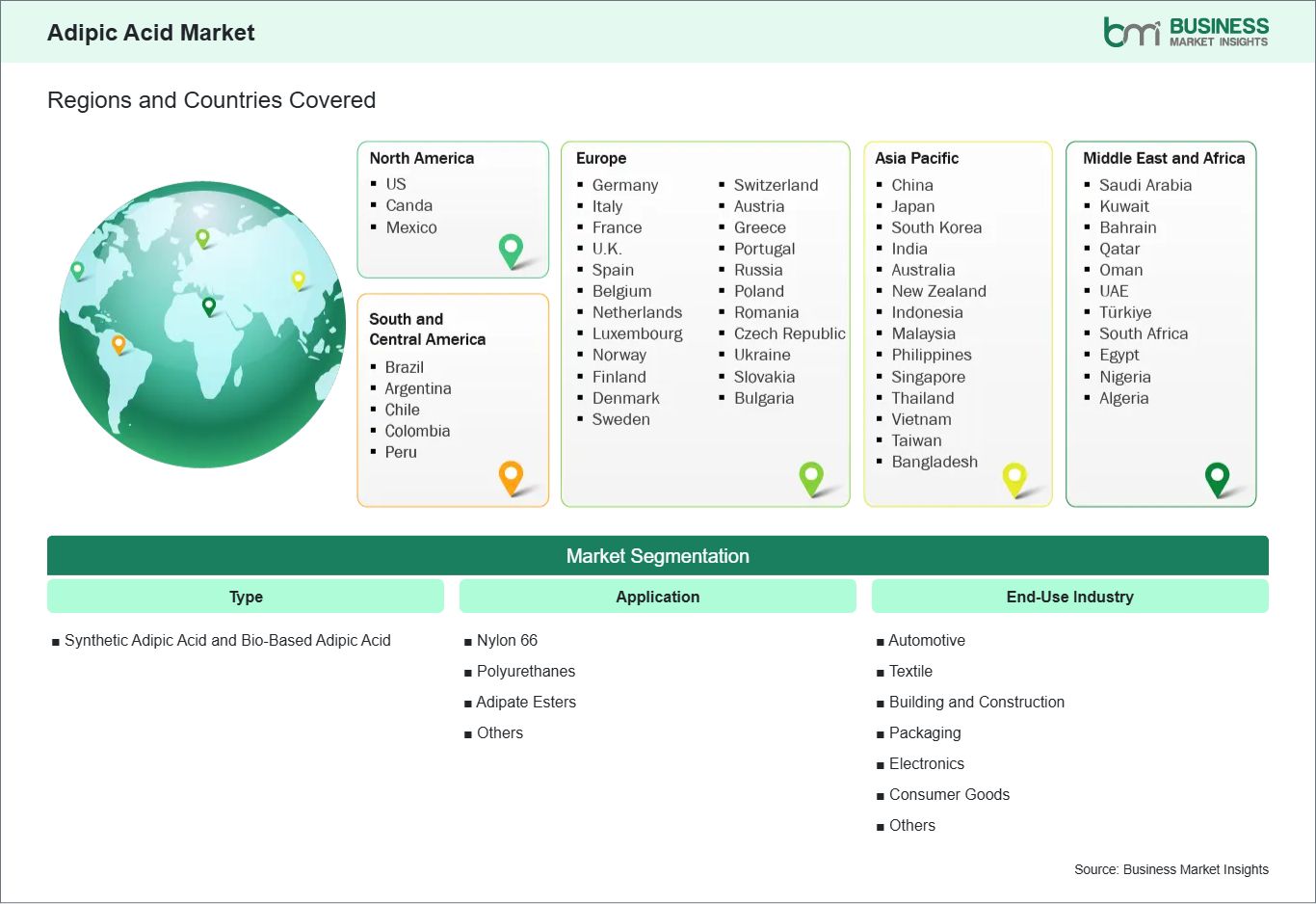
North America Adipic Acid Market
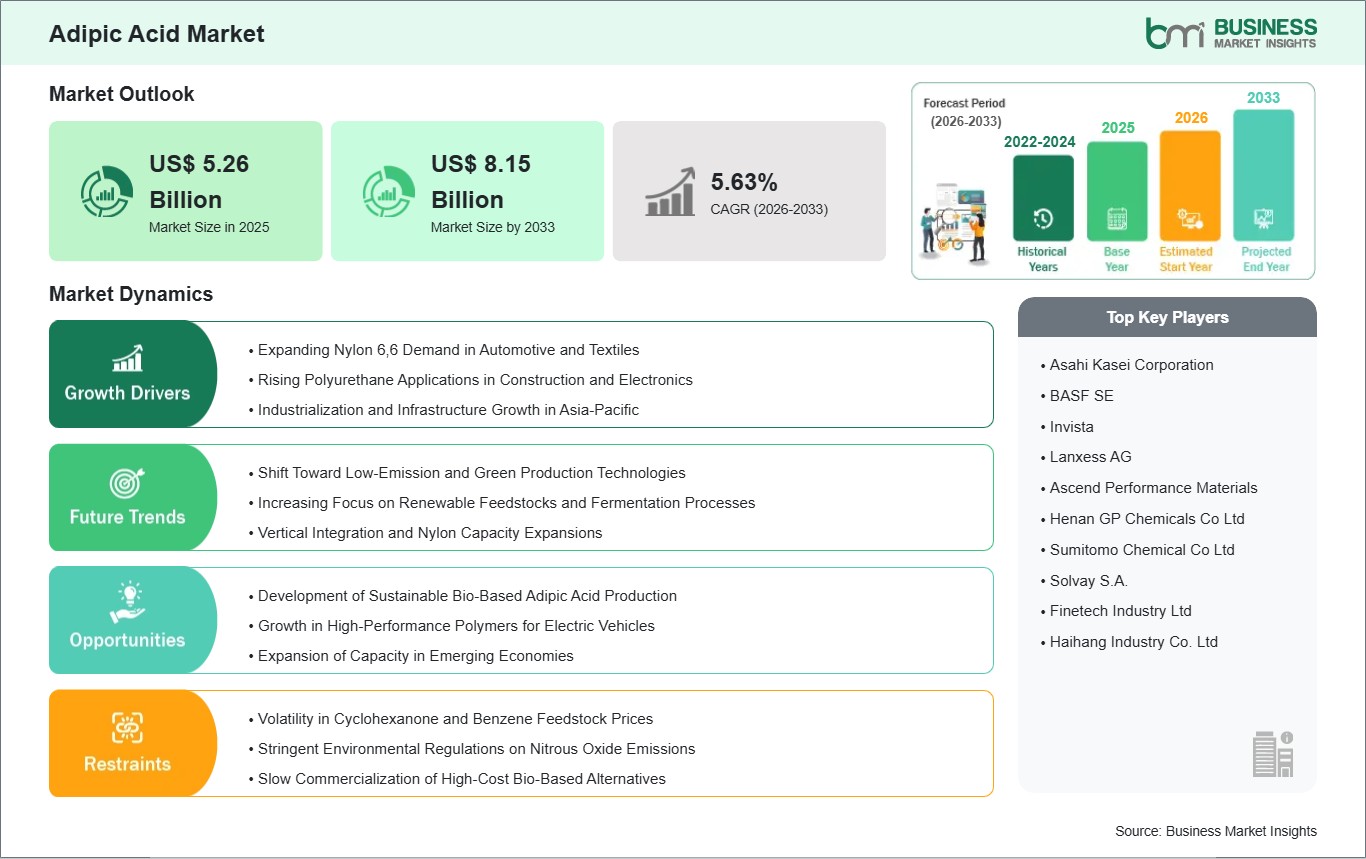
The North America Adipic Acid Market size accounted for approximately 27%–30% market share in 2025 and is projected to grow at a 5.2%–5.8% CAGR during 2026–2033. The region maintains a strong position due to established chemical manufacturing infrastructure, advanced polymer production capabilities, automotive lightweighting demand, and industrial applications of nylon 6,6 and polyurethane. The United States represents the largest regional contributor, supported by automotive manufacturing, engineering plastics consumption, and investments in sustainable chemical technologies. Manufacturers are focusing on improving production efficiency and reducing environmental impact.
- The US remains a major adipic acid consumer due to strong automotive production, demand for engineering polymers, and established downstream nylon 6,6 manufacturing capabilities.
- Chemical producers are investing in cleaner production technologies and emission reduction initiatives to address environmental regulations and sustainability expectations.
- Growing demand for lightweight automotive components is increasing adoption of nylon-based materials across vehicle interiors, under-the-hood components, and industrial applications.
- The region benefits from strong research capabilities supporting development of sustainable polymers and alternative adipic acid production methods.
US Adipic Acid Market
The United States represented approximately 22%–25% of global adipic acid demand in 2025 and is expected to grow at a 5.3%–5.9% CAGR through 2026–2033. Market expansion is supported by automotive lightweighting trends, industrial polymer demand, and continued consumption of nylon 6,6 materials. The country has a mature chemical manufacturing ecosystem with established producers, advanced processing capabilities, and strong demand from transportation, textiles, and specialty applications. Increasing focus on sustainable chemical production is influencing future investments.
- Automotive manufacturers are increasing polymer usage to achieve weight reduction, fuel efficiency improvements, and enhanced component durability.
- Demand for polyurethane applications is expanding through construction insulation, coatings, adhesives, and industrial elastomer requirements.
- Chemical companies are exploring low-carbon production pathways to align with sustainability targets and environmental compliance requirements.
- Strong industrial infrastructure supports consistent demand from engineering plastics and specialty chemical applications.
Europe Adipic Acid Market
Europe held approximately 22%–25% market share in 2025 and is expected to register a 4.8%–5.4% CAGR during 2026–2033. The region benefits from advanced chemical manufacturing capabilities, strong automotive production, and increasing demand for sustainable materials. Germany, France, and Italy represent key markets due to their automotive industries and polymer processing sectors. European manufacturers are emphasizing circular chemistry, emission reduction technologies, and environmentally responsible production methods to comply with stringent sustainability regulations.
- Germany remains a leading Adipic Acid market due to automotive manufacturing strength, engineering plastics demand, and advanced chemical production capabilities.
- France and Italy are supporting regional growth through industrial applications, polymer processing, and increasing adoption of sustainable chemical solutions.
- European regulations targeting carbon emissions are encouraging manufacturers to invest in cleaner adipic acid production technologies.
- Demand for high-performance nylon materials continues increasing across automotive, electronics, and industrial applications.
- Research initiatives focused on renewable feedstocks are creating opportunities for sustainable adipic acid development.
Asia Pacific Adipic Acid Market
Asia Pacific Adipic Acid Market share reached approximately 45%–48% in 2025 and is projected to achieve the fastest growth during 2026–2033. The region dominates global consumption due to expanding automotive production, textile manufacturing, industrial development, and increasing polymer demand. China represents the largest contributor, while India, Japan, and Southeast Asian countries are experiencing strong growth due to infrastructure expansion and manufacturing investments. Regional producers are increasing capacity to meet rising downstream demand.
- China leads regional consumption due to large-scale chemical production, automotive manufacturing, textile industries, and extensive nylon 6,6 applications.
- India is experiencing increasing demand due to expanding automotive production, industrial development, and growing polymer processing capabilities.
- Japan maintains strong demand through advanced automotive technologies, specialty materials, and high-performance engineering polymer applications.
- Southeast Asian markets are attracting investments through manufacturing expansion and increasing downstream chemical consumption.
- Regional manufacturers are focusing on production capacity expansion and sustainable chemical technology development.
Rest of World Adipic Acid Market
The Rest of World region accounted for approximately 6%–9% market share in 2025 and is projected to grow at a 5.5%–6.1% CAGR during 2026–2033. Latin America, Middle East, and Africa are witnessing increasing demand due to industrial development, automotive growth, infrastructure investments, and expanding chemical applications. Brazil, Mexico, and Middle Eastern economies are emerging as important markets due to manufacturing expansion and increasing consumption of polymer-based materials.
- Brazil is supporting regional demand through automotive production, industrial applications, and increasing consumption of engineering plastics.
- Mexico is benefiting from automotive manufacturing expansion and growing demand for lightweight polymer components.
- Middle Eastern countries are developing chemical industries through industrial diversification and investments in manufacturing infrastructure.
- Africa presents long-term opportunities as industrialization, infrastructure development, and manufacturing activities expand.
- Regional markets are attracting investment through increasing demand for advanced materials and polymer-based solutions.