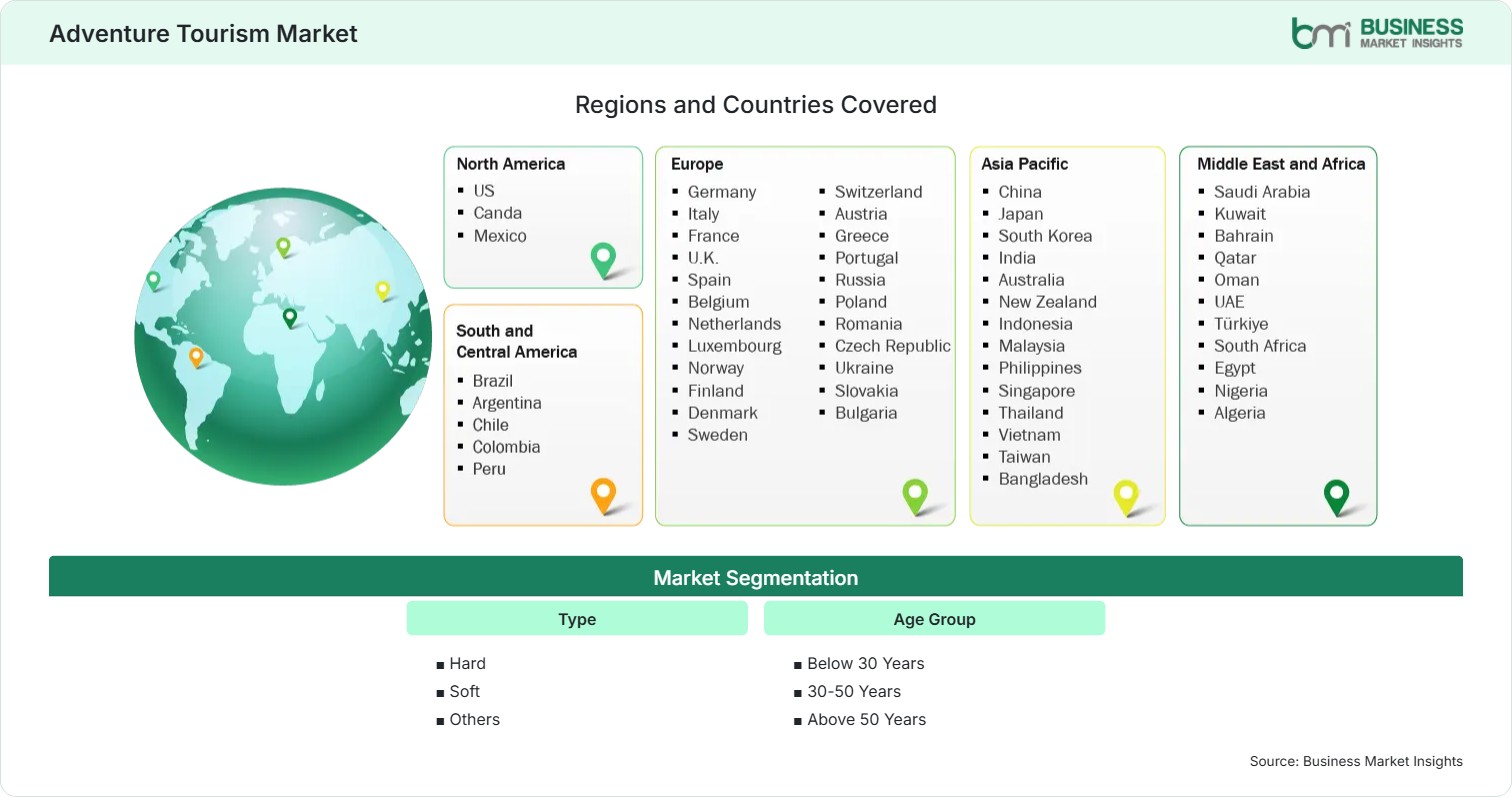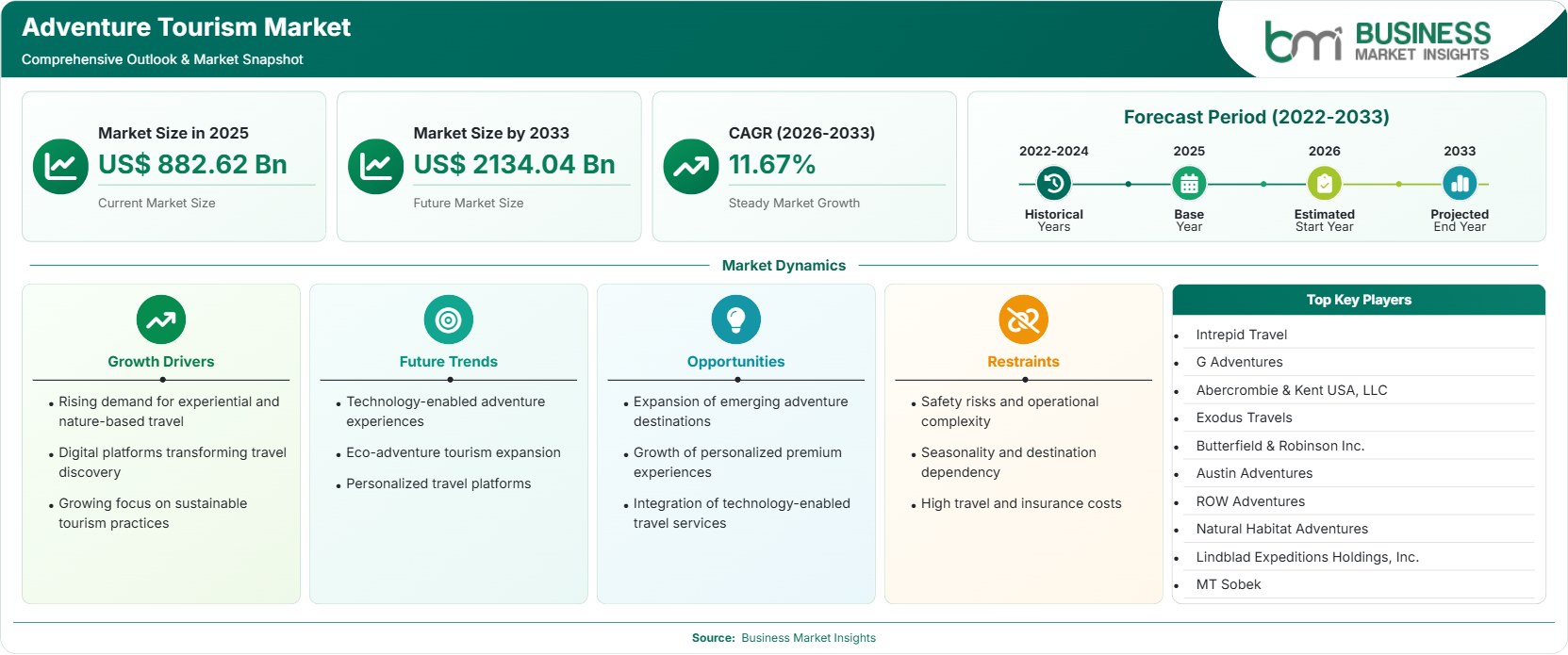
Adventure Tourism Market Regional Highlights
North America Adventure Tourism Market
North America accounted for 33%–36% share in 2025 and is projected to expand at a CAGR of 10%–12% from 2026 to 2033. The region benefits from established outdoor recreation culture, diverse landscapes, premium travel offerings, and advanced tourism infrastructure. Adventure Tourism market share remains supported by strong domestic participation, national park visitation, and increasing demand for customized wilderness and experiential travel packages across the United States and Canada.
- Outdoor recreation providers are expanding guided experiences including hiking, camping, wildlife tours, and adventure-based wellness programs.
- National parks and protected areas continue attracting travellers seeking nature-focused experiences supported by improved visitor infrastructure.
- Tour operators are investing in digital platforms to simplify booking, personalization, and customer communication processes.
- Sustainable travel initiatives are encouraging companies to develop environmentally responsible adventure packages.
US Adventure Tourism Market
The United States represented 28%–31% share in 2025 and is forecast to grow at a CAGR of 10%–12% during 2026–2033. The strength of the country lies in its numerous outdoor destinations, well-established adventure companies, and high consumer participation in recreational pursuits. Growth opportunities include an increased interest in national parks, wellness tourism, and individualized outdoor experiences.
- Domestic adventure travel demand is increasing through hiking, camping, cycling, and wildlife observation activities.
- Tour companies are developing premium experiences combining outdoor activities with luxury accommodation and personalized services.
- Digital platforms are improving customer discovery, itinerary planning, and reservation management capabilities.
Europe Adventure Tourism Market
The Europe region accounted for 24%–27% in 2025 and is projected to grow at a CAGR of 9%–11%. It is driven by well-developed cultural tourism networks, varied landscapes, and mature markets for outdoor activities. The major countries include Germany, the United Kingdom, France, Switzerland, and Spain due to their well-developed tourist infrastructure.
- Germany supports adventure tourism through alpine activities, cycling routes, and environmentally focused travel programs.
- The United Kingdom benefits from hiking destinations, coastal exploration, and established outdoor recreation communities.
- Switzerland maintains demand through mountain tourism, winter activities, and premium adventure experiences.
- European operators are adopting sustainability standards to align with responsible tourism expectations.
Asia Pacific Adventure Tourism Market
Asia Pacific held 30%–33% share in 2025 and is projected to register a CAGR of 13%–15% between 2026 and 2033. The region represents the fastest-growing market due to rising disposable income, expanding tourism infrastructure, younger travellers, and increasing digital travel adoption. China, India, Japan, Australia, Thailand, and Indonesia are key contributors through diverse natural landscapes and destination development.
- China is expanding adventure travel through domestic tourism growth, outdoor recreation initiatives, and digital booking adoption.
- India is developing adventure destinations through government tourism programs, mountain activities, and eco-tourism projects.
- Australia maintains strong demand through marine activities, wildlife experiences, and outdoor exploration.
- Southeast Asian countries are attracting international travellers through affordable adventure packages and unique destinations.
- Regional operators are increasing investments in safety standards and customized travel offerings.
Rest of World Adventure Tourism Market
The rest of world held a market share of 7% to 10% in 2025 and is projected to grow at a CAGR of 11% to 13% between 2026 and 2033. South America, the Middle East, and Africa have been developing across various areas, including nature, wildlife, culture, and tourism diversification initiatives. These geographies are receiving foreign investment in destination development and tourism conservation. These regions are attracting international investment focused on destination development, conservation-based tourism, and premium adventure experiences.
South American destinations are leveraging biodiversity and natural landscapes, while Middle Eastern economies are developing adventure tourism as part of broader economic diversification programs.
- Brazil supports growth through rainforest exploration, wildlife tourism, and nature-based travel experiences.
- Costa Rica continues attracting adventure travellers through conservation tourism and outdoor activities.
- United Arab Emirates is expanding desert adventure experiences through tourism infrastructure investments.
- South Africa benefits from wildlife tourism, safari experiences, and outdoor adventure offerings.
- African destinations are developing sustainable tourism models to attract international adventure travellers.