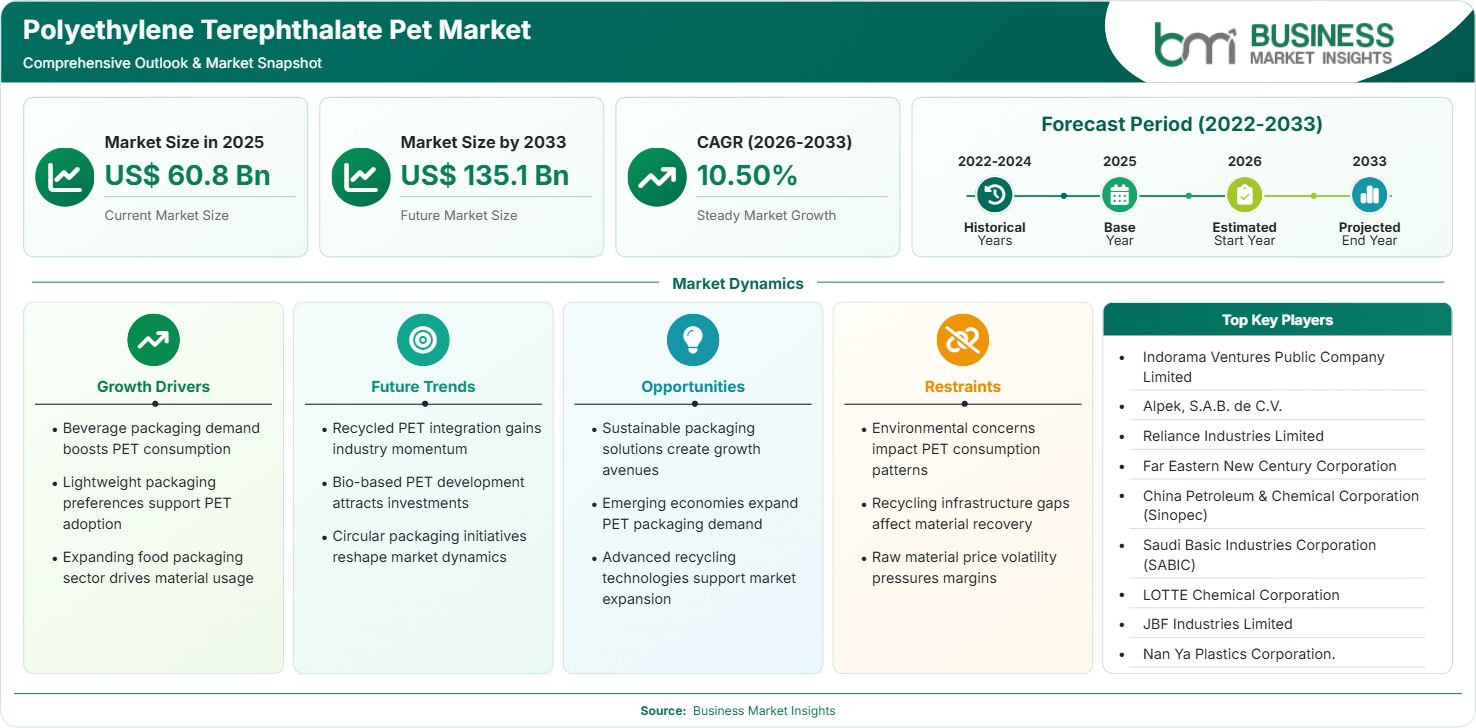
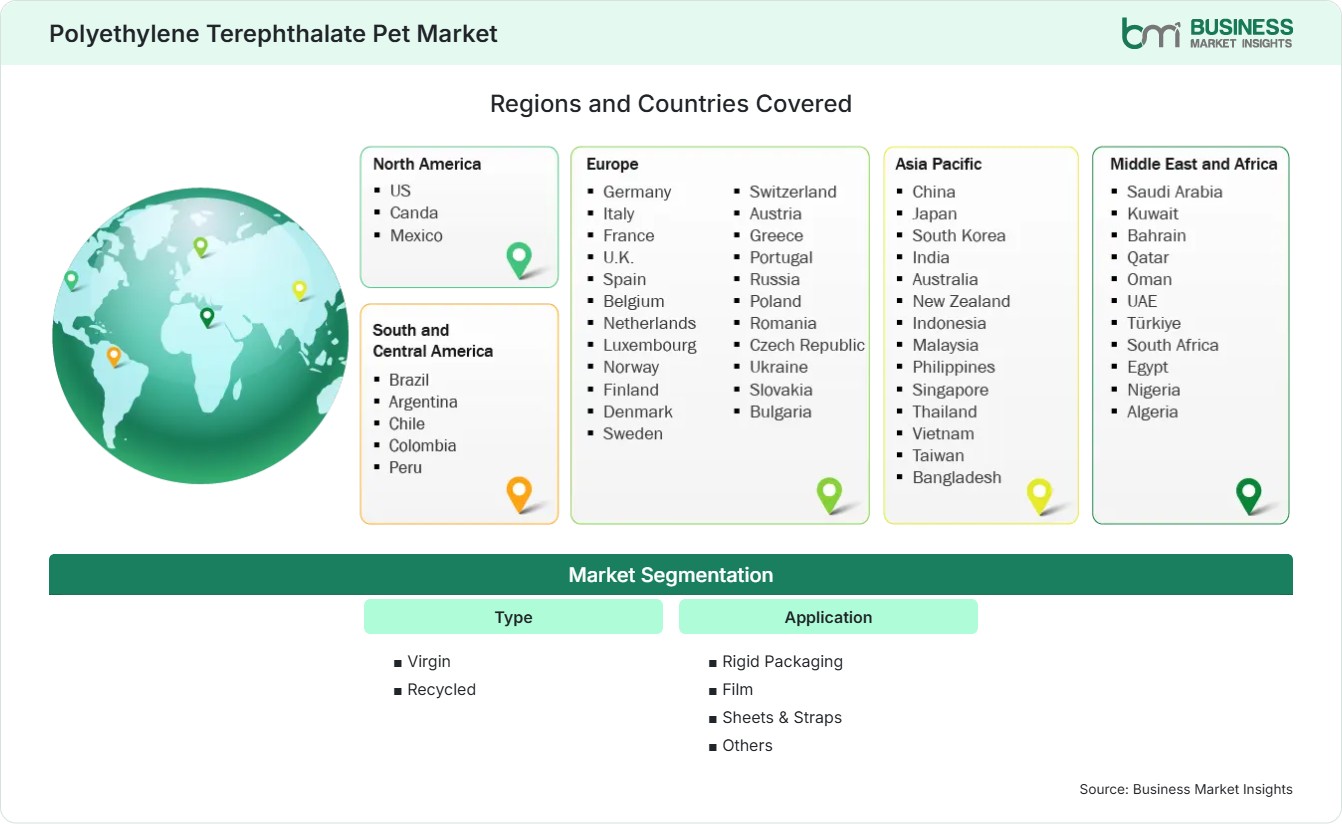
Key Market Drivers
Expansion of Sustainable Packaging and Recycled Content Mandates
Current trends in global packaging laws encourage the use of recycled content in beverage and food packaging. This has resulted in a consistent need for both PET and rPET material. The EU's Single-Use Plastics Directive and packaging waste programs have led to increased purchases of more sustainable, recycled packaging. Beverage companies continue to pledge to increase recycled-content packaging, ensuring sustained resin demand for a long time. More environmentally responsible packaging is becoming preferred by consumers, affecting the branding efforts of many products in the food, beverage, personal care, and home products industries. As collection systems and bottle-to-bottle recycling technologies improve, manufacturers are securing higher-quality feedstock, enabling greater utilization of recycled content while maintaining product performance and regulatory compliance.
Rising Consumption of Packaged Beverages and Convenience Foods
Urbanization, changing lifestyles, and growing disposable incomes are supporting global consumption of bottled water, carbonated drinks, juices, ready-to-drink beverages, and packaged foods. PET packaging remains popular due to its lightweight, transparent, durable, and economical characteristics. Food processing firms are moving toward smaller packaging to reduce logistics costs and enhance their sustainability performance. Developing nations in the Asia-Pacific region, Latin America, and even some African countries are experiencing increased demand for packaged consumer products. Retail, e-commerce, and foodservice segments are all driving demand for rigid packaging solutions, thus ensuring stable resin demand through the forecast period.
Technological Advancements in Recycling and Resin Processing
Investments in mechanical recycling technology, chemical recycling, optical sorting, and decontamination have made recycled PET more commercially viable than ever before. More efficient processing capabilities enable companies to produce food-grade recycled resin that closely mimics the properties of virgin resin. Recycled products are recovered by advanced systems that can process previously unmanageable waste, ensuring a sufficient supply of feedstock without reliance on landfills. In addition, producers use efficient, energy-saving manufacturing technologies, which reduce production costs and CO2 emissions. Digital management systems implemented into the recycling and manufacturing processes contribute to yield management and quality control.
Key Market Opportunities
Food-Grade Recycled PET Capacity Expansion
The production of food-grade recycled resins is one of the most promising areas for investment across the entire value chain. Rising mandatory requirements for the content of recycled material in packaging are generating shortages of high-quality rPET. Beverage makers need a stable quality of their raw material supply, thereby creating new business prospects for recyclers, technology suppliers, and resin producers. The installation of state-of-the-art equipment for washing, sorting, and decontamination will justify premium prices due to high standards for food-contact materials. In addition, the development of recycling facilities in high-consumption countries is another way of growth. Given numerous sustainability promises, demand for food-grade recycled materials is expected to exceed supply in certain regions.
Emergence of Closed-Loop Circular Packaging Ecosystems
The move to circular packaging solutions creates numerous opportunities for those who work in collection, recycling, manufacturing, and consumer branding sectors. By implementing closed-loop systems, bottles can be collected, recycled, and reused in packaging processes. This reduces reliance on raw materials. There is an increasing trend in government support for deposit-refund initiatives and extended producer responsibility programs, which result in greater material recovery. Companies that invest in collection systems, recycling technologies, and traceability can benefit from securing their feedstocks. The Polyethylene Terephthalate Market Forecasts report shows an increase in investment in circular economy projects driven by compliance with environmental goals.
High-Growth Potential Across Emerging Asian and African Markets
Several developing countries are witnessing high growth rates in packaged foods and beverages, health care products, and consumer goods. The growing urban populations and the expanding middle-class consumer base are fueling demand for low-cost, readily available packaging. Packaging is becoming easier as manufacturers set up production units to cater to local market requirements and even exports. Favorable infrastructure development, increased retail presence, and enhanced logistics support provide a conducive environment for packaging. Countries such as India, Indonesia, Vietnam, Nigeria, and Kenya present good business opportunities for the resin makers and packaging converters. Investments in regional recycling ecosystems can further strengthen competitiveness while addressing environmental and sustainability objectives over the long term.
Market Restraints and Challenges
Volatility in Raw Material and Feedstock Pricing
Factor: PET production remains closely linked to petrochemical feedstocks such as purified terephthalic acid (PTA) and monoethylene glycol (MEG), both of which experience pricing fluctuations driven by crude oil markets, supply disruptions, and geopolitical developments.
Impact: Cost volatility creates challenges for manufacturers seeking predictable profitability and stable customer pricing. Sudden increases in feedstock costs can compress margins and reduce competitiveness, particularly for smaller producers with limited procurement flexibility. Packaging converters and brand owners may also face pricing pressure when adjusting purchasing strategies. Although recycled feedstock adoption can partially mitigate exposure, raw material volatility remains a critical challenge affecting investment planning, contract negotiations, and long-term operational stability across global supply chains.
Collection Infrastructure Gaps and Recycled Feedstock Availability
Factor: Many developing regions lack sufficient waste collection, sorting, and recycling infrastructure to support large-scale recovery of post-consumer PET materials. Contamination and inconsistent collection practices further reduce usable feedstock availability.
Impact: Limited access to high-quality recycled material constrains rPET production growth and can increase procurement costs. Manufacturers attempting to meet ambitious recycled-content targets may face supply shortages or quality inconsistencies. This challenge can delay sustainability initiatives, increase operational complexity, and create regional disparities in recycled material adoption. Closing infrastructure gaps requires substantial investment from governments, private companies, and waste-management organizations, making it a long-term challenge despite strong demand for circular packaging solutions.