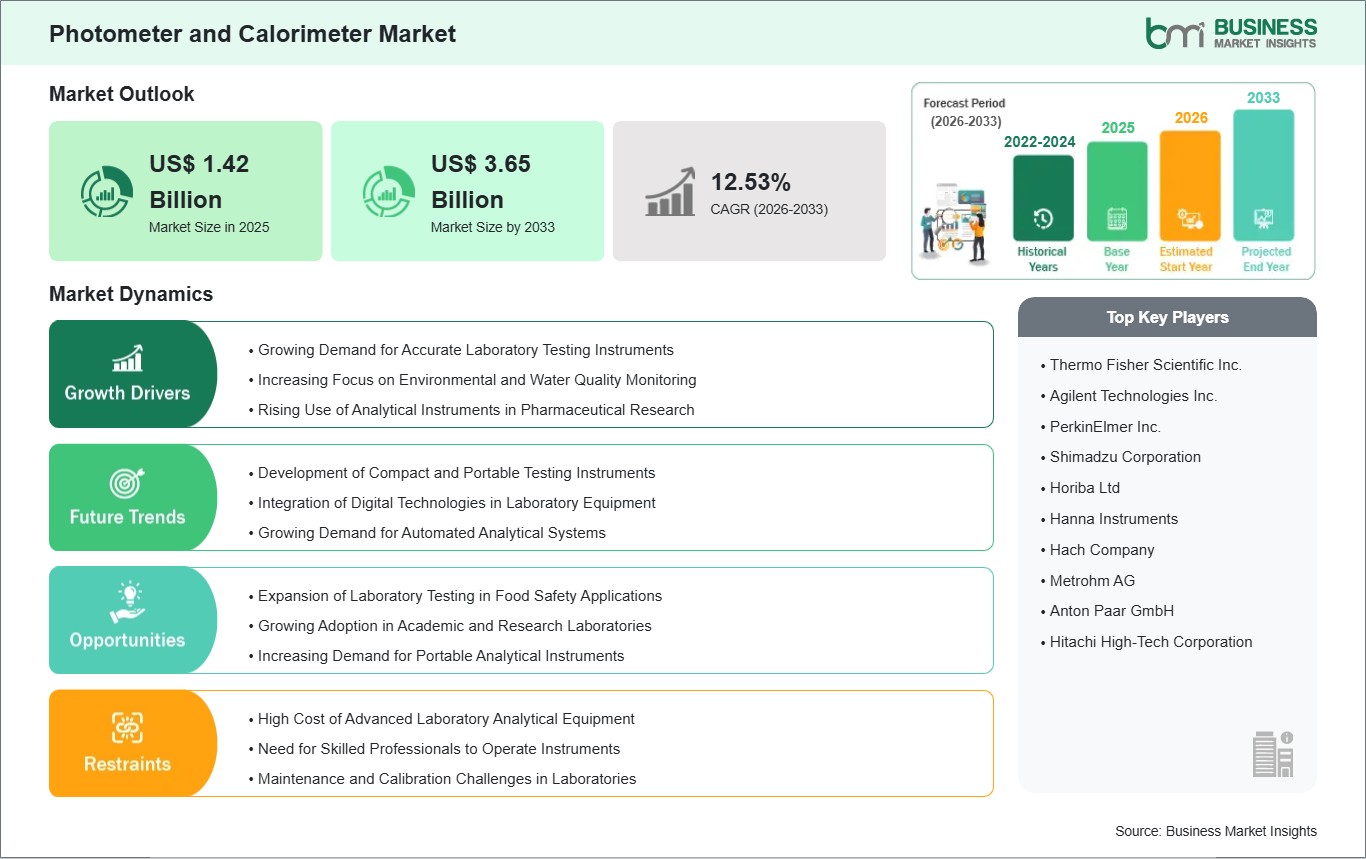
Growing Demand for Accurate Laboratory Testing Instruments
The growing demand for accurate laboratory testing instruments is a key driver for the photometer and calorimeter market. Laboratories across industries rely on precise analytical tools to measure chemical concentrations, energy changes, and light absorption in various samples. Photometers and calorimeters help scientists and technicians perform reliable testing, which is essential for research, quality control, and regulatory compliance in many sectors.
Industries such as pharmaceuticals, environmental monitoring, and food safety depend heavily on laboratory testing to ensure product quality and safety. Photometers are widely used to measure chemical concentrations in liquids, while calorimeters help analyze heat changes during chemical reactions. These instruments allow laboratories to perform detailed analysis and obtain reliable data that supports research and product development activities.
More science work means labs are turning to better tools for checking results. Because precision matters, many groups now choose updated devices that do a finer job. Universities, factories, and pollution watchers alike spend on gear that delivers sharper data. When tests spread into new areas, machines like photometers see more use over time. With every field needing checks, these instruments slowly become standard choices.
Expansion of Laboratory Testing in Food Safety Applications
The expansion of laboratory testing in food safety applications presents strong opportunities for the photometer and calorimeter market. Food manufacturers and regulatory agencies are placing greater emphasis on ensuring food quality and safety through accurate testing and monitoring. Photometers and calorimeters help laboratories analyze food composition, detect contaminants, and measure chemical properties in food products.
Food testing laboratories use photometric analysis to evaluate parameters such as nutrient levels, additives, and contamination in food and beverages. Calorimeters are also used to study energy content and chemical reactions that occur during food processing and storage. These analytical methods support quality control processes and help manufacturers maintain consistent product standards.
Furthermore, growing consumer awareness about food safety is encouraging stricter testing and monitoring practices. Governments and regulatory bodies are implementing guidelines that require reliable laboratory analysis for food products. As the global food industry expands and focuses on quality assurance, the adoption of advanced laboratory testing instruments is expected to increase, creating significant growth opportunities for the photometer and calorimeter market.