
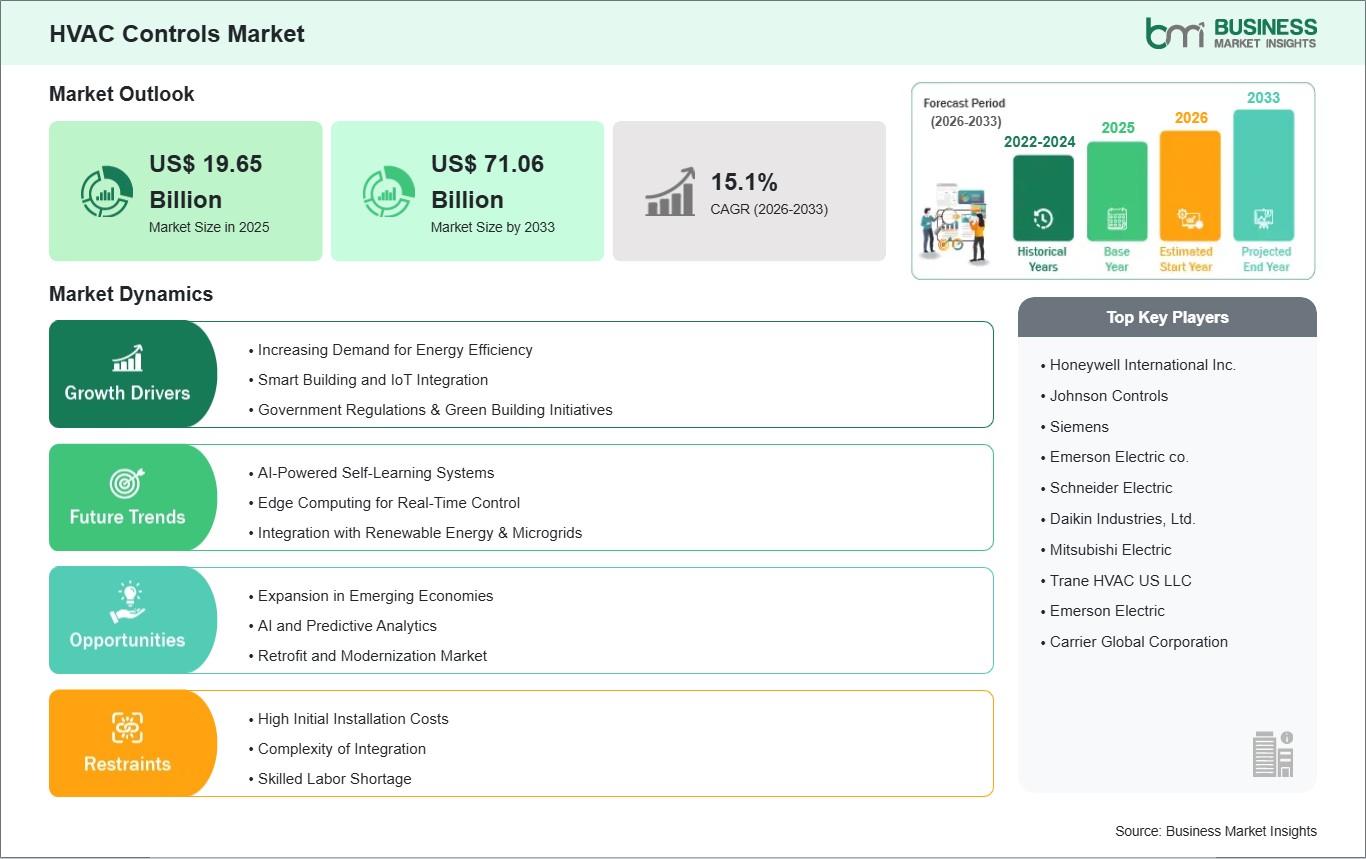
The HVAC Controls market size is expected to reach US$ 71.06 billion by 2033 from US$ 19.65 billion in 2025. The market is estimated to record a CAGR of 15.10% from 2026 to 2033.
Heating, Ventilation, and Air Conditioning (HVAC) controls are systems and components designed to regulate and optimize the operation of HVAC equipment — including heating, cooling, ventilation, and air quality functions — in residential, commercial, and industrial environments. These control systems help maintain desired indoor temperatures and humidity levels, manage airflow and ventilation, and enable efficient energy use through automated adjustments. The benefits of HVAC controls extend to enhanced occupant comfort, reduced energy consumption, lower operational costs, improved air quality, and seamless integration with smart building technologies, making them indispensable across sectors such as residential homes, office buildings, retail spaces, hospitals, manufacturing facilities, and data centers.
The HVAC controls market is shaped by several key drivers, opportunities, and restraints. Global emphasis on energy efficiency and stringent government regulations aimed at reducing carbon emissions are major growth drivers, as building owners seek smart controls that optimize HVAC performance and comply with energy codes. Rapid adoption of smart building technologies — with integration of IoT, AI, and cloud-based platforms — is further propelling demand, enabling real-time monitoring, predictive maintenance, and significant cost savings over time.

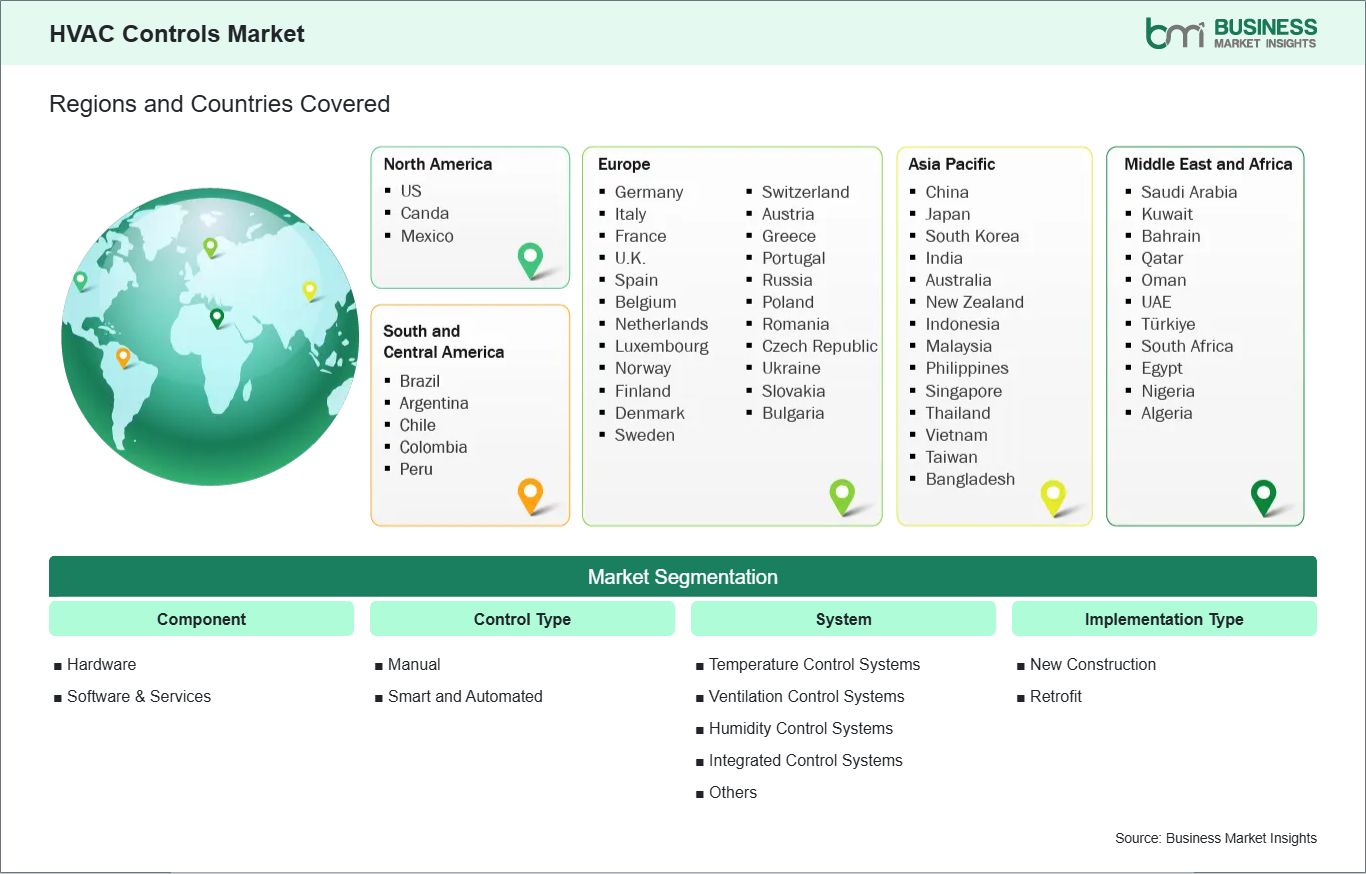
Key segments that contributed to the derivation of the HVAC Controls market analysis are component, control type, system, implementation type and end user.
The rising demand for energy efficiency is one of the foremost drivers shaping the growth of the HVAC controls market today. As buildings account for a large portion of energy consumption globally, stakeholders—from architects and facility managers to policymakers—are intensifying efforts to reduce operational energy use while maintaining indoor comfort and air quality. HVAC controls are central to this transition because they enable precise regulation of heating, cooling, ventilation, and indoor environmental conditions, optimizing system performance and minimizing wasted energy. Modern control strategies like demand-controlled ventilation, occupancy sensing, and variable air volume regulation can significantly cut energy use compared to conventional fixed-schedule HVAC operations, making these systems attractive for new and existing buildings alike.
Energy efficiency standards and building codes globally reinforce this trend. For example, ASHRAE Standard 90.1—an influential benchmark for commercial building energy design in the United States—mandates minimum energy efficiency requirements for HVAC systems and associated controls, pushing designers and builders to incorporate advanced control solutions into projects to comply with regulatory expectations. These standards are increasingly referenced in building energy codes and green certification frameworks (such as LEED), creating additional incentives for energy-efficient HVAC control adoption.
The HVAC controls market is poised for growth as governments and corporations emphasize energy efficiency and sustainability in existing buildings. Retrofitting aging HVAC systems with advanced controls—such as building automation systems, IoT sensors, and demand-control ventilation—offers significant energy and operational savings without full equipment replacement.
Government initiatives are driving this trend. The US Department of Energy continues to fund retrofit programs that focus on advanced controls to enhance building performance. In 2024, the EU’s Energy Performance of Buildings Directive strengthened efficiency requirements for existing buildings, pushing upgrades with smarter HVAC controls. India’s Chandigarh energy management cell and Andhra Pradesh’s National Energy Conservation Awards in 2025 highlight similar retrofit-driven opportunities. Corporate programs also support this market. Johnson Controls’ retrofit initiatives and partnerships, including with CBRE in 2024, enable scalable control upgrades in commercial buildings. Workforce programs like Bosch India’s HVAC skill centers in 2025 ensure the effective deployment of such technologies. These developments collectively position retrofit-driven HVAC controls as a major growth avenue for the coming years.
By component, the market is bifurcated into hardware, software & services. The hardware segment dominated the market in 2024. Components such as thermostats, valves, dampers, and gateways form the backbone of HVAC controls, allowing accurate temperature, airflow, and humidity regulation. They facilitate real-time data collection, system automation, and predictive maintenance, enhancing energy efficiency and other benefits.
By control type, the market is bifurcated into manual, smart and automated. The smart and automated segment held the largest share of the market in 2024. Manual controls offer basic functionality, smart controls provide connectivity and remote access, while automated systems enable predictive management and energy optimization, driving efficiency, user convenience, and increased market penetration across residential, commercial, and industrial sectors.
By system, the market is segmented into temperature control systems, ventilation control systems, humidity control systems, integrated control systems, and others. The temperature control systems segment held the largest share of the market in 2024. These systems enhance HVAC efficiency, ensure optimal indoor comfort, improve air quality, and enable tailored solutions for residential, commercial, and industrial applications.
By implementation type, the market is segmented into new construction, retrofit. The new construction segment held the largest share of the market in 2024. The new installation and retrofit—determine market reach, adoption rate, and revenue growth, with new installations driving demand in construction projects and retrofits enabling modernization of existing HVAC systems.
By end user, the market is segmented into residential, commercial, and industrial. The commercial segment held the largest share of the market in 2024. Residential, commercial, and industrial—drive demand patterns, influence product customization, and shape market growth, with each sector prioritizing energy efficiency, comfort, and system scalability according to specific needs.
| Report Attribute | Details |
|---|---|
| Market size in 2025 | US$ 19.65 Billion |
| Market Size by 2033 | US$ 71.06 Billion |
| Global CAGR (2026 - 2033) | 15.1% |
| Historical Data | 2022-2024 |
| Forecast period | 2026-2033 |
| Segments Covered | By Component
|
| Regions and Countries Covered | North America
|
| Market leaders and key company profiles |
|
The "HVAC Controls Market Size and Forecast (2022–2033)" report provides a detailed analysis of the market covering below areas:
The geographical scope of the HVAC Controls market report is divided into five regions: North America, Asia Pacific, Europe, Middle East &; Africa, and South & Central America. The HVAC Controls market in Asia Pacific is expected to grow significantly during the forecast period.
The Asia-Pacific HVAC Controls market is segmented into China, Japan, South Korea, India, Australia, New Zealand, Indonesia, Malaysia, the Philippines, Singapore, Thailand, Vietnam, Taiwan, Bangladesh, and the Rest of Asia. The Asia-Pacific HVAC controls market is experiencing robust growth, driven by the increasing urbanization, rising construction activities, energy efficiency regulations, adoption of smart building technologies, and growing demand for climate control in commercial and residential sectors.
The rapid urbanization, expanding commercial and residential construction, and increasing focus on energy-efficient building solutions. Government initiatives promoting sustainability, rising adoption of smart building and IoT-enabled HVAC systems, and growing awareness of indoor air quality are also key factors. Additionally, technological advancements in automated climate control and demand for cost-effective energy management solutions further propel market expansion across the region.

The HVAC Controls market is evaluated by gathering qualitative and quantitative data post primary and secondary research, which includes important corporate publications, association data, and databases. A few of the key developments in the HVAC controls market are:
The HVAC Controls Market is valued at US$ 19.65 Billion in 2025, it is projected to reach US$ 71.06 Billion by 2033.
As per our report HVAC Controls Market, the market size is valued at US$ 19.65 Billion in 2025, projecting it to reach US$ 71.06 Billion by 2033. This translates to a CAGR of approximately 15.1% during the forecast period.
The HVAC Controls Market report typically cover these key segments-
The historic period, base year, and forecast period can vary slightly depending on the specific market research report. However, for the HVAC Controls Market report:
The HVAC Controls Market is populated by several key players, each contributing to its growth and innovation. Some of the major players include:
The HVAC Controls Market report is valuable for diverse stakeholders, including:
Essentially, anyone involved in or considering involvement in the HVAC Controls Market value chain can benefit from the information contained in a comprehensive market report.
Please tell us your area of interest
(Market Segments/ Regions and Countries/ Companies)