
Mobile Cardiac Telemetry Systems Market Outlook: Size, Share, Trends, Growth Analysis, Competitive Landscape & Forecast, 2026-2033

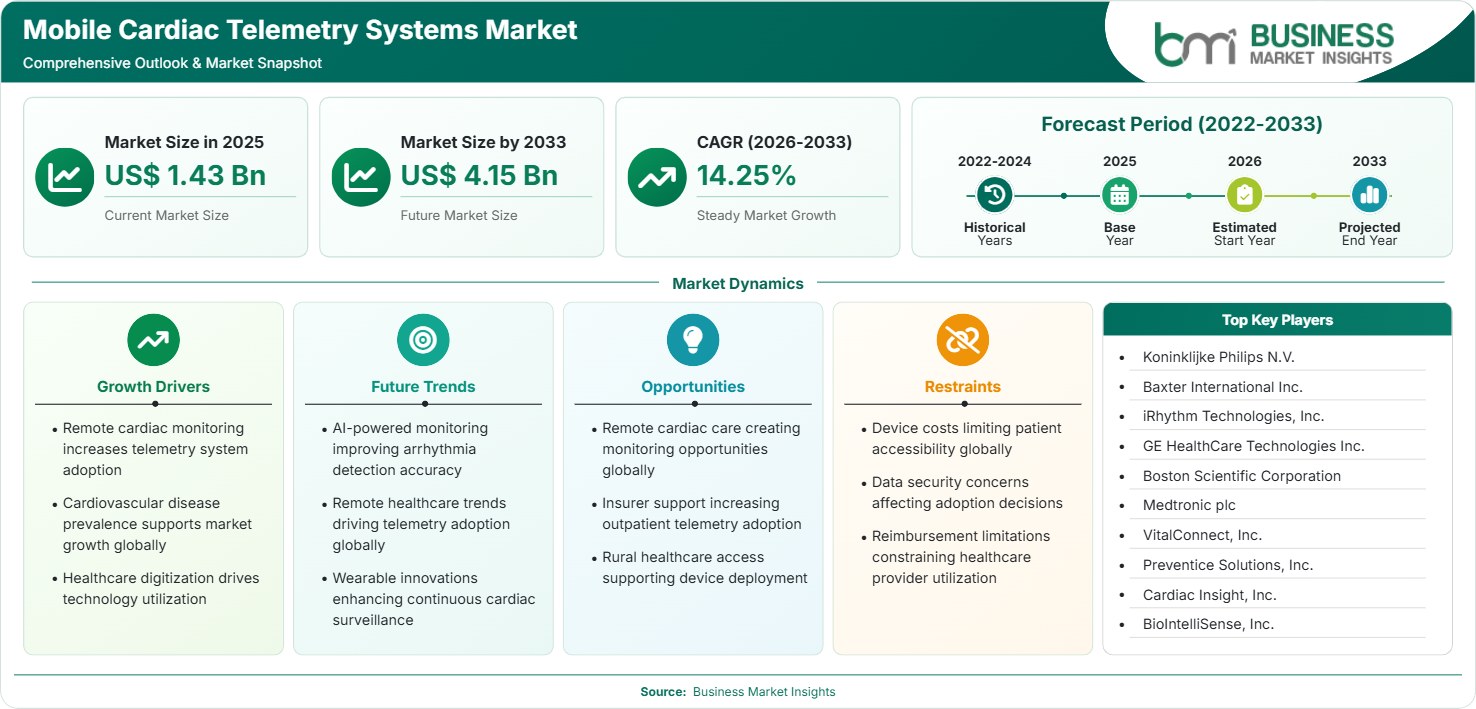
The Mobile Cardiac Telemetry Systems Market size was valued at US$ 1.43 Billion in 2025 and is projected to reach US$ 4.15 Billion by 2033, growing at a CAGR of 14.25% during 2026–2033. Rising cardiovascular disease prevalence, growing remote patient monitoring adoption, reimbursement expansion, AI-enabled arrhythmia detection, and increasing home-based cardiac care create substantial market opportunities globally.

Report Coverage
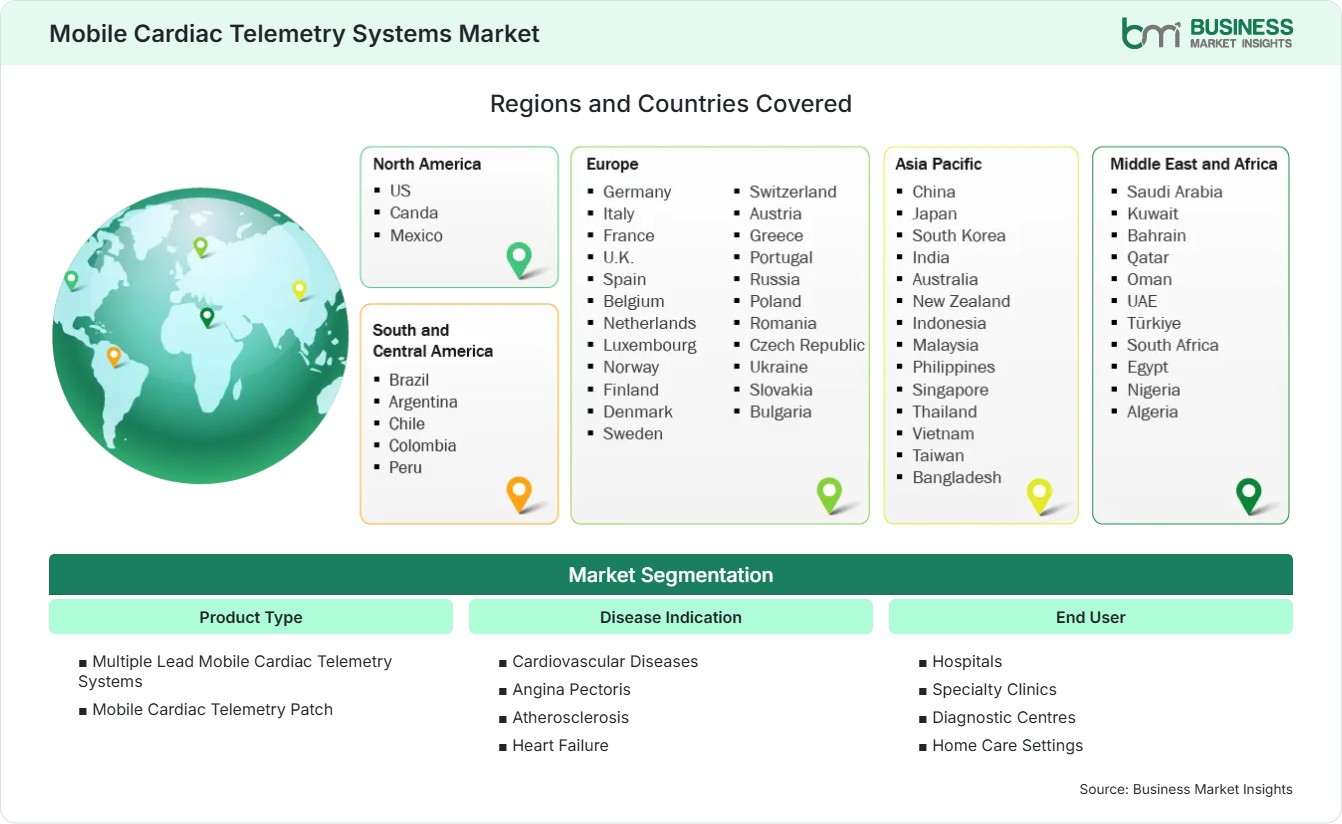
  • Product Type: Multiple Lead Mobile Cardiac Telemetry Systems, Mobile Cardiac Telemetry Patch
  • Disease Indication: Cardiovascular Diseases, Angina Pectoris, Atherosclerosis, Heart Failure
  • End User: Hospitals, Specialty Clinics, Diagnostic Centres, Home Care Settings
US$ 1.43 Bn Market size in 2025
US$ 4.15 Bn Market Size by 2033
14.25% CAGR, 2026 - 2033
2026-2033 Forecast Period

AI Overview

Mobile Cardiac Telemetry Systems Market Summary

  • North America Region: North America holds a market share of 38%–41% in 2025, growing at a CAGR of 13.0%–14.0% during 2026–2033. Growth is driven by strong reimbursement, telehealth integration, expanding remote cardiac monitoring adoption, rising arrhythmia prevalence, advanced healthcare infrastructure, wearable technology penetration, physician acceptance, and increasing value-based care initiatives. The U.S. leads regional demand, supported by favorable reimbursement policies and growing remote cardiac monitoring utilization, registering 13.5%–14.5% CAGR.
  • Fastest Growing Region: Asia Pacific accounts for 23%–26% share in 2025 and is projected to expand at 15.5%–17.0% CAGR during 2026–2033. Growth stems from healthcare digitization, expanding cardiac disease burden, rising healthcare expenditure, telemedicine investments, improved diagnostic accessibility, urbanization, supportive government initiatives, increasing smartphone penetration, and growing specialist care capacity.
  • Leading Segment: Hospitals represent 42%–45% of Mobile Cardiac Telemetry Systems Market revenue in 2025 and are expected to advance at 13.0%–14.0% CAGR during 2026–2033. Demand is supported by integrated cardiac workflows, continuous monitoring requirements, specialist supervision, growing elective cardiac procedures, payer support, enhanced patient management protocols, and digital telemetry platform deployment.
  • High Growth Segment: Mobile Cardiac Telemetry Patch captures 30%–33% share in 2025 and is forecast to grow at 16.0%–17.5% CAGR through 2033. Adoption benefits from patient comfort, longer wear duration, wireless functionality, simplified deployment, outpatient monitoring expansion, reduced hospital visits, improved compliance, and data-driven diagnostic capabilities.
  • Key Market Opportunity: Expansion of AI-enabled remote cardiac monitoring platforms integrated with cloud analytics and home-care ecosystems is creating scalable opportunities for providers, payers, device manufacturers, digital health firms, and preventive cardiovascular management programs.
  • Major Market Players: Koninklijke Philips N.V., Baxter International Inc., iRhythm Technologies, Inc., GE HealthCare Technologies Inc., Boston Scientific Corporation, Medtronic plc, VitalConnect, Inc., Preventice Solutions, Inc., Cardiac Insight, Inc., BioIntelliSense, Inc.
Strategic Insights

Mobile Cardiac Telemetry Systems Market: Strategic Insights

Mobile Cardiac Telemetry Systems Market Strategic Framework
FREE PDF
Request your free sample
Request free sample
Stakeholder View

Key Takeaways

  • The value chain increasingly combines sensor manufacturers, cloud analytics providers, telehealth platforms, and cardiac service providers, creating integrated monitoring ecosystems that improve diagnostic workflow efficiency and patient engagement.
  • Home-based monitoring represents one of the strongest growth avenues as providers seek lower-cost cardiac surveillance alternatives while maintaining clinical visibility across chronic cardiovascular disease populations.
  • Product innovation is shifting toward AI-driven arrhythmia classification, patch-based telemetry systems, longer battery performance, and interoperable platforms capable of integrating with electronic health record infrastructure.
  • Asia Pacific presents an attractive investment case because expanding healthcare coverage, growing cardiovascular disease prevalence, and digital healthcare adoption are creating substantial demand for advanced monitoring solutions.
  • Strategic acquisitions within digital health and remote diagnostics are accelerating platform expansion, strengthening software capabilities, and broadening provider access to integrated cardiac monitoring services.
  • Reimbursement alignment around remote patient monitoring is encouraging broader physician adoption and helping manufacturers scale recurring service-based revenue models.
Geographic Outlook

Mobile Cardiac Telemetry Systems Market Regional Highlights

North America Mobile Cardiac Telemetry Systems Market

North America accounted for approximately 38%–41% of the Mobile Cardiac Telemetry Systems Market share in 2025 and is projected to expand at a CAGR of 13.0%–14.0% through 2033. Regional leadership stems from advanced healthcare infrastructure, widespread reimbursement coverage for remote patient monitoring, and strong physician adoption of ambulatory cardiac diagnostics. The region also benefits from a high prevalence of atrial fibrillation and heart failure. Digital health integration, AI-powered arrhythmia analysis, and growing patient preference for home-based monitoring continue to support sustained revenue expansion across healthcare systems.

  • Remote patient monitoring reimbursement programs are encouraging hospitals and physician groups to deploy telemetry platforms for long-term cardiovascular disease surveillance while enhancing continuity of care and reducing avoidable hospital admissions.
  • Healthcare organizations increasingly integrate telemetry solutions with electronic medical record systems, enabling clinicians to access near real-time cardiac data and optimize diagnosis, treatment planning, and patient management workflows.
  • Rising prevalence of chronic cardiovascular disorders continues to generate strong diagnostic demand, particularly among aging populations requiring continuous rhythm monitoring and timely therapeutic interventions.
  • Device manufacturers are prioritizing AI-enabled diagnostics, predictive cardiac analytics, and cloud-based data transmission technologies that improve operational efficiency while delivering clinically actionable insights.
  • Growing partnerships among technology providers, healthcare networks, and insurers are supporting scalable deployment of remote cardiac monitoring services across both urban and rural care settings.

US Mobile Cardiac Telemetry Systems Market

The United States represented approximately 74%–78% of North American revenue in 2025 and is anticipated to grow at a CAGR of 13.5%–14.5% through 2033. The presence of effective cardiac disease management, robust reimbursement mechanisms, and widespread digital technology is key to achieving high levels of market penetration. The increasing use of continuous telemetry to diagnose arrhythmias and to follow up cardiac patients after discharge is a trend among healthcare practitioners. Adoption of wearable technologies provides another boost to this national demand.

  • Expansion of remote physiologic monitoring reimbursement frameworks has increased physician adoption of telemetry-driven cardiac assessment and care management strategies across outpatient healthcare environments.
  • Large healthcare systems continue investing in integrated digital cardiovascular platforms that combine monitoring devices, cloud analytics, and clinical decision-support tools for enhanced patient engagement.
  • Home-care cardiac monitoring adoption is increasing as providers seek cost-efficient methods to manage chronic cardiovascular conditions while minimizing unnecessary emergency department utilization.
  • Innovation activity remains strong, with manufacturers introducing more compact, longer-wear, and AI-enhanced telemetry systems designed to improve patient comfort and diagnostic accuracy.

Europe Mobile Cardiac Telemetry Systems Market

Europe accounted for around 27%-30% of the global Mobile Cardiac Telemetry Systems Market's total revenues and is expected to witness a CAGR of 13.5%-14.5% between 2026 and 2033. This is driven by an aging population, increasing instances of cardiovascular diseases, and advancements in mobile telemetry technology. Healthcare providers are increasingly using ambulatory care to manage chronic cardiovascular diseases, reducing pressure on hospital stays. Germany continues to lead the regional market, whereas Spain and some Central European nations show higher growth prospects.

  • Germany leads regional adoption owing to advanced healthcare infrastructure, widespread cardiovascular screening initiatives, and strong investment in digital health technologies supporting continuous cardiac monitoring.
  • The United Kingdom continues expanding virtual care pathways that integrate remote monitoring technologies into chronic disease management and post-discharge cardiac follow-up programs.
  • Spain is among the fastest-growing national markets, supported by healthcare digitalization projects and increasing deployment of connected patient monitoring solutions.
  • European regulatory emphasis on preventive healthcare and chronic disease management is encouraging broader deployment of remote cardiac diagnostic technologies.
  • Regional manufacturers and healthcare providers increasingly collaborate to develop integrated digital cardiac care ecosystems focused on efficiency, accessibility, and patient-centric outcomes.

Asia Pacific Mobile Cardiac Telemetry Systems Market

Asia-Pacific accounted for about 23% - 26% of the Mobile Cardiac Telemetry Systems Market share by value in 2025 and is projected to register the fastest CAGR of 15.5% - 17.0% by 2033. The growing digitization of the healthcare sector, high incidence of cardiovascular diseases, and availability of specialized cardiac care facilities contribute to growth. With large patient numbers, high healthcare expenditure, and the adoption of telemedicine, favorable conditions have been created for deploying telemetry systems. In this region, China is the largest market, while India is the fastest-growing one.

  • China benefits from large-scale healthcare modernization programs and growing investments in connected medical technologies supporting chronic disease monitoring and management.
  • India is experiencing accelerated adoption due to expanding telehealth networks, increasing cardiovascular disease awareness, and growing demand for affordable remote diagnostic solutions.
  • Japan continues emphasizing elderly patient care and continuous disease monitoring, creating sustained demand for innovative wearable telemetry technologies.
  • Smartphone penetration and digital health platform adoption are improving accessibility of remote cardiac monitoring services across diverse population groups throughout the region.
  • Private healthcare providers are expanding investments in ambulatory diagnostics and connected care models, strengthening demand for advanced telemetry systems.

Rest of World Mobile Cardiac Telemetry Systems Market

The Rest of World region represented approximately 8%–11% of global Mobile Cardiac Telemetry Systems Market revenue in 2025 and is projected to expand at a CAGR of 14.0%–15.0% through 2033. South and Central America are benefiting from growing healthcare modernization and increasing cardiovascular disease awareness. Brazil remains the leading regional contributor.

Across the Middle East and Africa, expanding healthcare investments, rising digital health adoption, and improved specialist care accessibility support market development. Saudi Arabia and the United Arab Emirates demonstrate strong growth momentum due to healthcare transformation initiatives and telemedicine integration programs.

  • Brazil leads adoption within South and Central America as public and private healthcare organizations increase investment in advanced cardiovascular diagnostics and remote patient management capabilities.
  • Healthcare providers across Latin America are exploring cost-effective telemetry technologies that can enhance chronic disease monitoring while improving care delivery efficiency.
  • Saudi Arabia continues investing in digital health infrastructure and connected care services as part of broader healthcare transformation initiatives supporting advanced diagnostics.
  • The United Arab Emirates is witnessing increasing implementation of remote monitoring programs across hospitals and specialty clinics focused on cardiovascular disease management.
  • Regional expansion remains supported by healthcare access improvements, rising awareness of early diagnosis benefits, and growing adoption of connected medical technologies.
Global Market Geography
FREE PDF
Request your free sample
Request free sample
Segment Analysis

Mobile Cardiac Telemetry Systems Market Segmentation

Product Type

Product Type was an important area for technology innovation, wherein Multiple Lead Mobile Cardiac Telemetry Systems held the highest market share, capturing around 67% - 70% of the market in 2025 and growing at a CAGR of 13.0% - 14.0% by 2033. Healthcare professionals are still struggling to find the balance between diagnostic accuracy and patient convenience. The scope of the Mobile Cardiac Telemetry Systems Market is expanding due to the adoption of monitoring patches.

  • Multiple Lead Mobile Cardiac Telemetry Systems: These systems remain preferred for complex arrhythmia assessment due to superior signal quality, multi-channel monitoring capability, and widespread utilization across hospitals requiring continuous cardiovascular surveillance.
  • Mobile Cardiac Telemetry Patch: Patch-based devices are witnessing accelerated adoption because of lightweight form factors, improved wearability, enhanced patient compliance, and suitability for long-duration ambulatory monitoring applications.

Disease Indication

Disease indication demand is primarily driven by the growing burden of chronic cardiovascular disorders worldwide. Cardiovascular Diseases represented approximately a 48%–52% share in 2025 and are anticipated to expand at a CAGR of 13.5%–14.5% through 2033. Increasing incidences of arrhythmias, ischemic conditions, and heart failure are encouraging continuous monitoring adoption. The Mobile Cardiac Telemetry Systems Market trends indicate a stronger emphasis on preventive detection and long-term disease management supported by remote monitoring technologies.

  • Cardiovascular Diseases: Broad disease prevalence and increased screening initiatives support substantial telemetry utilization for continuous rhythm monitoring, early diagnosis, treatment optimization, and long-term patient care management.
  • Angina Pectoris: Growing need to evaluate episodic cardiac symptoms and assess treatment effectiveness supports increasing deployment of telemetry systems across cardiology-focused healthcare settings.
  • Atherosclerosis: Telemetry monitoring assists clinicians in evaluating cardiovascular risk patterns and managing patients with progressive vascular disease through enhanced diagnostic oversight and monitoring continuity.
  • Heart Failure: Continuous monitoring solutions aid early detection of rhythm abnormalities and deterioration indicators, helping providers reduce hospitalization rates and improve disease management outcomes.

End User

End-user adoption patterns highlight the continuing dominance of institutional healthcare providers. Hospitals accounted for approximately 42%–45% of total revenue in 2025 and are forecast to grow at a CAGR of 13.0%–14.0% through 2033 in the Mobile Cardiac Telemetry Systems Market. Growing remote care integration, reimbursement support, and rising patient monitoring requirements underpin adoption. Specialty care delivery expansion and increasing utilization of digital cardiovascular monitoring solutions are also broadening opportunities across alternative healthcare settings.

  • Hospitals: Hospitals maintain leadership due to specialist availability, integrated diagnostic infrastructure, advanced cardiac programs, and continuous demand for monitoring technologies within inpatient and outpatient settings.
  • Specialty Clinics: Cardiology-focused clinics increasingly utilize telemetry systems for long-term patient assessment, supporting efficient diagnosis, treatment planning, and management of complex cardiovascular conditions.
  • Diagnostic Centers: Diagnostic facilities deploy telemetry solutions to improve monitoring services, enhance clinical productivity, and support patient referrals requiring advanced cardiac evaluation.
  • Home Care Settings: Home-based adoption continues to expand due to patient convenience, telehealth integration, chronic disease management requirements, and healthcare cost optimization initiatives supporting remote monitoring models.
Market Forces

Mobile Cardiac Telemetry Systems Market Dynamics

Key Market Drivers

Rising Burden of Cardiovascular Diseases and Arrhythmias

Cardiovascular diseases remain the leading cause of mortality globally, creating sustained demand for continuous cardiac monitoring technologies. Growing numbers of patients with atrial fibrillation, heart failure, ischemic heart disease, and rhythm disorders necessitate early detection and continuous surveillance. The Mobile Cardiac Telemetry Systems Market growth will depend heavily on the increasing number of patients who need continuous monitoring outside hospitals. Increasing numbers of healthcare professionals are opting for continuous telemetry because intermittent arrhythmias may not be readily detected with existing diagnostic approaches. Increasing elderly populations in North America, Europe, and Asia Pacific also add to the demand for monitoring.

Expansion of Remote Patient Monitoring Reimbursement

Healthcare reimbursement models are increasingly aware of the clinical and economic benefits of telemonitoring technology. Telemonitoring solutions are being deployed by healthcare providers to deliver better patient care while reducing costs associated with unnecessary admissions and emergency care. Positive reimbursement policies are driving widespread use within hospitals, specialty centers, and physician practices. Telehealth solutions play an even bigger role in increasing usage by enabling doctors to monitor heart activity in real time. As healthcare systems focus on preventive care and value-based delivery models, reimbursement-supported remote diagnostics are becoming important catalysts for broad-based market expansion worldwide.

Technological Advancements in Wearable Cardiac Monitoring

The process of continuous improvement in healthcare wearables has significantly changed the approach to cardiac monitoring. Modern companies are developing new models of cardiac monitoring devices that are lighter and more convenient thanks to wireless connectivity, longer-lasting batteries, and automated data transmission. With the use of artificial intelligence, it will become easier to diagnose arrhythmias and classify events due to greater accuracy. Thanks to improved analytics, clinicians' work and treatment decision-making will be simplified. In the contemporary world, medical practitioners prefer those technological innovations which are both efficient and user-friendly. Such developments accelerate adoption in ambulatory settings and increase demand from both providers and patients.

Key Market Opportunities

Expansion of AI-Enabled Remote Cardiac Care Platforms

The adoption of artificial intelligence in industry will create immense opportunities for telemetry companies to improve diagnostic speed and precision in clinical settings. AI will be able to recognize intricate arrhythmia patterns, prioritize high-priority cases, and reduce clinicians' workload. Healthcare organizations will look for flexible technology that can manage the rising number of cardiovascular cases without requiring additional staff. Analytics, cloud computing, and continuous monitoring can be considered building blocks for future models for cardiac care. As efforts towards digital transformation increase worldwide, there will likely be more investment in such systems. The Mobile Cardiac Telemetry Systems Market Forecasts will continue to benefit from providers’ interest in analytics and workflows.

Growth of Home-Based Cardiac Monitoring Programs

The healthcare industry is shifting towards decentralization, creating opportunities for remote monitoring in homes. There is a need for hospitals and insurance companies to seek cost-effective ways to provide inpatient services to their clients. Monitoring tools provide physicians with an opportunity to monitor the recovery process of patients who have undergone heart treatment or are suffering from cardiovascular diseases from their homes. It increases patient satisfaction and ensures the effective use of resources. The increased adoption of telehealth makes the business model for remote monitoring more viable. Providers that can offer connectivity, patient engagement, and access to diagnostic data for physicians stand to capitalize on expanding demand across developed and emerging healthcare markets.

Untapped Potential Across Emerging Healthcare Markets

The emerging markets hold great long-term potential due to the ongoing modernization of healthcare systems in Asia, Latin America, and parts of the Middle East. The rise in heart disease cases, increased funding for health services, and rising connectivity are contributing to greater availability of better diagnostics. Healthcare companies and governments continue to invest in developing telemedicine facilities to increase accessibility. With healthcare companies seeking ways to cope with the growing burden of chronic diseases, remotely usable cardiac monitoring devices are becoming more appealing. Firms that create localized distribution channels, use relatively inexpensive pricing structures, and collaborate with regional healthcare systems will achieve a distinct competitive edge and ensure growth in the marketplace.

Market Restraints and Challenges

High Implementation Costs and Reimbursement Variability

Factor: Investments in sophisticated telemetry devices, software solutions, cloud technology, and clinical monitoring services are typically high-cost. Impact: Limited budgets of healthcare institutions might result in delayed implementations or low adoption of the technology. Although current payment systems are constantly changing, there is significant variation in payments and coverage across regions. This might impact return on investment analysis and the decision-making process. Small-scale healthcare organizations might struggle to finance such initiatives at scale. Cost factors will play an important role in the development of healthcare markets due to other infrastructural priorities.

Data Security, Privacy, and Clinical Workflow Challenges

Factor: The use of telemetry systems generates massive amounts of personal data, which is transferred through interconnected healthcare networks and cloud infrastructure. Impact: Cybersecurity issues and regulatory compliance requirements could pose implementation challenges for healthcare facilities. They need to provide effective protection of their patients’ data while ensuring that the information remains available to clinicians. Integration problems with the current electronic health record systems could also add to the burden of the process. The clinical staff often struggle to manage alerts as their number grows.

Company Analysis

Competitive Landscape

The Mobile Cardiac Telemetry Systems Market analysis reveals a competitive environment characterized by established medical technology companies, specialized cardiac monitoring providers, and emerging digital health innovators focusing on wearable diagnostics and connected care platforms.

Company Name

Overview

Products and Services relevant to this market

Koninklijke Philips N.V.

Global healthcare technology company with strong patient monitoring and connected care capabilities across hospital and outpatient environments.

Cardiac monitoring solutions, remote patient monitoring technologies, telemetry systems, connected healthcare platforms, and clinical analytics tools.

Baxter International Inc.

Diversified medical technology company serving acute care, hospital, and connected patient monitoring markets worldwide.

Patient monitoring technologies, connected health solutions, healthcare analytics, and cardiovascular care support systems.

iRhythm Technologies, Inc.

Specialized digital healthcare company focused on advanced cardiac rhythm monitoring and diagnostic services.

Wearable cardiac monitoring devices, cloud analytics platforms, arrhythmia detection services, and ambulatory ECG monitoring solutions.

GE HealthCare Technologies Inc.

Major healthcare technology provider offering diagnostic and monitoring solutions across global healthcare settings.

Cardiac monitoring systems, patient telemetry technologies, diagnostic imaging, and integrated healthcare software solutions.

Boston Scientific Corporation

Leading medical device manufacturer with extensive cardiovascular technology expertise and global market presence.

Cardiac rhythm management technologies, cardiovascular diagnostics, monitoring solutions, and digital healthcare services.

Medtronic plc

International medical technology company focusing on chronic disease management and cardiovascular innovation.

Cardiac monitoring devices, implantable technologies, remote patient management systems, and digital cardiovascular solutions.

VitalConnect, Inc.

Digital health company specializing in wearable biosensor platforms and remote patient monitoring technologies.

Wearable telemetry patches, continuous cardiac monitoring platforms, wireless biosensors, and connected care services.

Preventice Solutions, Inc.

Cardiac monitoring specialist delivering ambulatory telemetry and diagnostic monitoring services.

Mobile cardiac telemetry services, ambulatory monitoring, diagnostic reporting, and physician support solutions.

Cardiac Insight, Inc.

Focused developer of advanced cardiac monitoring technologies for diagnostic and ambulatory care applications.

Wearable ECG systems, cardiac analytics software, telemetry monitoring platforms, and diagnostic support services.

BioIntelliSense, Inc.

Connected health company providing wearable medical devices and remote patient monitoring solutions.

Multi-parameter wearable sensors, remote monitoring platforms, predictive analytics, and digital care management services.

Trust & Transparency

Research Methodology

The market analysis combines proprietary research with secondary data from government agencies, company disclosures, regulatory filings, industry databases and expert interviews. Market estimates are validated through data triangulation, cross-market benchmarking and analyst review.

View Full Research Methodology

Questions Answered

Frequently Asked Questions

Why are home-care settings becoming increasingly important?

Home-care models support cost-efficient chronic disease management, improve patient convenience, enhance monitoring continuity, and reduce avoidable hospital utilization while enabling clinicians to maintain real-time cardiac oversight.

How does the Mobile Cardiac Telemetry Systems Market Report benefit stakeholders?

The Market Report helps manufacturers, investors, providers, and policymakers evaluate emerging opportunities, competitive positioning, technology developments, regional demand patterns, and strategic growth priorities.

What is the most rapidly expanding product category?

Mobile cardiac telemetry patches represent the fastest-growing product category because they improve patient comfort, support prolonged monitoring durations, reduce workflow complexity, and facilitate broader outpatient monitoring adoption.

Which region currently leads market revenue generation?

North America leads global revenue generation due to advanced healthcare infrastructure, strong digital health adoption, established reimbursement mechanisms, and widespread implementation of continuous cardiac monitoring technologies across healthcare systems.

What factors are driving adoption of mobile cardiac telemetry systems globally?

Growing cardiovascular disease prevalence, increasing remote patient monitoring utilization, wider telehealth adoption, AI-enabled arrhythmia detection capabilities, and supportive reimbursement policies are accelerating adoption across hospitals, clinics, diagnostic centers, and home-care environments.

Access the Full Mobile Cardiac Telemetry Systems Market Report

Get segment-level forecasts, regional estimates, competitive benchmarking, company profiles and downloadable Excel datasets.

Access the full Mobile Cardiac Telemetry Systems Market Report
350 pages PDF & Excel | 2026-11-03
Similar Research

Related Market Reports