
Cardiac Pacemakers Market Outlook: Size, Share, Trends, Growth Analysis, Competitive Landscape & Forecast, 2026-2033

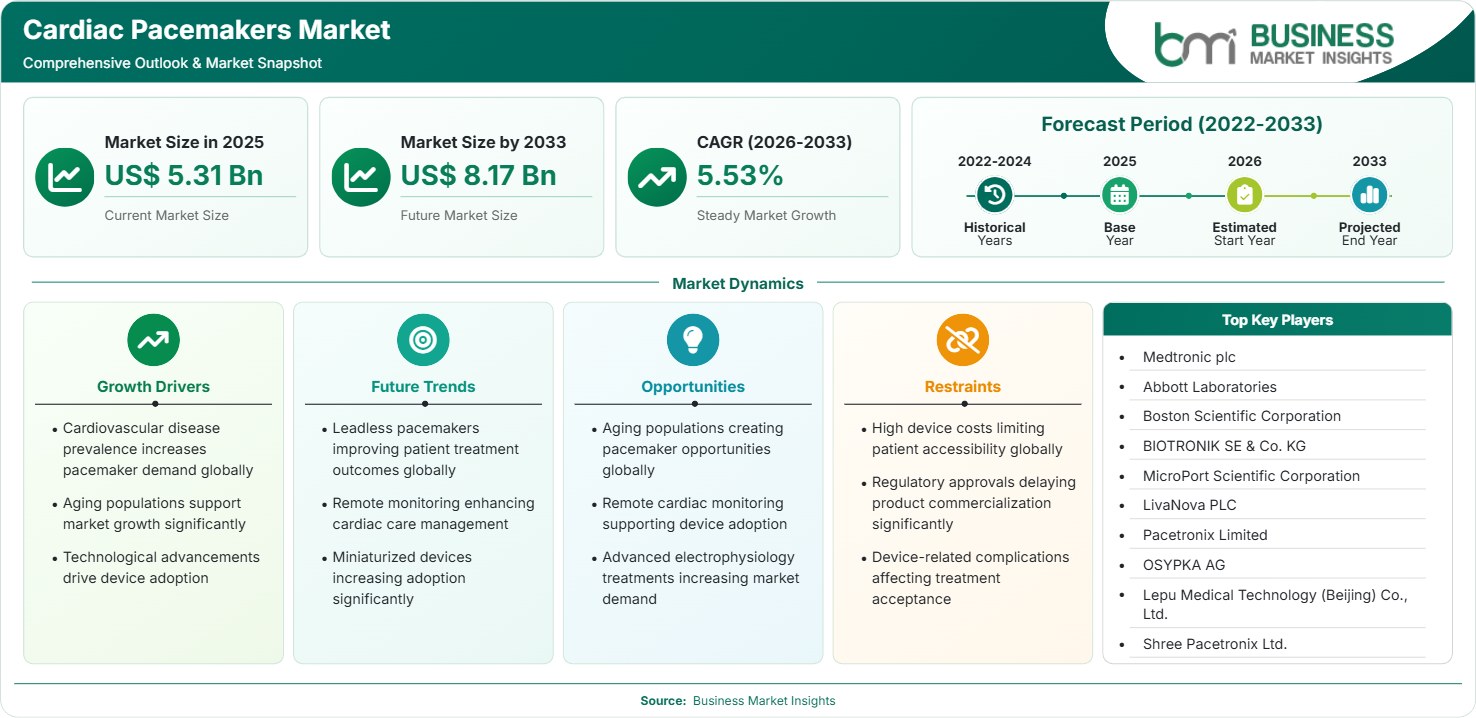
The Cardiac Pacemakers Market size was valued at US$ 5.31 Billion in 2025 and is projected to reach US$ 8.17 Billion by 2033, growing at a CAGR of 5.53% during 2026–2033, driven by rising arrhythmia prevalence, aging populations, advances in leadless pacing, and opportunities in remote monitoring and expanding cardiac care infrastructure.

Report Coverage
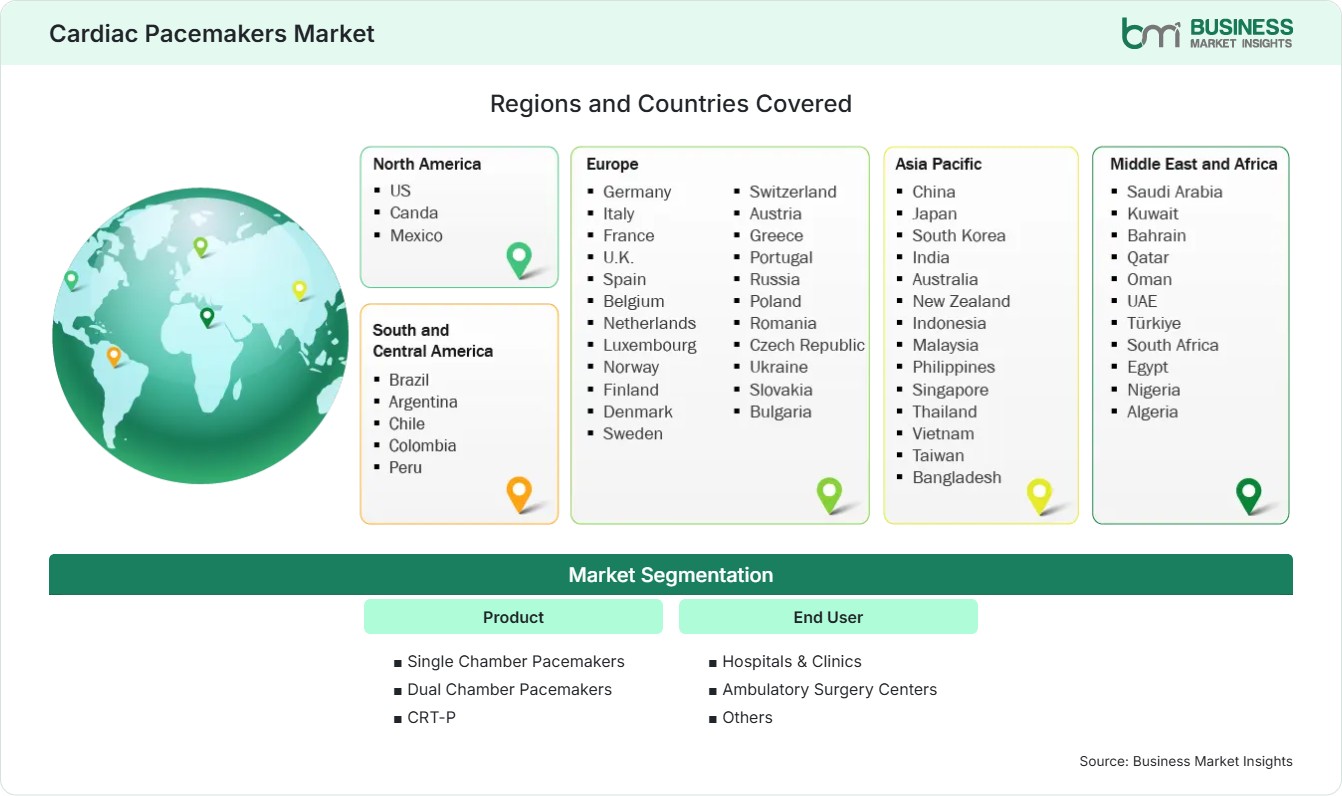
  • Product: Single Chamber Pacemakers, Dual Chamber Pacemakers, CRT-P
  • End User: Hospitals & Clinics, Ambulatory Surgery Centers, Others
US$ 5.31 Bn Market size in 2025
US$ 8.17 Bn Market Size by 2033
5.53% CAGR, 2026 - 2033
2026-2033 Forecast Period

AI Overview

Cardiac Pacemakers Market Summary

  • North America Region: North America holds an estimated 38%–42% Cardiac Pacemakers Market share in 2025, with a projected CAGR of 4.8%–5.6%, supported by established electrophysiology services, reimbursement access, advanced implanting centers, and remote monitoring adoption. The United States benefits from specialist networks and established device management pathways, supporting a modelled CAGR of 4.9%–5.7% during 2026–2033.
  • Fastest Growing Region: Asia Pacific accounts for an estimated 20%–24% share in 2025 and is projected to grow at a CAGR of 6.3%–7.4%, supported by rising cardiac diagnoses, improving hospital access, medical technology investment, and wider availability of implantable rhythm-management devices.
  • Leading Segment: Dual Chamber Pacemakers represent an estimated 48%–54% share in 2025, with a projected CAGR of 4.9%–5.7%, supported by coordinated atrial and ventricular pacing, established clinical use, and their suitability for patients requiring synchronized chamber support.
  • High Growth Segment: Cardiac Resynchronization Therapy-Pacemakers (CRT-P) account for an estimated 17%–21% share in 2025 and are projected to grow at a CAGR of 6.0%–7.1%, supported by heart failure management, ventricular synchronization needs, and expanding access to specialist cardiac assessment.
  • Key Market Opportunity: Leadless pacing, remote device monitoring, and improved access to electrophysiology services create opportunities for manufacturers to differentiate through reduced lead-related complications, efficient follow-up, and solutions adapted to healthcare systems with varied resource availability.
  • Major Market Players: Medtronic plc, Abbott Laboratories, Boston Scientific Corporation, BIOTRONIK SE & Co. KG, MicroPort Scientific Corporation, LivaNova PLC, Pacetronix Limited, OSYPKA AG, Lepu Medical Technology (Beijing) Co., Ltd., and Shree Pacetronix Ltd.
Strategic Insights

Cardiac Pacemakers Market: Strategic Insights

Cardiac Pacemakers Market Strategic Framework
FREE PDF
Request your free sample
Request free sample
Stakeholder View

Key Takeaways

  • Manufacturers compete through device reliability, clinical evidence, specialist relationships, and long-term service support. Suppliers of miniature batteries, integrated circuits, electrodes, and biocompatible materials are strategically important because component quality affects device longevity and manufacturing continuity.
  • Cardiac Resynchronization Therapy-Pacemakers (CRT-P) offer an attractive specialist segment, while leadless pacing creates a technology-led opportunity across eligible patients. Commercial success will depend on clinical selection, procedural expertise, and evidence that supports adoption beyond early centers.
  • Product development is moving toward miniaturization, improved atrioventricular synchrony, longer battery life, and more efficient remote follow-up. Companies that combine reliable hardware with secure digital monitoring may improve patient management while reducing unnecessary clinic visits.
  • India, China, and Southeast Asian markets offer opportunities as cardiac services expand beyond major urban hospitals. Manufacturers must align product portfolios and training programs with local purchasing power, reimbursement arrangements, and the availability of experienced implanting teams.
  • Strategic investment is increasingly relevant to leadless systems, device connectivity, and specialized electrophysiology technologies. Partnerships that provide clinical access, regulatory expertise, or distribution reach can help manufacturers enter new markets without building every capability internally.
  • Lifecycle support is a competitive differentiator. Battery surveillance, device programming, cybersecurity, replacement planning, and patient education influence the total cost of care and can strengthen relationships between manufacturers, hospitals, and cardiology practices.
Geographic Outlook

Cardiac Pacemakers Market Regional Highlights

North America Cardiac Pacemakers Market

North America Cardiac Pacemakers Market share is forecasted to capture between 38% - 42% of the total worldwide market by 2025, growing at a CAGR of 4.8%–5.6% from 2026 to 2033. These figures arise from mature electrophysiology networks, the presence of expert cardiologists, a relatively mature reimbursement environment, and the wide availability of implanted cardiac devices. The US is expected to be the largest country-level opportunity, while Canada will contribute due to its mature cardiac programs in hospitals.

  • Advanced cardiac centers sustain adoption through established implantation teams, structured follow-up, and access to device programming expertise. Manufacturers benefit when they support clinicians with training, diagnostics, and dependable long-term technical service.
  • Leadless systems offer a technology-led opportunity for selected patients who may benefit from avoiding transvenous leads or a surgical pocket. Adoption remains dependent on clinical eligibility, reimbursement, and evidence for long-term outcomes.
  • Remote monitoring can improve device follow-up by identifying relevant rhythm or device events between clinic appointments. Providers must still manage alert volumes, connectivity, cybersecurity, and clinical responsibility for reviewing transmitted information.
  • Replacement demand supports a recurring revenue base, as implanted devices eventually require battery-related assessment and replacement planning. Product reliability and patient continuity are important when hospitals compare device platforms and service commitments.

US Cardiac Pacemakers Market

The US Cardiac Pacemakers Market is expected to account for 78%-84% of the North American pacemaker market revenues in 2025 and is forecast to grow 4.9%-5.7% through 2033. The market has been helped by the presence of specialized cardiac hospitals, clinics, diagnostic capabilities, and competitiveness in the implanted rhythm management devices market. The FDA plays an important role in market access, whereas payers play a significant role in procedure choice and technology adoption.

  • Established electrophysiology services support access to conventional and advanced pacing options. Hospitals evaluate device performance alongside physician familiarity, procedural workflow, technical support, and the ability to manage long-term follow-up.
  • US Food and Drug Administration review requirements shape product development, clinical evidence generation, and launch timing. Manufacturers must account for regulatory submissions, post-market monitoring, and product-specific safety communication throughout the device lifecycle.
  • Remote monitoring platforms provide opportunities to streamline routine surveillance and identify clinically relevant device events. Their value depends on reliable connectivity, secure data handling, appropriate alert triage, and clear responsibility across care teams.

Europe Cardiac Pacemakers Market

The Europe Cardiac Pacemakers Market will generate 25%-29% of worldwide revenue by 2025 and is expected to exhibit a CAGR of 4.5%-5.4% in the period 2026-2033. The well-established healthcare infrastructure, specialized cardiac facilities, and established practices for device implantation drive demand in the region. Germany, France, Italy, and the UK are among the key markets, and factors such as reimbursement policies, hospital procurement practices, and access to specialized services drive country-level market dynamics. Data from the European Society of Cardiology indicate significant variability in pacemaker implantation rate between participating countries.

  • Germany benefits from developed hospital infrastructure and specialist cardiac services. Demand is influenced by procurement decisions, clinical preferences, product reliability, and the availability of experienced implantation and follow-up teams.
  • France and Italy offer established cardiac treatment networks, with demand shaped by public purchasing arrangements and local clinical practice. Manufacturers need consistent technical support and evidence suited to national care pathways.
  • The United Kingdom presents opportunities through established specialist services and structured clinical pathways. Budget constraints and procurement evaluations can influence the timing of adoption for newer, higher-cost pacing technologies.
  • Central and Eastern European markets may offer expansion opportunities where implantation access and specialist capacity improve. Growth will depend on funding, training, device availability, and the ability to sustain follow-up after implantation.

Asia Pacific Cardiac Pacemakers Market

The Asia Pacific Cardiac Pacemakers Market is expected to account for 20%-24% of global market revenue by 2025, with a predicted CAGR of 6.3%-7.4% over 2026-2033. The region's growth dynamics are driven by improved hospital facilities, increased awareness of cardiac rhythm disorders, and the development of specialist care. China and Japan are among the key markets, while there are potential opportunities in India and Southeast Asia due to increased access to treatments. There are significant differences in demand across income levels, insurance coverage, doctor availability, and participation in health systems.

  • China offers opportunities through a large patient base, hospital investment, and domestic medical-device capabilities. Manufacturers must navigate local regulatory requirements, procurement dynamics, and competition from established international and domestic suppliers.
  • Japan's aging population and developed cardiac care infrastructure support demand for pacing therapies. Product selection is influenced by clinical evidence, established physician practice, device reliability, and the requirements of long-term follow-up.
  • India offers growth potential through expanding private cardiac hospitals and increasing access to specialist treatment. Affordability, clinician training, distribution reach, and reimbursement limitations remain central considerations for broader adoption.
  • Southeast Asian markets can benefit from investment in cardiac centers and improved diagnostic pathways. Adoption will depend on hospital capacity, trained implanting clinicians, dependable supply, and sustainable patient follow-up services.

Rest of World Cardiac Pacemakers Market

In Latin America, the Middle East, and Africa together, these regions are expected to account for 7%–11% of total global Cardiac Pacemakers Market revenues in 2025, with a modelled compound annual growth rate of 5.0%–6.5% from 2026 to 2033. The drivers for Latin America include the presence of cardiac centers in Brazil and Mexico, and further expansion in other countries. In the Middle East, investments in specialty hospitals and cardiac facilities can offer opportunities for Gulf markets. In Africa, uptake is hampered by access issues, such as funding for procurement, device costs, lack of specialists, and follow-up.

The key to growth will not lie in procurement and service solutions but in their sustainability. Public hospitals, private hospital networks, charitable organizations, and manufacturers of implantation and replacement devices determine access to implantation and replacement services. Companies that offer training for clinicians, maintenance services, and a reasonable range of products can help achieve greater success in this area. Different import policies and budgets affect the risks in each country.

  • Brazil and Mexico provide important Latin American opportunities through specialist hospitals and the development of cardiac treatment capacity. Distribution networks and procurement arrangements influence which manufacturers can maintain consistent access and post-implantation support.
  • Other South and Central American markets may expand as diagnostic access and cardiac referral pathways improve. Financing, import dependence, and shortages of specialist staff can delay adoption despite clinical need.
  • Gulf countries, including Saudi Arabia and the United Arab Emirates, offer opportunities through investment in advanced hospital services. Procurement decisions emphasize clinical capability, reliability, training, and support for complex cardiac procedures.
  • African markets may benefit from stronger public-private partnerships and specialist training initiatives. Device affordability, dependable supply, and access to follow-up services remain essential to safe and sustainable implantation.
  • Regional distributors can support market access by coordinating registration, inventory, clinician education, and technical assistance. Their value is greatest where manufacturers lack direct commercial infrastructure or hospitals require local service continuity.
Global Market Geography
FREE PDF
Request your free sample
Request free sample
Segment Analysis

Cardiac Pacemakers Market Segmentation

Product

Product accounts for the full device market. Dual-chamber systems are expected to account for 48%–54% of revenue share in 2025 and to grow at a CAGR of 4.9%–5.7% from 2026 to 2033. Clinical appropriateness, device longevity, programmability, and physician expertise define product-based purchase decisions. The Cardiac Pacemakers Market covers both traditional chambered devices and CRT-P devices, which are employed for distinct pacing applications. Reliability, ease of implantation, battery life, and clinical services are the criteria on which manufacturers are competing.

  • Single Chamber Pacemakers: These systems stimulate one heart chamber and are used when clinical requirements permit a simpler pacing configuration. Their established use, relatively straightforward implantation, and suitability for selected rhythm disorders sustain demand across diverse cardiac care settings.
  • Dual Chamber Pacemakers: These devices coordinate pacing between the atrium and ventricle, supporting atrioventricular synchrony when clinically indicated. Their broad application, established clinical familiarity, and flexible programming maintain their importance in routine rhythm-management practice.
  • Cardiac Resynchronization Therapy-Pacemakers (CRT-P): CRT-P devices coordinate ventricular contraction for selected patients with heart failure and electrical conduction abnormalities. Adoption depends on careful patient selection, specialist assessment, and evidence that resynchronization can improve cardiac function and symptoms.

End User

Hospital and clinic settings are predicted to have an income share of 65%-71% in 2025, with a CAGR of 4.9%-5.7% by 2033. The share is a result of the need for specialized cardiac pacemaker evaluation, device placement, imaging support, emergencies, and post-procedure monitoring. Ambulatory surgical centers can see opportunities when patients meet selection criteria and procedures, and regulatory considerations allow for the provision of services on an outpatient basis. The trends in the Cardiac Pacemakers Market among end users are determined by many factors.

  • Hospitals & Clinics: Hospitals and specialist clinics manage most implantations because they offer electrophysiology expertise, diagnostic facilities, and resources for procedural complications. Established device clinics also support programming, surveillance, replacement planning, and ongoing patient management.
  • Ambulatory Surgery Centers: These facilities may provide selected procedures in suitable healthcare systems where outpatient cardiac interventions are clinically appropriate. Expansion depends on patient selection, procedural safety, emergency transfer arrangements, reimbursement, and access to qualified electrophysiology professionals.
  • Others: The supplied segmentation identifies this category as an end-user classification. It is not treated as an additional sub-segment in this analysis because the specified reporting framework excludes an Other or Other sub-segment from the published segmentation breakdown.
Market Forces

Cardiac Pacemakers Market Dynamics

Key Market Drivers

Increasing Cardiovascular Disease Burden and Aging Populations

Aging populations and the continuing burden of cardiovascular disease support demand for diagnosis and treatment of rhythm disorders. The number of people who died from cardiovascular diseases across the globe is estimated at 19.8 million in 2022 by the WHO, which shows the size of the problem in terms of healthcare challenges. However, this number covers all cardiovascular diseases, not pacemaker candidates, but still points to the importance of having good cardiac treatment services. With more and more patients getting older, there is a need for proper detection of bradycardia and conducting issues. Cardiac Pacemakers Market growth, therefore, depends on translating diagnosis into appropriate treatment through specialist referral, clinical assessment, implantation capacity, and long-term monitoring.

Clinical Preference for Reliable and Individualized Pacing

Pacemaker choice has become increasingly dependent on factors such as the patient's conduction abnormality, pacing demands, comorbidities, and the need for long-term therapy. Dual-chamber pacemakers remain relevant when synchronization of both atria and ventricles is required, and CRT-P may be beneficial in some heart failure patients who meet the criteria for such treatment. Another option is leadless pacemakers, which have become possible to use in appropriate candidates without transvenous leads and the necessity to create a surgical pocket. These alternatives serve to meet various clinical demands and are not meant to be replacements for one another. Companies need to ensure the safety, reliability, and clinical relevance of their devices. Cardiac Pacemakers Market trends thus make product lines diversified enough to meet all these needs without violating any established standards of care.

Expansion of Specialist Cardiac Treatment Infrastructure

The development of cardiology units, electrophysiology laboratories, diagnostic services, and training programs enables the performance of pacing procedures. Hospitals must have the capacity for everything from diagnosis to implantation, programming, complication management, and preparation for replacement. Referral processes should be optimized to identify patients who need specialist referral due to symptoms or conduction abnormalities. The chance is especially valuable in those healthcare systems that concentrate their cardiac care in big cities and where patients have to travel long distances. It could be done by manufacturers through training, education, and technical support. Nevertheless, investment in equipment alone does not create demand without having skilled clinicians and funding opportunities.

Key Market Opportunities

Commercial Expansion of Leadless Pacing Technologies

Leadless pacing offers manufacturers a differentiated proposition for appropriately selected patients who may benefit from avoiding transvenous leads or a surgical pocket. Abbott unveiled its AVEIR dual-chamber leadless pacemaker in India on October 6, 2025, showcasing the technology's geographic expansion. The Cardiac Pacemakers Market opportunity includes improved sensing, interdevice communication, retrievability, and long-term management. Commercial success will hinge on clinical suitability, training, reimbursement, and data from various patient types. It is important to be able to differentiate between the capabilities of the product that have been validated versus new indications.

Remote Monitoring and Connected Device Services

Connected follow-up services offer an opportunity to extend manufacturer value beyond the initial implant. Remote monitoring can transmit device information to clinical teams, helping them review relevant events without requiring every check to occur in person. Differences between products may be created by providing connectivity, user-friendly interfaces for doctors, secure data transmission, and incorporation into the hospital process flow. Cardiac Pacemakers Market Forecasts will benefit investors most if they consider the recurring service needs of implanted devices rather than assuming device sales are a single transaction. Business models, however, must address alert fatigue, data management, patient access, and the analysis of incoming data.

Access Expansion Through Local Partnerships and Training

Investment in healthcare in India, China, Southeast Asia, Latin America, and the Gulf regions presents opportunities for firms to contribute across the entire treatment chain. Collaboration with hospitals and distributors will enable us to enhance product accessibility, educate medical staff, manage the registration process, and provide technical assistance. Manufacturing locally or assembling regionally could be beneficial for some firms in meeting procurement needs and ensuring supply continuity, depending on component availability and quality control. It is critical to focus on access sustainability rather than just the amount of product delivered.

Market Restraints and Challenges

High Device and Procedure Costs

Factor: Pacemaker therapy encompasses the technology itself, the implantation process, the use of hospital infrastructure, follow-up, and future replacement. More advanced technologies will require additional equipment, specialized skills, and purchase considerations. Impact: High costs across all stages could hinder the availability of such technologies in low-cost settings, especially in cases of partial insurance and direct patient payments. The hospitals will prefer familiar devices that have a known set of service needs and will avoid more innovative technologies. Producers should prove their value through reliability, proper indications, and the ability to facilitate the work processes.

Regulatory Complexity and Uneven Specialist Capacity

Factor: Implantable cardiac devices are subject to several regulatory requirements, including evidence assessment, manufacturing, tracking, and post-market safety surveillance. Markets differ in their regulatory approval timelines, reimbursement policies, and purchasing practices. Impact: The difficulty of the regulatory process can delay product launch and increase development costs, while the limited availability of electrophysiologists can limit adoption even after approval. Remote areas may lack the manpower and infrastructure needed for proper patient follow-up.

Company Analysis

Competitive Landscape

The Cardiac Pacemakers Market analysis centers on established multinational manufacturers and specialist suppliers competing through pacing technologies, product reliability, clinical support, and geographic reach. The supplied company field was blank, so the following active companies form a representative competitive set rather than a confirmed customer-provided list.

Company Name

Overview

Products and Services relevant to this market

Medtronic plc

Global medical technology company with an established cardiac rhythm management business and broad hospital relationships.

Conventional and leadless pacemakers, cardiac rhythm management systems, remote monitoring, device programming, and clinical support.

Abbott Laboratories

Diversified healthcare company with a significant cardiovascular device portfolio and investment in leadless pacing.

Single- and dual-chamber pacing solutions, AVEIR leadless pacemakers, rhythm management technologies, and patient monitoring services.

Boston Scientific Corporation

Medical technology manufacturer active in electrophysiology and implantable cardiac rhythm management.

Implantable pacing systems, cardiac rhythm management devices, remote monitoring support, and related clinical technologies.

BIOTRONIK SE & Co. KG

Specialist cardiovascular technology company with expertise in implantable devices and connected cardiac care.

Conventional pacemakers, cardiac resynchronization technologies, lead systems, and remote patient monitoring solutions.

MicroPort Scientific Corporation

Medical device group with cardiovascular technologies and a presence in international markets.

Implantable cardiac rhythm management products, pacing systems, and associated device support.

LivaNova PLC

Medical technology company focused on cardiovascular and neuromodulation therapies, with an established cardiac device heritage.

Cardiac device technologies and related cardiovascular products; specific pacemaker availability should be verified by market and product line.

Pacetronix Limited

An Indian medical device manufacturer specializing in cardiac rhythm management products.

Implantable pacemakers, pacing leads, and related cardiac device products for clinical use.

OSYPKA AG

Specialist medical technology company active in cardiac stimulation and electrophysiology-related products.

Cardiac pacing equipment, temporary pacing technologies, electrodes, and associated accessories.

Lepu Medical Technology (Beijing) Co., Ltd.

Medical device manufacturer with cardiovascular products and an international distribution footprint.

Cardiac rhythm management and cardiovascular device offerings; current pacemaker models and registrations vary by market.

Shree Pacetronix Ltd.

Indian cardiac device business associated with pacing products and specialist medical technology supply.

Pacemaker-related products and accessories; current legal entity and portfolio alignment should be confirmed before commercial publication.

Trust & Transparency

Research Methodology

The market analysis combines proprietary research with secondary data from government agencies, company disclosures, regulatory filings, industry databases and expert interviews. Market estimates are validated through data triangulation, cross-market benchmarking and analyst review.

View Full Research Methodology

Questions Answered

Frequently Asked Questions

How does patient selection influence CRT-P adoption?

CRT-P is intended for appropriately selected patients who may benefit from coordinated ventricular pacing. Clinicians evaluate cardiac function, electrical conduction patterns, symptoms, and applicable clinical criteria before deciding whether resynchronization therapy is suitable.

Why is the Cardiac Pacemakers Market Report relevant to medical device investors?

It helps investors assess product differentiation, regional access, competitive positioning, procedural infrastructure, and the commercial implications of emerging pacing technologies. Investment decisions should also account for regulatory timelines, clinical evidence, reimbursement, and long-term service requirements.

What distinguishes leadless pacemakers from conventional systems?

Leadless devices are implanted inside the heart and do not require conventional transvenous leads or a separate surgical pocket. Their suitability depends on the patient's clinical needs, device indication, procedural considerations, and the capabilities of the treating center.

How can remote monitoring support pacemaker care?

Remote monitoring enables clinicians to review transmitted device information and selected rhythm events between scheduled visits. Its value depends on dependable connectivity, secure data handling, appropriate alert thresholds, and sufficient clinical resources to review and act on relevant findings.

What factors should hospitals evaluate before selecting a pacemaker platform?

Hospitals should assess clinical indications, device reliability, battery longevity, implantation requirements, programming capabilities, follow-up arrangements, and the manufacturer's technical support. Procurement teams should also consider total lifecycle cost and the availability of compatible accessories.

Access the Full Cardiac Pacemakers Market Report

Get segment-level forecasts, regional estimates, competitive benchmarking, company profiles and downloadable Excel datasets.

Access the full Cardiac Pacemakers Market Report
350 pages PDF & Excel | 2026-10-21
Similar Research

Related Market Reports