
Foot Care Products Market Outlook: Size, Share, Trends, Growth Analysis, Competitive Landscape & Forecast, 2026-2033

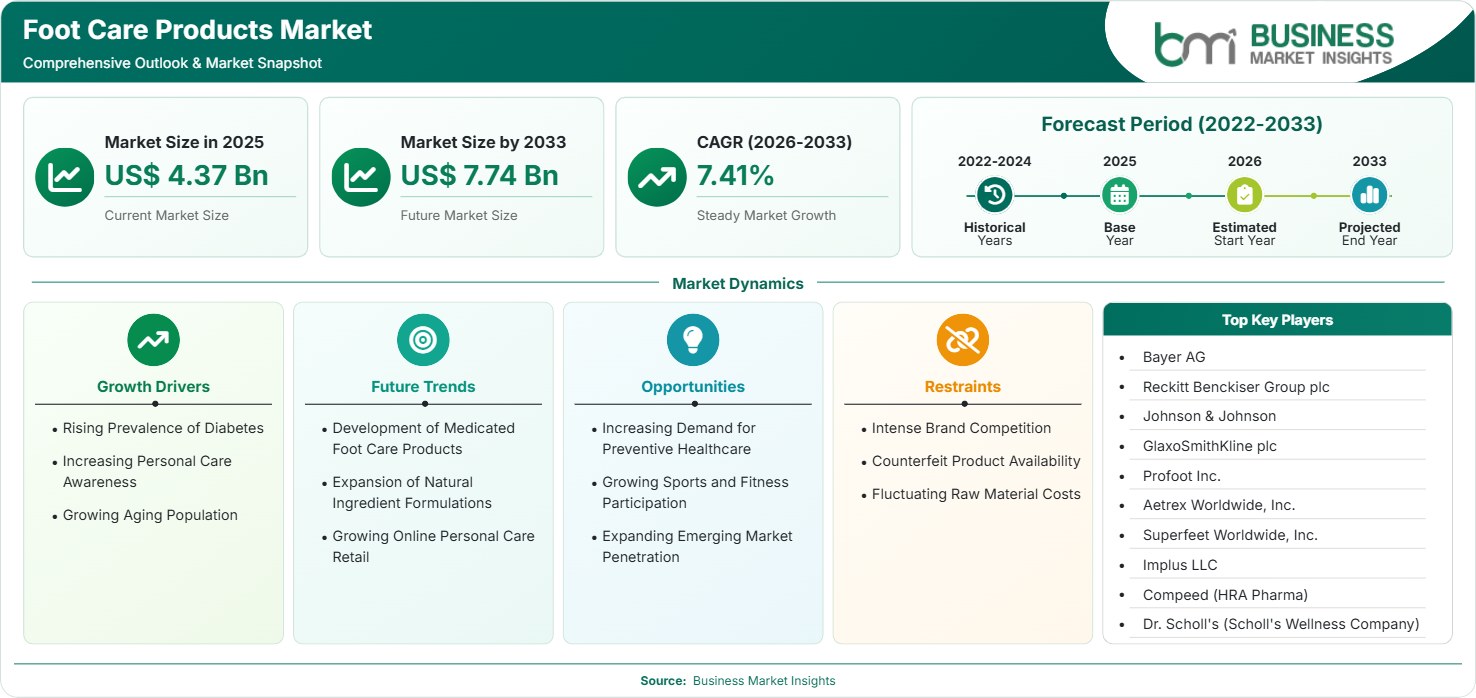
The Foot Care Products Market size was valued at US$ 4.37 Billion in 2025 and is projected to reach US$ 7.74 Billion by 2033, growing at a CAGR of 7.41% during 2026–2033, driven by rising diabetes prevalence, increasing personal care awareness, aging demographics, preventive healthcare adoption, and expanding sports-related foot protection requirements.

Report Coverage
  • Type: Foot Creams & Lotions, Shoe Pads, Moisturizing Socks, Others
  • Categories: Personal Use, Sports & Athletes, Medical
  • Distribution Channel: Hypermarkets & Supermarkets, Pharmacy Stores, Online Stores, Convenience Stores
US$ 4.37 Bn Market size in 2025
US$ 7.74 Bn Market Size by 2033
7.41% CAGR, 2026 - 2033
2026-2033 Forecast Period

01 AI Overview

Foot Care Products Market Summary

  • North America Region: North America holds 34%–37% share in 2025, expanding at a CAGR of 6.9%–7.3% through 2033, supported by advanced personal care adoption, diabetic foot management awareness, premium product innovation, and strong pharmacy networks. The U.S. market grows with a CAGR of 7.0%–7.4% due to preventive foot health solutions and consumer wellness spending.
  • Fastest Growing Region: Asia Pacific represents 25%–28% share in 2025 and records the fastest CAGR of 8.5%–8.9% during 2026–2033, supported by rising disposable income, expanding healthcare access, increasing beauty consciousness, growing diabetic populations, and rapid online retail penetration.
  • Leading Segment: Medical category accounts for 38%–41% share in 2025 and grows at a CAGR of 7.6%–8.0%, driven by diabetic foot care demand, therapeutic product adoption, podiatric recommendations, and increasing focus on preventive treatment solutions among aging populations.
  • High Growth Segment: Online Stores segment captures 18%–21% share in 2025 and expands at a CAGR of 9.0%–9.5%, supported by digital commerce growth, wider product availability, subscription models, consumer reviews, and convenient home delivery services.
  • Key Market Opportunity: Increasing demand for specialized diabetic foot solutions, athlete-focused products, sustainable formulations, and digital retail channels creates opportunities for manufacturers to develop targeted solutions addressing diverse consumer healthcare and lifestyle requirements.
  • Major Market Players: Bayer AG, Reckitt Benckiser Group plc, Johnson & Johnson, GlaxoSmithKline plc, Profoot Inc., Aetrex Worldwide, Inc., Superfeet Worldwide, Inc., Implus LLC, HRA Pharma, Scholl's Wellness Company.
02 Strategic Insights

Foot Care Products Market: Strategic Insights

Foot Care Products Market Strategic Framework
FREE PDF
Request your free sample
Request free sample
03 Stakeholder View

Key Takeaways

  • The supply chain structure includes ingredient suppliers, formulation developers, manufacturers, distributors, pharmacies, and digital retailers. Companies with integrated sourcing capabilities and diversified distribution networks gain competitive advantages by improving cost efficiency and responding quickly to changing consumer preferences.
  • Medical and sporting applications have high growth prospects because consumers demand tailored options for managing diabetes, improving athletic ability, preventing injuries, and enhancing everyday comfort. Innovations that target specific illnesses can help position products at high-value.
  • Innovations in this industry involve multiple functions, sustainable packaging, advanced cushioning technology, and customized options. Research is being conducted to create products that combine medical benefits with beauty.
  • The APAC region presents a lucrative investment option due to the rise in the number of middle-class populations, health awareness, and quick adoption of e-commerce practices in the area.
  • Partnerships, acquisition of brands, and portfolio expansion efforts play an important role in determining competitive positioning in the specialized foot care segment through the entry of healthcare and consumer goods companies into the segment.
  • Digital transformation is becoming a critical differentiation factor through online marketing channels that allow reaching out to consumers and educating them about the products available.
04 Geographic Outlook

Foot Care Products Market Regional Highlights

North America Foot Care Products Market

North America accounted for 34%–37% of global revenue in 2025 and is projected to grow at a CAGR of 6.9%–7.3% during 2026–2033. The Foot Care Products Market share remains supported by premium product adoption, pharmacy availability, and consumer preference for preventive wellness solutions. The United States represents the largest contributor, followed by Canada, with manufacturers emphasizing therapeutic formulations, comfort technologies, and specialized solutions for aging consumers.

  • Rising diabetes prevalence encourages adoption of medical-grade foot care solutions, including protective creams, therapeutic treatments, and specialized products recommended by healthcare professionals for long-term patient management and preventive care.
  • Strong consumer awareness regarding hygiene, skincare, and personal wellness supports demand for premium moisturizing products, exfoliation solutions, and advanced formulations designed for daily foot maintenance.
  • Established pharmacy chains and organized retail networks improve accessibility of branded products, enabling manufacturers to strengthen distribution partnerships and expand consumer reach across diverse demographic groups.
  • Increasing sports participation and fitness activities create demand for performance-oriented products such as cushioning inserts, protective pads, and recovery-focused foot care solutions among active consumers.

US Foot Care Products Market

The United States represented approximately 82%–85% of North American revenue in 2025 and is expected to expand at a CAGR of 7.0%–7.4% through 2033. The Foot Care Products Market share in the country is strengthened by demand for diabetic care products, sports applications, and premium personal care solutions. Manufacturers increasingly focus on innovation, clinical validation, and digital engagement strategies to capture changing consumer preferences across healthcare and lifestyle segments.

  • Growing preference for preventive healthcare encourages consumers to purchase specialized products addressing dryness, discomfort, odor control, and mobility-related concerns through convenient retail and online channels.
  • Expanding sports and fitness participation increases demand for supportive shoe pads, performance insoles, and recovery products among athletes and recreational users seeking improved comfort.
  • Digital commerce platforms enable broader product discovery, subscription-based purchasing, and personalized recommendations, helping brands increase direct consumer relationships and improve market visibility.
  • Healthcare professionals increasingly recommend specialized products for diabetic patients, creating stronger connections between medical care providers and foot wellness manufacturers.

Europe Foot Care Products Market

Europe captured approximately 27%–30% share in 2025 and is forecast to expand at a CAGR of 7.2%–7.6% through 2033. The region benefits from aging populations, healthcare awareness, and strong demand for premium personal care products. Germany, the United Kingdom, and France represent major contributors, while Nordic countries show increasing adoption of advanced wellness solutions. The Foot Care Products Market share is influenced by pharmacy-based distribution, regulatory compliance, and growing interest in preventive foot health management.

  • Germany leads regional adoption through developed healthcare systems, strong consumer purchasing power, and increasing demand for medically oriented foot protection products among older populations.
  • The United Kingdom demonstrates strong growth through expanding online retail adoption, increasing wellness awareness, and rising consumer interest in convenient home-based foot care solutions.
  • European consumers increasingly prefer sustainable formulations and environmentally responsible packaging, encouraging manufacturers to invest in cleaner ingredients and recyclable product designs.
  • Regulatory emphasis on cosmetic and healthcare product safety encourages companies to improve formulation transparency, quality testing, and consumer trust across European markets.
  • France and Italy continue supporting premium product demand through beauty care integration and increasing adoption of specialized personal grooming solutions.

Asia Pacific Foot Care Products Market

Asia Pacific accounted for 25%–28% of global revenue in 2025 and is anticipated to register the fastest CAGR of 8.5%–8.9% during 2026–2033. Expanding healthcare access, rising disposable incomes, increasing beauty consciousness, and growing digital retail adoption support regional expansion. China represents the largest market, while India records rapid growth due to healthcare modernization and increasing consumer awareness. The Foot Care Products Market share continues expanding through affordable product availability, local manufacturing, and rising demand for preventive wellness products.

  • China maintains regional leadership through large consumer demand, expanding e-commerce ecosystems, and increasing adoption of branded personal care and therapeutic foot care solutions.
  • India demonstrates strong growth potential as rising diabetes cases, healthcare awareness programs, and improving retail infrastructure increase demand for specialized products.
  • Southeast Asian countries benefit from growing middle-class populations, urbanization, and increasing interest in personal grooming and preventive healthcare solutions.
  • Online marketplaces improve accessibility across emerging economies by offering diverse product ranges, competitive pricing, and convenient delivery options for consumers.
  • Japan and South Korea support premium segment expansion through advanced skincare technologies, aging population needs, and strong consumer preference for quality products.

Rest of World Foot Care Products Market

The Rest of World region represented 8%–10% of global revenue in 2025 and is projected to grow at a CAGR of 7.5%–8.0% through 2033. South and Central America benefit from expanding healthcare awareness, improving retail infrastructure, and rising personal care spending. Middle East and Africa markets are supported by increasing healthcare investments, urbanization, and growing interest in wellness products. Brazil leads South American demand, while Saudi Arabia and the United Arab Emirates show stronger adoption across Middle Eastern economies.

  • Brazil continues expanding through growing pharmacy networks, increasing consumer awareness, and rising demand for affordable therapeutic and personal care foot solutions.
  • Middle Eastern countries invest in healthcare modernization, creating opportunities for specialized products addressing lifestyle-related conditions and preventive wellness requirements.
  • African markets experience gradual adoption through improving retail access, increasing urban populations, and rising availability of international healthcare and personal care brands.
  • International companies strengthen regional presence through partnerships with local distributors, improving product availability and consumer education initiatives.
  • Growing digital commerce adoption supports wider market penetration by enabling consumers in developing regions to access diverse foot care product categories.
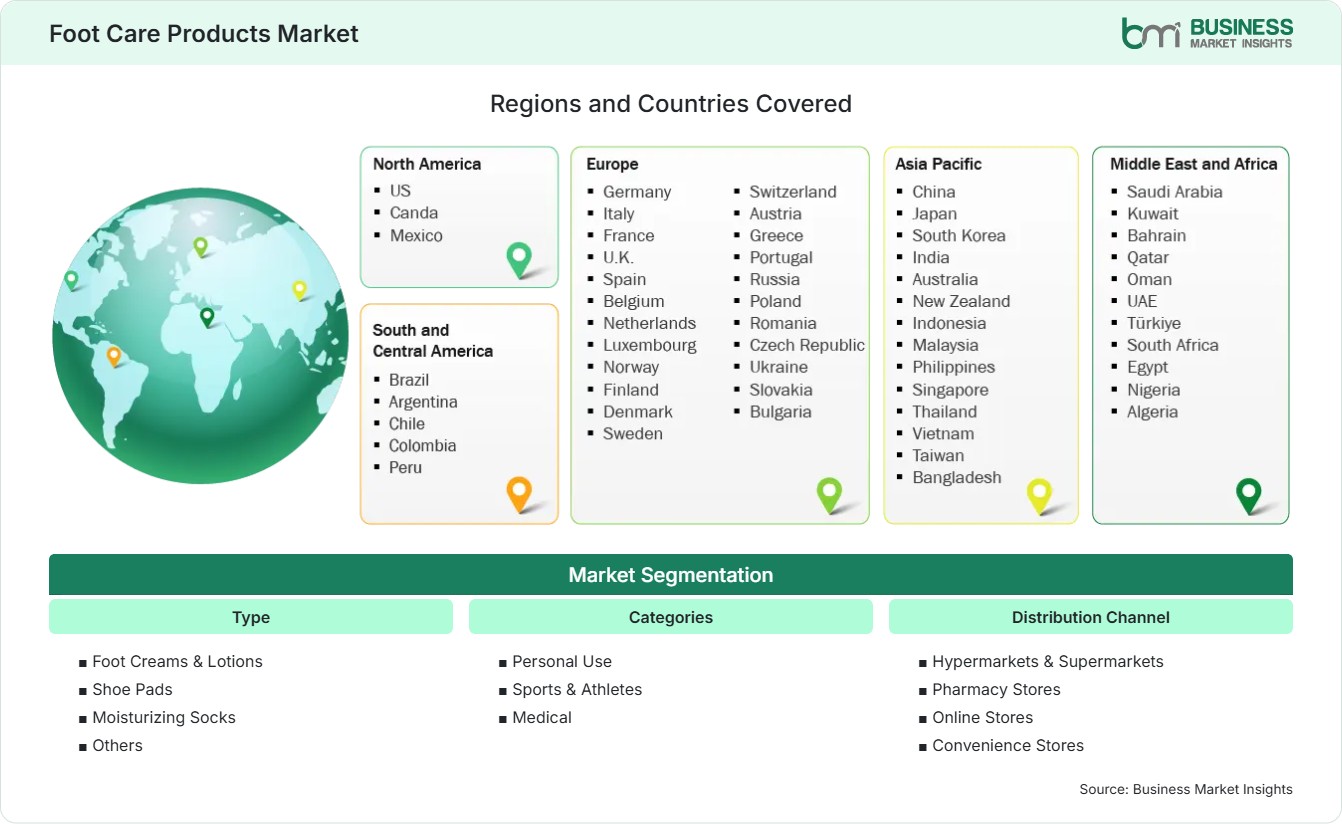
Global Market Geography
FREE PDF
Request your free sample
Request free sample
05 Segment Analysis

Foot Care Products Market Segmentation

Type

The Type segment represents a diverse product ecosystem addressing therapeutic, cosmetic, and comfort-based consumer requirements. The Foot Care Products Market scope expands as manufacturers introduce multifunctional products combining hydration, protection, and corrective benefits. The segment is estimated to account for 45%–48% share in 2025 and grow at a CAGR of 7.3%–7.7% between 2026–2033.

  • Foot Creams & Lotions: These products dominate daily foot care routines through moisturizing, repairing, and protective benefits. Demand increases due to dryness concerns, diabetic care needs, and expanding personal wellness awareness among consumers.
  • Shoe Pads: Cushioning and support solutions address discomfort, pressure points, and mobility issues. Adoption is increasing among athletes, professionals, and elderly consumers seeking enhanced footwear comfort and reduced foot strain.
  • Moisturizing Socks: Innovative sock-based treatments provide intensive hydration and convenience. Growing interest in at-home spa experiences and premium self-care routines supports wider consumer adoption across beauty and wellness segments.

Categories

The Categories segment includes Personal Use, Sports & Athletes, and Medical applications, each addressing different consumer requirements. The Foot Care Products Market share is influenced by evolving consumer lifestyles, preventive healthcare adoption, and product specialization. This segment is projected to hold 38%–41% share in 2025 with a CAGR of 7.5%–7.9% during 2026–2033.

  • Personal Use: Consumers increasingly adopt foot care solutions for hygiene, skincare, relaxation, and cosmetic benefits. Growing self-care awareness and premium personal grooming trends support category expansion.
  • Sports & Athletes: Performance-oriented products address foot protection, recovery, and comfort requirements among athletes. Rising fitness participation and recreational sports engagement drive demand for specialized solutions.
  • Medical: Medical applications benefit from increasing diabetic populations, podiatric recommendations, and demand for therapeutic products designed to manage foot-related health concerns effectively.

Distribution Channel

Distribution channels play an important role in product accessibility, brand visibility, and consumer purchasing behavior. The Foot Care Products Market trends indicate increasing channel diversification, with companies investing in omnichannel strategies. The segment accounts for 42%–45% share in 2025 and is projected to expand at a CAGR of 8.0%–8.4% through 2033.

  • Hypermarkets & Supermarkets: These channels provide convenient access to mass-market products, supporting impulse purchases, brand visibility, and consumer engagement through promotional activities.
  • Pharmacy Stores: Pharmacies remain preferred for therapeutic products due to professional recommendations, healthcare trust, and consumer preference for medically associated foot care solutions.
  • Online Stores: Digital platforms enable wider product selection, competitive pricing, customer reviews, and direct brand interactions, accelerating adoption among technology-oriented consumers.
  • Convenience Stores: These outlets support quick purchases of essential foot care products, particularly in urban areas where consumers prioritize accessibility and immediate availability.
06 Market Forces

Foot Care Products Market Dynamics

Key Market Drivers

Rising Prevalence of Diabetes

Increasing diabetes prevalence is a major driver as diabetic individuals require continuous foot monitoring and preventive care solutions to reduce complications. According to the International Diabetes Federation, there are hundreds of millions of diabetic patients globally; hence, there is an increased need for special creams, protective items, and therapy. The Foot Care Products Market growth is facilitated by health awareness drives that emphasize early action. Companies are producing clinically-based products with improved moisturizing, antimicrobial, and protective abilities.

Increasing Personal Care Awareness

The growing consumer attention towards the cleanliness, look, and wellbeing of their feet is resulting in the increased need for sophisticated foot care products that go beyond mere maintenance. The consumer is opting for high-quality creams, exfoliation products, moisturizers, and other unique foot care products as part of a regular self-care regimen. The role of social media and beauty trends is helping increase foot care awareness amongst consumers. The manufacturers have adapted to this trend through innovation in formulation to combine aesthetic and functional attributes into one product.

Growing Aging Population

The growing number of the elderly population increases the need for the development of products that will provide solutions for dry skin, mobility problems, and foot pain associated with aging. Elderly people need preventive and supportive treatment in order to remain independent and have better quality of life. Healthcare professionals put an increased emphasis on foot management, particularly among those who have chronic diseases. Such a demographic change motivates the production of convenient and effective products.

Key Market Opportunities

Increasing Demand for Preventive Healthcare

Preventive healthcare adoption creates opportunities for manufacturers to position foot care products as essential wellness solutions rather than occasional purchases. Growing consumer awareness regarding early intervention, prevention of diabetic foot complications, and the importance of good hygiene is fostering investments in self-care regimes. Foot Care Products Market Forecast reveals growing opportunities for the development of clinically backed products and campaigns. Expansion of companies can be done by establishing relationships with healthcare institutions, pharmacies, and wellness portals.

Growing Sports and Fitness Participation

The increasing number of people participating in running, exercise, and recreational sports means that there is a need for performance-oriented footcare products. There is a need for products that assist in recovery, injury prevention, comfort, and prolonged activity. The companies are producing shoe pads and other foot care products that are meant for the athletes. The growth of the fitness culture among the younger generation provides an opportunity for the development of special product lines.

Expanding Emerging Market Penetration

Emerging economies represent substantial opportunities owing to the increasing disposable income, better healthcare facilities, and the rising level of consumer consciousness. Businesses are creating extensive distribution channels in the regions of Asia Pacific, Latin America, and the Middle East in order to gain access to this emerging consumer base. Affordable product lines, localized formulations, and online commerce can enhance the reach of such products. The increasing number of urban consumers and the improved pharmacy infrastructure represent positive trends for foreign and regional pharmaceuticals manufacturers.

Market Restraints and Challenges

Intense Brand Competition

Factor: High competition among established healthcare, personal care, and specialized foot care brands creates pricing pressure and increases marketing costs. Impact: Factor: High competition among established healthcare, personal care, and specialized foot care brands creates pricing pressure and increases marketing costs. Impact: Firms might encounter low profit margins despite their need to invest consistently in innovation, branding, and consumer engagement. The presence of big multinational companies with well-developed distribution channels is a difficult factor that limits the ability of small firms to establish themselves on the market.

Counterfeit Product Availability

Factor: Increasing availability of counterfeit foot care products through unauthorized sellers affects brand reputation and consumer trust. Impact: Counterfeit products can lower the confidence of consumers, raise safety issues, and affect negatively the profits of legal producers. There is an added problem in online markets owing to the challenges involved in preventing listings without approval and ensuring the authenticity of products. Authentication tools, packaging security improvements, and better control over distribution are among measures being employed by firms to mitigate counterfeiting problems.

07 Company Analysis

Competitive Landscape

The Foot Care Products Market analysis highlights a competitive environment shaped by multinational healthcare companies, specialized foot wellness brands, and consumer goods manufacturers. Strategic partnerships, portfolio diversification, and investments in advanced product development remain key approaches for improving consumer reach and addressing evolving healthcare and lifestyle requirements.

Company Name

Overview

Products and Services relevant to this market

Bayer AG

Bayer is a global life sciences company operating across healthcare and consumer wellness segments with strong brand recognition and distribution capabilities.

Provides foot care solutions focused on skin protection, moisturizing, therapeutic applications, and consumer healthcare products supporting daily foot wellness.

Reckitt Benckiser Group plc

Reckitt is a multinational consumer health company offering trusted wellness brands across hygiene, healthcare, and personal care categories worldwide.

Develops consumer healthcare products addressing skin care, hygiene management, and specialized personal care requirements related to foot wellness.

Johnson & Johnson

Johnson & Johnson operates healthcare businesses with extensive expertise in consumer health products and global medical innovation capabilities.

Offers healthcare and personal care solutions supporting skin health, protection, hygiene, and wellness-related foot care applications.

GlaxoSmithKline plc

GSK is a global healthcare company focused on innovative consumer health and pharmaceutical solutions across multiple therapeutic categories.

Provides healthcare products supporting skin protection, therapeutic care, and consumer wellness applications relevant to foot health management.

Profoot Inc.

Profoot specializes in foot care products designed for comfort, pain relief, and support through targeted consumer solutions.

Manufactures shoe inserts, cushions, orthotic supports, and foot comfort products addressing pressure relief and mobility requirements.

Aetrex Worldwide, Inc.

Aetrex is a specialized foot wellness company focused on orthotics, footwear technology, and biomechanical support solutions.

Offers orthotic insoles, supportive footwear solutions, and technologies designed for alignment, comfort, and foot health improvement.

Superfeet Worldwide, Inc.

Superfeet develops performance-oriented foot support products serving athletes, active consumers, and individuals requiring enhanced comfort.

Provides premium insoles, footwear support technologies, and customized solutions for sports performance and everyday mobility.

Implus LLC

Implus is a consumer products company specializing in fitness, footwear accessories, and personal care categories.

Supplies foot care accessories, insoles, shoe supports, and wellness products distributed through retail and online channels.

HRA Pharma

HRA Pharma is a healthcare company focused on consumer health solutions and specialty products across international markets.

Offers healthcare-oriented products supporting personal wellness, skin care, and consumer health management applications.

Scholl's Wellness Company

Scholl's Wellness Company is a recognized foot care brand specializing in consumer products for comfort and protection.

Provides foot creams, insoles, treatments, and comfort solutions designed for everyday foot care and mobility support.

10 Trust & Transparency

Research Methodology

The market analysis combines proprietary research with secondary data from government agencies, company disclosures, regulatory filings, industry databases and expert interviews. Market estimates are validated through data triangulation, cross-market benchmarking and analyst review.

View Full Research Methodology

11 Questions Answered

Frequently Asked Questions

How does the Foot Care Products Market Report help businesses evaluate opportunities?

The report provides insights into market dynamics, segmentation, competitive positioning, regional developments, growth opportunities, and strategic factors influencing future business decisions.

What role does sustainability play in product development?

Companies are increasingly adopting sustainable packaging, cleaner ingredients, and environmentally responsible manufacturing practices to align with consumer expectations and regulatory priorities.

Why are medical applications becoming important for product manufacturers?

Medical applications offer opportunities to address chronic conditions, aging-related concerns, and healthcare recommendations. Manufacturers are developing clinically supported products to improve credibility and meet specialized consumer requirements.

How are online channels influencing purchasing behavior in this sector?

Online platforms improve product accessibility, provide consumer reviews, support comparison-based purchasing, and enable brands to reach customers beyond traditional retail locations through direct-to-consumer strategies.

What factors are increasing demand for specialized foot care products?

Consumer interest is shifting toward preventive wellness, diabetic foot management, sports recovery, and premium personal care routines. Growing healthcare awareness encourages consumers to select targeted products rather than general-purpose solutions.

Access the Full Foot Care Products Market Report

Get segment-level forecasts, regional estimates, competitive benchmarking, company profiles and downloadable Excel datasets.

Access the full Foot Care Products Market Report
350 pages PDF & Excel | 2026-08-12