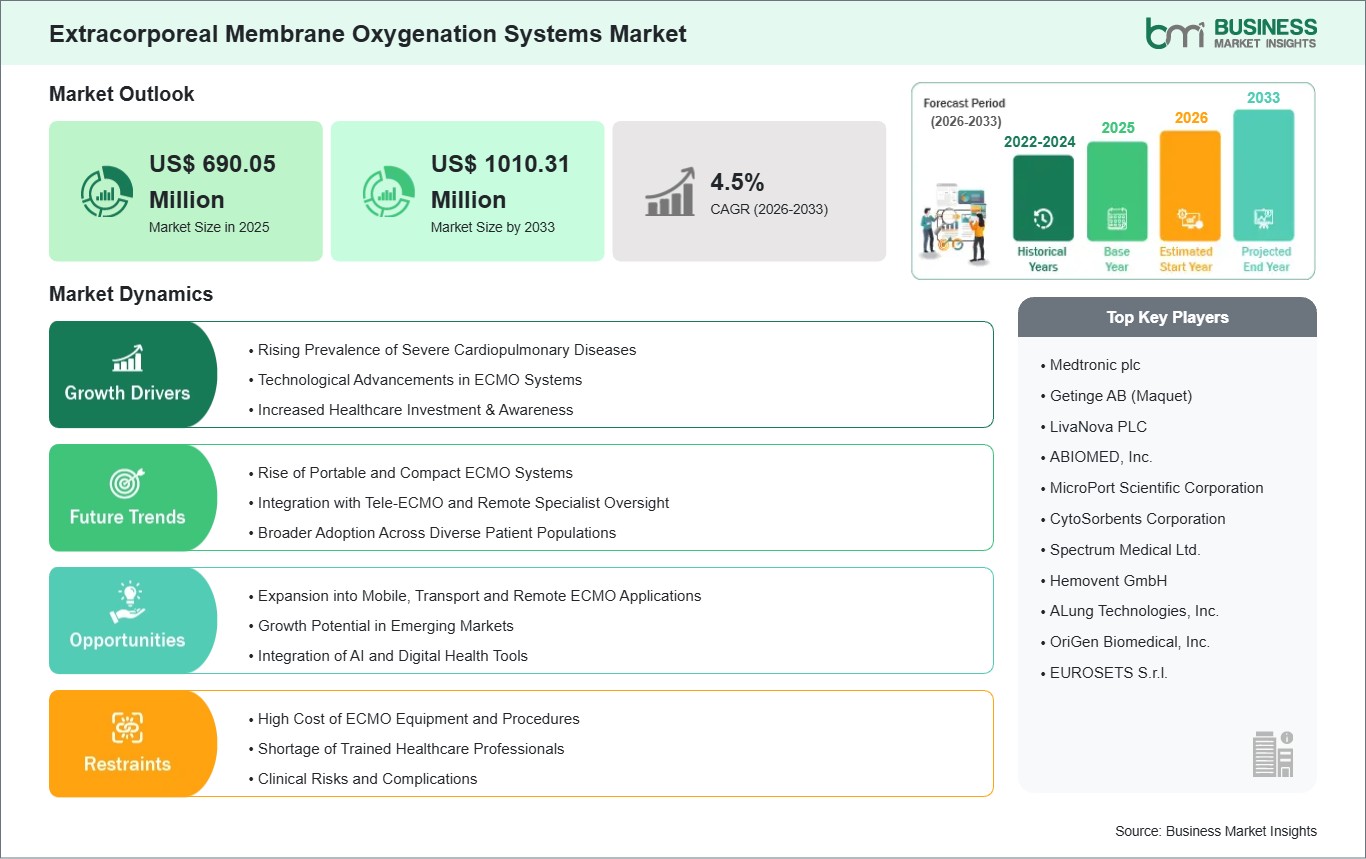
The Extracorporeal Membrane Oxygenation Systems Market size is expected to reach US$ 1010.31 Million in 2033 from US$ 690.05 Million in 2025. The market is estimated to record a CAGR of 4.5% from 2026 to 2033.
Extracorporeal Membrane Oxygenation (ECMO) is a crucial technology used for advanced life support in cases of severe cardiac or respiratory failure where traditional treatments have failed. ECMOs provide temporary assistance to the patient's lungs and heart, which allows patients to stabilize while they recover in a high-acuity setting. Demand for ECMO is fueled by increased incidence of ARDS (acute respiratory distress syndrome), COPD (chronic obstructive pulmonary disease), heart failure, and complications from cardiac surgery. The increased use of ECMOs during the COVID-19 pandemic raised clinician awareness and pushed for increased ECMO adoption in all ICU settings around the globe. RPCs, more compact and portable ECMO systems, upgraded oxygenator membranes, and integrated system monitoring capabilities have enhanced ECMO safety, ease of use, and improved patient outcomes. Most developed areas across the globe have a higher utilization of ECMO due to a greater availability of healthcare resources such as trained staff and established market systems as compared to developing nations which are just beginning to increase their use of ECMO through increased investment in critical care facilities. There has been a notable trend toward mobile/transportable ECMO units for use in inter-hospital transfer and/or emergent services, in addition to increasing amounts of research, emergence of clinical evidence supporting the use of ECMO, and formulation of guidelines for use in both adult and pediatric/neonatal populations have all increased use of ECMO systems. Overall, the growth in the ECMO systems market is influenced by the combination of technological advances and increased clinical demand, as well as an extended increase in global capacity in the critical care industry with continued experience will lead to sustained growth.

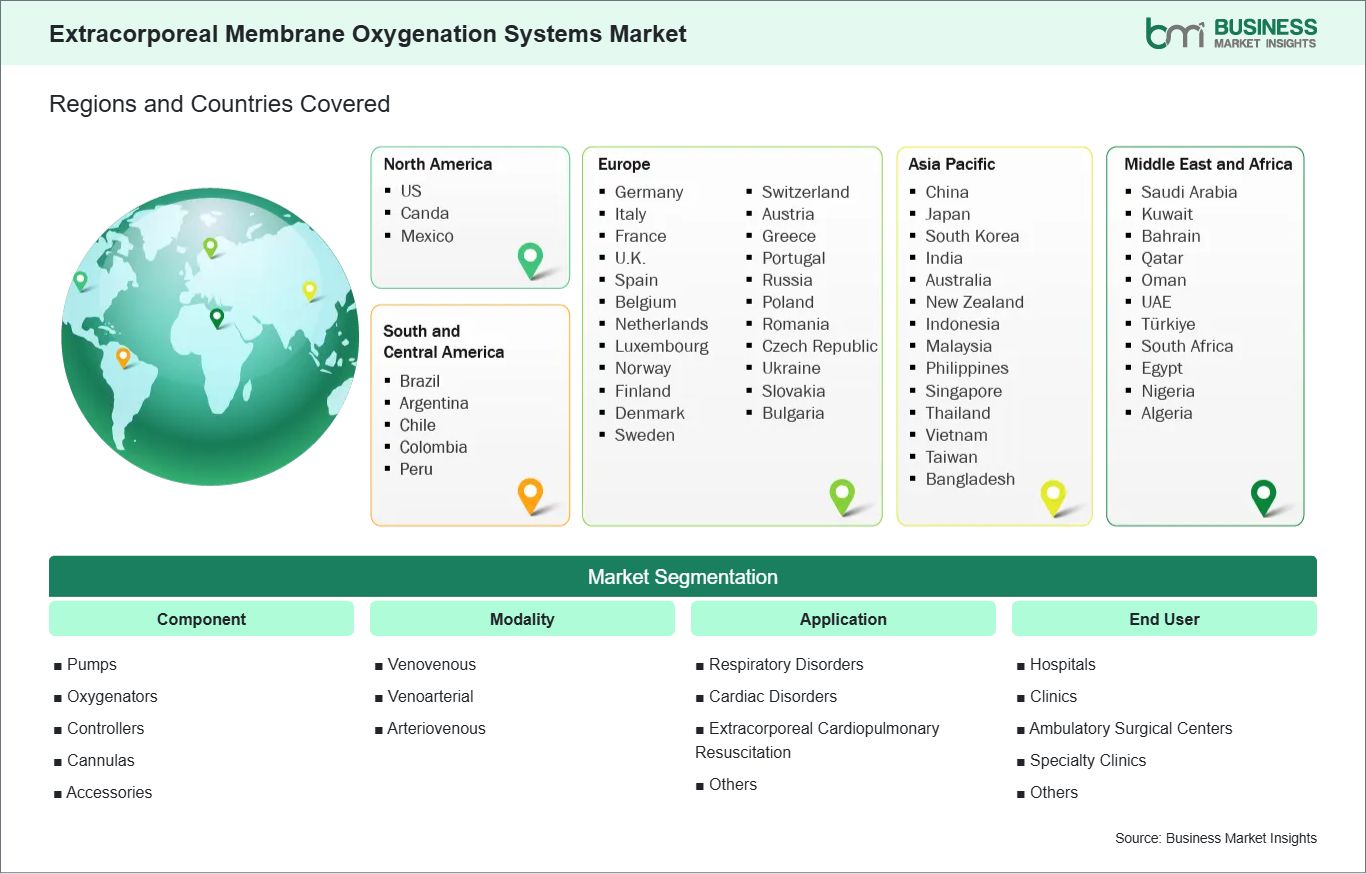
Key segments that contributed to the derivation of the Extracorporeal Membrane Oxygenation Systems market analysis are component, modality, application, and end user.
The increase in severe cardiopulmonary diseases requiring advanced life support has been the most important driver for the Extracorporeal Membrane Oxygenation (ECMO) Systems Market. Globally, there is an increase in the incidence of diseases such as: Acute Respiratory Distress Syndrome (ARDS), Heart Failure (HF), Chronic obstructive Pulmonary Disease (COPD), or Cardiac Complications due to Surgeries or Trauma, where the presence of these diseases mean that the patient must be treated with advanced Life Support - ECMO. The COVID-19 Pandemic was one of the main factors in increasing demand for ECMO, as the increase in patients with Severe Respiratory Failure resulted in a greater need to utilize/clinical reliance on ECMO. The increasing prevalence of the older population (Geriatric) population as well as the greater numbers of patients who survive complex cardiac surgeries, are also factors contributing to the increase in the patient population requiring ECMO. Increased awareness on the part of healthcare providers regarding the use of ECMO as either Bridge-to-Recovery or Bridge-to-Transplant has also been a key contributor to the establishment of additional ECMO programs in nations around the world. In addition, major advances in ECMO technologies have made these systems safer, easier to use, and therefore, have increased utilization within Intensive Care Units (ICUs). Thus, the rising burden of severe cardiopulmonary diseases continues to play a major role in enhancing the growth of the Global ECMO Systems Market.
The ECMO systems market is expected to experience growth opportunity with the creation and implementation of portable, mobile and transportable ECMO equipment. The traditional sources of ECMO equipment were large and complex and were initially exclusively utilized within a hospital’s intensive care unit (ICU). However, advancements in technology have made it possible for ECMO devices to be smaller, lighter and user-friendly and used out of the hospital environment. As a result, critical care providers are now able to perform ECMO during transport to and from hospitals, during emergency transfer of patients in out-of-hospital settings, and in locations with limited access to resources. Furthermore, the ability to provide ECMO therapy while patients are being transported is essential for patients who are in urgent need of being sent to specialized centres for advanced care or transplantation. Additionally, portable ECMO devices will allow for the broader use of ECMO in smaller hospitals and clinics that do not have dedicated ECMO service capabilities, thereby enhancing patient access to this lifesaving technology. As Emergency Medical Services (EMS) and Critical Care networks continue to change, demand for mobile ECMO equipment will increase substantially. The movement toward a more mobile ECMO market not only improves patient survival, but also creates new markets and ways to utilize ECMO technology, facilitating long-term growth opportunities for manufacturers of ECMO products. The development of portable ECMO technologies, therefore, represents an opportunity for ECMO manufacturers to expand their reach and meet the unmet clinical needs of patients globally.
By component, the extracorporeal membrane oxygenation systems market is segmented into pumps, oxygenators, controllers, cannulas, accessories. The pumps segment dominated the market in 2024. The growth is attributed to their critical role in maintaining continuous blood flow and ensuring efficient oxygenation during ECMO therapy.
By modality, the market is segmented into venovenous (VV ECMO), venoarterial (VA ECMO), arteriovenous (AV ECMO). The venovenous (VV ECMO) segment held the largest share of the market in 2024. The growth of segment is driven by its predominant use in managing severe respiratory failure and ARDS cases.
By application, the market is segmented into respiratory disorders, cardiac disorders, extracorporeal cardiopulmonary resuscitation (ECPR), and others. The respiratory disorders segment held the largest share of the market in 2024. The segmental growth is driven by the increasing incidence of respiratory diseases such as ARDS and COVID-19-related complications requiring ECMO support.
By distribution channel, the market is segmented into hospitals, clinics, ambulatory surgical centers, specialty clinics, others. The hospitals segment held the largest share of the market in 2024. The segmental growth is driven by their comprehensive ICU facilities and capacity to support complex ECMO procedures with trained specialists.
| Report Attribute | Details |
|---|---|
| Market size in 2025 | US$ 690.05 Million |
| Market Size by 2033 | US$ 1010.31 Million |
| Global CAGR (2026 - 2033) | 4.5% |
| Historical Data | 2022-2024 |
| Forecast period | 2026-2033 |
| Segments Covered | By Component
|
|
Regions and Countries Covered
| |
| North America | US, Canada, Mexico |
| Europe | Belgium, Austria, Finland, Denmark, Greece, Poland, Romania, Russia, Ukraine, Czech Republic, Slovakia, Bulgaria, Italy, Luxembourg, Germany, Switzerland, France, Netherlands, Norway, Portugal, Spain, Sweden, United Kingdom |
| Asia-Pacific | Australia, China, India, Japan, South Korea, Indonesia, Malaysia, Philippines, Singapore, Thailand, Vietnam, Bangladesh, New Zealand, Taiwan |
| South and Central America | Brazil, Argentina, Peru, Chile, Colombia |
| Middle East and Africa | Bahrain, Kuwait, Oman, Qatar, Saudi Arabia, United Arab Emirates, Turkiye, South Africa, Egypt, Algeria, Nigeria |
| Market leaders and key company profiles |
|
The "Extracorporeal Membrane Oxygenation Systems Market Size and Forecast (2022 - 2033)" report provides a detailed analysis of the market covering below areas:
The geographical scope of the Extracorporeal Membrane Oxygenation Systems market report is divided into five regions: North America, Asia Pacific, Europe, Middle East & Africa, and South & Central America. The Extracorporeal Membrane Oxygenation Systems market in Asia Pacific is expected to grow significantly during the forecast period.
The Asia-Pacific Extracorporeal Membrane Oxygenation Systems market is segmented into China, Japan, South Korea, India, Australia, New Zealand, Indonesia, Malaysia, the Philippines, Singapore, Thailand, Vietnam, Taiwan, Bangladesh, and the Rest of Asia. The continued growth of investments into, the healthcare segment, along with the increasing occurrence of cardiopulmonary disease, and growing number of critical care facilities, has allowed the ECMO system market to continue growing exponentially in this area. Countries such as China, India, Japan, South Korea, and Australia are experiencing a rise in urbanization, a change in lifestyle, and an increase in the occurrence of chronic respiratory or cardiac conditions (acute respiratory distress syndrome, heart failure, chronic obstructive pulmonary disease), leading to an increased need for complex life-support systems.
The worldwide COVID-19 pandemic acted as a rapid reinforcement for the advancements in expanded understanding and acceptance of ECMO systems, as the awareness of ECMO's lifesaving potential for severe respiratory failure patients improved. With the investment of governments and private healthcare entities into the expansion and availability of intensive care facilities, through both the development of new facilities, along with the ongoing training of professionals and the procurement of advanced ECMO systems, there was an increase in ECMO system adoption within the major metropolitan areas. Additionally, due to the improvements being made to the reimbursement policies in addition to increasing patient affordability there has been an influx of ECMO system therapy into the overall healthcare environment.
Additionally, recent developments in portable and user-friendly ECMO devices are helping to reduce infrastructure obstacles and make them more accessible to hospitals located in outlying areas or smaller cities. Additionally, as a result of the expanding digital health ecosystem & telemedicine initiatives, remote training and expert consultations now exist to help drive market development as well. The combination of these factors will create a positive marketplace environment for the growth of ECMO systems in the Asia Pacific region, with clinical requirements being a strong driver of growth in addition to continued growth through infrastructure expansion and tech innovations providing significant opportunity for both manufacturers and healthcare providers.

The Extracorporeal Membrane Oxygenation Systems market is evaluated by gathering qualitative and quantitative data post primary and secondary research, which includes important corporate publications, association data, and databases. A few of the key developments in the extracorporeal membrane oxygenation systems market are:
The Extracorporeal Membrane Oxygenation Systems Market is valued at US$ 690.05 Million in 2025, it is projected to reach US$ 1010.31 Million by 2033.
As per our report Extracorporeal Membrane Oxygenation Systems Market, the market size is valued at US$ 690.05 Million in 2025, projecting it to reach US$ 1010.31 Million by 2033. This translates to a CAGR of approximately 4.5% during the forecast period.
The Extracorporeal Membrane Oxygenation Systems Market report typically cover these key segments-
The historic period, base year, and forecast period can vary slightly depending on the specific market research report. However, for the Extracorporeal Membrane Oxygenation Systems Market report:
The Extracorporeal Membrane Oxygenation Systems Market is populated by several key players, each contributing to its growth and innovation. Some of the major players include:
The Extracorporeal Membrane Oxygenation Systems Market report is valuable for diverse stakeholders, including:
Essentially, anyone involved in or considering involvement in the Extracorporeal Membrane Oxygenation Systems Market value chain can benefit from the information contained in a comprehensive market report.
Please tell us your area of interest
(Market Segments/ Regions and Countries/ Companies)