
Endoscopy Ultrasound Market Outlook: Size, Share, Trends, Growth Analysis, Competitive Landscape & Forecast, 2026-2033

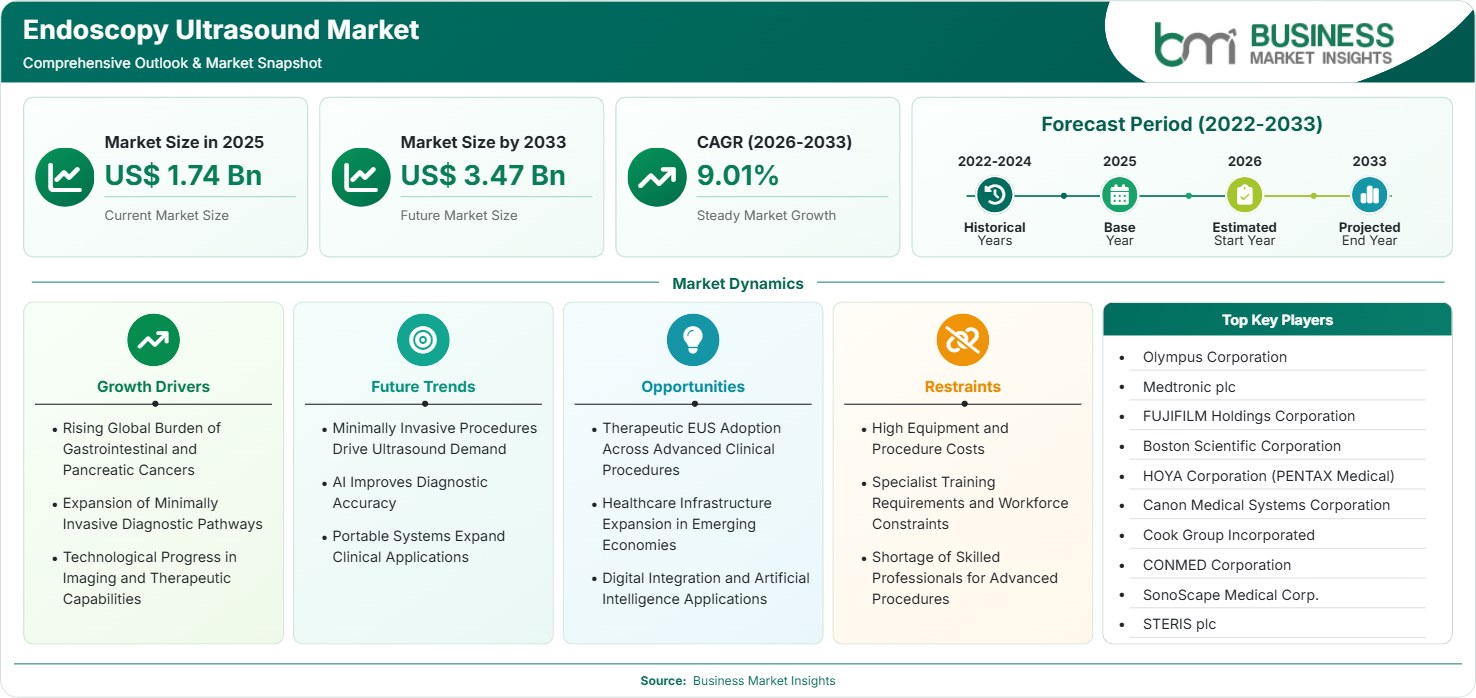
The Endoscopy Ultrasound Market size was valued at US$ 1.74 Billion in 2025 and is projected to reach US$ 3.47 Billion by 2033, growing at a CAGR of 9.01% during 2026–2033. Demand is supported by rising gastrointestinal cancers, increasing minimally invasive diagnostics, expanding therapeutic EUS procedures, hospital technology upgrades, AI-enabled imaging integration, and growing healthcare investments across emerging economies.

Report Coverage
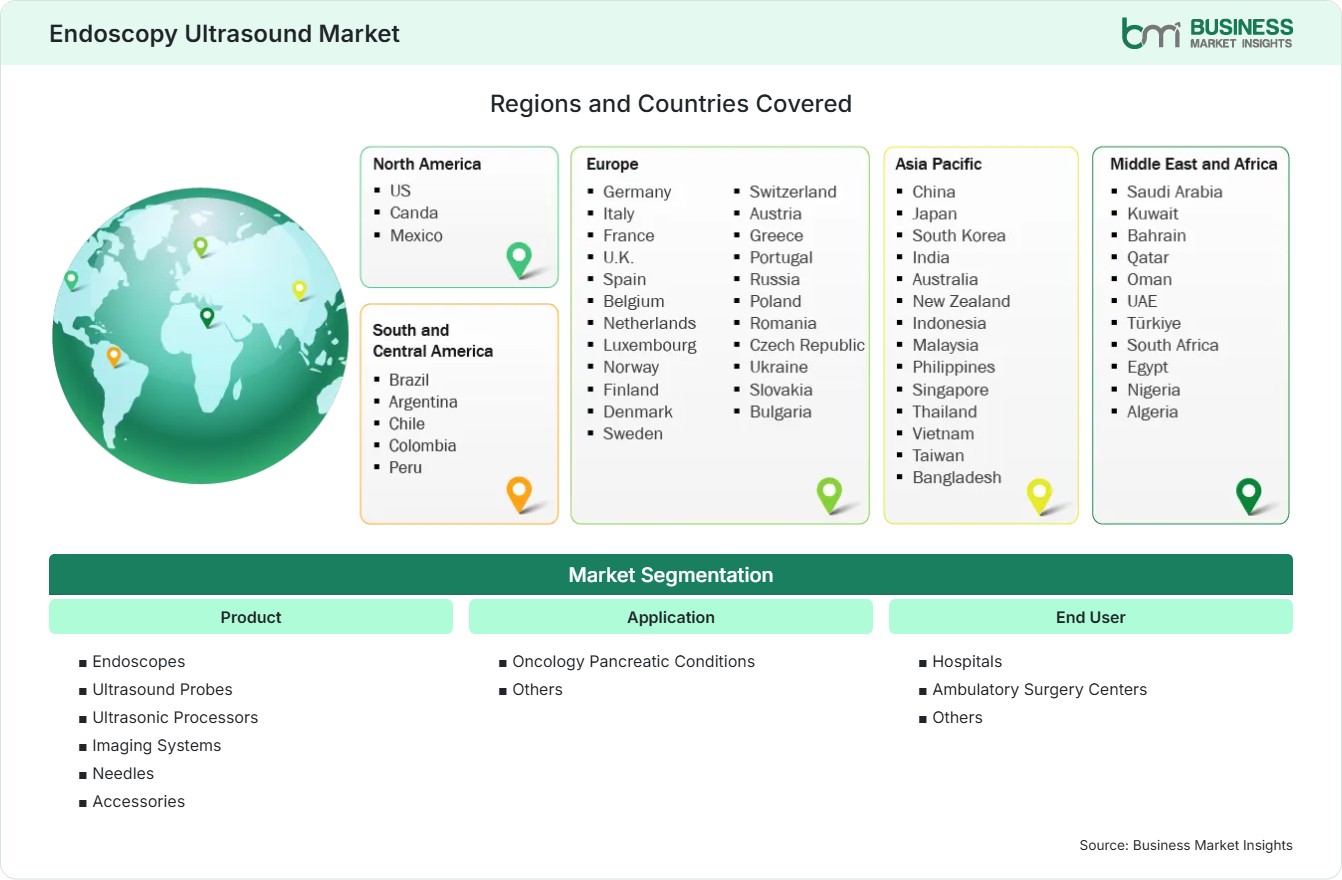
  • Product: Endoscopes , Ultrasound Probes, Ultrasonic Processors, Imaging Systems, Needles, Accessories
  • Application: Oncology Pancreatic Conditions, Others
  • End User: Hospitals, Ambulatory Surgery Centers, Others
US$ 1.74 Bn Market size in 2025
US$ 3.47 Bn Market Size by 2033
9.01% CAGR, 2026 - 2033
2026-2033 Forecast Period

AI Overview

Endoscopy Ultrasound Market Summary

  • North America Region: North America holds a market share of 35%–38% in 2025, growing with a CAGR of 8.2%–8.8% during 2026–2033. Growth is supported by high procedural volumes, advanced hospital infrastructure, reimbursement support, oncology screening adoption, physician expertise expansion, artificial intelligence integration, growing elderly populations, stronger healthcare spending, innovation partnerships, and therapeutic procedure demand. US market remains dominant due to advanced healthcare networks, strong reimbursement systems, and 8.3%–8.9% CAGR.
  • Fastest Growing Region: Asia Pacific holds an Endoscopy Ultrasound Market share of 24%–27% in 2025, growing with a CAGR of 10.8%–11.5% during 2026–2033. Expansion is driven by healthcare infrastructure modernization, increasing gastrointestinal disease prevalence, medical tourism growth, rising specialist availability, government funding initiatives, domestic manufacturing development, diagnostic awareness programs, and expanding urban hospital networks.
  • Leading Segment: Endoscopes account for 39%–42% share in 2025 and are projected to grow at 8.8%–9.4% CAGR. Adoption benefits from technological upgrades, enhanced imaging capabilities, compatibility with therapeutic interventions, replacement demand, clinician preference, training familiarity, hospital procurement priorities, and increasing case complexity across gastroenterology practices.
  • High Growth Segment: Oncology represents a 42%–46% share of the Endoscopy Ultrasound Market in 2025 and advances at 10.1%–10.8% CAGR. Growth reflects increased cancer incidence, stronger staging requirements, precision biopsy utilization, treatment planning reliance, multidisciplinary care pathways, expanding screening programs, molecular diagnostics integration, and demand for minimally invasive tissue acquisition.
  • Key Market Opportunity: Expanding therapeutic applications across pancreatic disease management, tissue acquisition, targeted interventions, and outpatient settings create substantial opportunities for manufacturers developing imaging-enhanced systems, specialized needles, digital workflows, and clinician training platforms.
  • Major Market Players: Olympus Corporation, Medtronic plc, FUJIFILM Holdings Corporation, Boston Scientific Corporation, HOYA Corporation (PENTAX Medical), Canon Medical Systems Corporation, Cook Group Incorporated, CONMED Corporation, SonoScape Medical Corp., STERIS plc.
Strategic Insights

Endoscopy Ultrasound Market: Strategic Insights

Endoscopy Ultrasound Market Strategic Framework
FREE PDF
Request your free sample
Request free sample
Stakeholder View

Key Takeaways

  • The value chain is increasingly integrated, with endoscope manufacturers, imaging technology suppliers, needle developers, software vendors, and healthcare providers collaborating to improve procedural outcomes and workflow efficiency.
  • Oncology-focused applications provide the strongest growth potential due to increasing cancer burden, greater use of tissue acquisition procedures, and rising reliance on precision diagnostic pathways.
  • Product innovation is shifting toward AI-assisted imaging, enhanced visualization platforms, digital documentation tools, and therapeutic ultrasound capabilities that extend clinical utility beyond diagnosis.
  • Asia Pacific presents a compelling investment environment owing to healthcare infrastructure expansion, specialist workforce growth, rising procedure volumes, and favorable demographic trends.
  • Strategic partnerships, technology licensing agreements, distribution collaborations, and portfolio expansions remain common competitive approaches among established manufacturers seeking broader geographic penetration.
  • Ambulatory care settings are gradually increasing adoption as advanced imaging systems become more efficient, supporting lower-cost diagnostic pathways for selected procedures.
Geographic Outlook

Endoscopy Ultrasound Market Regional Highlights

North America Endoscopy Ultrasound Market

North America represents the largest regional market with 35%–38% Endoscopy Ultrasound Market share in 2025 and an estimated CAGR of 8.2%–8.8% through 2033. Regional leadership reflects advanced reimbursement systems, extensive specialist availability, strong adoption of minimally invasive diagnostics, and high gastrointestinal cancer screening rates. Hospitals continue replacing legacy platforms with advanced imaging systems supporting therapeutic procedures. Substantial research activity, physician training programs, and clinical evidence supporting EUS-guided interventions further strengthen market penetration across healthcare networks.

  • Growing adoption of EUS-guided biopsy procedures improves diagnostic accuracy and supports precision oncology decision-making across major healthcare institutions.
  • Large academic medical centers continue investing in image-enhanced systems integrated with digital workflow management solutions.
  • Increased prevalence of pancreatic disorders contributes to sustained demand for advanced diagnostic and therapeutic capabilities.
  • Reimbursement support encourages utilization of minimally invasive procedures compared with more invasive diagnostic alternatives.
  • Technology partnerships accelerate deployment of AI-enabled visualization and image interpretation systems.

US Endoscopy Ultrasound Market

The U.S. accounts for 84%-88% of the North American market and grows at an 8.3%-8.9% CAGR through the forecast period. High procedure volume, mature specialist network, high volume of cancer screenings, and quick adoption of technology enable the market leadership position. The healthcare delivery system places increasing importance on early detection and non-invasive treatment paths. The rising use of AI-based decision support solutions and EUS in the treatment of pancreatic disease continues to drive long-term demand across tertiary and community care facilities.

  • Academic hospitals remain major adopters of cutting-edge imaging systems and therapeutic ultrasound platforms.
  • Oncology centers increasingly utilize EUS-guided sampling for staging and treatment planning applications.
  • Industry-led clinician training continues improving procedural competency and adoption levels nationwide.
  • Strong healthcare expenditure supports consistent replacement cycles across advanced diagnostic equipment segments.

Europe Endoscopy Ultrasound Market

Europe holds a market share of 27%–30% until 2025 and a CAGR of 8.5%–9.1% till 2033 in the Endoscopy Ultrasound Market. The growth in demand is driven by organized health care systems, an aging population, and a rising burden of gastrointestinal diseases. Germany dominates as the leading regional market, but Spain and Poland are emerging markets fueled by investments in health care advancements. Partnerships between hospitals and device manufacturers for research help in the use of imaging technology. Endoscopy is used for disease diagnosis and treatment.

  • Germany leads regional revenues due to advanced hospital infrastructure and established gastroenterology practices.
  • Spain demonstrates accelerated growth driven by diagnostic modernization and specialist capacity expansion.
  • Cancer care programs increasingly incorporate high-resolution imaging for precise staging applications.
  • Public healthcare systems continue balancing procedural efficiency with long-term patient outcome improvements.
  • Technology replacement demand sustains procurement activity among large healthcare providers.

Asia Pacific Endoscopy Ultrasound Market

Asia Pacific holds a 24%–27% share in 2025 and records the fastest CAGR of 10.8%–11.5%. Expanding healthcare infrastructure, rising disposable income, increasing cancer detection initiatives, and rapid hospital development support growth. China remains the largest regional market while India exhibits especially strong expansion because of healthcare investment and specialist capacity growth. Medical tourism trends, domestic device manufacturing, and broader access to advanced diagnostics contribute to market momentum across both developed and developing economies.

  • China benefits from large patient volumes and ongoing healthcare infrastructure expansion programs.
  • India shows high growth potential driven by hospital expansion and increasing awareness of minimally invasive diagnostics.
  • Regional manufacturers are improving affordability and accessibility of imaging technologies.
  • Government healthcare initiatives support broader deployment of specialist diagnostic services.
  • Oncology diagnosis rates continue increasing, supporting procedural demand across urban centers.

Rest of World Endoscopy Ultrasound Market

The Rest of World region accounts for a 9%–11% share in 2025 and is expected to grow at 9.2%–9.8% CAGR of the Endoscopy Ultrasound Market. South and Central America benefit from private hospital investments and growing awareness of advanced gastroenterology diagnostics. In the Middle East and Africa, healthcare diversification programs, medical infrastructure upgrades, and expanding specialist care services stimulate adoption. Brazil leads regional demand, while Saudi Arabia demonstrates strong growth supported by healthcare transformation initiatives and technology procurement programs.

  • Brazil remains the largest market due to extensive private healthcare participation and rising diagnostic demand.
  • Saudi Arabia records strong expansion supported by healthcare modernization and specialist service development.
  • Medical tourism contributes to adoption of advanced imaging technologies across selected countries.
  • Training initiatives help address specialist shortages and promote procedural utilization.
  • Private healthcare investments remain an important driver across emerging markets.
Global Market Geography
FREE PDF
Request your free sample
Request free sample
Segment Analysis

Endoscopy Ultrasound Market Segmentation

Product

In the product segment, endoscopes account for about 39%–42% of market share in 2025, with a CAGR of 8.8%–9.4%. The scope of the Endoscopy Ultrasound Market will continue to grow due to innovations in image quality, maneuverability, therapeutic applications, and workflow efficiency. Clinicians are looking for investment in efficient systems that can perform diagnosis and therapy.

  • Endoscopes: Core procedural devices enabling visualization and ultrasound assessment, benefiting from continued upgrades in image resolution, ergonomic design, maneuverability, and compatibility with interventional procedures.
    • Radial Endoscopes: Widely utilized for comprehensive imaging and diagnostic assessment, supporting clinicians seeking detailed anatomical visualization in gastrointestinal examinations.
    • Linear Endoscopes: Preferred for tissue acquisition and therapeutic interventions because real-time needle guidance improves procedural precision and treatment planning.
  • Ultrasound Probes: Demand rises through replacement cycles, improved image generation capabilities, and greater procedural customization requirements.
  • Ultrasonic Processors: Advanced processing units enhance image interpretation, workflow integration, and diagnostic confidence for specialist users.
  • Imaging Systems: Adoption reflects demand for high-definition visualization, digital connectivity, and integrated reporting functionality.
  • Needles: Growth is linked to increasing biopsy procedures, oncology diagnoses, and therapeutic intervention applications.
  • Accessories: Supporting products enhance procedural efficiency, safety, workflow standardization, and equipment utilization.

Application

Application demand is driven by the oncology end-user industry, which holds a market share of 42%-46% in 2025, with a CAGR of 10.1%-10.8%. High incidences of cancer and the need for early diagnosis and accuracy in sample extraction have been contributing to a high adoption rate. The Endoscopy Ultrasound Market trends suggest a growing preference for precise diagnosis and treatment.

  • Oncology: Extensive use in tumor staging, biopsy guidance, tissue acquisition, and treatment planning supports continued market leadership.
  • Pancreatic Conditions: Growing utilization reflects increasing pancreatic disease prevalence and clinical reliance on minimally invasive diagnostic procedures.

End User

Hospitals emerge as the leading end-user segment, holding a market share of 68%-72% with a CAGR of 8.7%-9.3%. High procedure volumes, specialist presence, infrastructural advancements, and budget allocation contribute to leadership. Integration of healthcare delivery systems, multi-disciplinary expanding management programs, and growing therapeutic strengthening drive procurement activities at healthcare facilities.

  • Hospitals: Primary adoption centers owing to comprehensive infrastructure, specialist personnel, and complex procedure capabilities.
  • Ambulatory Surgery Centers: Increasing utilization reflects efficiency benefits, lower treatment costs, and procedural advancements enabling safe outpatient care.
Market Forces

Endoscopy Ultrasound Market Dynamics

Key Market Drivers

Rising Global Burden of Gastrointestinal and Pancreatic Cancers

Gastrointestinal cancers, according to WHO cancer assessments, continue to be some of the most important causes of global cancer incidences and deaths. The need for staging, biopsy acquisition, and treatment planning is one of the key drivers of procedure use. EUS offers imaging capabilities that cannot be obtained using traditional methods. Increased detection rates of pancreatic cancer make it more compelling, as they facilitate proper tissue sampling and disease assessment. Modern healthcare professionals use additional imaging modalities to enhance diagnostic accuracy and facilitate treatment personalization. These factors collectively reinforce long-term utilization across oncology-focused healthcare environments.

Expansion of Minimally Invasive Diagnostic Pathways

Healthcare institutions continue to emphasize minimally invasive methods that shorten the healing period, reduce complications during the procedure, and reduce resource use. Endoscopic ultrasound aligns well with the goals by providing high-quality imaging while minimizing reliance on surgical diagnostics. Advanced imaging technologies have been incorporated into the health systems operating under a value-based care model that stresses efficiency and clinical outcomes. Familiarity with conducting procedures, access to training programs, and high-quality clinical data play important roles in driving the adoption process. As more patients require better imaging services, the demand for endoscopic ultrasound systems continues to grow in both mature and developing markets.

Technological Progress in Imaging and Therapeutic Capabilities

Image enhancement, digital workflow integration, AI-supported interpretation, and therapy are among the areas manufacturers have been focusing on for technological improvements. This translates to better visualization, increased diagnostic confidence, increased clinician efficiency, and procedural precision. Visualization enhancement technology makes it more clinically valuable in oncology, pancreatic disease, and gastroenterology. With solutions that integrate imaging, information, and treatment, manufacturers help clinicians streamline their workflows. Moreover, with consistent innovation, new applications become possible, including diagnostics and procedures. With evolving technological capabilities, purchase decisions favor multipurpose systems, which offer clear advantages for clinical and operational performance.

Key Market Opportunities

Therapeutic EUS Adoption Across Advanced Clinical Procedures

Greater adoption of EUS drainage, therapies, and treatment procedures provides substantial business opportunities. The healthcare industry is constantly seeking technological solutions that combine diagnostic and therapeutic functions in a single procedure. Such an approach would reduce the need for hospital admissions and potentially increase patient convenience. Companies capable of producing specific needles, accessories, imaging-enhancing devices, and workflow equipment could leverage the increased procedural complexity. Long-Term Endoscopy Ultrasound Market forecasts indicate strong interest in combined therapeutic technologies, particularly in oncological and pancreatic disease treatment settings.

Healthcare Infrastructure Expansion in Emerging Economies

Countries that have just joined the league are making greater investments to develop their diagnostic facilities, cancer treatment, and advanced imaging. The new hospitals and clinics need modern machines capable of performing complex procedures. Insurance policies, more educational training for doctors, and demographics help boost the market. In addition, local manufacturing enhances availability and affordability. Those businesses that establish regional partnerships, training programs, and distribution channels will be able to grow sustainably as healthcare systems modernize and procedural awareness expands across underserved populations.

Digital Integration and Artificial Intelligence Applications

AI offers opportunities to increase lesion detection accuracy, streamline workflows, improve image interpretation, and enhance report consistency. Healthcare organizations are increasingly interested in evaluating devices that can help make decisions and reduce variability. Combining AI technology with the electronic health record and workflow system adds another layer of efficiency. The new software-based business model enables technology companies to generate recurring revenue beyond the sale of capital equipment. Over time, as regulation matures, AI systems are expected to gain broader acceptance, strengthening differentiation strategies among technology providers.

Market Restraints and Challenges

High Equipment and Procedure Costs

Factor: High-tech systems require substantial initial capital investments, maintenance and consumable costs, and specialist training expenses. Impact: These cost-related factors may limit adoption in small healthcare facilities, especially in developing nations. Insufficient budgets will limit the ability to replace equipment on time and access innovations. Hospitals typically conduct ROI calculations before making a purchase decision. Inconsistent reimbursement policies between countries also affect purchasing decisions. Even though the clinical advantages are undeniable, financial constraints remain important, influencing deployment timelines and technology accessibility across certain markets.

Specialist Training Requirements and Workforce Constraints

Factor: There is a need for well-trained specialists, such as gastroenterologists and endoscopists, as well as other clinical professionals with procedural expertise. Impact: Workforce shortages can affect procedural capacity and utilization, even when equipment is available. Training needs time, effort, and money. Differences in expertise levels among clinicians can also influence procedures. Implementation will be slow in new markets where access to specialized training is limited. These workforce-related challenges continue influencing market penetration and operational scalability across multiple regions.

Company Analysis

Competitive Landscape

The Endoscopy Ultrasound Market analysis indicates competition centered on imaging quality, therapeutic capability expansion, clinical training support, and geographic reach.

Company Name

Overview

Products and Services relevant to this market

Olympus Corporation

Global leader in endoscopy technologies with strong gastroenterology and imaging presence across major healthcare markets.

Echoendoscopes, ultrasound processors, imaging systems, endoscopy platforms, accessories, service solutions.

Medtronic plc

Diversified medical technology company with extensive gastrointestinal and minimally invasive treatment portfolio.

Endoscopic accessories, interventional devices, supporting gastroenterology solutions and procedural technologies.

FUJIFILM Holdings Corporation

Leading imaging and healthcare technology provider with advanced endoscopy capabilities.

Endoscopes, ultrasound-compatible systems, visualization technologies, digital workflow platforms.

Boston Scientific Corporation

Major interventional medicine developer serving gastrointestinal and oncology specialties.

EUS needles, therapeutic accessories, biopsy tools, interventional devices.

HOYA Corporation (PENTAX Medical)

Established endoscopy manufacturer focused on imaging innovation and clinical usability.

Echoendoscopes, processors, visualization platforms, gastrointestinal diagnostic systems.

Canon Medical Systems Corporation

Medical imaging specialist with global diagnostic equipment presence.

Ultrasound systems, imaging technologies, diagnostic visualization solutions.

Cook Group Incorporated

Recognized provider of minimally invasive medical devices.

Fine-needle aspiration devices, therapeutic accessories, gastroenterology instruments.

CONMED Corporation

Medical technology company supporting surgical and endoscopic procedures.

Endoscopy products, visualization devices, supporting procedural solutions.

SonoScape Medical Corp.

Expanding imaging company with growing international healthcare footprint.

Ultrasound equipment, endoscopic ultrasound solutions, imaging platforms.

STERIS plc

Healthcare and life sciences company supporting procedural environments.

Endoscope reprocessing, infection prevention systems, service solutions.

Trust & Transparency

Research Methodology

The market analysis combines proprietary research with secondary data from government agencies, company disclosures, regulatory filings, industry databases and expert interviews. Market estimates are validated through data triangulation, cross-market benchmarking and analyst review.

View Full Research Methodology

Questions Answered

Frequently Asked Questions

What insights does the Endoscopy Ultrasound Market Report provide for investors?

The report evaluates growth drivers, regional opportunities, competitive positioning, technology trends, regulatory influences, and segment-level demand patterns to support strategic investment planning.

How is artificial intelligence influencing adoption?

AI tools improve image interpretation, lesion detection, workflow consistency, and reporting efficiency, helping clinicians make faster and potentially more accurate diagnostic decisions.

What differentiates linear and radial endoscopes?

Linear devices enable real-time needle guidance during tissue sampling and interventions, while radial variants provide broad diagnostic imaging useful for anatomical assessment and disease evaluation.

Why are hospitals the dominant end users?

Hospitals handle the highest procedure volumes, maintain specialist teams, and possess infrastructure needed for advanced imaging, intervention, anesthesia support, and multidisciplinary patient management.

Which clinical application generates the highest revenue demand?

Oncology-related procedures generate the largest revenue contribution because physicians use ultrasound-guided imaging for staging, biopsies, lesion characterization, and treatment planning across multiple cancer types.

Access the Full Endoscopy Ultrasound Market Report

Get segment-level forecasts, regional estimates, competitive benchmarking, company profiles and downloadable Excel datasets.

Access the full Endoscopy Ultrasound Market Report
350 pages PDF & Excel | 2026-09-22
Similar Research

Related Market Reports