
Handheld Ultrasound Market Outlook: Size, Share, Trends, Growth Analysis, Competitive Landscape & Forecast, 2026-2033

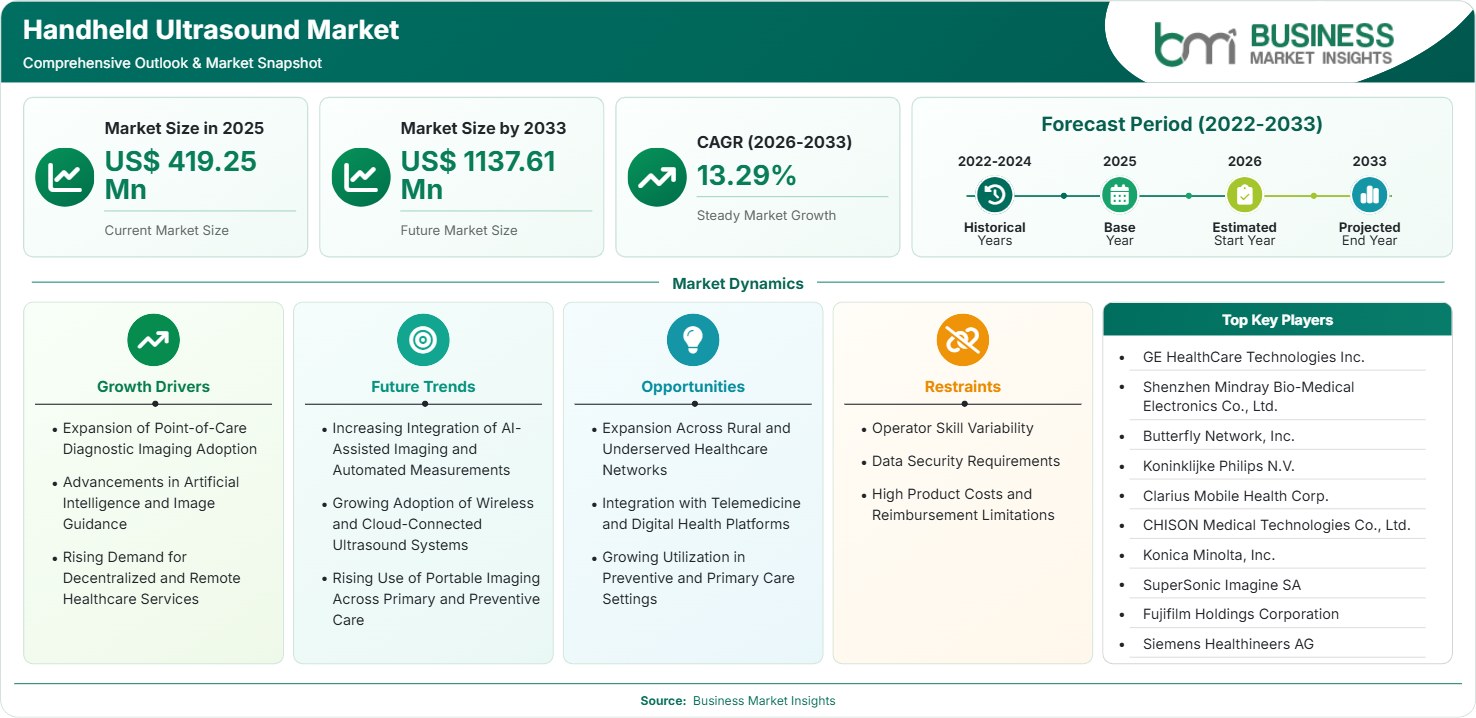
The Handheld Ultrasound Market size was valued at US$ 419.25 Million in 2025 and is projected to reach US$ 1137.61 Million by 2033, growing at a CAGR of 13.29% during 2026–2033, driven by rising point-of-care diagnostics adoption, expanding telehealth integration, AI-enabled imaging advancements, emergency medicine demand, and opportunities across remote healthcare delivery and resource-constrained clinical settings.

Report Coverage
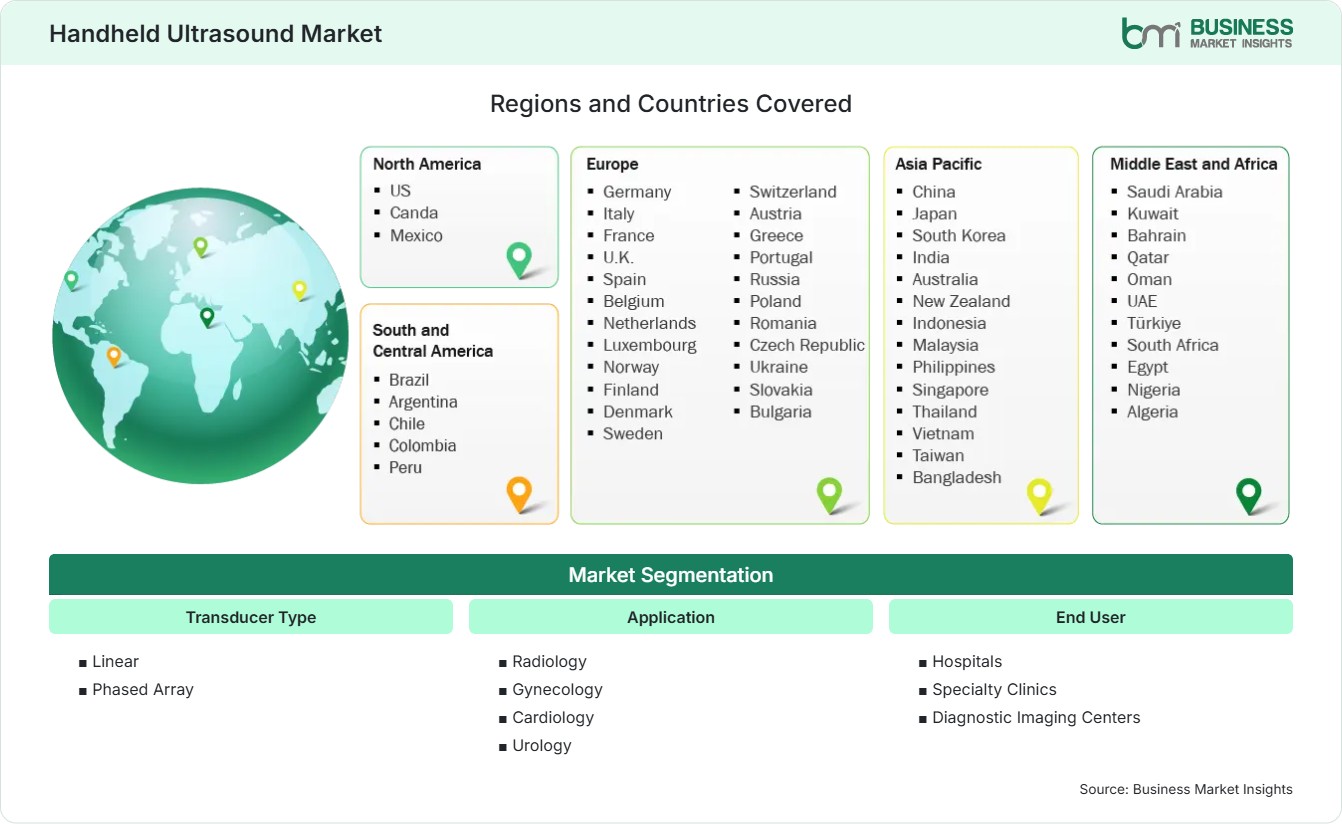
  • Transducer Type: Linear, Phased Array
  • Application: Radiology, Gynecology, Cardiology, Urology
  • End User: Hospitals, Specialty Clinics, Diagnostic Imaging Centers
US$ 419.25 Mn Market size in 2025
US$ 1137.61 Mn Market Size by 2033
13.29% CAGR, 2026 - 2033
2026-2033 Forecast Period

01 AI Overview

Handheld Ultrasound Market Summary

  • North America Region: North America holds 38%–41% share in 2025, with a 12.0%–13.0% CAGR during 2026–2033, driven by POCUS adoption, emergency care modernization, AI-assisted diagnostics, reimbursement improvements, outpatient imaging, and hospital digitization. The U.S. is the largest contributor, with an estimated 12.3%–13.3% CAGR.
  • Fastest Growing Region: Asia Pacific accounts for 24%–27% share in 2025 and is projected to grow at 15.0%–16.5% CAGR during 2026–2033, supported by healthcare infrastructure investments, rural imaging demand, physician shortages, medical device manufacturing, and digital health programs.
  • Leading Segment: Hospitals hold 42%–45% share in 2025 and are expected to grow at 12.5%–13.5% CAGR, driven by bedside diagnostics, emergency care, workflow optimization, reduced imaging delays, and broader acute-care adoption.
  • High Growth Segment: Cardiology represents 18%–21% share in 2025 and is forecast to grow at 15.5%–17.0% CAGR, supported by cardiovascular disease prevalence, portable echocardiography, cardiac screening, preventive care, and outpatient monitoring.
  • Key Market Opportunity: Expanding adoption in primary care, ambulatory services, home healthcare, and rural areas creates opportunities for portable imaging solutions that improve diagnostic access and reduce referral dependence.
  • Major Market Players: GE HealthCare Technologies Inc.; Shenzhen Mindray Bio-Medical Electronics Co., Ltd.; Butterfly Network, Inc.; Koninklijke Philips N.V.; Clarius Mobile Health Corp.; CHISON Medical Technologies Co., Ltd.; Konica Minolta, Inc.; SuperSonic Imagine SA; Fujifilm Holdings Corporation; Siemens Healthineers AG.
02 Strategic Insights

Handheld Ultrasound Market: Strategic Insights

Handheld Ultrasound Market Strategic Framework
FREE PDF
Request your free sample
Request free sample
03 Stakeholder View

Key Takeaways

  • The industry value chain is increasingly centered on integrated hardware, AI-powered software, cloud platforms, and clinical workflow solutions rather than standalone imaging devices, creating recurring revenue opportunities for solution providers.
  • Cardiology, emergency medicine, and point-of-care diagnostics represent the most attractive growth areas due to rising demand for rapid imaging assessments and increasing pressure to improve patient throughput.
  • Guidance and interpretation systems powered by artificial intelligence for acquiring images become key to competition as they assist in cutting training needs and increasing clinician adoption.
  • Asia Pacific presents a compelling investment case as healthcare infrastructure development, rising medical expenditure, and digital health initiatives support accelerated deployment of portable diagnostic technologies.
  • Growing trend in strategic moves includes cooperation and investments in integration of software solutions, telemedicine and AI-powered diagnostics.
04 Geographic Outlook

Handheld Ultrasound Market Regional Highlights

North America Handheld Ultrasound Market

North America accounts for approximately 38%–41% of the Handheld Ultrasound Market share in 2025 and is projected to expand at a 12.0%–13.0% CAGR during 2026–2033. Strong healthcare spending, advanced clinical infrastructure, and widespread point-of-care ultrasound utilization support regional leadership. Healthcare providers increasingly deploy portable imaging systems to improve diagnostic efficiency, reduce workflow delays, and expand access across emergency, critical care, and outpatient environments. Continued innovation in AI-enabled imaging solutions further strengthens regional competitiveness and adoption momentum.

  • Hospitals increasingly integrate portable imaging into emergency departments to accelerate diagnosis, improve patient throughput, and reduce dependence on centralized imaging systems while supporting broader point-of-care clinical workflows.
  • AI-assisted image acquisition and interpretation technologies are gaining traction among healthcare providers seeking improved consistency, clinician productivity, and expanded ultrasound accessibility across multiple specialties.
  • Reimbursement support for point-of-care procedures continues encouraging investment in portable diagnostic technologies, particularly among large healthcare systems focused on operational efficiency improvements.
  • Medical education programs increasingly incorporate portable imaging training, helping expand clinician familiarity and supporting broader adoption across emergency medicine, internal medicine, and primary care disciplines.
  • Strong innovation ecosystems and healthcare technology investments continue supporting commercialization of next-generation imaging platforms with advanced connectivity and workflow integration capabilities.

US Handheld Ultrasound Market

The United States represents approximately 78%–82% of North American revenue in 2025 and is expected to grow at a 12.3%–13.3% CAGR through 2033.. Increasing integration of AI-powered imaging solutions and remote healthcare services supports continued demand across hospital systems, ambulatory care centers, and community healthcare providers.

  • Emergency medicine remains a leading application area as clinicians increasingly rely on portable imaging for rapid bedside assessment and treatment decision support.
  • Academic medical centers continue driving technology adoption through clinical research, physician training programs, and validation of emerging imaging workflows.
  • Growing utilization within home healthcare and community care programs supports broader deployment beyond traditional hospital environments.
  • Healthcare organizations increasingly prioritize interoperable imaging platforms capable of integrating with electronic health records and telemedicine systems.

Europe Handheld Ultrasound Market

Europe accounts for approximately 27%–30% Handheld Ultrasound Market share in 2025 and is forecast to grow at a 12.5%–13.8% CAGR during 2026–2033. Demand is supported by aging populations, increasing chronic disease prevalence, and healthcare modernization initiatives. The region benefits from strong clinical adoption of point-of-care diagnostics and supportive regulatory frameworks. Germany leads regional revenue generation, while Central and Eastern European markets exhibit comparatively higher growth potential driven by healthcare digitization and infrastructure investments.

  • Germany remains the leading national market, supported by advanced healthcare infrastructure and widespread adoption of diagnostic imaging technologies across hospitals and specialty clinics.
  • The United Kingdom continues expanding point-of-care imaging utilization within emergency and primary care pathways to improve patient access and reduce diagnostic delays.
  • France and Italy are investing in digital healthcare transformation initiatives that support broader deployment of connected diagnostic devices.
  • Poland and several Central European countries demonstrate accelerated growth rates approaching 14.0%–15.0%, supported by healthcare infrastructure modernization programs.
  • Cross-border collaborations in medical technology research contribute to innovation and adoption of advanced portable imaging solutions.

Asia Pacific Handheld Ultrasound Market

Asia Pacific holds approximately 24%–27% share in 2025 and represents the fastest-growing regional Handheld Ultrasound Market with a 15.0%–16.5% CAGR through 2033. Rapid healthcare infrastructure development, growing patient populations, and increasing demand for affordable diagnostic technologies support expansion. China leads regional revenue generation, while India and Southeast Asian countries demonstrate strong growth prospects driven by expanding healthcare access initiatives.

  • China remains the largest regional market due to strong domestic manufacturing capabilities, healthcare digitization investments, and increasing deployment across hospitals and community healthcare facilities.
  • India is projected to achieve growth rates of approximately 16.0%–17.5%, supported by expanding healthcare infrastructure and increasing rural diagnostic requirements.
  • Japan continues emphasizing advanced portable imaging technologies for aging population management and chronic disease monitoring applications.
  • Southeast Asian countries increasingly invest in decentralized healthcare delivery models that benefit compact diagnostic imaging systems.
  • Growing clinician training initiatives are improving awareness and practical utilization of portable ultrasound technologies across emerging healthcare markets.

Rest of World Handheld Ultrasound Market

Rest of World accounts for approximately 6%–8% Handheld Ultrasound Market share in 2025 and is projected to expand at a 13.0%–14.5% CAGR through 2033. South and Central America benefit from increasing healthcare investments and broader access to diagnostic services. Meanwhile, Middle East and African markets are supported by healthcare infrastructure development, medical technology modernization programs, and rising demand for portable diagnostic equipment.

  • Brazil leads South and Central American demand, supported by expanding private healthcare networks and increasing investment in diagnostic imaging infrastructure.
  • Mexico continues benefiting from healthcare accessibility initiatives focused on improving diagnostic capabilities across community and regional healthcare facilities.
  • Saudi Arabia and the United Arab Emirates demonstrate strong adoption potential driven by healthcare transformation strategies and advanced medical technology investments.
  • South Africa remains a key African market, supported by increasing deployment of portable diagnostic equipment in public and private healthcare settings.
  • Mobile healthcare initiatives across developing regions are creating new opportunities for compact imaging technologies that support remote diagnostic capabilities.
Global Market Geography
FREE PDF
Request your free sample
Request free sample
05 Segment Analysis

Handheld Ultrasound Market Segmentation

Transducer Type

The Transducer Type segment accounted for approximately 34%–37% of the market in 2025 and is expected to expand at a 13.0%–14.0% CAGR through 2033. Technological improvements in probe miniaturization, wireless connectivity, and image optimization continue strengthening adoption. The Handheld Ultrasound Market scope is expanding as clinicians increasingly utilize portable transducers across emergency medicine, primary care, cardiovascular assessment, and remote healthcare delivery environments.

  • Linear: Widely utilized for vascular imaging, musculoskeletal examinations, procedural guidance, and superficial tissue assessment. Growing point-of-care applications and improved image resolution continue supporting broad clinical adoption across healthcare settings.
  • Phased Array: Frequently used in cardiac imaging and critical care applications where compact design and deep tissue penetration are essential. Increasing cardiovascular disease screening supports continued utilization growth globally.

Application

The Application segment represented nearly 28%–31% of total revenue in 2025 and is projected to grow at a 13.5%–14.5% CAGR through 2033. The increasing integration of portable imaging into routine diagnostics, emergency assessments, and chronic disease monitoring continues strengthening the role of handheld ultrasound technologies across healthcare systems.

  • Radiology: Radiologists increasingly employ portable imaging systems for rapid assessments, outpatient consultations, and supplemental examinations that improve workflow efficiency and diagnostic accessibility across healthcare facilities.
  • Gynecology: Point-of-care imaging supports prenatal monitoring, reproductive health evaluations, and routine examinations. Growing emphasis on maternal healthcare access continues encouraging adoption in both urban and rural environments.
  • Cardiology: Rising prevalence of cardiovascular disorders is accelerating demand for portable echocardiography solutions. Rapid bedside cardiac assessment capabilities are strengthening adoption among emergency and outpatient providers.
  • Urology: Portable imaging assists kidney, bladder, and prostate evaluations while supporting procedural guidance. Increasing outpatient treatment volumes and efficiency requirements continue driving broader clinical utilization.

End User

The End User segment accounted for approximately 42%–45% share in 2025 and is forecast to register a 12.5%–13.5% CAGR through 2033. Growing demand for decentralized diagnostics, workflow optimization, and rapid patient assessment supports adoption. Expanding investments in connected healthcare technologies and clinician training programs continue improving accessibility and utilization across diverse care delivery environments.

  • Hospitals: Largest adoption environment due to extensive use in emergency departments, intensive care units, operating rooms, and inpatient settings where rapid diagnostic support enhances clinical decision-making.
  • Specialty Clinics: Increasing utilization across cardiology, obstetrics, sports medicine, and pain management practices reflects demand for efficient diagnostic workflows and improved patient convenience.
  • Diagnostic Imaging Centers: Portable imaging solutions complement conventional imaging infrastructure by supporting preliminary assessments, follow-up examinations, and expanded service delivery capabilities.
06 Market Forces

Handheld Ultrasound Market Dynamics

Key Market Drivers

Expansion of Point-of-Care Diagnostic Imaging Adoption

Point-of-care ultrasound utilization is expanding rapidly across emergency medicine, critical care, primary care, and ambulatory settings. As per WHO’s health care accessibility improvement programs and several programs aimed at health system modernization in different nations, quick decision-making regarding diagnosis is a critical area for healthcare providers. Portable imaging equipment helps reduce time consumed by radiology processes conducted centrally, making it more accessible for underserved settings. Increasing awareness of bedside imaging among physicians has helped further boost its adoption. Considering the need for efficiency in health care systems, mobile imaging equipment has become an important tool for diagnosis in all healthcare markets around the world.

Advancements in Artificial Intelligence and Image Guidance

Artificial intelligence is transforming image acquisition, interpretation assistance, and workflow optimization within portable diagnostic imaging. The advanced software has more capabilities such as automated measurements, anatomical recognition and clinical decision making. This reduces operator involvement and shorten the time needed for training, thus making it usable by non-specialist healthcare professionals. All these advancements contribute directly to the Handheld Ultrasound Market growth since it increases the number of users. In addition, there is increased demand for technologies that can combine artificial intelligence features with cloud services.

Rising Demand for Decentralized and Remote Healthcare Services

Healthcare delivery models are shifting toward community-based care, ambulatory services, home healthcare, and remote consultations. The portable imaging technology is aligned with the need to diagnose patients outside the conventional hospital settings. Initiatives such as government-sponsored healthcare accessibility programs and expansion of telemedicine initiatives play a vital role in promoting the use of mobile imaging devices. The demand for the technology is especially high in areas with a doctor shortage and other infrastructure challenges. The combination of mobility, affordability, and connectivity continues shaping Handheld Ultrasound Market trends, encouraging broader utilization among healthcare providers seeking flexible diagnostic capabilities that enhance patient access and operational efficiency.

Key Market Opportunities

Expansion Across Rural and Underserved Healthcare Networks

Significant opportunities exist in rural and underserved healthcare environments where access to advanced diagnostic imaging remains limited. Portable ultrasound solutions offer viable options at reduced costs compared to traditional imaging equipment while enhancing the availability of diagnostics. Various government healthcare campaigns and international development projects have initiated to invest in portable diagnostic solutions. Health care organizations are able to use portable technology in community clinics, field hospitals, and remote health care projects without requiring significant infrastructure investment. The Handheld Ultrasound Market Forecast shows an increasing need from regions that emphasize healthcare access and efficiency of the workforce.

Integration with Telemedicine and Digital Health Platforms

The rapid expansion of telemedicine creates substantial opportunities for connected imaging solutions capable of supporting remote consultation and specialist collaboration. Cloud-enabled devices facilitate image sharing, workflow management, and clinical review across geographically dispersed healthcare networks. Healthcare organizations are seeking integrated ecosystems to standalone machines. This development favors the adoption of a software-based business model which creates a stream of recurring income. With the continued proliferation of telehealth, companies that can offer interoperable and secure means of transferring data will definitely have competitive advantages. Digital health record systems also enhance the commercial value of the technology.

Growing Utilization in Preventive and Primary Care Settings

Preventive healthcare and early disease detection initiatives are increasing demand for accessible diagnostic tools within primary care environments. The portable imaging devices enable doctors to perform instant assessments and thus increase the level of certainty in diagnoses while minimizing referrals. The use of such devices in areas like medicine, community healthcare, occupational health care, and preventive screenings presents promising opportunities for future growth. The emphasis of healthcare institutions on affordable and effective measures that can help lower costs of future treatments is rising. Portable imaging devices assist in achieving these goals since they help diagnose patients sooner.

Market Restraints and Challenges

Operator Skill Variability

Factor: Limited training among certain user groups creates challenges in achieving standardized examination outcomes. Impact: Medical practitioners might be reluctant to expand their deployment in the absence of proper educational programs for competency training. Clinical quality regulatory demands also place importance on training. Although artificial intelligence and imaging techniques have been used to address some of these problems, ensuring clinical competency among users from different backgrounds poses another major challenge.

Data Security Requirements

Factor: Healthcare organizations must comply with strict data protection regulations while managing secure transmission and storage of patient information. Impact: Implementation difficulty and the need for extra investments can affect buying behavior, especially for smaller healthcare facilities. Integration of new solutions with current hospital information systems and electronic health records can be demanding. In light of the increasing number of connected diagnostics ecosystems, suppliers should meet the growing cybersecurity demands and interoperability standards.

07 Company Analysis

Competitive Landscape

The competitive environment is characterized by ongoing innovation in wireless imaging, artificial intelligence, cloud connectivity, and point-of-care workflows. Current Handheld Ultrasound Market analysis indicates that manufacturers are increasingly differentiating through software ecosystems, AI-assisted diagnostics, interoperability, and specialty-focused imaging solutions.

Company Name

Overview

Products and Services relevant to this market

GE HealthCare Technologies Inc.

Global medical technology leader with strong ultrasound expertise, extensive healthcare partnerships, and a broad diagnostic imaging portfolio serving hospitals and outpatient providers worldwide.

Vscan Air, Vscan Extend, portable ultrasound solutions, workflow software, AI-enabled imaging tools, clinical training, and connected diagnostic platforms.

Shenzhen Mindray Bio-Medical Electronics Co., Ltd.

Major medical device manufacturer with extensive presence across emerging and developed markets, supported by broad diagnostic and monitoring product capabilities.

Portable ultrasound systems, point-of-care imaging devices, wireless diagnostic solutions, imaging software, and clinical workflow technologies.

Butterfly Network, Inc.

Pioneer in semiconductor-based handheld ultrasound technology focused on democratizing medical imaging through software-driven and AI-enabled diagnostic platforms.

Butterfly iQ series, AI-enabled imaging applications, cloud connectivity, tele-ultrasound services, workflow management solutions, and education platforms.

Koninklijke Philips N.V.

Global healthcare technology company emphasizing connected care, diagnostic imaging, and advanced point-of-care ultrasound innovation across multiple specialties.

Lumify, point-of-care ultrasound systems, tele-ultrasound solutions, AI-powered imaging software, and integrated healthcare connectivity platforms.

Clarius Mobile Health Corp.

Specialized portable ultrasound company focused on wireless imaging systems designed for point-of-care and specialty clinical applications.

Wireless handheld scanners, cloud imaging tools, AI-assisted workflows, specialty imaging applications, and mobile diagnostic solutions.

CHISON Medical Technologies Co., Ltd.

Established ultrasound manufacturer serving hospitals and clinics with cost-effective imaging technologies and expanding global distribution capabilities.

Portable ultrasound devices, handheld scanners, diagnostic imaging systems, clinical software, and healthcare imaging solutions.

Konica Minolta, Inc.

Diversified technology company with growing healthcare imaging capabilities focused on digital diagnostics and clinical workflow enhancement.

Portable imaging solutions, diagnostic ultrasound systems, digital healthcare platforms, and integrated imaging technologies.

SuperSonic Imagine SA

Medical imaging innovator recognized for advanced ultrasound technologies and high-performance diagnostic visualization capabilities.

Ultrasound imaging platforms, elastography technologies, portable diagnostic solutions, and specialty imaging applications.

10 Trust & Transparency

Research Methodology

The market analysis combines proprietary research with secondary data from government agencies, company disclosures, regulatory filings, industry databases and expert interviews. Market estimates are validated through data triangulation, cross-market benchmarking and analyst review.

View Full Research Methodology

11 Questions Answered

Frequently Asked Questions

What is the long-term outlook for the Handheld Ultrasound Market?

Long-term prospects remain favorable as healthcare systems prioritize decentralized diagnostics, digital health integration, and accessible imaging technologies. Continued innovation in AI, cloud connectivity, and workflow automation is expected to support sustained industry expansion.

How does this Handheld Ultrasound Market Report support strategic decision-making?

The study provides insights into technology developments, competitive positioning, regional opportunities, investment priorities, adoption drivers, and operational challenges, helping stakeholders evaluate growth prospects and long-term market strategies.

Which healthcare settings are creating the strongest demand?

Hospitals remain the largest users, particularly emergency departments and intensive care units. However, specialty clinics, ambulatory care centers, community healthcare facilities, and home healthcare providers are becoming increasingly important demand contributors.

What role does artificial intelligence play in portable ultrasound systems?

Artificial intelligence assists with image acquisition, anatomical recognition, automated measurements, and clinical guidance. These capabilities reduce training requirements, improve consistency, and enable broader adoption among clinicians without advanced ultrasound specialization.

What factors are accelerating adoption of handheld ultrasound devices?

Growing demand for point-of-care diagnostics, advances in wireless imaging, AI-assisted interpretation, telemedicine integration, and the need for faster clinical decision-making are encouraging healthcare providers to deploy handheld ultrasound technologies across multiple care settings.

Access the Full Handheld Ultrasound Market Report

Get segment-level forecasts, regional estimates, competitive benchmarking, company profiles and downloadable Excel datasets.

Access the full Handheld Ultrasound Market Report
350 pages PDF & Excel | 2026-08-26