Market Summary
Executive Summary and Global Market Analysis
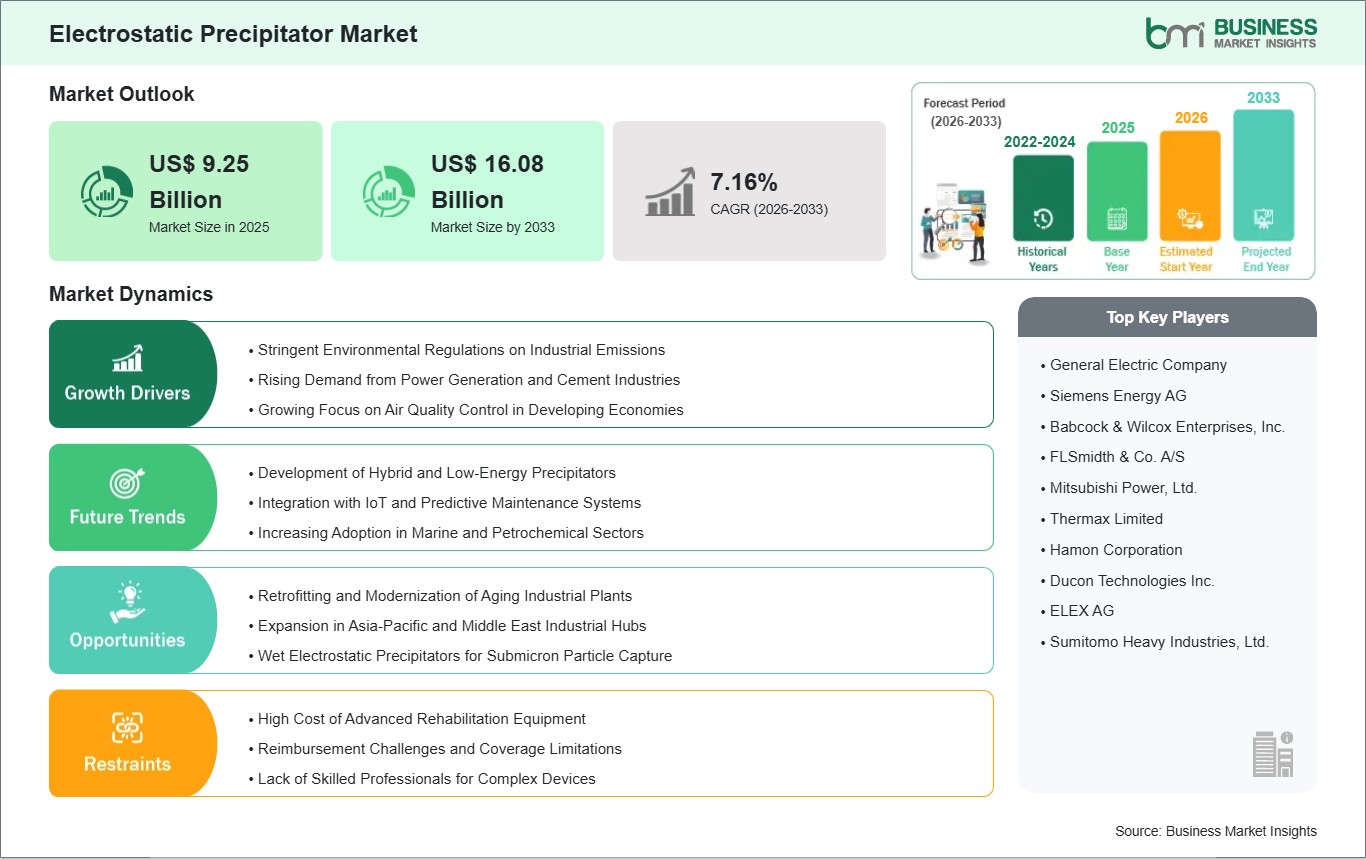
The "Electrostatic Precipitator Market" report focuses on the market for electrostatic precipitators, which are widely used for the removal of particulate matter from industrial exhaust gases through electrostatic charging. The electrostatic precipitators are widely used in industries where air pollution control is of prime importance. The electrostatic precipitators play a vital role in reducing emissions, maintaining compliance, and promoting environmental sustainability. The market for electrostatic precipitators is witnessing steady growth due to the rising environmental awareness and stringent regulations on emissions in industries. The industrial sector is adopting advanced air pollution control technology to maintain compliance standards. The rising environmental concerns over reducing industrial emissions and improving air quality are major factors for the growth of the electrostatic precipitators market.
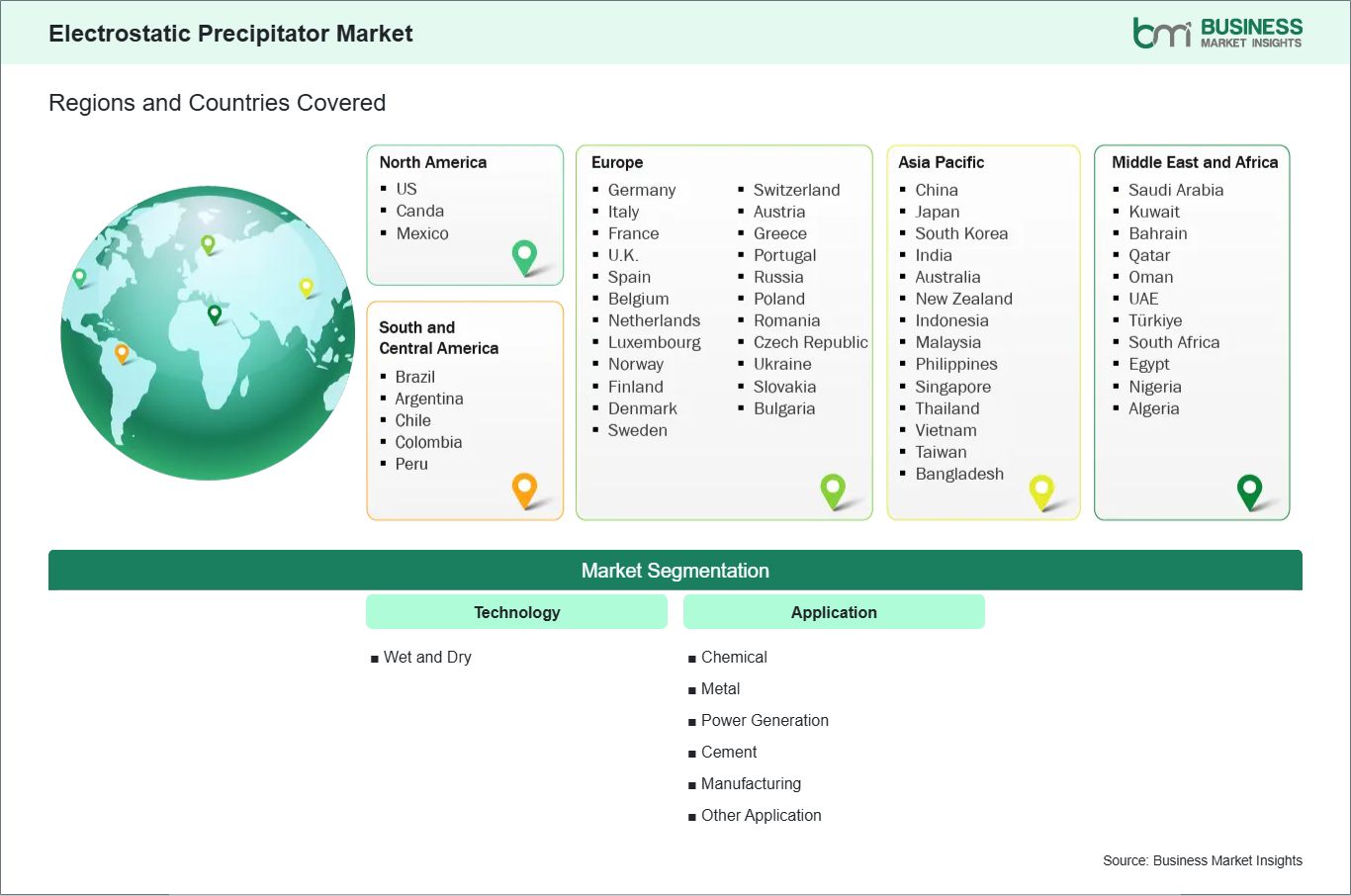
Based on technology, dry electrostatic precipitators are widely used due to their suitability for handling large quantities of flue gases in power plants and industries. Wet electrostatic precipitators are becoming more prominent in industries that require the removal of particulate matter and aerosol particles, mainly in the chemical and metal industries. Power generation is a significant segment for electrostatic precipitators due to stringent requirements for emission control. The cement and metal industries are also major contributors to the electrostatic precipitators market due to the nature of the industrial processes, which are continuously in operation. The chemical and manufacturing industries are adopting these technologies to enhance the capabilities of the electrostatic precipitators.
The competitive landscape of the Electrostatic Precipitator Market is characterized by technological advancements, system customization, and integration with monitoring solutions. Market participants are focusing on improving efficiency, durability, and compliance with evolving environmental standards.
Market Forces
Electrostatic Precipitator Market Drivers and Opportunities
Stringent Environmental Regulations and Emission Standards
The imposition of stringent environmental laws in various industries is a significant driver for the Electrostatic Precipitator Market. Governments and regulatory authorities are imposing emission norms to reduce air pollution, which affects environmental health. This has led many industries, such as power, cement, and manufacturing, to invest in efficient technologies for pollution control.
Electrostatic precipitators are efficient in removing particulate matter from exhaust gases, which helps meet regulatory norms. As environmental laws are changing, many industries are upgrading their existing technologies and investing in new technologies, which indicates a growing Electrostatic Precipitator Market and emphasizes the need for efficient emission control technologies.
Technological Advancements and Expansion of Industrial Infrastructure
The ongoing technological advancements are creating new opportunities for the Electrostatic Precipitator Market. The advancements in technology are helping to improve the efficiency of the electrostatic precipitators. The new technological advancements in electrostatic precipitators are helping to improve the efficiency of the electrostatic precipitators. Moreover, the growth of industrial infrastructure, especially in developing countries, is creating new opportunities for the electrostatic precipitators market.
The growth of industrial infrastructure is creating new opportunities for the electrostatic precipitators market. The growth of industrial infrastructure, such as power plants, cement plants, and manufacturing plants, is creating new opportunities for the electrostatic precipitators market.
Size and Share Analysis
Electrostatic Precipitator Market Size and Share Analysis
The Electrostatic Precipitator Market is projected to grow from US$ 9.25 billion in 2025 to US$ 16.08 billion in 2033, registering a CAGR of 6.1 %. This growth is supported by increasing demand for efficient emission control technologies across industrial sectors.
By technology, dry electrostatic precipitators hold a larger share due to their widespread use in power generation and heavy industries. Wet electrostatic precipitators are gaining traction, particularly in applications requiring the removal of finer particles and aerosols.
In terms of application, power generation accounts for a significant share due to stringent emission standards and large-scale operations. The cement and metal industries also contribute substantially, driven by continuous production processes and environmental compliance requirements. Chemical and manufacturing sectors are steadily increasing their adoption of electrostatic precipitators to improve air quality and meet regulatory standards.
Geographic Insights
Electrostatic Precipitator Market Geographic Insights
Asia Pacific is one of the major markets for the Electrostatic Precipitator Industry, with rapid industrialization and infrastructure development. Countries like China, India, and Japan are witnessing rapid growth in terms of power generation, cement production, and manufacturing activities. As the infrastructure is growing rapidly, the demand for effective emission control is also rising to address environmental issues. Governments in this region are adopting strict policies to reduce environmental pollution. Industries in this region are adopting advanced electrostatic precipitators to control pollution. Moreover, the presence of huge industrial infrastructure and rapid growth in infrastructure development is also supporting the growth of the electrostatic precipitators market.
North America is one of the established markets for electrostatic precipitators. Countries like the United States and Canada already possess well-established infrastructure. Governments in this region have already established strict policies to control environmental pollution. Industries in this region are required to maintain effective emission control equipment. Adoption of electrostatic precipitators is growing rapidly in this region. Adoption is largely driven by the need to upgrade existing infrastructure with the latest technology to integrate digital technology. Moreover, the presence of well-established infrastructure in this region is supporting the growth of the electrostatic precipitators market.
Industry Activity
Recent Developments
The Electrostatic Precipitator Market is analyzed using a combination of primary and secondary research sources, including corporate publications, industry associations, and established databases. This approach helps in identifying recent technological advancements and industry developments influencing the market.
- In June 2024, Babcock & Wilcox Enterprises introduced an upgraded electrostatic precipitator system designed to enhance particulate removal efficiency in power generation plants. The innovation focuses on improving operational performance and compliance with evolving environmental standards, supporting increased adoption across industrial facilities.
- In August 2025, The first order for a wet electrostatic precipitator (WESP) to be installed at a customer’s works in Europe was placed with Siempelkamp Energy & Drying Solutions GmbH in August 2025. The project encompasses the delivery, installation, and commissioning of the complete system and marks Siempelkamp Energy & Drying Solutions GmbH’s entry into the mineral-wool industry.
Trust & Transparency
Research Methodology
The market analysis combines proprietary research with secondary data from government agencies, company disclosures, regulatory filings, industry databases and expert interviews. Market estimates are validated through data triangulation, cross-market benchmarking and analyst
review.
View Full Research Methodology
Key Sources Referred:
International Energy Agency (IEA)United Nations Environment Programme (UNEP)Environmental Protection Agency (EPA)European Environment Agency (EEA)International Electrotechnical Commission (IEC)Industry Associations for Air Pollution ControlResearch Institutions in Environmental EngineeringTrade Journals on Industrial Emissions and Control SystemsCompany Annual Reports and Sustainability ReportsGovernment Environmental Regulatory Bodies