Dropshipping Market Regional Highlights
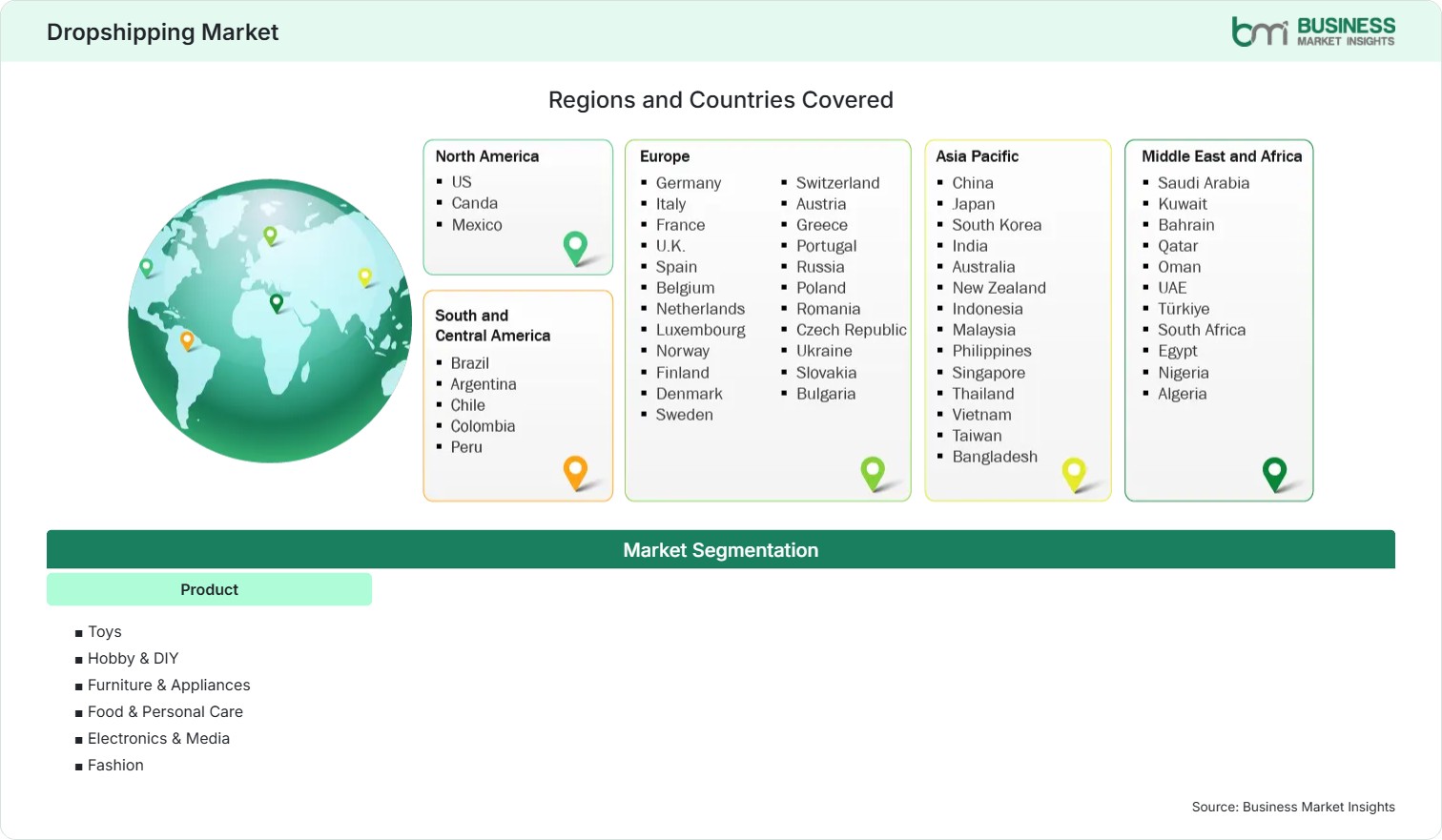
North America Dropshipping Market
North America accounted for 34%–37% of the market share in 2025 and is projected to expand at a CAGR of 29%–31% during 2026–2033. These regions benefit greatly from advanced e-commerce ecosystems, cloud-based infrastructure, robust digital payment systems, and widespread use of artificial intelligence in retail. Consumer trust in online transactions, high Internet penetration rates, and investments in order fulfillment automation processes contribute to the expansion of Dropshipping Market share across the USA and Canada.
- AI-driven inventory management systems are still working towards minimizing inventory inconsistencies, optimizing supplier collaboration, as well as facilitating better pricing, faster deliveries, and higher levels of customer satisfaction through multiple digital sales platforms.
- The implementation of sophisticated logistical infrastructure, including same-day delivery, automated fulfillment warehouses, and warehouse management systems allows for effective handling of increasing number of orders and enhanced operational scalability.
- The rising popularity of social commerce, influencer marketing, and omnichannel retailing further promotes digital customer acquisition and provides additional space for specialty dropshipping firms to serve niche customer segments.
- Major technology providers keep developing automation software, prediction capabilities, and cloud-based e-commerce platforms which make the operation of SMEs easier, while allowing for better visibility of suppliers within the digital retail environment.
- Data protection and security, transaction integrity, as well as transparency of international trade are gaining regulatory focus when it comes to the adoption of online retail solutions.
US Dropshipping Market
The United States represented approximately 28%–30% of global revenue in 2025 and is expected to register a CAGR of 29%–31% through 2033. The country's leadership reflects advanced e-commerce infrastructure, strong consumer purchasing power, extensive third-party logistics capabilities, and widespread adoption of cloud commerce technologies supporting scalable digital retail business models.
- Continuous investments in AI-powered store management and customer forecasting on behalf of tech companies enhance merchants' efficiency and facilitate personalization in the digital marketplaces.
- Strong participation from SMEs, entrepreneurs, and digital-first brands accelerates marketplace diversification, creating sustained demand for supplier integration platforms and automated inventory synchronization solutions.
- Collaborations in cross-border delivery services and development of payment systems keep enhancing the opportunities for merchants to reach out to their international customers and simplify their operations in international online commerce.
- Increased investments in warehousing robots, order fulfillment software, and delivery automation enhance the competitiveness of the retailers who aim at improving order execution.
Europe Dropshipping Market
Europe held around 24%–27% market revenue share in 2025 and is expected to register a CAGR of 30%–32% till 2033. The robust digital commerce policies, rising participation in e-commerce sales, and increased investments in logistics automation are expected to continue driving regional growth. Germany is the largest country-level market while Poland shows the highest rate of growth due to rapid digitalization of SMEs.
- Harmonization of digital commerce regulations makes border transactions easier, allowing businesses to increase customer coverage, while adhering to the regulatory requirements of different European markets.
- Growing investments in localized fulfillment centers reduce delivery times, improve customer satisfaction, and enhance supply chain resilience for online retailers serving diverse regional markets.
- AI-driven pricing optimization, multilingual storefront capabilities, and integrated supplier management platforms enable merchants to efficiently scale operations throughout Europe.
- Environmental sustainability is becoming an important consideration for consumers when they choose merchants and their fulfillment services providers.
- Expansion of digital payment technologies and fintech innovation supports secure online purchasing while improving transaction efficiency across both domestic and international retail operations.
Asia Pacific Dropshipping Market
Asia Pacific held approximately 26%–29% of the Dropshipping market share in 2025 and is projected to achieve the highest CAGR of 33%–35% during the forecast period. Rapid smartphone adoption, expanding digital payment ecosystems, growing supplier networks, and government support for digital economies continue positioning China as the regional leader, while India records the fastest expansion driven by increasing online entrepreneurship and e-commerce infrastructure development.
- Large manufacturing ecosystems provide merchants with extensive supplier options, competitive pricing, and efficient product sourcing supporting scalable international dropshipping operations.
- Rising internet penetration and affordable smartphone access continue expanding online consumer participation, particularly across emerging Southeast Asian economies experiencing rapid digital transformation.
- Investments in warehouse automation, AI-powered logistics optimization, and cross-border fulfillment strengthen operational efficiency while improving customer delivery experiences.
- Growing adoption of social commerce, live-stream shopping, and creator-led retail ecosystems enables merchants to accelerate customer acquisition through digital engagement channels.
- Supportive government initiatives promoting digital payments, startup ecosystems, and e-commerce innovation encourage greater participation from SMEs entering online retail markets.
Rest of World Dropshipping Market
The Rest of World region represented approximately 11%–13% of the Dropshipping market revenue in 2025 and is anticipated to grow at a CAGR of 31%–33% through 2033. South and Central America continue benefiting from improving digital payment adoption and expanding online retail participation, while the Middle East and Africa experience increasing investments in logistics modernization and digital commerce infrastructure.
Brazil is the top performing country in both South America and Central America while the UAE has shown the maximum growth rate in the Middle East region due to its investment in e-commerce and logistics
- Expanding broadband connectivity and smartphone adoption improve consumer access to online marketplaces while supporting sustained digital retail expansion across emerging economies.
- Increasing government investment in logistics modernization and digital infrastructure strengthens fulfillment efficiency, enabling merchants to serve broader regional customer bases more effectively.
- Financial technology innovation enhances digital payment accessibility, encouraging online purchasing behavior while improving transaction security and merchant confidence.
- Growing international supplier partnerships expand product availability, allowing regional retailers to diversify offerings without maintaining significant inventory investments.
- Rising participation from SMEs adopting cloud commerce platforms creates new opportunities for localized entrepreneurship while supporting broader economic digitalization across developing markets.