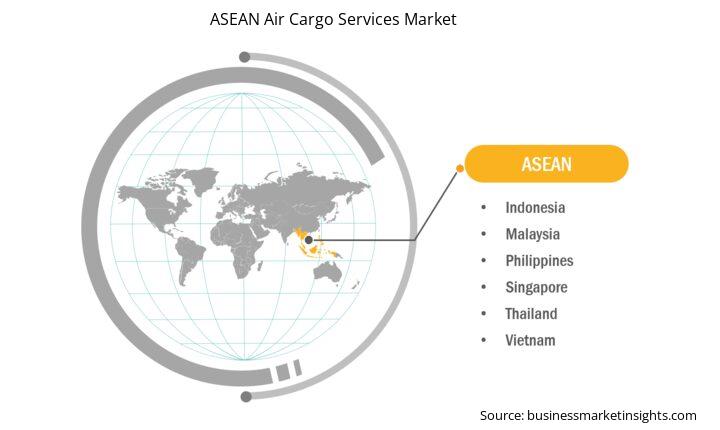
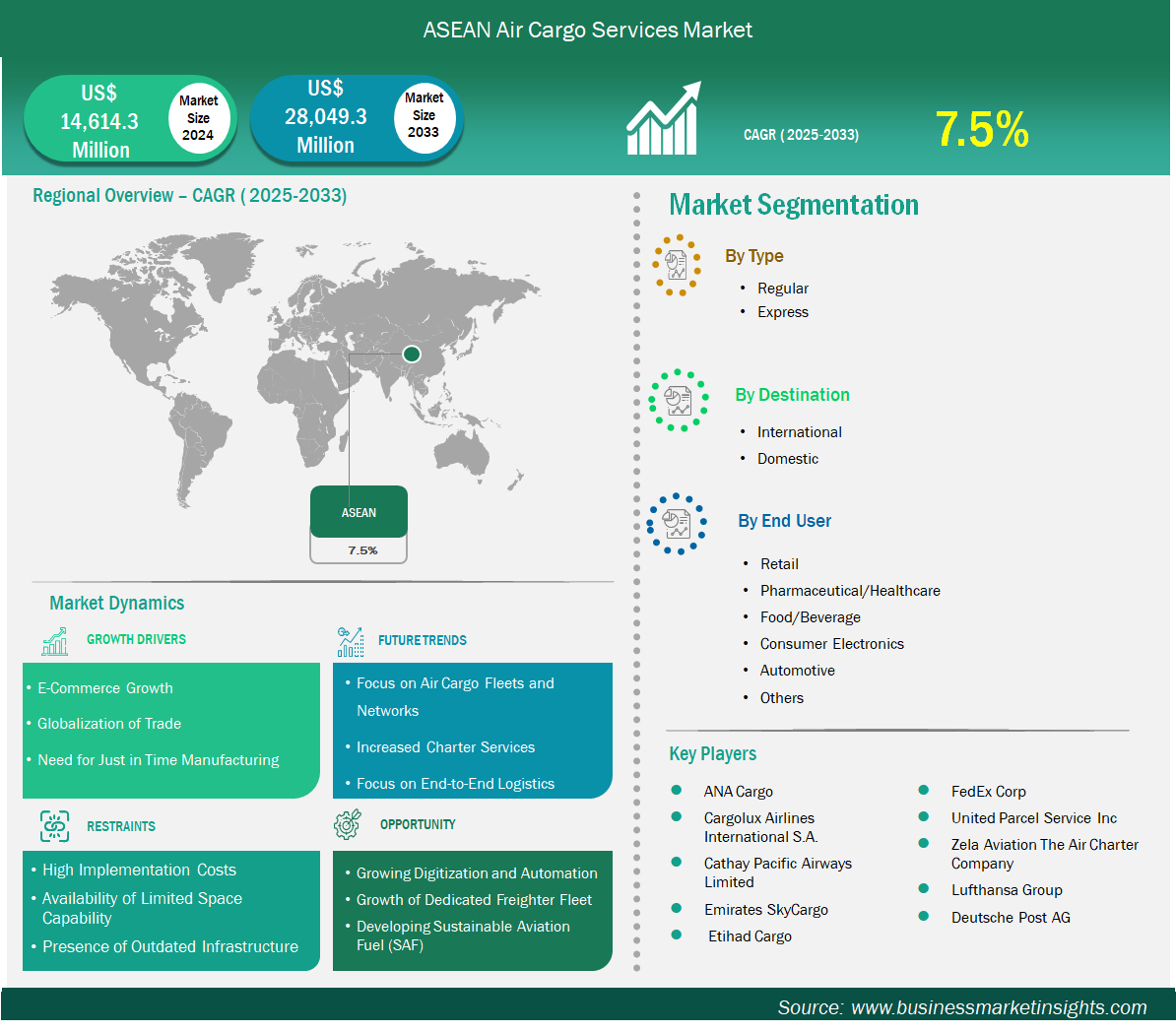
The ASEAN air cargo services market size is expected to reach US$ 28,049.3 million by 2033 from US$ 14,614.3 million in 2024. The market is estimated to record a CAGR of 7.5% from 2025 to 2033.
Executive Summary and ASEAN Air Cargo Services Market Analysis:
The ASEAN air cargo services market is evolving rapidly into a key logistics hub in Asia, supported by strong intra-regional trade, strategic geographic positioning, and investments in multimodal infrastructure. Countries like Indonesia, Malaysia, the Philippines, Singapore, Thailand, and Vietnam are contributing significantly to the region’s robust air cargo network through investments in automation, digital freight solutions, and logistics innovation. The region benefits from its central location between East Asia, South Asia, and Oceania, making it a critical link in global air freight corridors.
Indonesia is strengthening its air cargo network through airport modernization programs, particularly at Soekarno-Hatta International Airport. The country is focusing on enhancing cargo handling capabilities, boosting capacity for time-sensitive goods, and supporting growing e-commerce demand through improved customs procedures and cold chain systems.
Malaysia is positioning itself as a key transshipment hub in Southeast Asia with Kuala Lumpur International Airport playing a central role. The government is promoting digital logistics solutions and bonded logistics zones to support pharmaceutical and high-tech cargo, while also expanding capacity for perishable goods.
The Philippines is investing in modernizing airport infrastructure, especially at Ninoy Aquino and Clark International Airports, to meet growing demand from electronics, textile, and e-commerce sectors. Initiatives are also underway to integrate smart cargo tracking and customs clearance systems.
Singapore remains a regional air cargo leader, leveraging Changi Airport’s advanced logistics infrastructure, free trade zones, and seamless integration with seaport operations. Singapore continues to lead in automation, AI-enabled cargo platforms, and end-to-end visibility across supply chains.
Thailand is expanding its role in regional cargo logistics through key airports like Suvarnabhumi, investing in smart warehousing, digital freight corridors, and green logistics practices. The country’s logistics roadmap aims to enhance Thailand’s competitiveness in cross-border trade.
Vietnam is emerging as a dynamic player in the ASEAN air cargo sector, driven by manufacturing exports and growing e-commerce demand. With Noi Bai and Tan Son Nhat Airports undergoing upgrades, Vietnam is prioritizing efficiency improvements in cargo turnaround time, cold chain handling, and digital infrastructure.
Together, these ASEAN nations are strengthening the region’s air cargo ecosystem by embracing digital transformation, infrastructure modernization, and sustainable freight initiatives—positioning ASEAN as a global hub for fast, reliable, and cost-efficient air cargo services.
ASEAN Air Cargo Services Market Segmentation Analysis:
Key segments that contributed to the derivation of the air cargo services market analysis are type, destination and end user.
- By type, the air cargo services market is bifurcated into regular and express. The regular segment dominated the market in 2024.
- By destination, the market is bifurcated into international and domestic. The international segment held the largest share of the market in 2024.
- By end user, the market is segmented into retail, pharmaceutical/healthcare, food/beverage, consumer electronics, automotive, and others. The pharmaceutical/healthcare segment held the largest share of the market in 2024.
ASEAN Air Cargo Services Market Outlook
The ASEAN air cargo services market is rapidly emerging as a vital logistics hub in Asia-Pacific, driven by increasing cross-border e-commerce, advanced digital infrastructure, and robust manufacturing exports. Countries such as Indonesia, Malaysia, the Philippines, Singapore, Thailand, and Vietnam are leading the region’s air cargo transformation by investing in smart logistics solutions, expanding cargo handling capacity, and enhancing multimodal connectivity.
A key growth driver in the region is the surge in demand for time-critical, high-value shipments, including electronics, pharmaceuticals, and perishables. Governments and logistics providers across ASEAN are adopting automation, AI-powered cargo platforms, and green aviation technologies to reduce emissions and improve cargo efficiency. The region is also leveraging its central geographic location to facilitate rapid cargo transit between Asia, Oceania, and the Middle East.
ASEAN Air Cargo Services Market Country Insights
Based on country, the ASEAN air cargo services market is experiencing robust growth, driven by strategic infrastructure investments, rapid e-commerce expansion, and strong trade integration across member economies such as Indonesia, Malaysia, the Philippines, Singapore, Thailand, and Vietnam. These countries are strengthening their position in the global air cargo network through digital transformation, cold chain infrastructure, and improved regulatory frameworks.
Singapore continues to lead the region with Changi Airport’s world-class cargo infrastructure, integrated multimodal connectivity, and efficient customs clearance systems. The city-state serves as a strategic transshipment hub, handling high-value and time-sensitive shipments such as electronics, pharmaceuticals, and perishables. Investments in smart cargo systems and green aviation technologies are reinforcing Singapore’s leadership in air freight innovation.
Malaysia is enhancing its air cargo capabilities through Kuala Lumpur International Airport and regional gateways. The country is focusing on automation, bonded logistics zones, and expanding cargo terminal capacities to meet the increasing demand for cross-border e-commerce and industrial goods movement. Cold chain development is also a key priority to support exports of food and pharmaceuticals.
Thailand is scaling up its air freight network through Suvarnabhumi and Don Mueang airports, with ongoing airport upgrades and cargo terminal expansions. The country is investing in smart logistics infrastructure and AI-enabled tracking systems to optimize cargo throughput and reduce delays. Its strategic location enhances connectivity between ASEAN, China, and South Asia.
Vietnam is emerging as a dynamic player in the ASEAN air cargo market, backed by its strong manufacturing exports and rising e-commerce activity. With investments in airport modernization and digitized customs processes at key hubs like Noi Bai and Tan Son Nhat, Vietnam is boosting cargo handling capacity and positioning itself as a regional logistics hub.
Indonesia, with its archipelagic geography, is focusing on developing regional air freight corridors through Jakarta Soekarno-Hatta International Airport and other provincial hubs. Government initiatives are targeting multimodal integration, bonded logistics centers, and investment incentives to enhance cargo capacity for domestic and international markets.
The Philippines is advancing its air cargo sector through infrastructure development at Manila, Cebu, and Clark airports. Strong growth in e-commerce and export-driven industries like electronics and apparel is driving demand for reliable, time-sensitive logistics. Government programs supporting digital freight platforms and cold chain logistics are reinforcing the Philippines’ competitiveness in air freight services.
The ASEAN air cargo services market is expected to continue evolving rapidly driven by rising consumer expectations, trade growth, and sustainability-focused innovation. These country-level efforts are collectively reinforcing the region’s role as a global air logistics powerhouse.
ASEAN Air Cargo Services Market Company Profiles
ANA Cargo, Cargolux Airlines International S.A., Cathay Pacific Airways Limited, Emirates SkyCargo, Etihad Cargo, FedEx Corp, United Parcel Service Inc, Zela Aviation The Air Charter Company, Lufthansa Group, and Deutsche Post AG are among the key players operating in the market. These players adopt strategies such as expansion, product innovation, and mergers and acquisitions to stay competitive in the market and offer innovative products to their consumers.
ASEAN Air Cargo Services Market Research Methodology:
The following methodology has been followed for the collection and analysis of data presented in this report:
Secondary Research
The research process begins with comprehensive secondary research, utilizing both internal and external sources to gather qualitative and quantitative data for each market. Commonly referenced secondary research sources include, but are not limited to:
- Company websites, annual reports, financial statements, broker analyses, and investor presentations
- Industry trade journals and other relevant publications
- Government documents, statistical databases, and market reports
- News articles, press releases, and webcasts specific to companies operating in the market
Note: All financial data included in the Company Profiles section has been standardized to US$. For companies reporting in other currencies, figures have been converted to US$ using the relevant exchange rates for the corresponding year.
Primary Research
Business Market Insights conducts a significant number of primary interviews each year with industry stakeholders and experts to validate and analyze the data and gain valuable insights. These research interviews are designed to:
- Refine findings from secondary research
- Enhance the expertise and market understanding of the analysis team
- Gain insights into market size, trends, growth patterns, competitive dynamics, and future prospects
Primary research is conducted via email interactions and telephone interviews with industry experts across various markets, categories, segments, and sub-segments in different regions. Participants typically include:
- Industry stakeholders: Vice Presidents, business development managers, market intelligence managers, and national sales managers
- External experts: Valuation specialists, research analysts, and key opinion leaders with industry-specific expertise
Key Sources Referred:
- The International Air Transport Association (IATA)
- The International Civil Aviation Organization (ICAO)
- World Bank – ASEAN Trade and Logistics Performance Index
- World Trade Organization (WTO)
- Airports Council International (ACI) – Asia-Pacific Region
- ASEAN Secretariat – Trade & Transport Statistics
- Company website
- Company annual reports
- Company investor presentations
ASEAN Air Cargo Services Market Strategic Insights
ASEAN Air Cargo ServicesMarket Report Highlights
| Report Attribute | Details |
| Market size in 2024 | US$ 14,614.3 Million |
| Market Size by 2033 | US$ 28,049.3 Million |
| CAGR (2025 - 2033) | 7.5% |
| Historical Data | 2022-2023 |
| Forecast period | 2025-2033 |
| Segments Covered |
By Type
|
|
Regions and Countries Covered
|
|
| ASEAN | Indonesia, Malaysia, Philippines, Singapore, Thailand, Vietnam |
| Market leaders and key company profiles |
|
ASEAN Air Cargo Services Market Country and Regional Insights