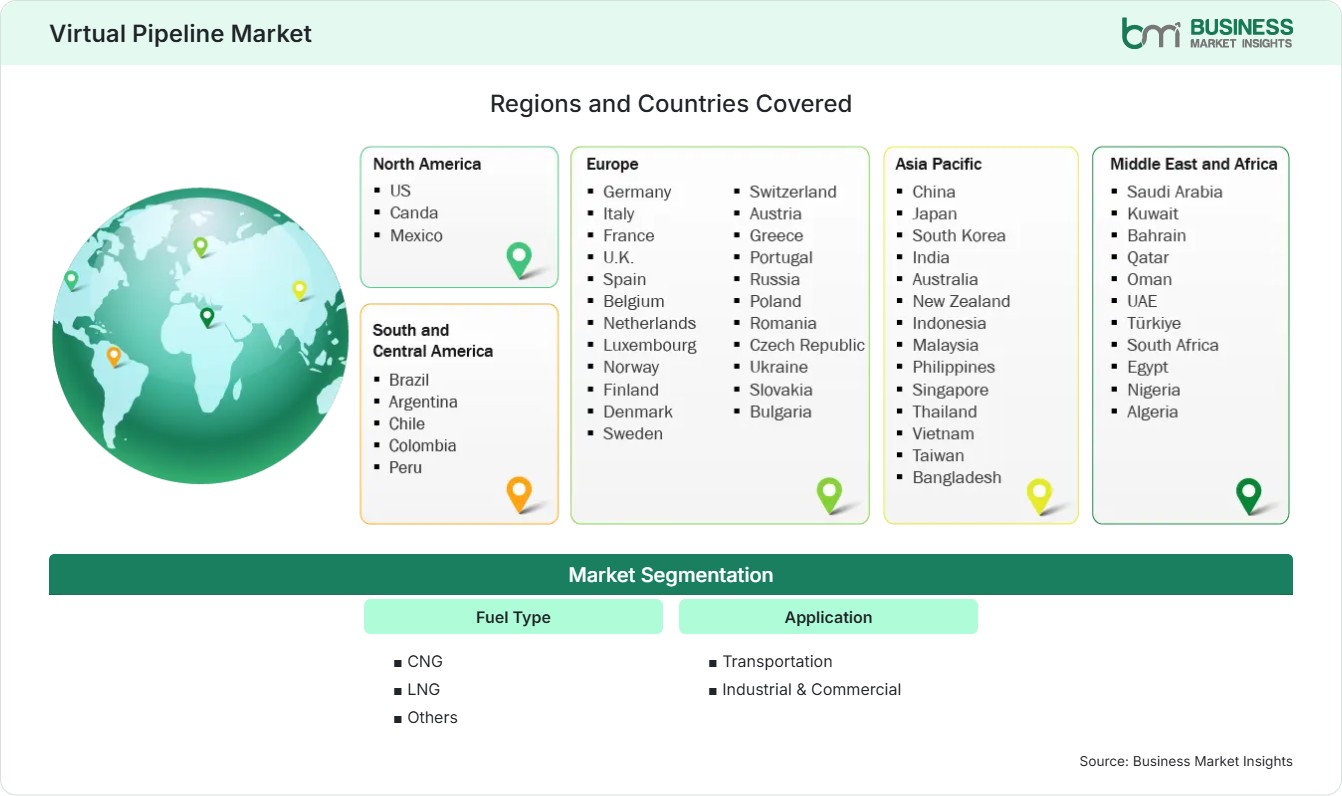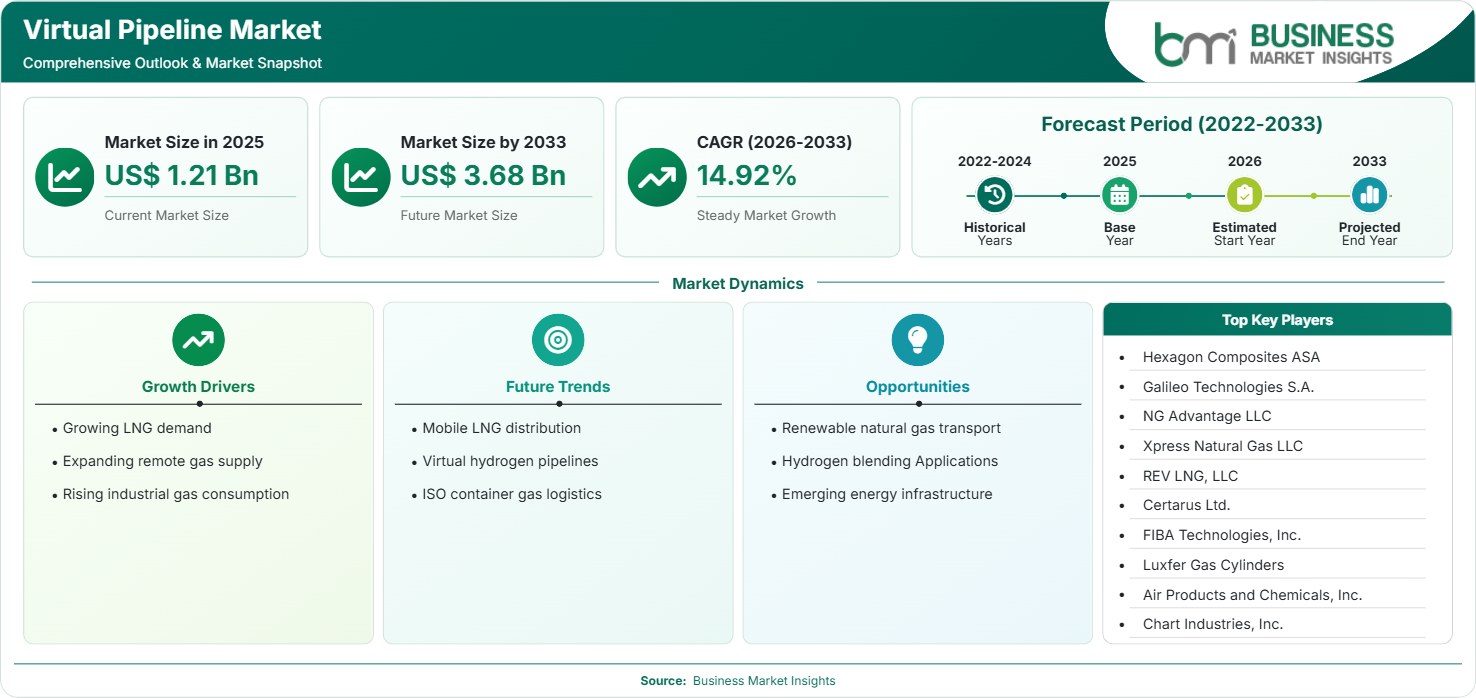
Virtual Pipeline Market Regional Highlights
North America Virtual Pipeline Market
North America represented approximately 38%–42% of the global Virtual Pipeline market in 2025 and is projected to expand at a CAGR of 14.5%–15.0% during 2026–2033. The region benefits from extensive natural gas availability, industrial consumption, LNG adoption, and demand for flexible energy distribution. The market share remains significant due to remote gas supply requirements, off-grid applications, and expanding cleaner fuel adoption.
- The United States remains the largest contributor due to LNG availability, industrial demand, and distributed energy infrastructure development.
- Canada supports regional expansion through natural gas resources, remote communities, and clean energy initiatives.
- Industrial users are adopting virtual pipelines to access reliable gas supply without permanent pipeline infrastructure.
- LNG transportation solutions are gaining adoption across remote and commercial energy applications.
US Virtual Pipeline Market
The United States accounted for approximately 34%–38% of global revenue in 2025 and is expected to register a CAGR of 14.6%–15.1% through 2033. The country remains a leading Virtual Pipeline market due to abundant natural gas resources, expanding LNG usage, and industrial fuel demand. The market growth is supported by distributed energy systems, remote supply requirements, and increasing adoption of cleaner gas alternatives.
- Industrial facilities are increasingly using virtual pipeline systems for flexible and reliable natural gas delivery.
- LNG-based solutions are expanding across regions lacking conventional pipeline connectivity.
- Energy companies are investing in advanced storage, transportation, and monitoring technologies.
Europe Virtual Pipeline Market
Europe held an estimated 20%–24% share in 2025 and is forecast to grow at a CAGR of 13.8%–14.5% between 2026 and 2033. The region benefits from energy diversification strategies, LNG infrastructure expansion, renewable gas initiatives, and industrial decarbonization efforts. Germany, the United Kingdom, France, Italy, and Spain represent important markets due to increasing focus on flexible energy supply systems.
- Germany supports demand through industrial gas consumption and energy transition initiatives.
- The United Kingdom is expanding LNG-related infrastructure and decentralized energy solutions.
- France and Italy are developing opportunities through cleaner fuel adoption and industrial applications.
- European companies are exploring hydrogen blending and renewable gas transportation solutions.
Asia Pacific Virtual Pipeline Market
Asia Pacific accounted for approximately 28%–32% of the market in 2025 and is expected to achieve the fastest growth with a CAGR of 15.5%–16.2% through 2033. Rising industrialization, increasing LNG demand, expanding energy access, and infrastructure development are supporting regional adoption. China, India, Japan, South Korea, and Southeast Asian countries represent key growth Virtual Pipeline markets.
- China leads regional adoption through industrial gas demand and expanding LNG infrastructure.
- India represents strong growth potential through energy access programs and increasing natural gas consumption.
- Japan supports adoption through LNG expertise and advanced energy transportation systems.
- Southeast Asian markets are developing opportunities through remote energy supply requirements.
Rest of World Virtual Pipeline Market
The Rest of World region accounted for approximately 10%–14% share in 2025 and is projected to grow at a CAGR of 14.8%–15.5% during the forecast period. Latin America, the Middle East, and Africa are witnessing increasing demand due to energy access challenges, industrial development, and investments in flexible gas distribution. Virtual pipelines provide alternatives where traditional pipeline networks remain limited.
- Brazil represents a growing market due to industrial gas demand and energy infrastructure development.
- Mexico supports expansion through natural gas distribution requirements and industrial applications.
- Middle Eastern countries are investing in advanced energy transportation and LNG infrastructure.
- African markets are adopting decentralized gas supply solutions to improve energy accessibility.
- Regional industries are exploring virtual pipelines for reliable fuel delivery and operational flexibility.