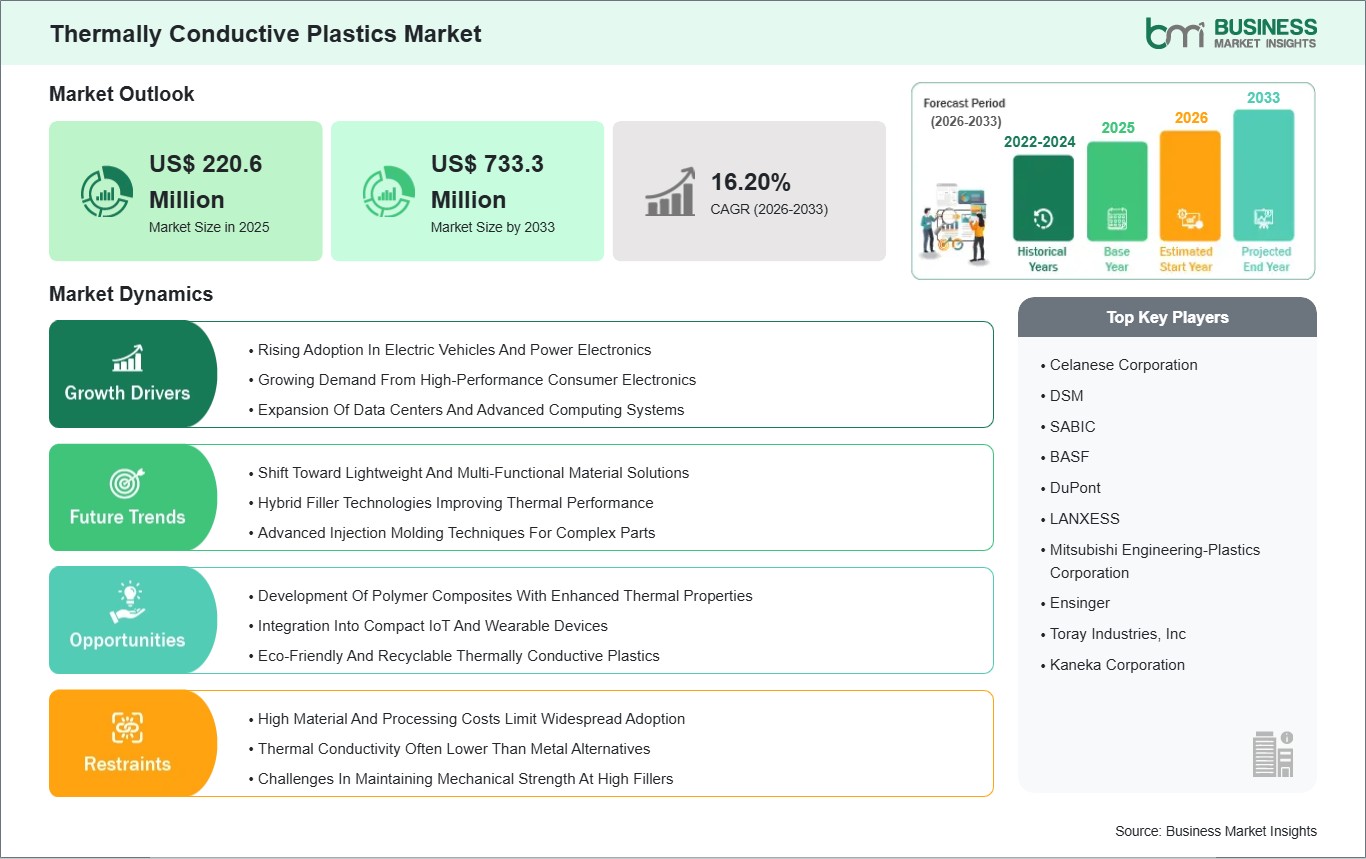
Rising Adoption In Electric Vehicles And Power Electronics
The worldwide transition to electric vehicles (EVs) has created significant demand for thermally conductive plastics, which enable vehicle weight reduction through efficient heat dissipation capabilities that surpass metal materials. The growing use of these materials in EV battery enclosures, inverter housings and powertrain components helps maintain temperature control while enhancing energy efficiency. North America, Europe and China lead the implementation of advanced polymer composites, which they use in high-voltage modules to improve vehicle range and thermal management of compact systems.
Thermally conductive plastics provide power electronics applications with effective heat management solutions, which power inverters, converters and renewable energy modules use in their high-power densely packed components. The semiconductor sector requires higher power densities, which creates rising demand in Asia Pacific and Europe as manufacturers work with material suppliers to fulfill their thermal and mechanical specifications.
South America and the Middle East & Africa have begun using these plastics in their industrial and electrical systems to improve system reliability. The global markets show that thermally conductive plastics have gained acceptance in EVs and power electronics because these materials develop lightweight structures that achieve high performance while providing thermal efficiency, easy manufacturing and flexible design options.
Development Of Polymer Composites With Enhanced Thermal Properties
Innovation in polymer composites is advancing thermally conductive plastics by integrating high-performance fillers such as graphite, graphene, boron nitride, and metal oxides. These fillers create thermal pathways, enabling heat dissipation while maintaining plastic’s lightweight, moldable, and corrosion-resistant properties. North America and Europe dominate R&D, producing composites for automotive, aerospace, and electronics applications requiring reliable thermal management.
Collaborations between polymer manufacturers and OEMs have led to composites tailored for compact consumer electronics, such as smartphones, laptops, and LED lighting systems, where efficient heat spread is critical. Asia Pacific manufacturers leverage these innovations for high-volume production, meeting design and thermal performance demands in electronics and power modules.
Next-generation composites are extending to renewable energy equipment, telecommunication infrastructure, and industrial electronics. Advancements in hybrid fillers, dispersion methods, and polymer matrices allow fine-tuning of thermal conductivity, mechanical strength, and manufacturability. Globally, these developments strengthen the adoption of thermally conductive plastics, offering lightweight, high-performance solutions that meet diverse industrial and consumer requirements while supporting energy efficiency and compact designs.