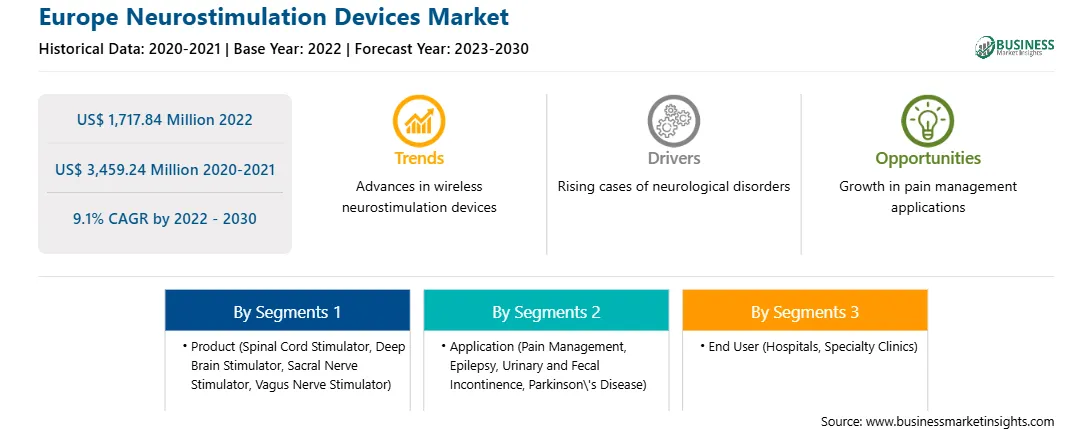
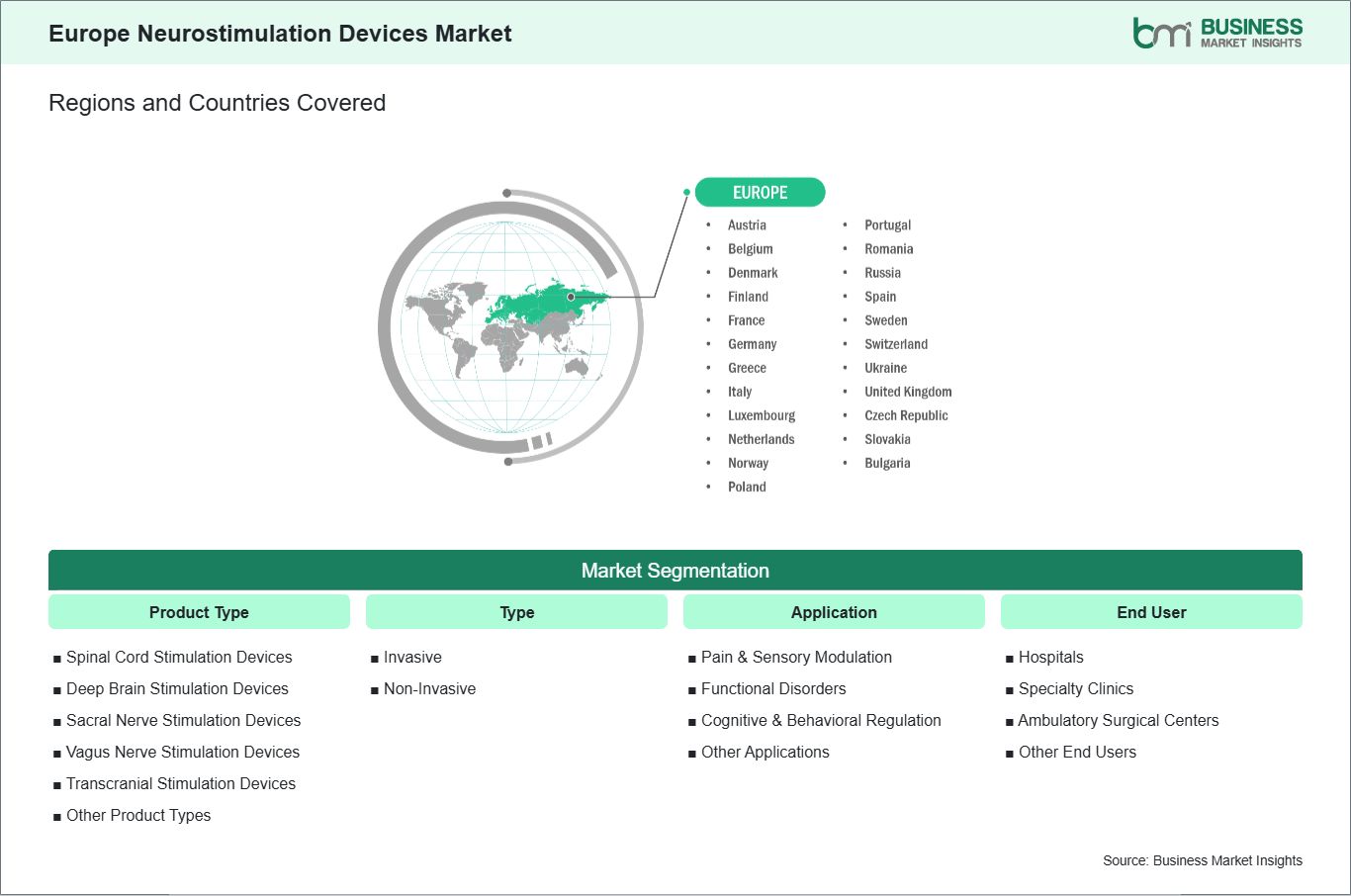
The geographical scope of the Europe Neurostimulation Devices Market report is divided into Germany, Italy, France, U.K., Spain, Belgium, Netherlands, Luxembourg, Norway, Finland, Denmark, Sweden, Switzerland, Austria, Greece, Portugal, Russia, Poland, Romania, Czech Republic, Ukraine, Slovakia, Bulgaria. Germany held the largest share in 2025.
Western European countries control the majority of the European neurostimulation devices market, which exhibits advanced development but shows uneven market distribution among its countries. The German market dominates the region because its network of operational neurosurgery centers allows universal health insurance coverage to help medical facilities implement new technologies like spinal cord stimulation and deep brain stimulation, which handle the highest number of medical procedures throughout Europe. France and the U.K. function as important market sectors because their centralized reimbursement systems, which include HAS in France and NICE in the U.K., and their active clinical research environments enable the rising use of neuromodulation for chronic pain treatment. Southern European countries such as Italy, Spain, Greece, and Portugal show moderate but growing adoption, with Italy standing out due to strong northern hospital networks, while southern regions face reimbursement and access disparities. The Benelux countries (Belgium, the Netherlands, Luxembourg) experience continuous growth because of their high health expenditure and their residents' ability to receive treatment across borders. Northern European countries, which include Sweden, Denmark, Finland, and Norway, show more rapid expansion of non-invasive digital neurostimulation solutions because they have established outpatient care systems and policies that encourage technology use. The small populations of Switzerland and Austria do not restrict their citizens from using advanced technology, which leads to high rates of innovation throughout their countries. The Eastern European countries of Poland, Romania, the Czech Republic, Slovakia, Bulgaria, and Ukraine, together with Russia, function as emerging markets because their market presence remains limited due to budget restrictions, although EU funding and increased neurological disease cases are helping to improve market accessibility. The European market shows Germany as the main market leader. France and the U.K. follow. Eastern and Southern Europe represent future growth potential because of their increasing reimbursement systems and growing medical knowledge.