Analysis - by Product (Monoclonal Antibodies, Vaccine, Recombinant Hormones/Proteins, Cell and Gene Therapy, and Others), Application (Cancer, Infectious Diseases, Autoimmune Diseases, and Others), Source (Mammalian and Microbial), and Manufacturing (Outsourced and In-house)
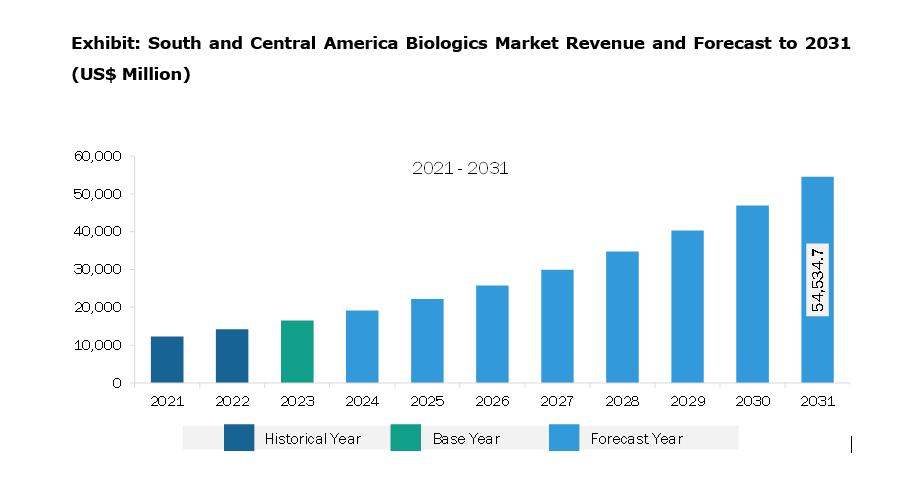
The South & Central America biologics market was valued at US$ 16,517.2 million in 2023 and is expected to reach US$ 54,534.7 million by 2031; it is estimated to register a CAGR of 16.1% from 2023 to 2031.
Gene and Cell Therapy Advancements in Biologics Regions Fuel South & Central America Biologics Market
Gene and cell therapies are among the most promising and rapidly growing segments in the biologics market. These therapies have the potential to cure or significantly alleviate diseases by addressing their root causes at the genetic or cellular level rather than just managing symptoms. Gene therapies involve introducing or modifying genetic material in a patient’s cells to treat or prevent disease. Significant progress has been made in treating genetic disorders such as sickle cell anemia, muscular dystrophy, and certain inherited forms of blindness. The development of gene-editing technologies, particularly CRISPR, has further improved the precision and effectiveness of these therapies, making them viable options for conditions that were previously untreatable. Cell therapies, including stem cell and CAR-T (Chimeric Antigen Receptor T-cell) therapies, provide innovative treatments for various conditions, including certain cancers, autoimmune diseases, and tissue regeneration. CAR-T therapies, in particular, have transformed the treatment of blood cancers by utilizing the patient’s immune cells to attack cancer cells directly. The complexity and specialization of gene and cell therapies present high-value opportunities for biologics manufacturers. Despite challenges related to production, cost, and regulatory approval, the potential for groundbreaking, life-saving treatments makes this an expanding and lucrative market segment.
South & Central America Biologics Market Overview
The biologics market in South & Central America is segmented into Brazil, Argentina, and the Rest of South & Central America. The rising prevalence of genetic disease, growing demand for personalized medicines and biologics, and surging number of product launches with technological advancements are expected to contribute to the growth of the market in this region. As per a study titled "Medical genetics workforce in Brazil: practitioners, services, and disease distribution," published in 2021, ~53,746 live births were diagnosed with rare genetic diseases in 2019–2020, while 498 cases were with a hereditary cancer syndrome. The study titled "The Brazilian Rare Genomes Project," published in May 2022, states that 13.2 million individuals were affected by rare diseases in Brazil. The rising prevalence of genetic disease, along with chronic illness, is the primary factor driving the growth of the biologics market in Brazil. The country has a robust domestic pharmaceutical production capacity, which enables its trade activities and contributes notably to its GDP. As per the US Department of Commerce, domestic companies, such as Hypermarcas and EMS Sigma Pharma, account for ~80% of the total pharmaceutical companies in Brazil. Such a well-positioned pharmaceutical and biopharmaceutical industry supports the growth of the biologics market in Brazil. Bevacizumab, cetuximab, and panitumumab are the three main monoclonal antibodies approved for treating metastatic colorectal cancer (mCRC) in the country.
South & Central America Biologics Market Revenue and Forecast to 2031 (US$ Million)
South & Central America Biologics Market Segmentation
Based on product, the South & Central America biologics market is segmented into monoclonal antibodies, vaccine, recombinant hormones/proteins, cell and gene therapy, and others. The monoclonal antibodies segment held the largest market share in 2023.
In terms of application, the South & Central America biologics market is categorized into cancer, infectious diseases, autoimmune diseases, and others. The cancer segment held the largest market share in 2023.
By source, the South & Central America biologics market is bifurcated into mammalian and microbial. The mammalian segment held a larger market share in 2023.
Based on manufacturing, the South & Central America biologics market is bifurcated into outsourced and in-house. The outsourced segment held a larger market share in 2023.
In terms of country, the South & Central America biologics market is segmented into Brazil, Argentina, and the Rest of South & Central America. Brazil dominated the South & Central America biologics market share in 2023.
AbbVie Inc; Pfizer Inc; Samsung Biologics Co Ltd; ADMA Biologics, Inc.; Wuxi Biologics Inc; Catalent Inc; AGC Biologics AS; AstraZeneca Plc; Amgen Inc; Nitto Avecia; and Quality Assistance s.a. are some of the leading companies operating in the South & Central America biologics market.
South & Central America Biologics Market Strategic Insights
Get more information on this report
South & Central America Biologics Market Segmentation Analysis
South & Central America Biologics Market Report Highlights
South & Central America Biologics Report Scope
Report Attribute
Details
Market size in 2023
US$ 16,517.2 Million
Market Size by 2031
US$ 54,534.7 Million
CAGR (2023 - 2031)
16.1%
Historical Data
2021-2023
Forecast period
2025-2031
Segments Covered
By Product
Monoclonal Antibodies
Vaccine
Recombinant Hormones/Proteins
Cell and Gene Therapy
Others
By Application
Cancer
Infectious Diseases
Autoimmune Diseases
Others
By Source
Mammalian and Microbial
By Manufacturing
Outsourced and In-house
Regions and Countries Covered
South & Central America
Brazil, Argentina, Rest of South & Central America
Market leaders and key company profiles
AbbVie Inc
Pfizer Inc
Samsung Biologics Co Ltd
ADMA Biologics, Inc.
Wuxi Biologics Inc
Catalent Inc
AGC Biologics AS
AstraZeneca Plc
Amgen Inc
Nitto Avecia
Quality Assistance s.a.
Get more information on this report
South & Central America Biologics Market Country and Regional Insights
Get more information on this report
Identical Market Reports with other Region/Countries
The List of Companies - South & Central America Biologics Market
AbbVie IncPfizer IncSamsung Biologics Co LtdADMA Biologics, Inc.Wuxi Biologics IncCatalent IncAGC Biologics ASAstraZeneca PlcAmgen IncNitto AveciaQuality Assistance s.a.
Frequently Asked Questions
How big is the South & Central America Biologics Market?
The South & Central America Biologics Market is valued at US$ 16,517.2 Million in 2023, it is projected to reach US$ 54,534.7 Million by 2031.
What is the CAGR for South & Central America Biologics Market by (2023 - 2031)?
As per our report South & Central America Biologics Market, the market size is valued at US$ 16,517.2 Million in 2023, projecting it to reach US$ 54,534.7 Million by 2031. This translates to a CAGR of approximately 16.1% during the forecast period.
What segments are covered in this report?
The South & Central America Biologics Market report typically cover these key segments-
Product (Monoclonal Antibodies, Vaccine, Recombinant Hormones/Proteins, Cell and Gene Therapy, and Others)
Application (Cancer, Infectious Diseases, Autoimmune Diseases, and Others)
Source (Mammalian and Microbial)
Manufacturing (Outsourced and In-house)
What is the historic period, base year, and forecast period taken for South & Central America Biologics Market?
The historic period, base year, and forecast period can vary slightly depending on the specific market research report. However, for the South & Central America Biologics Market report:
Historic Period : 2021-2023
Base Year : 2023
Forecast Period : 2025-2031
Who are the major players in South & Central America Biologics Market?
The South & Central America Biologics Market is populated by several key players, each contributing to its growth and innovation. Some of the major players include:
AbbVie Inc
Pfizer Inc
Samsung Biologics Co Ltd
ADMA Biologics, Inc.
Wuxi Biologics Inc
Catalent Inc
AGC Biologics AS
AstraZeneca Plc
Amgen Inc
Nitto Avecia
Quality Assistance s.a.
Who should buy this report?
The South & Central America Biologics Market report is valuable for diverse stakeholders, including:
Investors: Provides insights for investment decisions pertaining to market growth, companies, or industry insights. Helps assess market attractiveness and potential returns.
Industry Players: Offers competitive intelligence, market sizing, and trend analysis to inform strategic planning, product development, and sales strategies.
Suppliers and Manufacturers: Helps understand market demand for components, materials, and services related to concerned industry.
Researchers and Consultants: Provides data and analysis for academic research, consulting projects, and market studies.
Financial Institutions: Helps assess risks and opportunities associated with financing or investing in the concerned market.
Essentially, anyone involved in or considering involvement in the South & Central America Biologics Market value chain can benefit from the information contained in a comprehensive market report.





 Get Free Sample For South & Central America Biologics Market