Analysis - by Product and Services (Medical Device Connectivity Solutions and Medical Device Connectivity Services), Technology (Wireless Technologies, Hybrid Technologies, and Wired Technologies), Application (Vital Signs and Patient Monitors, Anaesthesia Machines and Ventilators, Infusion Pumps, and Others), and End User (Hospitals, Ambulatory Surgical Centers, Imaging and Diagnostic Centers, and Homecare Settings)
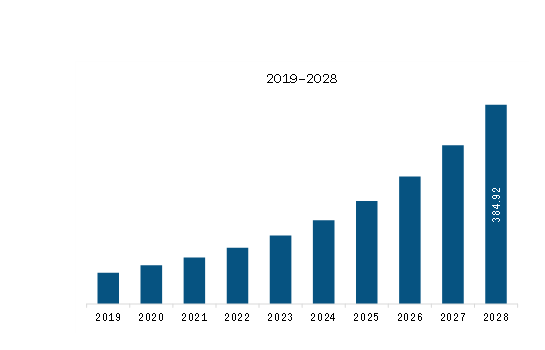
The South America medical device connectivity market is expected to grow from US$ 108.73 million in 2022 to US$ 384.92 million by 2028. It is estimated to grow at a CAGR of 23.1% from 2022 to 2028.
Inclination Toward Home Healthcare to Fuel South America Medical Device Connectivity Market Growth During Forecast Period
The shift of point of care (PoC) from hospital to home provides good chances for better, consistent, and timely interaction between patient and doctor, making cloud and mobility-driven medical devices a foremost trend. Also, the COVID-19 crisis triggered the importance of AI in healthcare, which led to the growing emphasis on home-based care due to limited hospital bed capacity and a scarcity of skilled healthcare professionals. By monitoring the patient’s vitals remotely, healthcare professionals can avoid hospital admission if cases can be handled virtually, thereby reserving hospital beds only for patients requiring critical care. Home monitoring, often known as remote patient monitoring (RPM), has a subset of applications that have different requirements and frequency of data delivery, including monitoring chronic diseases and tracking patients’ health status.The bolstering numbers of connected medical devices, along with improvements in the systems and software that support capture and transmission of medical grade data, connectivity technologies and services, have given rise to the Internet of Medical Things (IoMT). Through IoMT, the connectivity between sensors and devices is expected to aid in real-time patient care, even remotely, thereby improving communication within and between medical facilities. Owing to the aforementioned factors, the market for medical device connectivity is expected to proliferate during the forecast period.
South America Medical Device Connectivity Market Overview
The South America medical device connectivity market is segmented into Brazil, Argentina, and the Rest of South America. The healthcare facilities and services are better in Brazil and Argentina as compared to the other countries in the region. Latin American startups emerging in the telemedicine/telecare industry have quickly gained traction in providing hospital-level clinical solutions. The Argentinian government announced its plan to create an interoperability HUB where all the stakeholders (public and private) can integrate to provide synergies for better patient outcomes. This plan also considers providing free training, which is required to understand the standards and leverage adoption. These kinds of training and initiatives are usually expensive for health-based IT companies and professionals who want to adopt the defined standards. The COVID-19 pandemic catalyzed the development of digital health strategies in Brazil. Among the key initiatives, it is worth noting the creation of actual governance organizations (such as the National Health Data Network– Rede Nacional de Dados em Saúde) in preparation for the rollout of a massive data-driven healthcare strategy that involves technology. It involves telemedicine, remote monitoring, remote diagnostics, telerehabilitation, etc. The initiatives taken by governments of various countries in South America for creating awareness about the various digital health facilities such as EMR, telehealth, and telemedicine are driving the growth of the medical device connectivity market.
South America Medical Device Connectivity Market Revenue and Forecast to 2028 (US$ Million)
South America Medical Device Connectivity Market Segmentation
The South America medical device connectivity market is segmented into product and services, technology, application, end user, and country. Based on product and services, the South America medical device connectivity market is segmented into medical device connectivity solutions and medical device connectivity services. The medical device connectivity solutions segment registered the largest market share in 2022.
Based on technology, the South America medical device connectivity market is segmented into wireless technologies, hybrid technologies, and wired technologies. The wireless technologies segment registered the largest market share in 2022.
Based on application, the South America medical device connectivity market is segmented into vital signs and patient monitors, anesthesia machines and ventilators, infusion pumps, and others. The vital signs and patient monitors segment registered the largest market share in 2022.
Based on end user, the South America medical device connectivity market is segmented into hospitals, ambulatory surgical centres, imaging and diagnostic centres, and homecare settings. The hospitals segment registered the largest market share in 2022.
Based on country, the South America medical device connectivity market is segmented into Brazil, Argentina, and the Rest of South America. The Rest of South America dominated the market share in 2022.
Cisco Systems Inc, Digi International Inc., GE HealthCare Technologies Inc, iHealth Labs Inc, Infosys Ltd, Koninklijke Philips NV, Lantronix Inc., Medtronic Plc, and Oracle Corp are the leading companies operating in the South America medical device connectivity market.
South America Medical Device Connectivity Market Strategic Insights
Get more information on this report
South America Medical Device Connectivity Market Segmentation Analysis
South America Medical Device Connectivity Market Report Highlights
South America Medical Device Connectivity Report Scope
Report Attribute
Details
Market size in 2022
US$ 108.73 Million
Market Size by 2028
US$ 384.92 Million
CAGR (2022 - 2028)
23.1%
Historical Data
2020-2021
Forecast period
2023-2028
Segments Covered
By Product and Services
Medical Device Connectivity Solutions
Medical Device Connectivity Services
By Technology
Wireless Technologies
Hybrid Technologies
Wired Technologies
By Application
Vital Signs and Patient Monitors
Anaesthesia Machines and Ventilators
Infusion Pumps
By End User
Hospitals
Ambulatory Surgical Centers
Imaging and Diagnostic Centers
Homecare Settings
Regions and Countries Covered
South and Central America
Brazil, Argentina, Rest of South and Central America
Market leaders and key company profiles
Cisco Systems Inc
Digi International Inc.
GE HealthCare Technologies Inc
iHealth Labs Inc
Infosys Ltd
Koninklijke Philips NV
Lantronix Inc.
Medtronic Plc
Oracle Corp
Get more information on this report
South America Medical Device Connectivity Market Country and Regional Insights
Get more information on this report
Identical Market Reports with other Region/Countries
The List of Companies - South America Medical Device Connectivity Market
1. Cisco Systems Inc2. Digi International Inc.3. GE HealthCare Technologies Inc4. iHealth Labs Inc5. Infosys Ltd6. Koninklijke Philips NV7. Lantronix Inc.8. Medtronic Plc9. Oracle Corp
Frequently Asked Questions
How big is the South America Medical Device Connectivity Market?
The South America Medical Device Connectivity Market is valued at US$ 108.73 Million in 2022, it is projected to reach US$ 384.92 Million by 2028.
What is the CAGR for South America Medical Device Connectivity Market by (2022 - 2028)?
As per our report South America Medical Device Connectivity Market, the market size is valued at US$ 108.73 Million in 2022, projecting it to reach US$ 384.92 Million by 2028. This translates to a CAGR of approximately 23.1% during the forecast period.
What segments are covered in this report?
The South America Medical Device Connectivity Market report typically cover these key segments-
Product and Services (Medical Device Connectivity Solutions, Medical Device Connectivity Services)
Application (Vital Signs and Patient Monitors, Anaesthesia Machines and Ventilators, Infusion Pumps)
End User (Hospitals, Ambulatory Surgical Centers, Imaging and Diagnostic Centers, Homecare Settings)
What is the historic period, base year, and forecast period taken for South America Medical Device Connectivity Market?
The historic period, base year, and forecast period can vary slightly depending on the specific market research report. However, for the South America Medical Device Connectivity Market report:
Historic Period : 2020-2021
Base Year : 2022
Forecast Period : 2023-2028
Who are the major players in South America Medical Device Connectivity Market?
The South America Medical Device Connectivity Market is populated by several key players, each contributing to its growth and innovation. Some of the major players include:
Cisco Systems Inc
Digi International Inc.
GE HealthCare Technologies Inc
iHealth Labs Inc
Infosys Ltd
Koninklijke Philips NV
Lantronix Inc.
Medtronic Plc
Oracle Corp
Who should buy this report?
The South America Medical Device Connectivity Market report is valuable for diverse stakeholders, including:
Investors: Provides insights for investment decisions pertaining to market growth, companies, or industry insights. Helps assess market attractiveness and potential returns.
Industry Players: Offers competitive intelligence, market sizing, and trend analysis to inform strategic planning, product development, and sales strategies.
Suppliers and Manufacturers: Helps understand market demand for components, materials, and services related to concerned industry.
Researchers and Consultants: Provides data and analysis for academic research, consulting projects, and market studies.
Financial Institutions: Helps assess risks and opportunities associated with financing or investing in the concerned market.
Essentially, anyone involved in or considering involvement in the South America Medical Device Connectivity Market value chain can benefit from the information contained in a comprehensive market report.





 Get Free Sample For South America Medical Device Connectivity Market