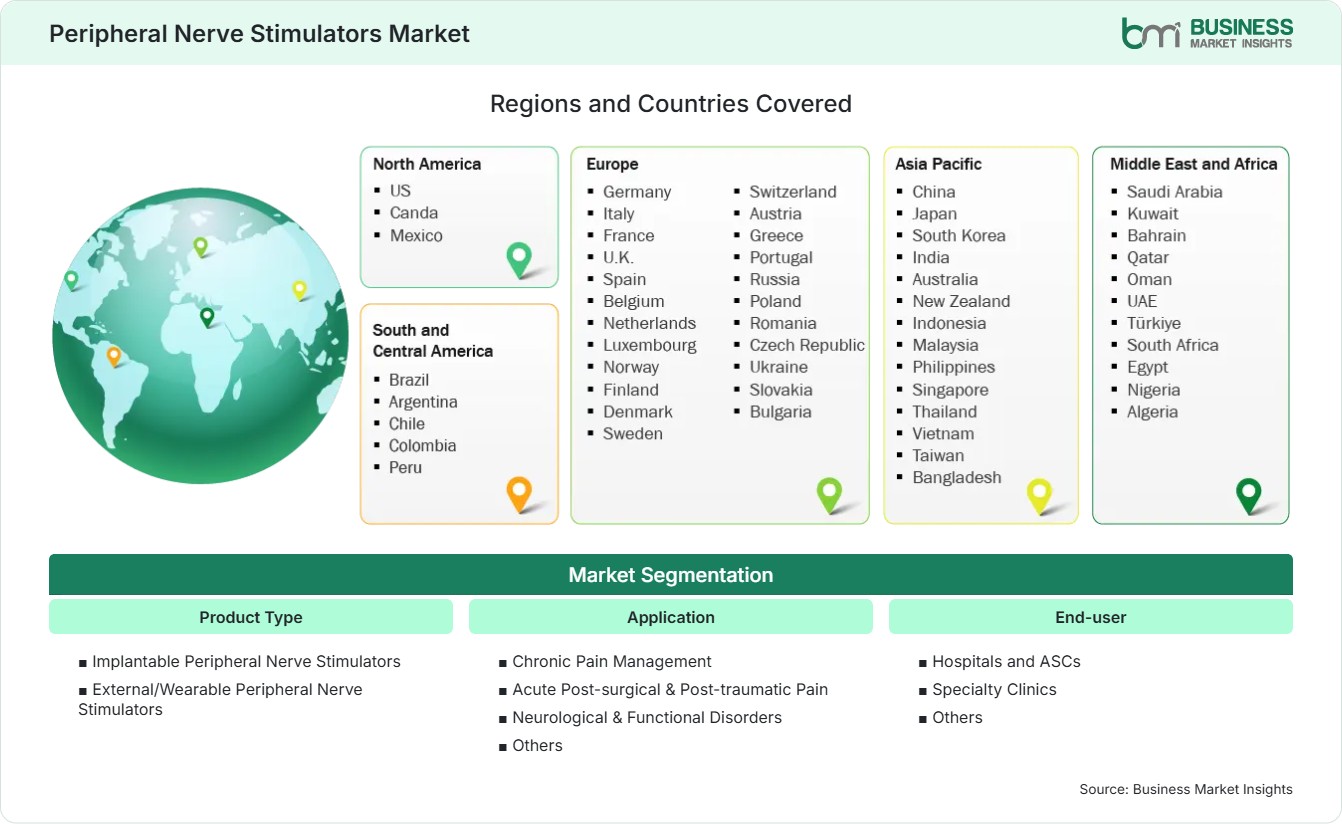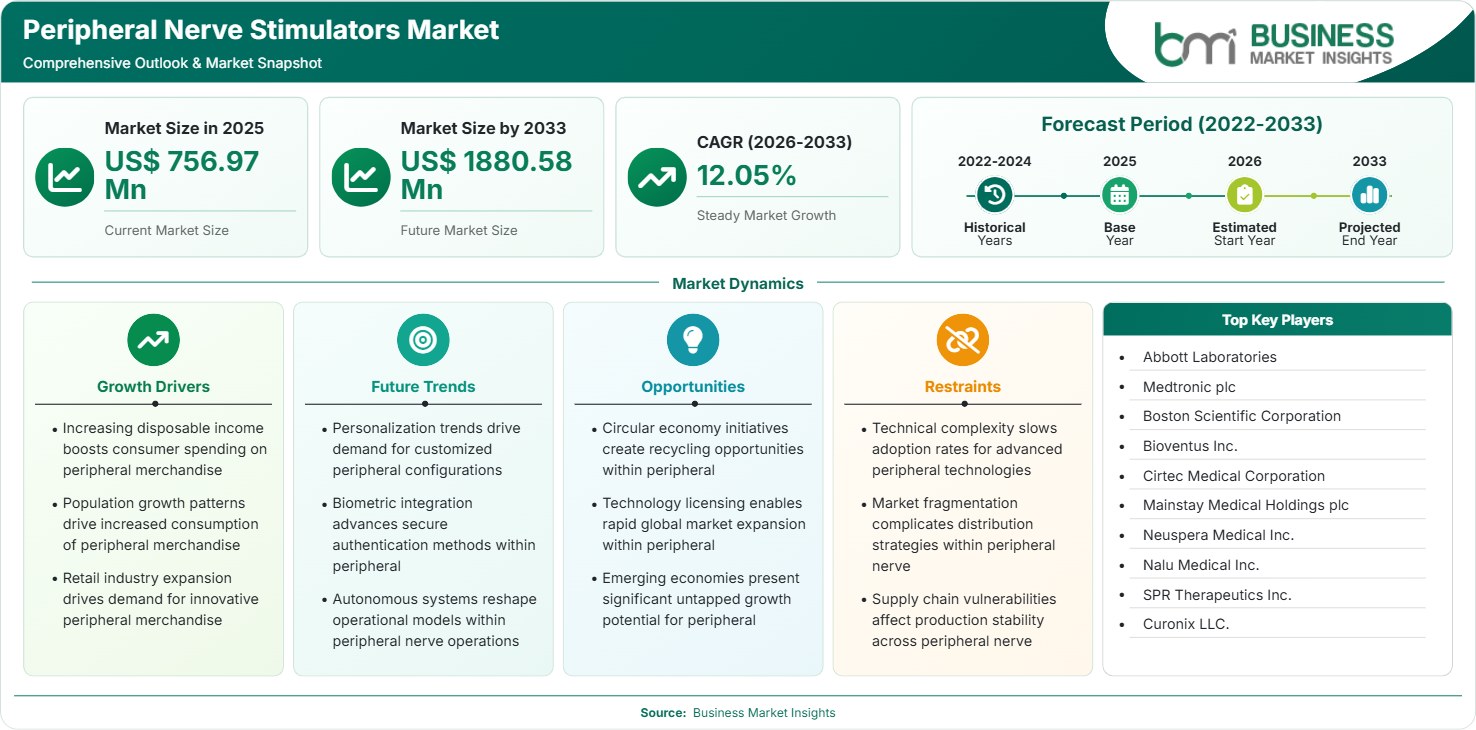
Peripheral Nerve Stimulators Market Regional Highlights
North America Peripheral Nerve Stimulators Market
North America accounted for approximately 38%–41% of global revenue in 2025 and is expected to register a CAGR of 10.8%–11.6% through 2033. The region benefits from advanced neuromodulation infrastructure, strong reimbursement mechanisms, and a high prevalence of chronic pain conditions. The Peripheral Nerve Stimulators Market share is reinforced by specialized pain centers and experienced implanting physicians. Increasing adoption of minimally invasive therapies, expanding outpatient procedures, and continued product innovation support sustained regional demand while clinical evidence strengthens physician confidence in long-term utilization.
- Chronic pain affects a sizable patient population, encouraging adoption of non-opioid technologies and expanding referrals toward neuromodulation therapies across specialist pain management networks.
- Strong reimbursement pathways improve patient access while supporting hospital investment in advanced stimulation equipment and procedure training.
- Device miniaturization and wireless technologies are reducing procedural complexity and improving patient comfort during long-term therapy.
- Ambulatory surgery centers continue gaining procedural volume as providers prioritize cost-efficient intervention pathways and shorter recovery durations.
US Peripheral Nerve Stimulators Market
The US market accounts for 78%–82% of total revenue in North America and is forecast to grow at a CAGR of 11.0%–11.8% through 2033. The Peripheral Nerve Stimulators Market is driven by existing pain management infrastructure, adoption of advanced neuromodulation devices, and ongoing research. Reimbursement policies, a high burden of chronic pain, and physician familiarity facilitate implementation in healthcare settings. Wearable nerve stimulation devices, patient management platforms, and transient neurostimulation devices contribute to national demand.
- Academic medical centers drive procedural innovation, generating valuable evidence supporting expanded therapeutic indications.
- Growth in outpatient interventions enhances accessibility and lowers total treatment costs across healthcare systems.
- Increasing preference for opioid alternatives encourages clinicians to evaluate nerve stimulation therapies earlier in care pathways.
- Ongoing clinical studies support reimbursement expansion and broader physician acceptance across pain specialties.
Europe Peripheral Nerve Stimulators Market
Europe will have about 27-30% market share, with a CAGR of 11.5-12.4%. The region benefits from favorable conditions, including the rising incidence of chronic diseases, the availability of healthcare services, and awareness of neuromodulation treatments. Germany is the biggest market in Europe, whereas Spain and certain Central European countries exhibit higher growth rates. Procedure volumes are enhanced through activities such as hospital infrastructure improvements, pain management programs, and improved clinician education.
- Germany leads regional demand through advanced reimbursement frameworks and established neuromodulation expertise.
- Spain demonstrates faster adoption rates, supported by increasing specialist engagement and growing pain management investments.
- Demand for minimally invasive treatment options aligns with broader healthcare efficiency initiatives.
- Regulatory standards encourage clinical validation, strengthening confidence among providers and payers.
Asia Pacific Peripheral Nerve Stimulators Market
The Asia Pacific region is forecast to account for 24% - 27% of the overall Peripheral Nerve Stimulators market share in 2025, with a CAGR of 13.8% - 14.8% through 2033, making it the fastest-growing region. China currently leads the region in market share due to its investments in healthcare and patient population, but India has greater growth potential. Increasing health expenditure, wider availability of specialists, higher diagnostic rates, and the adoption of technologies continue to drive the market. Governments are focused on innovative health technologies.
- China remains the largest regional market because of scale, infrastructure expansion, and hospital technology procurement.
- India presents strong long-term potential driven by increasing awareness and specialist capacity expansion.
- Private hospital networks accelerate adoption of advanced pain treatment technologies throughout urban centers.
- Growing elderly populations contribute to larger addressable patient groups requiring chronic pain therapies.
Rest of World Peripheral Nerve Stimulators Market
Rest of World accounts for roughly an 8%–10% share in 2025 and is anticipated to record a CAGR of 12.3%–13.2%. South and Central America benefit from private healthcare investments and increasing awareness of neuromodulation interventions.
The Middle East & Africa markets are relatively small, but adoption is strong, driven by hospital upgrades and specialist training. The Brazilian market shows the strongest regional demand, whereas Saudi Arabia displays good growth potential. Improved healthcare infrastructure, increasing burden of chronic diseases, and availability of pain therapy products contribute to further market development.
- Brazil benefits from established private healthcare networks and growing utilization of advanced pain management technologies.
- Saudi Arabia's healthcare transformation initiatives support procurement of innovative neurological treatment platforms.
- Medical tourism development encourages investment in specialized treatment capabilities.
- Increasing clinician education expands awareness and utilization of nerve stimulation therapies.