
Vagus Nerve Stimulation (VNS) Market Outlook: Size, Share, Trends, Growth Analysis, Competitive Landscape & Forecast, 2026-2033

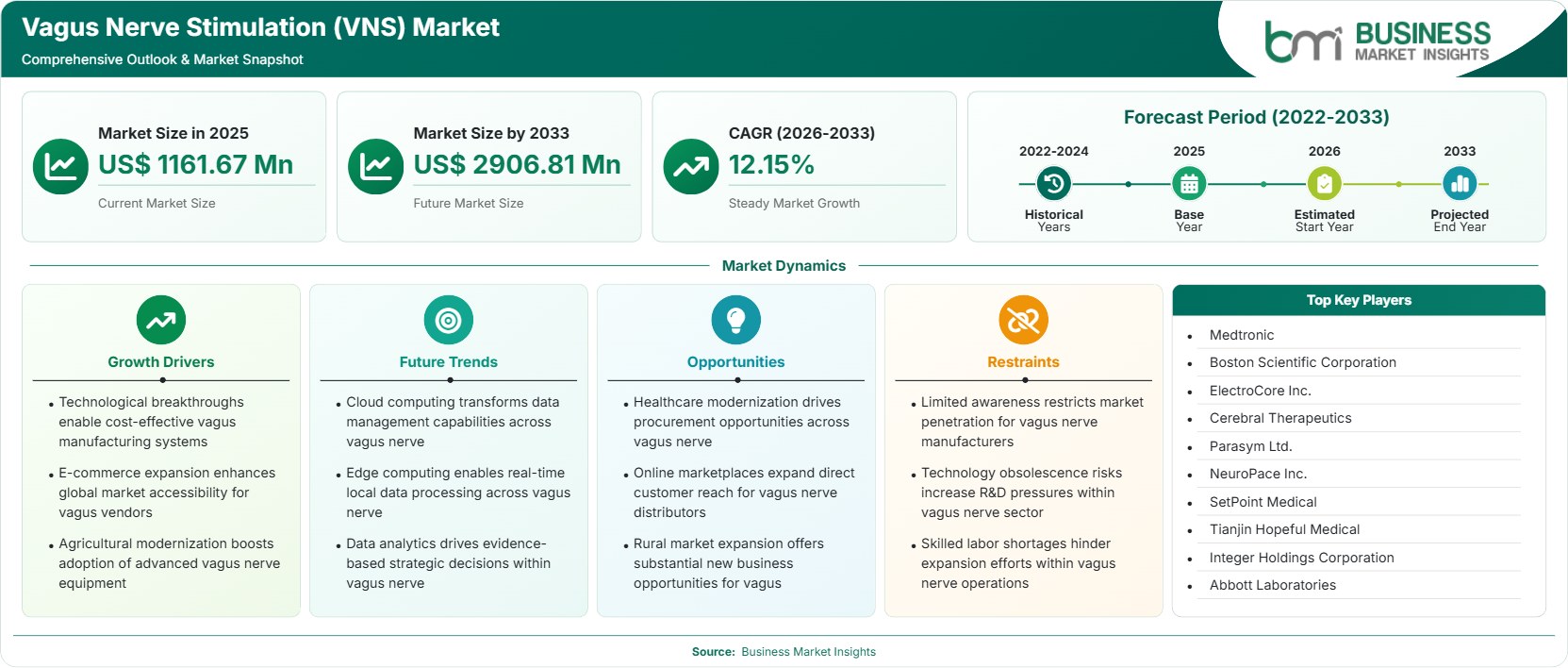
The Vagus Nerve Stimulation (VNS) Market size was valued at US$ 1161.67 Million in 2025 and is projected to reach US$ 2906.81 Million by 2033, growing at a CAGR of 12.15% during 2026–2033. Rising neurological disorder prevalence, expanding neuromodulation adoption, supportive reimbursement frameworks, continuous device innovation, and increasing research into non-invasive therapies continue creating significant commercial opportunities across developed and emerging healthcare markets.

Report Coverage
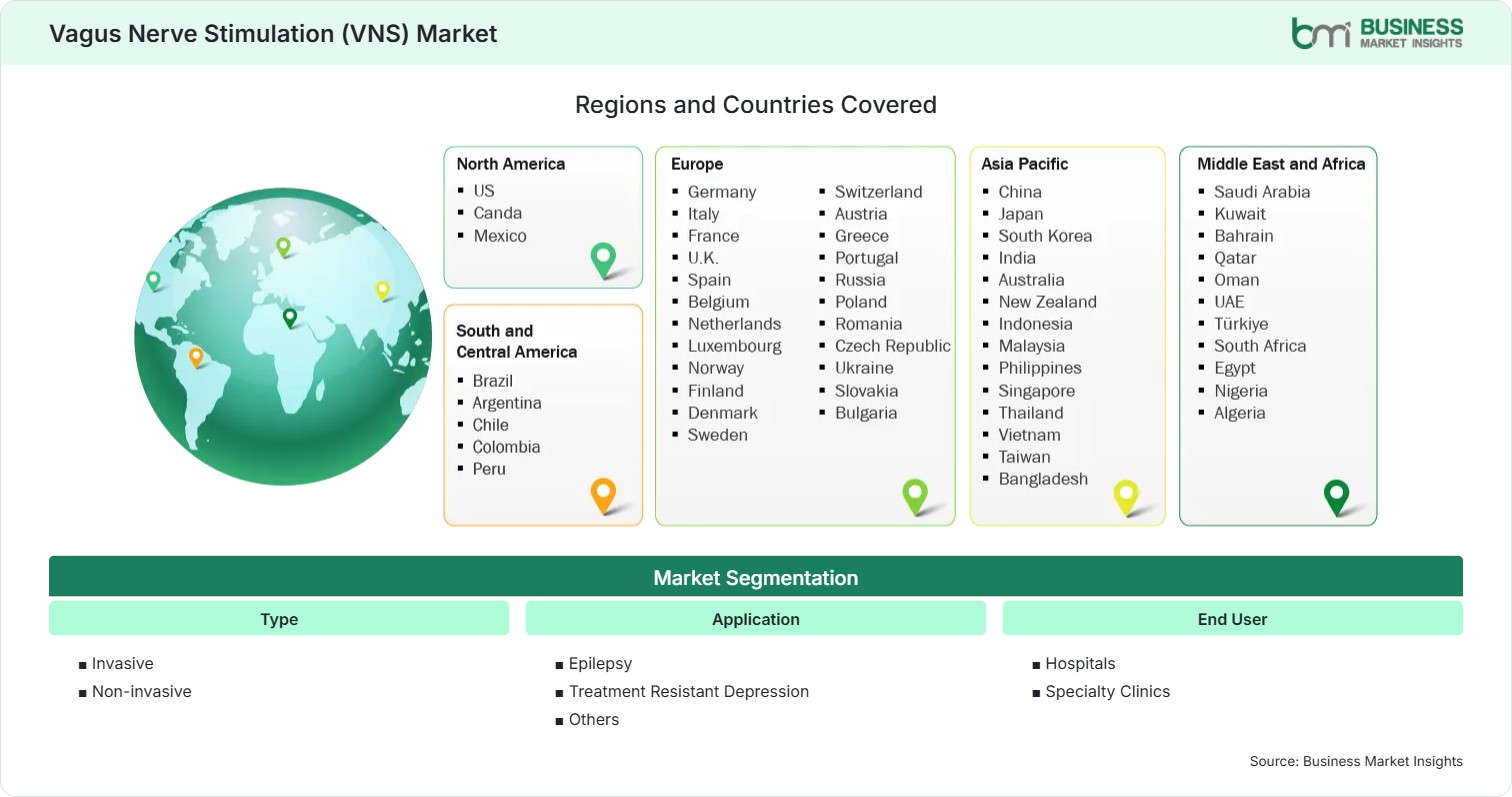
  • Type: Invasive, Non-invasive
  • Application: Epilepsy, Treatment Resistant Depression , Others
  • End User: Hospitals, Specialty Clinics
US$ 1161.67 Mn Market size in 2025
US$ 2906.81 Mn Market Size by 2033
12.15% CAGR, 2026 - 2033
2026-2033 Forecast Period

01 AI Overview

Vagus Nerve Stimulation (VNS) Market Summary

  • North America Region: North America holds 38%–41% market share in 2025, growing with a 11.5%–12.2% CAGR during 2026–2033, supported by favorable reimbursement, established epilepsy treatment pathways, strong clinical evidence, increasing neuromodulation adoption, expanding neurological care centers, technological innovation, and wider physician awareness across healthcare systems. The U.S. dominates regional demand through advanced neurology infrastructure, strong reimbursement policies, expanding epilepsy management programs, and projected CAGR of 11.8%–12.4%.
  • Fastest Growing Region: Asia Pacific accounts for 22%–25% market share in 2025 while advancing at a 13.6%–14.4% CAGR during 2026–2033, driven by healthcare modernization, increasing neurological disease diagnosis, expanding specialty hospitals, growing medical investments, improving reimbursement initiatives, domestic manufacturing, and rising awareness regarding neuromodulation therapies.
  • Leading Segment: Invasive type represents 63%–66% market share in 2025 and is expected to expand at a 11.4%–12.1% CAGR through 2033, supported by established long-term efficacy, extensive clinical validation, physician confidence, reimbursement availability, expanding implant procedures, and increasing adoption for drug-resistant neurological disorders worldwide.
  • High Growth Segment: Non-invasive (nVNS) represents the fastest-growing category with a projected 13.8%–14.6% CAGR during 2026–2033, encouraged by improved patient convenience, lower procedural risks, home-based therapy adoption, technological miniaturization, increasing regulatory approvals, and expanding neurological as well as psychiatric treatment applications globally.
  • Key Market Opportunity: Expanding adoption of wearable neuromodulation devices, digital patient monitoring, personalized stimulation protocols, artificial intelligence-enabled therapy optimization, and broader psychiatric indications create attractive long-term opportunities for manufacturers, healthcare providers, and investors worldwide.
  • Major Market Players: LivaNova PLC, BioControl Medical Ltd., electroCore, Inc., Parasym Ltd., Innovative Health Solutions Inc., tVNS Technologies GmbH, SetPoint Medical Corporation, Soterix Medical Inc., Nēsos Corporation, and NeuroSigma, Inc.
02 Strategic Insights

Vagus Nerve Stimulation (VNS) Market: Strategic Insights

Vagus Nerve Stimulation (VNS) Market Strategic Framework
FREE PDF
Request your free sample
Request free sample
03 Stakeholder View

Key Takeaways

  • The industry ecosystem is becoming increasingly integrated as implant manufacturers, digital health developers, neurology specialists, component suppliers, and hospital networks collaborate to improve long-term patient outcomes, therapy optimization, and device lifecycle management.
  • Drug-resistant epilepsy and non-invasive neuromodulation applications present the strongest commercial upside, supported by increasing diagnosis rates, favorable clinical evidence, expanding reimbursement, and rising preference for minimally invasive neurological therapies.
  • Innovation is shifting toward wearable stimulation technologies, AI-supported programming software, remote patient monitoring platforms, rechargeable implant systems, and personalized stimulation protocols designed to improve efficacy while reducing clinical intervention requirements.
  • Asia Pacific offers an attractive investment landscape due to expanding neurological healthcare infrastructure, increasing healthcare expenditure, improving physician training, broader patient awareness, and accelerating regulatory approvals for advanced neuromodulation devices.
  • Strategic acquisitions, licensing agreements, collaborative clinical research, and partnerships between medical device developers and healthcare institutions are expected to strengthen commercialization capabilities while expanding product portfolios across neurological and psychiatric indications.
  • Growing interest in vagus nerve stimulation for inflammatory disorders, migraine management, cardiovascular applications, and digital therapeutics is expected to diversify future revenue streams beyond traditional epilepsy treatment, supporting long-term market resilience.
04 Geographic Outlook

Vagus Nerve Stimulation (VNS) Market Regional Highlights

North America Vagus Nerve Stimulation (VNS) Market

North America accounted for 38%–41% of global revenue in 2025 and is projected to register a 11.5%–12.2% CAGR during 2026–2033. The region maintains leadership through extensive neurology care networks, favorable reimbursement, strong clinical adoption of implantable neurostimulation devices, and continuous product innovation. The Vagus Nerve Stimulation (VNS) Market share remains highest in North America because of growing awareness among physicians, increasing treatment rates for drug-resistant epilepsy and depression, and expanding investments in digital neuromodulation technologies across hospitals and specialty neurological centers.

  • The United States remains the primary revenue contributor owing to widespread availability of comprehensive epilepsy centers, higher procedural volumes, robust insurance reimbursement, continuous FDA clearances, and strong collaboration between manufacturers and leading academic medical institutions.
  • Canada continues strengthening regional demand through improved neurological care access, increasing healthcare expenditure, supportive public healthcare funding, and expanding physician training programs that encourage broader utilization of advanced neuromodulation therapies across specialized treatment facilities.
  • Clinical research activity across universities and medical centers continues validating additional therapeutic indications, supporting greater physician confidence and encouraging manufacturers to invest in innovative stimulation platforms with enhanced programming flexibility and remote monitoring capabilities.
  • Rising adoption of non-invasive stimulation technologies complements established implantable therapies by improving patient accessibility, reducing procedural barriers, and supporting outpatient neurological treatment pathways, particularly among patients seeking alternatives to conventional pharmacological interventions.
  • Strategic collaborations between healthcare providers, technology developers, and regulatory authorities continue accelerating commercialization, improving patient outcomes, and strengthening long-term regional competitiveness within the neuromodulation ecosystem.

US Vagus Nerve Stimulation (VNS) Market

The United States represented approximately 80%–84% of North American Vagus Nerve Stimulation (VNS) Market revenue during 2025 while advancing at a 11.8%–12.4% CAGR through 2033. High diagnosis rates of epilepsy and treatment-resistant depression, favorable reimbursement structures, established neurological referral systems, and early adoption of advanced implantable devices continue supporting sustained market expansion. Continuous investments in digital health integration, clinical trials, and precision neuromodulation further strengthen commercialization opportunities across major healthcare institutions.

  • Advanced regulatory pathways and strong physician awareness encourage faster commercialization of innovative stimulation devices, improving patient access while supporting sustained investment in neurological device research and clinical development programs nationwide.
  • Large integrated hospital systems increasingly adopt remote patient monitoring and digital programming solutions, improving therapy optimization, patient adherence, and long-term treatment outcomes while reducing follow-up burdens for healthcare professionals.
  • Expanding collaborations among academic research institutions, manufacturers, and healthcare providers accelerate evidence generation for emerging neurological and psychiatric indications, supporting broader reimbursement discussions and future market expansion.
  • Rising patient preference for minimally invasive treatment alternatives encourages greater adoption of wearable neuromodulation technologies alongside conventional implantable devices, creating diversified commercial opportunities across neurological care settings.

Europe Vagus Nerve Stimulation (VNS) Market

Europe captured 28%–31% of global Vagus Nerve Stimulation (VNS) Market revenue in 2025 and is anticipated to grow at a 11.7%–12.5% CAGR during 2026–2033. Strong neurological healthcare infrastructure, favorable medical device regulations, expanding reimbursement policies, and increasing clinical acceptance support stable regional development. Germany remains the leading national market, while the United Kingdom demonstrates one of the fastest adoption rates through increasing investments in neurological innovation, multidisciplinary epilepsy care, and expanding research collaborations supporting advanced neuromodulation therapies.

  • Germany leads regional revenues through advanced hospital infrastructure, high procedural expertise, favorable reimbursement mechanisms, and continued investments in neurological device innovation supported by established medical technology manufacturers and academic partnerships.
  • The United Kingdom records one of the strongest growth trajectories because expanding National Health Service neurological initiatives, growing clinical evidence, and increasing patient referrals strengthen adoption of implantable and non-invasive stimulation technologies.
  • France, Italy, and Spain continue expanding neurological treatment capacity through modernization of specialty healthcare facilities, increasing physician education, and wider availability of advanced neurostimulation procedures within tertiary care hospitals.
  • European manufacturers increasingly prioritize device miniaturization, rechargeable systems, and digital connectivity, supporting improved patient convenience while strengthening regional competitiveness within global neuromodulation technology markets.
  • Cross-border clinical research initiatives and harmonized regulatory frameworks continue supporting innovation, accelerating product approvals, and encouraging broader commercial deployment throughout European healthcare systems.

Asia Pacific Vagus Nerve Stimulation (VNS) Market

Asia Pacific accounted for 22%–25% of global revenue in 2025 and is projected to expand at the fastest 13.6%–14.4% CAGR during 2026–2033. Rapid healthcare modernization, increasing neurological disease awareness, expanding specialty hospitals, and higher healthcare expenditure continue supporting accelerated regional growth. China represents the largest regional market, while India demonstrates the fastest expansion because of improving healthcare accessibility, increasing investments in neurological care, and broader adoption of advanced medical technologies.

  • China maintains regional leadership through expanding tertiary hospitals, increasing domestic medical device capabilities, government healthcare investments, and growing diagnosis of neurological disorders requiring advanced therapeutic interventions.
  • India records the fastest regional expansion as neurological specialty centers increase, physician awareness improves, healthcare infrastructure strengthens, and greater affordability supports wider access to innovative neuromodulation technologies.
  • Japan continues emphasizing technological innovation through advanced medical device development, aging population healthcare strategies, and extensive clinical research supporting neurological treatment optimization across specialized healthcare institutions.
  • South Korea and Australia increasingly adopt wearable neuromodulation solutions supported by strong digital healthcare ecosystems, growing patient awareness, and favorable clinical research environments encouraging technological advancement.
  • Expanding regional manufacturing capabilities and regulatory modernization continue improving device accessibility while supporting international companies seeking long-term commercialization opportunities across diverse healthcare markets.

Rest of World Vagus Nerve Stimulation (VNS) Market

The Rest of World region represented 8%–10% of global Vagus Nerve Stimulation (VNS) Market revenue during 2025 and is forecast to achieve a 12.4%–13.2% CAGR through 2033. South and Central America continue benefiting from improving neurological healthcare infrastructure and increasing specialist availability.

Meanwhile, the Middle East and Africa experience gradual adoption supported by healthcare modernization initiatives, expanding private hospital investments, increasing awareness of advanced neuromodulation therapies, and stronger access to specialized neurological treatment services across key urban healthcare markets.

  • Brazil remains the largest South and Central American market through expanding tertiary healthcare facilities, increasing neurological diagnosis, improving reimbursement access, and stronger adoption of advanced implantable medical technologies.
  • Mexico demonstrates accelerating growth supported by expanding private healthcare investments, increasing specialist availability, favorable medical tourism trends, and broader physician awareness regarding advanced neuromodulation treatment options.
  • Saudi Arabia leads Middle Eastern adoption through significant healthcare infrastructure investments, neurological center expansion, digital healthcare transformation, and increasing procurement of advanced medical technologies within public and private hospitals.
  • South Africa continues improving regional accessibility through specialist neurological programs, growing healthcare investments, and partnerships with international medical device companies introducing innovative therapeutic solutions.
  • Government healthcare modernization initiatives, rising neurological disease awareness, and increasing international collaborations continue strengthening long-term commercial prospects across emerging economies despite reimbursement and affordability challenges.
Global Market Geography
FREE PDF
Request your free sample
Request free sample
05 Segment Analysis

Vagus Nerve Stimulation (VNS) Market Segmentation

Type

The Type segment accounted for the largest revenue contribution, with Invasive systems representing approximately 63%–66% of the market in 2025, while the overall segment is expected to expand at a 11.8%–12.5% CAGR through 2033. Growing physician confidence, long-term clinical validation, reimbursement support, and continuous technological improvements continue strengthening adoption. The Vagus Nerve Stimulation (VNS) Market scope is expanding as both implantable and external stimulation technologies address broader neurological and psychiatric disorders across hospital and outpatient settings.

  • Invasive: Implantable vagus nerve stimulation devices remain the preferred therapeutic option for patients with drug-resistant epilepsy and selected depression cases because of established clinical efficacy, durable treatment outcomes, and extensive physician experience worldwide.
  • Non-invasive (nVNS): Portable stimulation systems continue gaining popularity owing to improved patient convenience, lower procedural risks, expanding home-based treatment, and increasing clinical investigations evaluating effectiveness across multiple neurological and inflammatory indications.

Application

The Application segment continues benefiting from increasing neurological disease prevalence and expanding clinical evidence supporting neuromodulation therapies. Epilepsy accounted for 52%–55% of total market revenue in 2025 and the segment is anticipated to register a 11.6%–12.3% CAGR through 2033. The Vagus Nerve Stimulation (VNS) Market trends indicate growing adoption beyond epilepsy into psychiatric disorders, migraine management, and inflammatory conditions as clinical trials continue validating additional therapeutic applications and improving physician confidence.

  • Epilepsy: Drug-resistant epilepsy remains the primary clinical application, supported by established treatment guidelines, increasing referral to specialized epilepsy centers, long-term effectiveness, and growing acceptance of adjunctive neuromodulation therapies among neurologists.
  • Treatment Resistant Depression (TRD): Rising prevalence of treatment-resistant psychiatric disorders, expanding clinical evidence, and increasing awareness among mental health professionals are encouraging wider integration of vagus nerve stimulation into comprehensive depression management strategies.

End User

Hospitals continue dominating end-user demand with an estimated 68%–71% revenue share in 2025 and are projected to advance at a 11.7%–12.4% CAGR during the forecast period. Strong multidisciplinary neurological expertise, availability of surgical infrastructure, comprehensive diagnostic capabilities, and favorable reimbursement policies support continued leadership. Specialty clinics are steadily expanding as outpatient neuromodulation services, follow-up care, and personalized stimulation programming become increasingly accessible to broader patient populations.

  • Hospitals: Large healthcare institutions perform the majority of implantation procedures because they provide advanced neurosurgical expertise, multidisciplinary patient evaluation, comprehensive diagnostic services, and structured long-term therapy management for complex neurological disorders.
  • Specialty Clinics: Dedicated neurological and psychiatric clinics increasingly support device programming, follow-up monitoring, outpatient non-invasive therapies, and individualized treatment optimization, improving patient accessibility while reducing dependence on large tertiary healthcare facilities.
06 Market Forces

Vagus Nerve Stimulation (VNS) Market Dynamics

Key Market Drivers

Rising burden of drug-resistant neurological disorders

The increasing prevalence of epilepsy and treatment-resistant depression remains one of the strongest growth catalysts for the industry. According to the WHO, almost 50 million individuals across the world have epilepsy, while about 30% of these patients still experience seizures even after undergoing pharmacological treatment. The increasing unmet medical need has motivated health care professionals to utilize neuromodulation as an add-on therapy option. Vagus Nerve Stimulation (VNS) Market growth is supported by stronger clinical evidence, wider physician acceptance, favorable reimbursement in developed countries, and continuous expansion of specialized epilepsy centers capable of implanting and managing stimulation devices.

Advancements in neuromodulation technology

Continuous innovation in implantable pulse generators, programmable stimulation parameters, rechargeable systems, and digital patient monitoring has substantially improved therapeutic effectiveness and patient convenience. With more wireless features, remote programming, and miniaturized devices being used, there is improved compliance in the use of treatment over time. With increased funding in research and development, there is the potential for further applications in inflammation, migraines, and cardiovascular disease. Better reliability, longer battery life, and the customization of stimulation programs still keep the clinicians recommending this type of treatment modality.

Growing clinical acceptance supported by evidence

Clinical studies published through leading neurological associations continue demonstrating the sustained efficacy and safety of vagus nerve stimulation in carefully selected patients with refractory neurological disorders. New treatment guidelines and enhanced education for doctors increase confidence in adherence to long-term therapy. The cooperation between academic establishments, hospitals, and medical device makers increases both the evidence production and improvement in treatments. With more indications being approved, the increased use of the drug in clinics should support the long-term demand on the market.

Key Market Opportunities

Expansion of non-invasive wearable neuromodulation therapies

Wearable stimulation technologies represent one of the most attractive investment opportunities because they reduce procedural complexity while expanding patient accessibility. The Vagus Nerve Stimulation (VNS) Market Forecasts indicate there will be a higher commercialization of portable neuromodulation devices that can be used in outpatient and home-care settings. The rising interest in non-invasive neurological treatments, digital health solutions, and remote patient monitoring indicates sustainable revenues. Companies making investments into AI-based therapy customization, cloud treatment analysis, and individualized stimulation algorithms will have strong competitive differentiation advantages.

Emerging applications beyond neurological disorders

Research exploring vagus nerve stimulation for inflammatory diseases, autoimmune disorders, chronic pain, cardiovascular conditions, and post-stroke rehabilitation continues to create new commercial possibilities. Greater knowledge of inflammatory reflexes and autonomic nervous system regulation will drive interest in a wider array of treatment opportunities. Clinical validation in other therapeutic areas will enable a significant increase in the patient pool and revenue from epilepsy and depression treatments. Firms developing clinical collaborations for regulatory approval will likely be the early movers in new therapeutic fields.

Healthcare expansion across emerging economies

Rapid modernization of healthcare infrastructure throughout Asia Pacific, Latin America, and selected Middle Eastern countries provides considerable opportunities for market participants. The increase in the diagnosis of neurological cases, high health-care costs, improved reimbursement, and enhanced physician training will contribute to higher adoption rates of neuromodulation devices. Manufacturers internationally are forming partnerships with distributors within different regions, along with providing local support to gain better market penetration. The sustained investments by governments in neurological health care will provide sustained demand for stimulators.

Market Restraints and Challenges

High treatment costs and reimbursement disparities

Factor: Implantation procedures, advanced stimulation devices, follow-up programming, and long-term patient management involve substantial healthcare expenditure, particularly in countries with limited reimbursement coverage.

Impact: High overall treatment costs restrict accessibility for many patients and delay adoption among healthcare providers operating under constrained budgets. Reimbursement disparities between various healthcare delivery models complicate commercial growth even more, particularly in developing countries where neurological specialty care continues to be available only in urban tertiary care hospitals and financial support for expensive equipment is relatively poor.

Limited specialist availability and complex patient selection

Factor: Successful therapy requires experienced neurologists, neurosurgeons, multidisciplinary evaluation, and continuous device programming to optimize long-term clinical outcomes.

Impact: The lack of specialists, together with an uneven distribution of modern neurological care, limits the potential capacity and the accessibility of procedures in many areas. Moreover, rigorous selection criteria for patients, preoperative evaluations, and variable reactions to the procedure can increase decision time, even when there is increasing knowledge of and positive results from neuromodulation procedures.

07 Company Analysis

Competitive Landscape

Competition in the market is characterized by continuous innovation in implantable and non-invasive neuromodulation technologies, strategic clinical collaborations, and expanding regulatory approvals. The Vagus Nerve Stimulation (VNS) Market analysis indicates that manufacturers are prioritizing miniaturized devices, digital health integration, artificial intelligence-supported therapy optimization, and expanded therapeutic indications to strengthen competitive positioning. Established medical device companies leverage broad commercialization capabilities, while specialist neuromodulation developers focus on differentiated technologies, intellectual property expansion, and clinical evidence generation to capture emerging opportunities across epilepsy, depression, migraine, and inflammatory disease management.

Company Name

Overview

Products and Services relevant to this market

LivaNova PLC

Global medical technology company and the leading provider of implantable vagus nerve stimulation systems with extensive clinical validation and worldwide commercial presence.

Implantable VNS Therapy systems, pulse generators, leads, programming software, physician support, patient management solutions, and neuromodulation services for epilepsy and treatment-resistant depression.

BioControl Medical Ltd.

Medical device developer focused on neuromodulation technologies and bioelectronic therapies addressing neurological and cardiovascular disorders through innovative stimulation platforms.

Neuromodulation systems, implantable stimulation technologies, clinical support services, and research collaborations focused on autonomic nervous system modulation.

electroCore, Inc.

Commercial-stage bioelectronic medicine company specializing in non-invasive vagus nerve stimulation with expanding clinical applications across neurological and wellness indications.

gammaCore non-invasive vagus nerve stimulation devices, digital therapy support, clinical education, patient services, and bioelectronic medicine solutions.

Parasym Ltd.

United Kingdom-based neuromodulation company developing wearable non-invasive vagus nerve stimulation technologies supported by scientific research and digital health capabilities.

Wearable transcutaneous vagus nerve stimulation devices, therapy software, patient monitoring, and home-based neuromodulation solutions.

Innovative Health Solutions Inc.

Neuromodulation technology company emphasizing innovative stimulation platforms and clinical collaboration for advanced neurological treatment development.

Neurostimulation technologies, customized therapy platforms, clinical consulting, and neurological device development services.

tVNS Technologies GmbH

German medical technology company focused on transcutaneous vagus nerve stimulation products for neurological and psychiatric healthcare applications.

Non-invasive vagus nerve stimulation systems, wearable stimulation devices, clinical training, and therapeutic support solutions.

Others

Regional manufacturers and emerging neuromodulation developers contribute through specialized products, contract manufacturing, and technology partnerships supporting broader market competition.

Specialized stimulation devices, accessories, software platforms, distribution services, and customized neuromodulation technologies serving regional healthcare providers.

10 Trust & Transparency

Research Methodology

The market analysis combines proprietary research with secondary data from government agencies, company disclosures, regulatory filings, industry databases and expert interviews. Market estimates are validated through data triangulation, cross-market benchmarking and analyst review.

View Full Research Methodology

11 Questions Answered

Frequently Asked Questions

What does a Vagus Nerve Stimulation (VNS) Market Report typically include?

A comprehensive report generally covers market sizing, competitive benchmarking, regional assessment, technology trends, regulatory landscape, segmentation analysis, growth drivers, challenges, investment opportunities, company profiles, and future strategic outlook to support business planning and investment decisions.

How are non-invasive vagus nerve stimulation technologies influencing industry development?

Portable non-invasive stimulation devices are improving accessibility by reducing procedural complexity and supporting home-based therapy. Their expanding use in migraine, psychiatric disorders, and inflammatory disease research is broadening future commercial opportunities for manufacturers and healthcare providers.

Which product category currently dominates the market?

Implantable (Invasive) vagus nerve stimulation systems continue to account for the largest revenue contribution owing to extensive clinical validation, established treatment guidelines, favorable reimbursement, durable therapeutic outcomes, and widespread adoption for drug-resistant epilepsy management.

Which region is expected to offer the highest growth potential during the forecast period?

Asia Pacific is projected to record the fastest expansion because of healthcare infrastructure modernization, rising neurological disease diagnosis, increasing healthcare expenditure, expanding specialty hospitals, supportive regulatory developments, and improving patient access to advanced neuromodulation therapies.

What are the primary factors driving demand for the Vagus Nerve Stimulation (VNS) Market?

Increasing prevalence of drug-resistant epilepsy, growing diagnosis of treatment-resistant depression, expanding clinical evidence, favorable reimbursement in developed economies, technological advancements in neuromodulation, and greater physician awareness are the principal demand drivers supporting long-term market expansion.

Access the Full Vagus Nerve Stimulation (VNS) Market Report

Get segment-level forecasts, regional estimates, competitive benchmarking, company profiles and downloadable Excel datasets.

Access the full Vagus Nerve Stimulation (VNS) Market Report
350 pages PDF & Excel | 2026-08-17