
Pelvic Organ Prolapse Market Outlook: Size, Share, Trends, Growth Analysis, Competitive Landscape & Forecast, 2026-2033

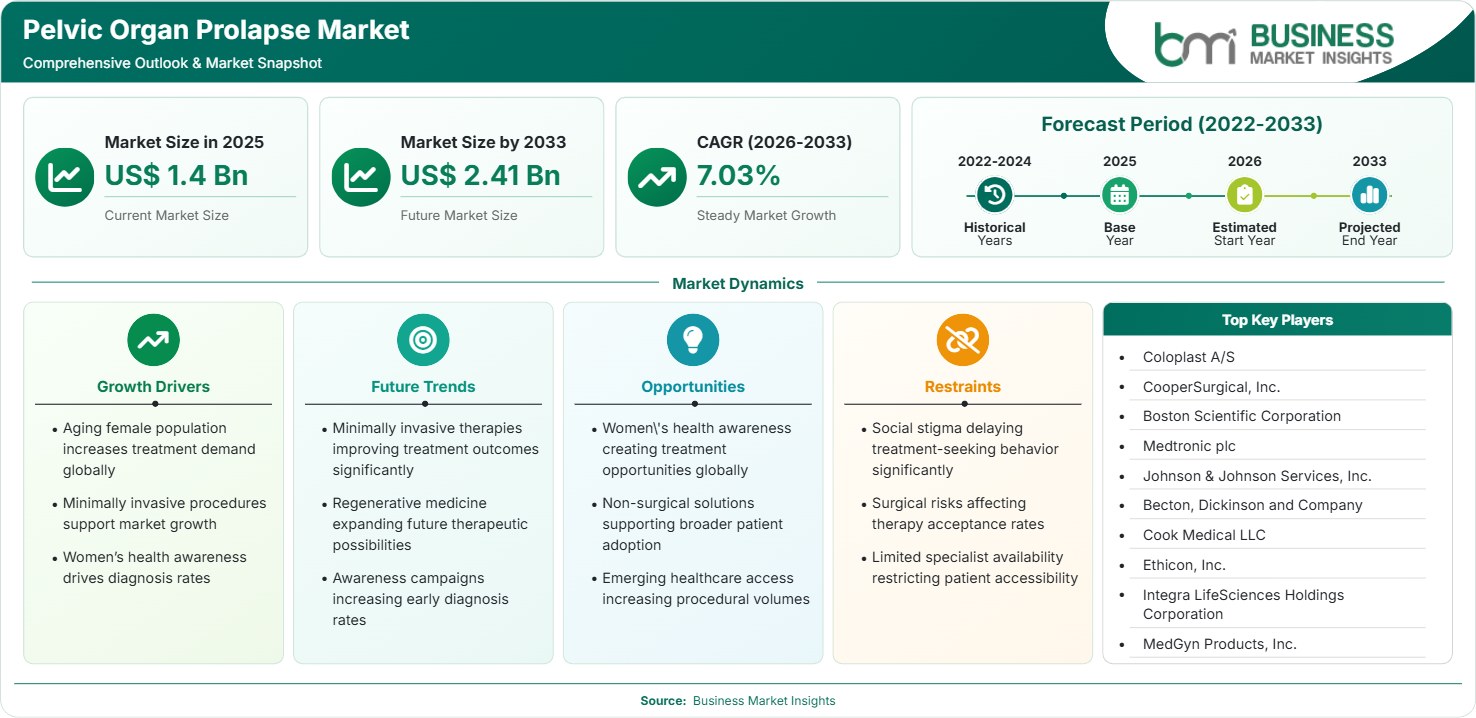
The Pelvic Organ Prolapse Market size was valued at US$ 1.4 Billion in 2025 and is projected to reach US$ 2.41 Billion by 2033, growing at a CAGR of 7.03% during 2026–2033. Rising female geriatric populations, greater clinical diagnosis rates, expanding pelvic floor therapy adoption, innovation in pessary and graft technologies, and improving access to minimally invasive reconstructive procedures continue creating substantial revenue opportunities.

Report Coverage
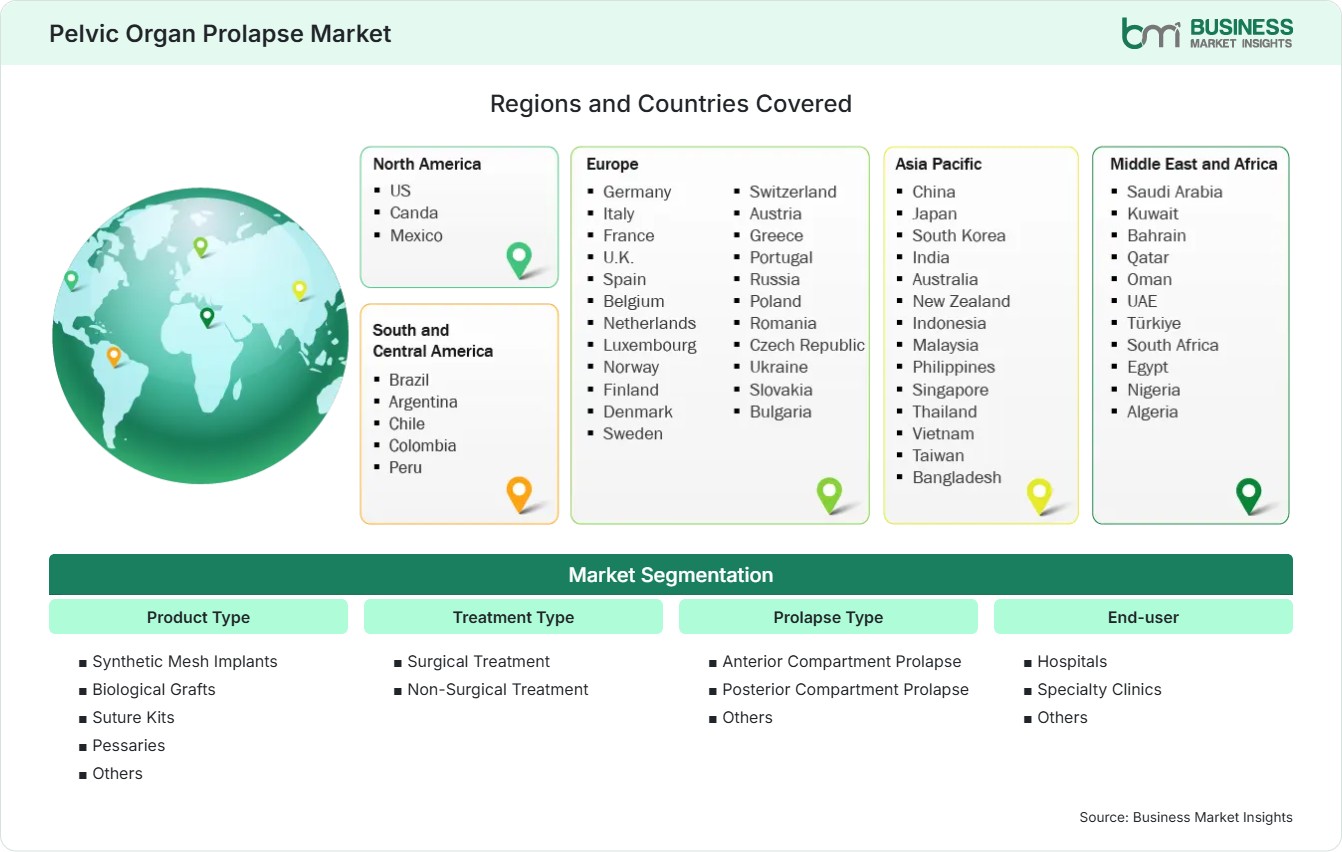
  • Product Type: Synthetic Mesh Implants, Biological Grafts, Suture Kits, Pessaries, Others
  • Treatment Type: Surgical Treatment , Non-Surgical Treatment
  • Prolapse Type: Anterior Compartment Prolapse, Posterior Compartment Prolapse, Others
  • End-user: Hospitals, Specialty Clinics, Others
US$ 1.4 Bn Market size in 2025
US$ 2.41 Bn Market Size by 2033
7.03% CAGR, 2026 - 2033
2026-2033 Forecast Period

AI Overview

Pelvic Organ Prolapse Market Summary

  • North America Region: North America holds a market share of 38%–41% in 2025, growing with a CAGR of 6.4%–6.8% during 2026–2033. Strong urogynecology networks, favorable reimbursement, increasing surgical volumes, advanced hospital infrastructure, growing awareness of pelvic floor disorders, and adoption of robotic-assisted procedures support sustained expansion and product uptake. Brief U.S. analysis: The U.S. dominates regional demand through specialized women's health centers, expanding minimally invasive surgery adoption, and a CAGR of 6.5%–6.9%.
  • Fastest Growing Region: Asia Pacific accounts for 24%–27% share in 2025 and advances at a CAGR of 8.1%–8.6% through 2033. Rising healthcare expenditure, expanding women's health awareness, improving diagnosis rates, growing specialist availability, increasing elderly populations, and hospital modernization continue accelerating treatment access and procedural adoption regionwide.
  • Leading Segment: Surgical Treatment captures 58%–61% share in 2025 and records a CAGR of 7.1%–7.5%. Increasing preference for durable anatomical correction, improved laparoscopic techniques, growing surgeon expertise, better postoperative outcomes, expanding robotic platforms, and higher treatment acceptance support segment leadership worldwide.
  • High Growth Segment: Pelvic Floor Physical Therapy represents 12%–15% Pelvic Organ Prolapse Market share in 2025 and expands at a CAGR of 8.7%–9.2%. Earlier intervention strategies, clinician recommendations, non-invasive treatment preference, rehabilitation program expansion, digital monitoring integration, patient education initiatives, and preventive care emphasis accelerate demand.
  • Key Market Opportunity: Integrating digital pelvic health platforms with conservative therapy pathways enables earlier diagnosis, remote monitoring, improved treatment adherence, broader patient reach, reduced complications, and stronger long-term clinical outcomes.
  • Major Market Players: Coloplast A/S, CooperSurgical, Inc., Boston Scientific Corporation, Medtronic plc, Johnson & Johnson Services, Inc., Becton, Dickinson and Company, Cook Medical LLC, Ethicon, Inc., Integra LifeSciences Holdings Corporation, and MedGyn Products, Inc.
Strategic Insights

Pelvic Organ Prolapse Market: Strategic Insights

Pelvic Organ Prolapse Market Strategic Framework
FREE PDF
Request your free sample
Request free sample
Stakeholder View

Key Takeaways

  • The value chain increasingly integrates device manufacturers, pelvic health specialists, rehabilitation providers, and hospitals, creating a multidisciplinary treatment ecosystem that improves diagnosis and long-term patient management.
  • Non-surgical interventions, particularly pelvic rehabilitation programs and advanced pessary management solutions, offer substantial expansion opportunities through earlier-stage patient engagement and preventive treatment pathways.
  • Innovation is shifting toward patient-specific implants, biologically derived grafts, reusable therapy platforms, and digital monitoring technologies that improve comfort, compliance, and treatment outcomes.
  • Asia Pacific presents a compelling investment case due to rising healthcare spending, a rapidly aging female population, expanding specialist networks, and improving surgical infrastructure.
  • Strategic acquisitions and partnerships continue enhancing product portfolios, strengthening regional distribution channels, and expanding access to specialized women’s health technologies.
  • Increasing emphasis on value-based healthcare is encouraging providers to adopt therapies that reduce recurrence rates, shorten recovery periods, and improve patient-reported quality-of-life outcomes.
Geographic Outlook

Pelvic Organ Prolapse Market Regional Highlights

North America Pelvic Organ Prolapse Market

North America remains the largest regional market, accounting for 38%–41% of the Pelvic Organ Prolapse Market share in 2025 while advancing at a CAGR of 6.4%–6.8% through 2033. High healthcare expenditure, strong specialist availability, and extensive urogynecology infrastructure support treatment adoption. Advanced reimbursement mechanisms encourage both surgical and conservative therapies. Increasing prevalence among aging women and growing awareness of pelvic floor dysfunction continue accelerating procedural volumes. Continued device innovation and hospital investments reinforce regional leadership across treatment categories.

  • Growing adoption of robotic sacrocolpopexy is improving surgical precision, reducing hospitalization duration, and enhancing patient recovery experiences across leading healthcare systems.
  • Women's health awareness campaigns are encouraging earlier diagnosis, increasing referrals, and supporting broader utilization of conservative treatment alternatives.
  • Academic medical centers continue expanding urogynecology training programs, strengthening procedural expertise and improving nationwide access to specialized care.
  • Major manufacturers maintain strong commercialization networks, supporting rapid adoption of new implants, grafts, and pessary technologies.

US Pelvic Organ Prolapse Market

The United States represents approximately 78%–82% of regional revenue and records a CAGR of 6.5%–6.9% through 2033. Extensive hospital infrastructure, strong physician awareness, and widespread availability of minimally invasive procedures support market leadership. Growth is fueled by increasing numbers of postmenopausal women seeking treatment and expanding acceptance of physical therapy interventions. Provider focus on quality-of-life improvement and recurrence reduction continues supporting advanced treatment utilization. Clinical research activity also strengthens innovation adoption across major healthcare institutions nationwide.

  • Increasing utilization of robotic-assisted surgery enhances procedural efficiency while expanding options for complex reconstructive cases.
  • Specialized women’s health centers are broadening patient access to multidisciplinary evaluation and treatment pathways.
  • Favorable reimbursement policies continue supporting adoption of surgical and non-surgical therapeutic approaches.
  • Research collaborations accelerate development of next-generation materials and patient-centered treatment technologies.

Europe Pelvic Organ Prolapse Market

Europe Pelvic Organ Prolapse Market accounts for 27%–30% of global revenue in 2025 and is projected to expand at a CAGR of 6.7%–7.1% through 2033. Strong public healthcare systems, increasing access to urogynecology specialists, and rising awareness of pelvic floor disorders continue supporting demand. Germany remains the largest regional contributor, while Spain and Italy are experiencing faster procedure growth. Hospital modernization, expanding minimally invasive surgical capabilities, and increased adoption of biologic graft technologies strengthen market performance. Clinical guideline adherence also promotes standardized treatment pathways.

  • Germany leads regional procedure volumes due to extensive hospital infrastructure, strong reimbursement frameworks, and high availability of pelvic reconstructive specialists across academic and community healthcare settings.
  • Spain exhibits one of the fastest regional expansion rates, supported by increasing women's health awareness, growing minimally invasive surgery adoption, and broader access to specialty clinics.
  • Aging female demographics across Western Europe continue increasing treatment demand, particularly for advanced prolapse management requiring surgical reconstruction and long-term follow-up care.
  • Healthcare providers increasingly emphasize patient-reported outcome measures, encouraging adoption of advanced graft technologies and personalized treatment protocols.
  • Regulatory focus on device quality and post-market surveillance supports provider confidence and sustainable product adoption.

Asia Pacific Pelvic Organ Prolapse Market

Asia Pacific represents 24%–27% of revenue in 2025 and is expected to record the fastest CAGR of 8.1%–8.6% through 2033. Infrastructure development in health care facilities, increased life expectancy among females, and awareness of urogynecological problems create a healthy demand environment. Treatment volumes in China and Japan are large, while growth potential is highest in India. Increased health care expenditures, training programs for specialists, and greater availability of surgical and rehabilitation treatments are driving faster growth in treatment use.

  • China remains a leading country due to expanding tertiary care capacity, increasing women's healthcare investments, and improving access to minimally invasive reconstructive procedures.
  • India records strong growth driven by healthcare infrastructure development, increasing awareness campaigns, and expansion of specialist gynecology services across metropolitan and secondary cities.
  • Japan benefits from one of the world's oldest populations, supporting sustained demand for advanced prolapse treatment and long-term monitoring solutions.
  • Growing private healthcare participation is accelerating availability of specialized pelvic floor rehabilitation and surgical services throughout the region.
  • Medical tourism destinations increasingly offer cost-effective reconstructive procedures, helping broaden patient access and regional procedural volumes.

Rest of World Pelvic Organ Prolapse Market

Rest of World contributes approximately 8%–11% of global Pelvic Organ Prolapse Market revenue in 2025 and is forecast to expand at a CAGR of 7.0%–7.6% through 2033. South and Central America benefit from improving healthcare access and increasing diagnosis rates.

Middle East and Africa markets are supported by hospital investments, expanding specialist availability, and gradual improvements in women's healthcare services. Brazil remains the leading contributor within Latin America, while Saudi Arabia demonstrates notable growth potential through healthcare modernization initiatives and increasing adoption of advanced surgical procedures.

  • Brazil leads regional demand through improving gynecological care access, expanding private healthcare networks, and growing awareness regarding pelvic floor disorders.
  • Saudi Arabia is emerging as a high-growth market supported by healthcare infrastructure investments and rising adoption of advanced women's health technologies.
  • Expanding specialist training programs improve diagnostic accuracy and treatment accessibility across developing healthcare systems.
  • Increasing government healthcare expenditure supports procurement of modern surgical equipment and advanced treatment products.
  • Growing patient awareness and urban healthcare expansion continue improving treatment-seeking behavior throughout emerging economies.
Global Market Geography
FREE PDF
Request your free sample
Request free sample
Segment Analysis

Pelvic Organ Prolapse Market Segmentation

Product Type

Product Type still represents an important category, encompassing products of both artificial and biological origins that aid reconstructive surgeries and long-term pelvic support needs. This segment accounts for about 30%–33% of market share by 2025 and is projected to grow at a CAGR of 6.8%–7.3% through 2033. Biocompatibility, safety, and convenience of implantation drive innovations and adoption. The trend in the Pelvic Organ Prolapse Market suggests a shift towards customized product solutions.

  • Synthetic Mesh Implants: Widely utilized in reconstructive procedures due to durability and anatomical support capabilities. Manufacturers continue improving material design, safety profiles, and long-term performance characteristics.
  • Biological Grafts: Adoption is increasing among providers seeking biologically compatible reinforcement materials capable of supporting tissue integration while minimizing foreign-body response concerns.
  • Suture Kits: Essential across reconstructive procedures, supported by demand for minimally invasive techniques, procedural efficiency improvements, and enhanced surgical precision requirements.
  • Pessaries: Strong demand continues among patients preferring conservative treatment approaches, particularly elderly populations and individuals seeking non-surgical symptom management solutions.

Treatment Type

Treatment Type is the dominant market segment, accounting for 58%–61% market share in 2025 and growing at a CAGR of 7.1%–7.5%. The scope of the Pelvic Organ Prolapse Market continues to expand owing to the increasing availability of surgical and non-surgical treatment options offered by healthcare professionals. Increasing focus on personalized patient care, better results, and improving quality of life drives the growth of the segment.

  • Surgical Treatment: Maintains leadership due to durable anatomical correction benefits and increasing acceptance of laparoscopic and robotic-assisted reconstructive procedures.
    • Sacrocolpopexy: Frequently selected for apical prolapse management because of favorable long-term efficacy, recurrence control, and compatibility with minimally invasive approaches.
    • Sacrohysteropexy: Growing utilization among women seeking uterine preservation while benefiting from effective pelvic support restoration and improved recovery outcomes.
  • Non-Surgical Treatment: Increasingly adopted due to lower procedural risk, earlier intervention opportunities, and strong clinician support for conservative management strategies.
    • Pessary Management: Provides effective symptom control and serves as an important treatment option for patients avoiding surgery or requiring temporary support.
    • Pelvic Floor Physical Therapy: Fastest-growing approach driven by preventive care awareness, rehabilitation program expansion, and increasing physician recommendations for early-stage intervention.

Prolapse Type

The Prolapse Type Segmentation is based on different anatomical presentations, symptom manifestations, and choice of treatment options. This segment holds approximately 24%–27% market share in 2025 and is forecast to grow at a CAGR of 7.0%–7.4% through 2033. Improved diagnostic rates, driven by better pelvic examination methods and imaging modalities, contribute to the growing demand, as does increasing patient awareness of the condition.

  • Anterior Compartment Prolapse: Represents a substantial proportion of diagnosed cases due to bladder-related symptoms, increasing clinical detection rates, and strong utilization of both conservative and surgical interventions.
  • Posterior Compartment Prolapse: Demand is supported by rising recognition of bowel-related dysfunction symptoms, improved diagnostic practices, and expanding availability of specialized reconstructive treatment options.

End-user

End-user demand will be driven by hospitals, which hold around 52%–56% of the Pelvic Organ Prolapse Market share in 2025, and will grow at a CAGR of 6.9%–7.3% until 2033. The growth factors include high surgical volumes, integrated care models, and availability of the latest procedural technologies. The specialty clinics also continue to grow in importance in diagnosis, rehabilitation, and disease management.

  • Hospitals: Remain the primary treatment setting due to availability of advanced surgical infrastructure, specialist expertise, postoperative monitoring capabilities, and comprehensive pelvic reconstructive care services.
  • Specialty Clinics: Increasingly important for diagnosis, pessary fitting, rehabilitation programs, follow-up management, and delivery of personalized pelvic health treatment strategies.
Market Forces

Pelvic Organ Prolapse Market Dynamics

Key Market Drivers

Growing Aging Female Population and Disease Prevalence

Population aging continues to be one of the leading drivers of demand for prolapse treatment worldwide. Based on demographic forecasts from health organizations worldwide, women aged 60 and older are likely to comprise a growing share of the population in the coming decades. Due to the high prevalence of pelvic floor muscle deterioration, connective tissue degeneration, and complications associated with childbirth, the number of diagnosed cases has been increasing. Pelvic Organ Prolapse Market growth is driven by healthcare seeking a better quality of life. Increased detection, wider availability of specialists, and higher patient awareness are leading to greater use of both conservative and surgical treatments. These demographic trends provide a durable long-term foundation for demand expansion.

Advancement of Minimally Invasive Reconstructive Procedures

Advancements in laparoscopic and robotic-assisted reconstructive surgery continue to revolutionize outcomes in healthcare markets worldwide. Minimal invasiveness allows for a shorter hospital stay, reduced postoperative pain, and accelerated recovery compared with traditional approaches. Providers tend to opt for advanced techniques to improve visualization and accuracy during sacrocolpopexy and similar procedures. This is due to the synergy among hospital investments, the adoption of robotic technology, and the standardization of procedures. Better anatomical results are another factor contributing to the adoption process. Advanced surgical technologies remain an important contributor to industry growth as the patient-centered approach becomes crucial for health care organizations.

Rising Awareness and Expansion of Pelvic Health Services

Awareness campaigns conducted by healthcare providers, women's health organizations, and patient advocacy groups are improving diagnosis and treatment-seeking behavior. Many women previously considered prolapse symptoms an unavoidable aspect of aging and delayed medical consultation. Increased awareness about treatment methods has brought considerable change in this aspect. According to the recent Pelvic Organ Prolapse Market Trends, there is an increasing number of women participating in pelvic floor rehab programs and consulting with specialists sooner. Urogynecology services are becoming more widespread due to the expansion of hospital and clinic capacities. Digital health applications, telemedicine, and outreach campaigns add to the increased awareness and assist healthcare professionals in detecting women at earlier stages of development.

Key Market Opportunities

Expansion of Digital Pelvic Health Platforms

The integration of digital technology into the healthcare sector provides immense benefits to providers, device companies, and rehabilitation experts. The use of mobile apps, remote monitoring devices, and virtual therapy platforms helps healthcare practitioners better manage their patients by improving adherence and outcome tracking. This will help them intervene early and reduce the burden of travel for patients. Integrating the symptom-tracking technology into pelvic floor rehabilitation may enhance management efficiency in the future. The increased popularity of telemedicine services also offers greater commercialization opportunities, especially in areas with limited access to specialists.

Growth Potential Across Emerging Healthcare Economies

Investments in infrastructure for hospitals, women's health care services, and specialist training programs continue in emerging economies. Growing disposable income, rising urbanization, and improved insurance coverage are enabling people to access more advanced healthcare solutions. In nations across Asia Pacific, Latin America, and the Middle East, healthcare innovations are helping to adopt treatments previously used only in advanced healthcare markets. Adoption of minimally invasive procedures and rehabilitation programs is becoming commonplace in these nations. There are plenty of investment opportunities in this space due to lower diagnostic rates compared to advanced healthcare markets.

Personalized Therapies and Biologic Innovation

Future innovation will be driven by biocompatible materials, personalized care plans, and procedural outcomes. Leading companies are already developing high-quality biomaterials that can provide enhanced tissue support and minimize any risks. Such a positive forecast, as seen in the Pelvic Organ Prolapse Market Forecasts, is confirmed by the growing interest in customized procedures tailored to patients' anatomy, age, lifestyles, and medical history. Furthermore, healthcare organizations are adopting shared decision-making, creating room for differentiation. Companies offering customized therapeutic options with strong safety and efficacy profiles are well positioned to enter premium segments.

Market Restraints and Challenges

Regulatory Scrutiny and Product Safety Concerns

Factor: Regulators in various countries have very tight controls on pelvic implants due to past complications and safety issues. Impact: Delayed product launches due to extended review processes, product withdrawals, and increased compliance requirements may lead to longer time to market and higher development expenses. The manufacturers also need to be involved in post-launch monitoring activities that involve considerable investments. Such aspects will definitely influence physicians' attitudes and treatment choices. Institutions may adopt more conservative approaches to evaluating innovations. Therefore, regulatory complexity is an important barrier to market introduction.

Limited Diagnosis Rates and Social Stigma

Factor: A large number of women still tend to hide symptoms due to embarrassment, lack of knowledge, and misconceptions concerning pelvic floor diseases. Impact: This delays diagnosis and subsequent treatment, limiting treatment uptake. Doctors across a variety of geographies have reported many cases that are either undiagnosed or untreated despite having various treatment options. There are also cultural barriers, inadequate screening measures, and a lack of trained professionals contributing to this problem. This, in turn, limits the patient influx in both the surgical and non-surgical routes. Awareness is a key factor in realizing the market's full potential.

Company Analysis

Competitive Landscape

The competitive environment is characterized by established medical device manufacturers, women’s health specialists, and pelvic care solution providers focusing on product innovation, physician training, and geographic expansion. Current Pelvic Organ Prolapse Market analysis indicates increasing emphasis on minimally invasive treatment technologies, biologic materials, and comprehensive pelvic health management solutions.

Company Name

Overview

Products and Services relevant to this market

Coloplast A/S

Global healthcare company with a strong presence in continence and women's health solutions, supported by extensive distribution networks and clinical engagement programs.

Pessaries, continence care products, pelvic health solutions, patient support programs, and women's healthcare management products.

CooperSurgical, Inc.

Women's healthcare specialist focused on fertility and gynecological care with expanding offerings supporting pelvic health treatment pathways.

Gynecological surgical instruments, diagnostic solutions, women's health devices, and procedural support technologies.

Boston Scientific Corporation

Diversified medical technology provider with broad expertise in minimally invasive procedures and pelvic health treatment technologies.

Surgical devices, repair systems, procedural tools, minimally invasive technologies, and physician training services.

Medtronic plc

Global medical device leader leveraging extensive procedural expertise and advanced surgical technology platforms.

Surgical instruments, laparoscopic technologies, energy devices, robotic-assisted surgery solutions, and procedural support systems.

Johnson & Johnson Services, Inc.

Major healthcare company with significant capabilities across surgery, medical devices, and women's health applications.

Surgical technologies, patient care solutions, advanced medical devices, and healthcare innovation platforms.

Becton, Dickinson and Company

Global medical technology provider serving hospitals and specialty care providers through diversified product portfolios.

Surgical access products, procedural kits, healthcare technologies, and hospital-focused medical solutions.

Cook Medical LLC

Specialized medical device manufacturer recognized for procedural innovation and physician-focused product development.

Surgical instruments, specialty procedural devices, catheter solutions, and intervention support products.

Ethicon, Inc.

Surgical technology company focused on improving outcomes through advanced procedural products and clinical education.

Sutures, surgical repair products, advanced wound closure technologies, and procedural solutions.

Integra LifeSciences Holdings Corporation

Medical technology company focused on regenerative technologies and specialized surgical solutions.

Regenerative products, biologic materials, reconstructive technologies, and specialty surgical solutions.

MedGyn Products, Inc.

Specialized women's health company serving gynecology and pelvic care providers worldwide.

Pessaries, gynecological instruments, pelvic examination products, and women's healthcare devices.

Trust & Transparency

Research Methodology

The market analysis combines proprietary research with secondary data from government agencies, company disclosures, regulatory filings, industry databases and expert interviews. Market estimates are validated through data triangulation, cross-market benchmarking and analyst review.

View Full Research Methodology

Questions Answered

Frequently Asked Questions

What role does pelvic floor physical therapy play in future market development?

Pelvic floor physical therapy supports early intervention, symptom management, rehabilitation, and preventive care strategies, making it one of the fastest-growing treatment approaches within the industry.

How does the Pelvic Organ Prolapse Market Report help stakeholders?

The Market Report assists manufacturers, investors, healthcare providers, and distributors by identifying growth segments, regional opportunities, competitive positioning, and emerging technology trends influencing future demand.

Which treatment category currently dominates industry revenue?

Surgical treatment remains the leading category due to durable anatomical correction outcomes, increasing use of laparoscopic procedures, and wider adoption of robotic-assisted reconstructive surgeries.

Which region offers the highest growth potential through 2033?

Asia Pacific presents the strongest growth potential because of expanding healthcare infrastructure, rising diagnosis rates, increasing healthcare expenditure, and growing access to women's specialty care services.

What factors are driving demand for pelvic organ prolapse treatment solutions?

The primary demand drivers include population aging, increasing prevalence of pelvic floor disorders, improved awareness, greater specialist availability, and expanding utilization of minimally invasive surgical and conservative treatment approaches.

Access the Full Pelvic Organ Prolapse Market Report

Get segment-level forecasts, regional estimates, competitive benchmarking, company profiles and downloadable Excel datasets.

Access the full Pelvic Organ Prolapse Market Report
350 pages PDF & Excel | 2026-11-03
Similar Research

Related Market Reports