Increasing Use in Wooden Components
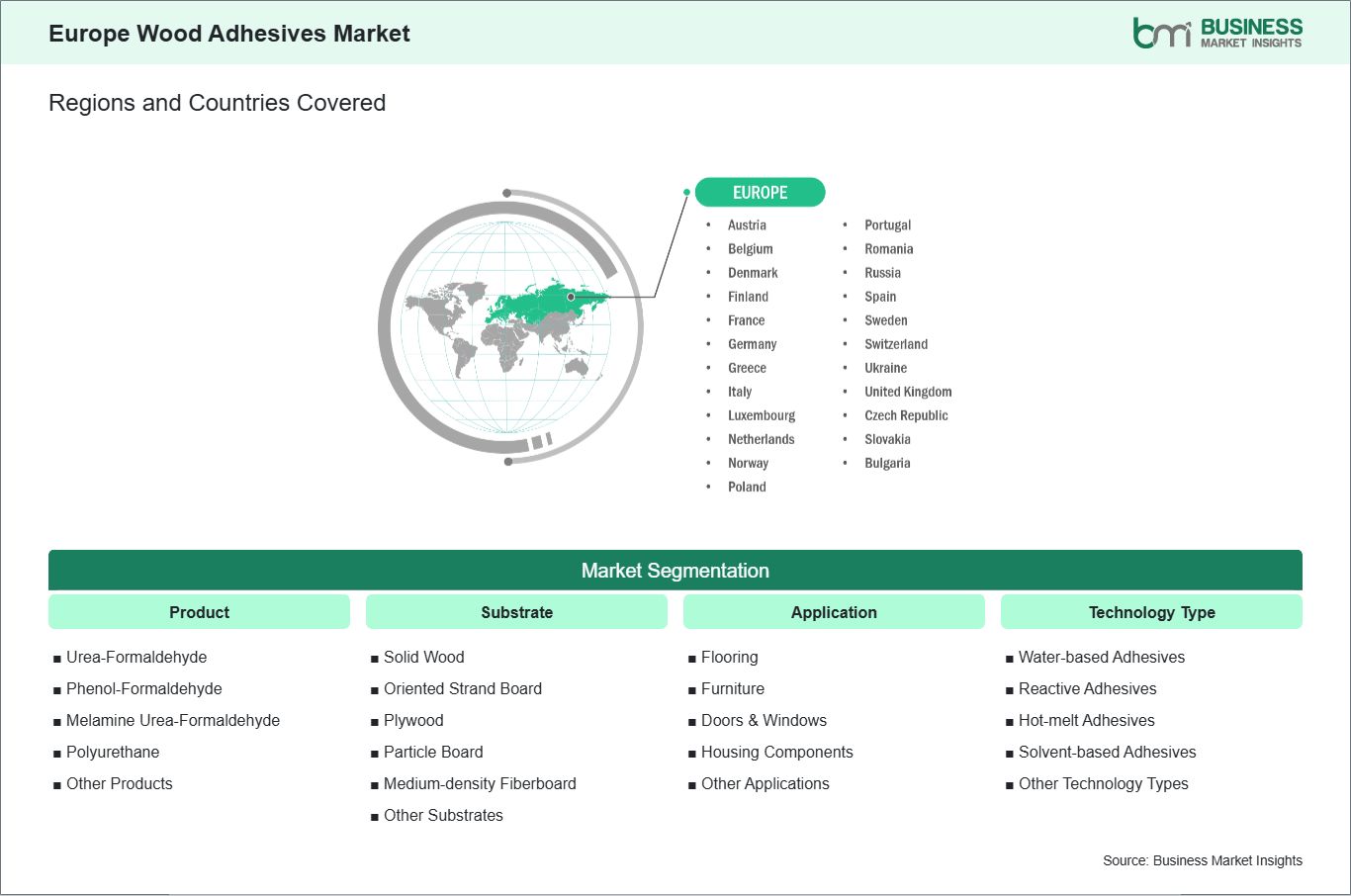
The Europe wood adhesives market is experiencing steady growth driven by the rising use of wooden components across construction, furniture manufacturing, and industrial applications. Countries such as Germany, Italy, France, and Scandinavian countries are highly engaged in the use of engineered wood applications that need high-performing adhesives. The adoption of engineered wood is leading to an increase in the demand for adhesives within residential and commercial sectors.
The European manufacturers are increasingly relying on the use of cross laminated timber, glued laminated timber, plywood, and particleboards as substitutes for traditional building materials. Adhesive technologies play an important part in providing these building materials with stability, structural integrity, and environmental resistance. With the development of construction trends toward prefabrication and modularity, the importance of adhesive technologies is growing steadily.
Regulations regarding sustainability in Europe are also affecting the demand for adhesives. Environmental regulations are making it necessary for industries to use low-emitting and formaldehyde-free adhesives. Such a situation is prompting manufacturers to improve their manufacturing processes while using environmentally friendly adhesives. Hence, suppliers of adhesives are innovating to fulfill the dual objectives of performance and environmental regulations in Europe.
Growing Applications in Interior Furnishings
The increasing demand for modern and customized interior furnishings is a key driver of the Europe wood adhesives market. Consumers across urban centers are investing in high-quality furniture, modular kitchens, wardrobes, and decorative interior elements. This growing preference for aesthetic and functional living spaces is expanding the use of wood-based materials that rely on adhesives for assembly and finishing.
Manufacturing centers of furniture in Italy, Poland, and Germany play a significant role in affecting demand in the region. The three countries have a well-developed furniture industry that operates predominantly through exports, which necessitates the use of adhesives in ensuring structural integrity, design versatility, and quality finishes. Increasing sophistication in furniture designs has rendered the use of adhesives vital to the production process.
Commercial interiors are also contributing to market growth, with offices, hospitality spaces, retail environments, and public infrastructure projects incorporating engineered wood products. Across Europe, there is a growing emphasis on sustainable interior design, which is encouraging the use of eco-friendly adhesive systems. This trend is expected to support continued adoption of advanced wood adhesives as interior furnishing applications expand across both residential and commercial sectors.