Electric Wheelchair Market Regional Highlights
North America Electric Wheelchair Market
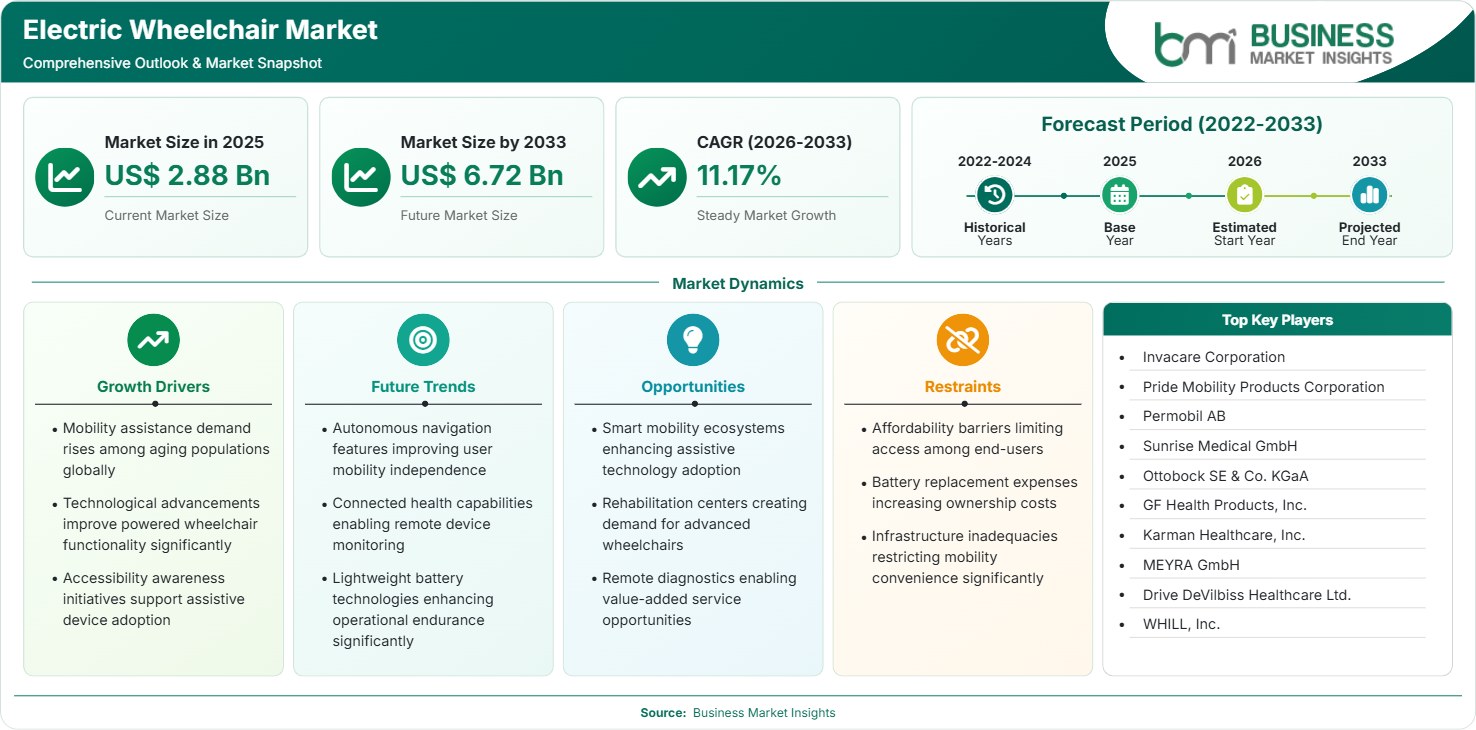
North America holds 34%–38% Electric Wheelchair Market share of 2025 revenue and is projected to expand at a 10.2%–11.0% CAGR through 2033. The region benefits from established rehabilitation networks, Medicare and private reimbursement, mature dealer infrastructure, sophisticated seating systems, and strong demand for customized mobility. The US remains the principal revenue contributor, while Canada adds demand through public healthcare programs and rehabilitation services. Product differentiation increasingly centers on clinical customization, connected controls, durability, battery performance, and service responsiveness.
- Reimbursement infrastructure supports clinically prescribed power mobility, while documentation requirements encourage suppliers to strengthen assessment, configuration, delivery, and post-sale service capabilities.
- Complex rehabilitation demand remains supported by neurological, orthopedic, and mobility-limiting conditions requiring specialized seating, power positioning, alternative controls, and individualized driving configurations.
- Manufacturers are introducing compact platforms, lighter materials, connected diagnostics, and advanced controls to address transportation constraints and improve everyday maneuverability.
- Homecare adoption is reinforced by aging consumers seeking independent movement between bedrooms, bathrooms, kitchens, outdoor spaces, and community environments.
- Lithium-ion battery development is receiving additional regulatory attention, with FDA recognition of ISO 7176-31 supporting standardized testing of powered-wheelchair battery systems and chargers.
US Electric Wheelchair Market
The US Electric Wheelchair Market represents approximately 29%–33% of global 2025 revenue and is estimated to grow at a 10.0%–10.8% CAGR through 2033. Demand is supported by Medicare coverage, specialist rehabilitation professionals, established DME suppliers, and advanced seating technologies. Coverage criteria emphasize mobility limitations, medical necessity, home use, practitioner involvement, and supplier compliance, creating a clinically structured purchasing environment for powered mobility equipment.
- Medicare coverage supports qualifying power mobility devices, but documentation, face-to-face assessment, standard written orders, and supplier requirements shape purchasing timelines and reimbursement access.
- Complex rehabilitation suppliers increasingly compete through clinical evaluation, seating expertise, alternative controls, power positioning, service availability, and documentation support.
- Lightweight travel-oriented powerchairs and compact mid-wheel platforms address consumer demand for easier vehicle transport, tighter turning spaces, and greater independence outside institutional environments.
- Smart seating, voice activation, remote diagnostics, and connected service platforms are creating differentiation beyond mechanical performance and conventional joystick control.
Europe Electric Wheelchair Market
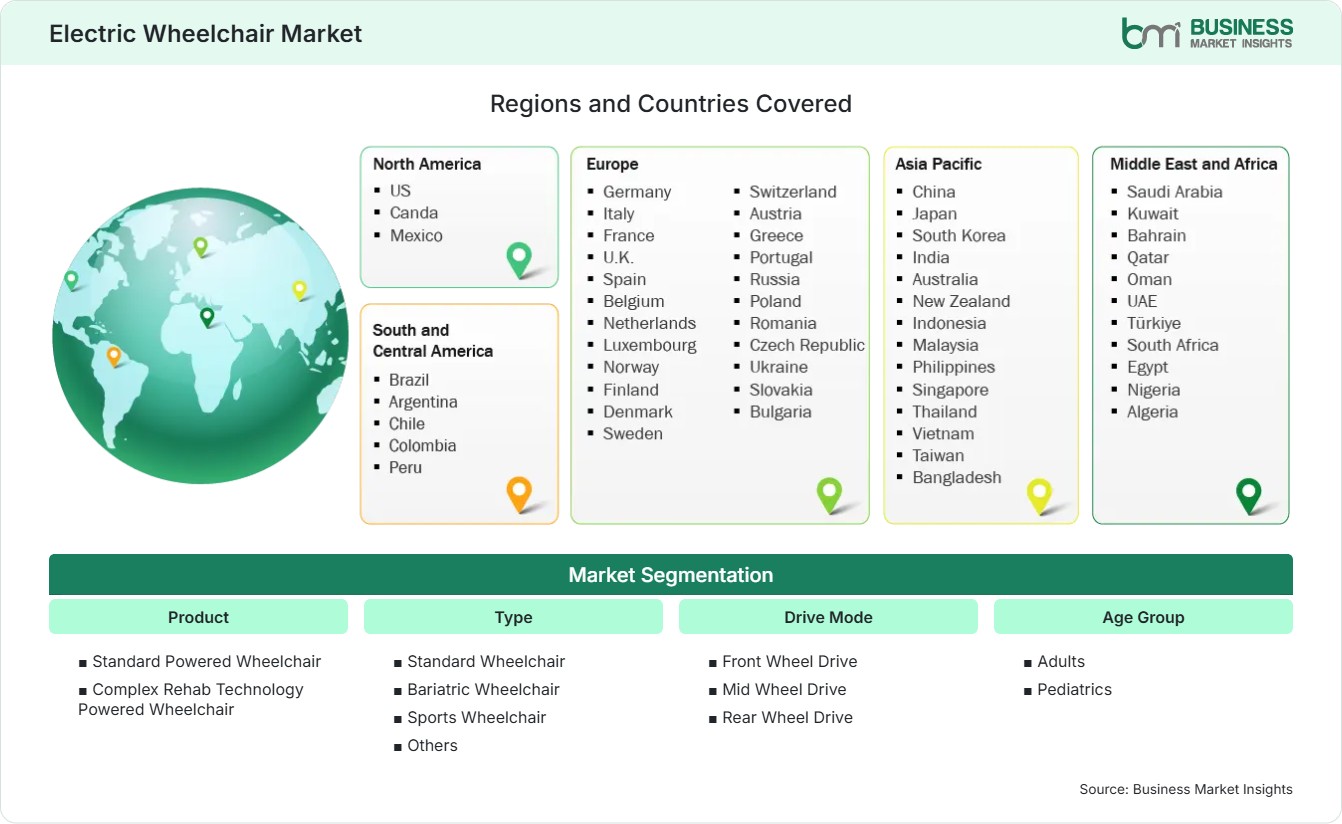
Europe will account for 27%-31% of the Electric Wheelchair Market's market share by 2025 and is expected to witness a 10.6%-11.5% CAGR during 2026-2033. Germany, the United Kingdom, France, Italy, and the Nordic markets have well-established rehabilitation ecosystems, and Central & Eastern Europe present avenues for future growth due to increased access to assistive technologies. Germany and the United Kingdom will continue to dominate the markets, but Poland and Spain have emerged as key areas of rapid growth.
- Germany benefits from established medical technology manufacturing, rehabilitation expertise, payer involvement, and demand for highly configurable mobility equipment serving complex users.
- The United Kingdom combines National Health Service procurement with specialist wheelchair services, creating demand for clinically appropriate configurations and reliable supplier support.
- France and Italy offer opportunities through aging populations, rehabilitation programs, accessibility initiatives, and expanding availability of powered mobility products across healthcare and homecare channels.
- Poland is developing as a higher-growth market as healthcare modernization and improving household purchasing capacity increase access to powered mobility equipment.
- European manufacturers are increasingly integrating modular seating, electronic controls, lightweight structures, and connected support functions to address both clinical and independent-living requirements.
Asia Pacific Electric Wheelchair Market
Asia Pacific Electric Wheelchair Market is 21% - 25% in 2025 and is expected to grow at a 12.5% - 13.4% CAGR during the period of 2033. Some of the major countries that will drive the market demand include China, Japan, South Korea, Australia, and India. China and India will lead the market in scale and growth potential, respectively. Japan and South Korea will focus on rehabilitation and electronics technology.
- China combines domestic manufacturing capabilities with expanding healthcare access, creating opportunities for competitively priced products alongside premium smart mobility platforms.
- Japan benefits from advanced robotics, electronics, rehabilitation technologies, and a rapidly aging population, encouraging demand for highly maneuverable and ergonomically optimized power mobility.
- India is developing from a lower installed base, with improving healthcare infrastructure, disability awareness, and local mobility initiatives supporting greater access to electric wheelchairs.
- South Korea provides opportunities for technologically advanced products integrating compact designs, electronic controls, connected functions, and rehabilitation-oriented configurations.
- Australia combines strong accessibility awareness, established rehabilitation services, and demand for outdoor mobility, creating a favorable environment for premium and specialized powerchairs.
Rest of World Electric Wheelchair Market
South and Central America Electric Wheelchair Market is expected to account for 7%–10% of demand in 2025, and the market will see a compound annual growth rate of 11.0%–12.0% through 2033. Brazil and Mexico drive regional demand, while Chile and Colombia provide secondary opportunities due to growth in healthcare provision and improved accessibility to assistive products. For the Middle East and Africa, the collective market is expected to represent 6%–8%, with the markets in the UAE, Saudi Arabia, and South Africa driving more lucrative demand.
Demand in Latin America is characterized by variable reimbursement, health care structure, reliance on imports, and distribution networks. The largest market in Latin America is in Brazil, while Mexico benefits from its proximity to North American supply sources. Middle Eastern countries rely more on investments in advanced health care facilities, availability, rehabilitation, and sophisticated mobility products, while Africa prioritizes affordability and replacement parts.
- Brazil is the largest Latin American opportunity, supported by population scale, rehabilitation demand, urban healthcare infrastructure, and growing availability of specialized mobility products.
- Mexico benefits from manufacturing connectivity and proximity to North American suppliers, creating opportunities for distribution, assembly, component sourcing, and healthcare mobility programs.
- Gulf markets increasingly favor technologically advanced wheelchairs in hospitals, rehabilitation centers, airports, and premium homecare environments where accessibility investments are expanding.
- South Africa remains an important African market because of its established private healthcare ecosystem and comparatively developed rehabilitation and mobility distribution infrastructure.
- Across lower-income markets, affordability, battery maintenance, repair availability, import costs, and trained clinical personnel remain central determinants of adoption and replacement cycles.