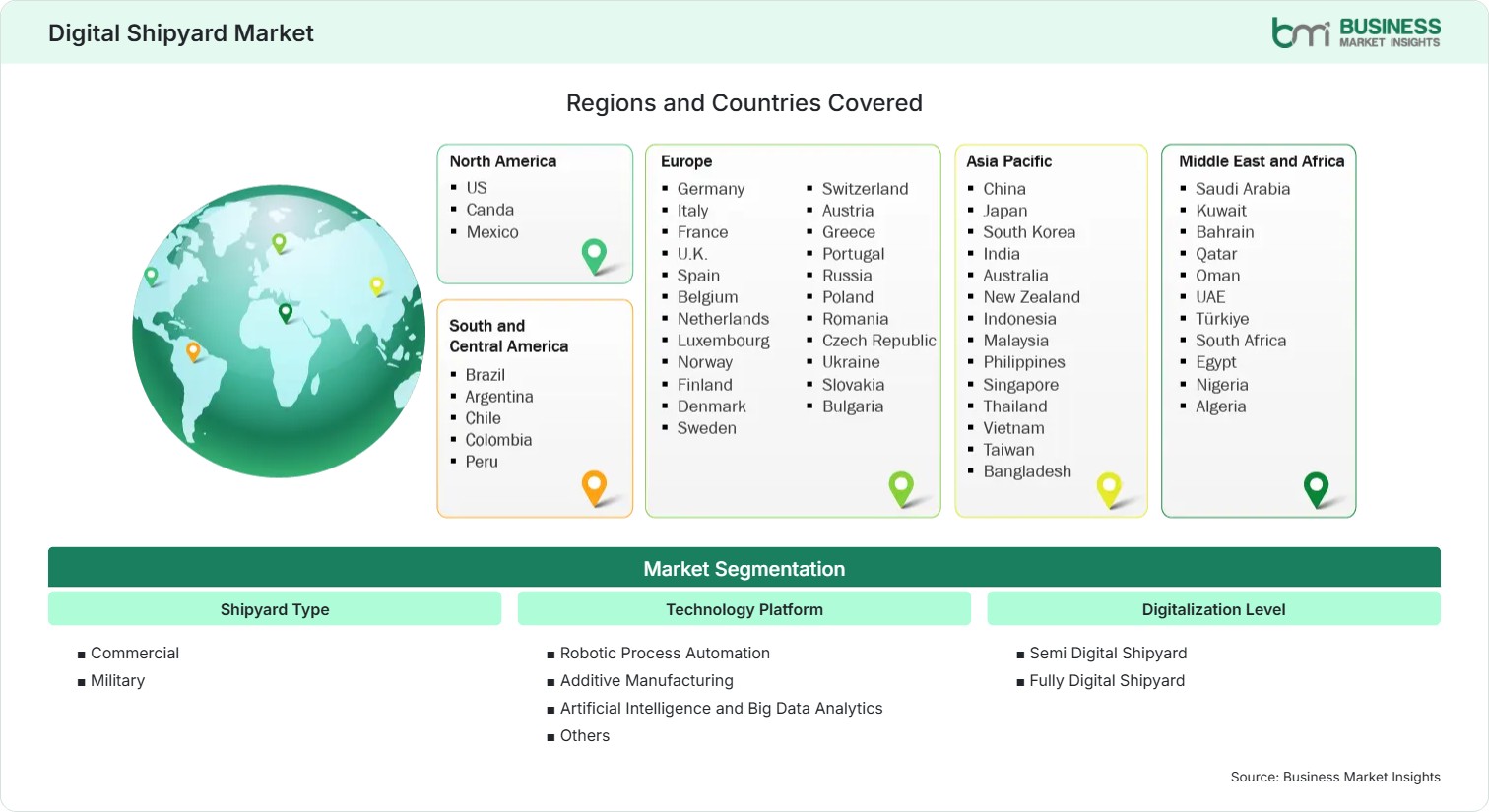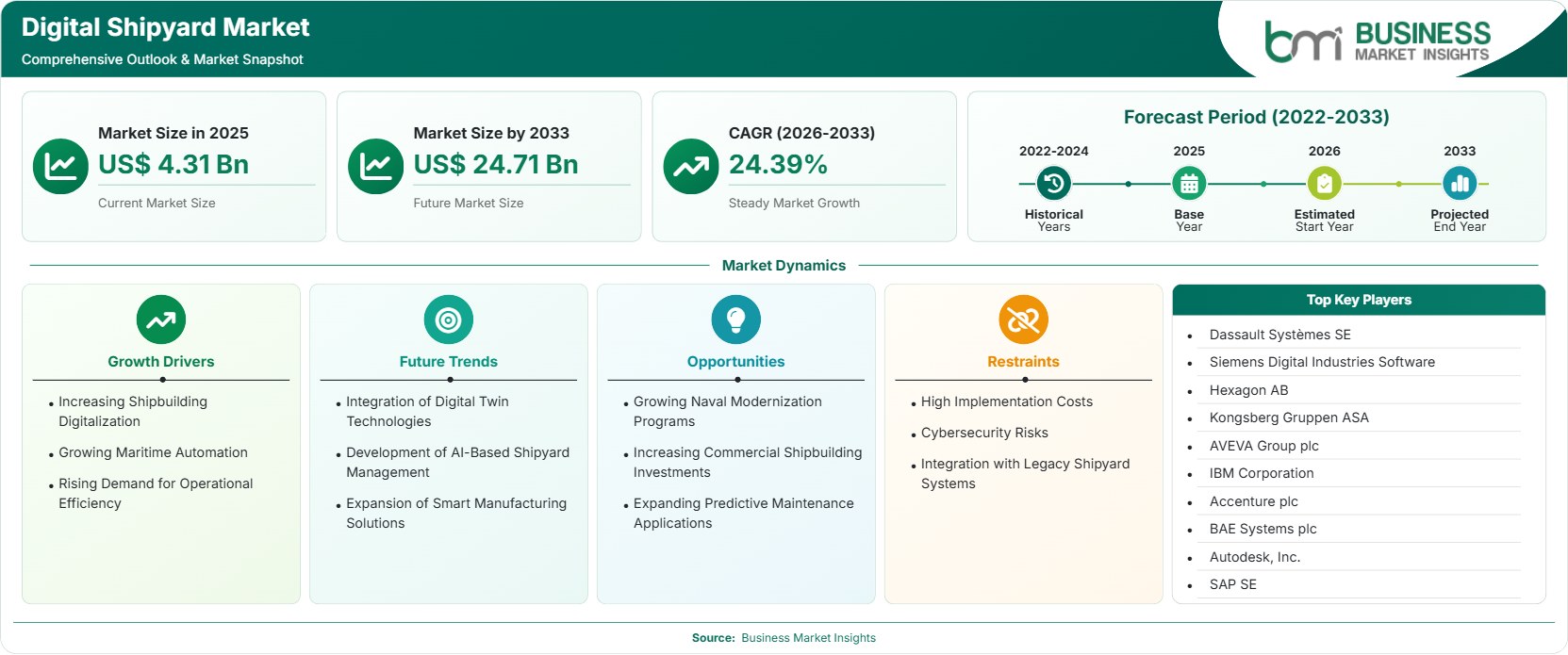
Digital Shipyard Market Regional Highlights
North America Digital Shipyard Market
North America accounted for 33%–36% of the market in 2025 and is projected to expand at a 23.0%–24.5% CAGR during 2026–2033. The region maintains leadership through continuous naval modernization, strong investments in digital manufacturing technologies, advanced engineering software, and industrial automation. The Digital Shipyard Market share remains supported by government defense contracts, mature technology infrastructure, widespread digital twin implementation, and collaboration between shipbuilders, software providers, and systems integrators to enhance productivity, lifecycle management, and operational resilience.
- The United States leads regional demand through naval fleet expansion, AI-driven production planning, digital engineering platforms, and smart manufacturing initiatives supporting commercial and defense shipbuilding efficiency.
- Canada increasingly adopts connected shipyard technologies across naval maintenance, Arctic vessel construction, and commercial ship repair facilities, improving workforce productivity and project execution accuracy.
- Industrial IoT deployment, cloud collaboration software, robotics integration, and predictive maintenance solutions continue strengthening regional competitiveness while minimizing construction delays and operational risks.
- Defense modernization budgets encourage adoption of digital twins, model-based engineering, automated quality inspection, and advanced simulation software throughout naval shipbuilding programs.
- Shipbuilders increasingly collaborate with software developers and automation specialists to establish integrated digital ecosystems supporting sustainable production and long-term asset lifecycle optimization.
US Digital Shipyard Market
The United States represented 73%–76% of North American revenue during 2025 while advancing at a 23.5%–24.8% CAGR through 2033. Strong defense procurement, expanding autonomous vessel development, digital engineering initiatives, and adoption of advanced manufacturing technologies continue strengthening Digital Shipyard Market leadership. Government investment in naval modernization, cybersecurity, and smart industrial infrastructure further accelerates implementation of integrated digital shipyard solutions across commercial and military facilities.
- Naval shipbuilding programs increasingly utilize digital twins, AI-enabled production scheduling, and virtual commissioning to improve construction quality while reducing project risks and lifecycle costs.
- Commercial shipyards adopt cloud engineering, robotic welding, and automated material handling technologies to shorten production cycles and improve operational efficiency.
- Federal investment supporting advanced manufacturing, cybersecurity resilience, and digital engineering standards continues encouraging modernization throughout domestic shipbuilding infrastructure.
- Strategic collaboration among defense contractors, software vendors, and engineering companies accelerates innovation across ship design, maintenance, and lifecycle asset management.
Europe Digital Shipyard Market
Europe accounted for 25%–28% Digital Shipyard Market share in 2025 and is forecast to register a 22.5%–24.0% CAGR during the forecast period. Strong environmental regulations, sophisticated shipbuilding capabilities, and widespread Industry 4.0 adoption continue supporting regional expansion. Germany, France, Italy, Norway, and the United Kingdom actively invest in intelligent manufacturing, digital engineering platforms, and naval modernization initiatives that strengthen production efficiency and sustainable maritime operations.
- Germany leads adoption through advanced industrial automation, engineering software development, and integrated smart manufacturing supporting both commercial and naval shipbuilding operations.
- Norway records one of the fastest regional growth rates by integrating autonomous vessel technologies, digital twins, and sustainable maritime innovation into modern shipyard operations.
- European shipbuilders increasingly implement AI-enabled quality control, additive manufacturing, and predictive maintenance technologies to improve vessel production consistency and resource efficiency.
- Environmental sustainability policies encourage digital manufacturing practices that reduce waste generation, optimize material utilization, and improve energy efficiency throughout ship construction activities.
- Collaborative research programs between governments, universities, and technology providers accelerate commercialization of next-generation maritime digitalization solutions.
Asia Pacific Digital Shipyard Market
Asia Pacific represented 27%–30% of the market in 2025 and is anticipated to achieve the fastest 25.8%–27.3% CAGR through 2033. Expanding commercial shipbuilding capacity, favorable industrial policies, growing exports, and increasing investment in automation continue driving regional expansion. China, South Korea, Japan, Singapore, and India actively modernize production facilities through AI, robotics, digital engineering platforms, and cloud-enabled manufacturing technologies supporting globally competitive shipbuilding industries.
- China dominates regional production through extensive commercial shipbuilding capacity, government-backed smart manufacturing initiatives, and widespread adoption of integrated digital engineering platforms.
- South Korea remains a technology leader by deploying AI-powered production optimization, robotic fabrication, and digital twin technologies across high-value vessel manufacturing programs.
- Japan strengthens operational efficiency through precision engineering, advanced automation, and predictive maintenance supporting high-quality commercial and specialized ship production.
- India's maritime modernization initiatives encourage investment in digital manufacturing, naval infrastructure, and connected engineering platforms supporting long-term industrial development.
- Singapore continues expanding smart maritime ecosystems integrating shipyards, ports, logistics networks, and digital infrastructure into highly connected operational environments.
Rest of World Digital Shipyard Market
The Rest of World accounted for 11%–14% market share during 2025 and is projected to expand at a 22.0%–23.5% CAGR through 2033. Digital Shipyard Market growth is supported by increasing shipbuilding investments across the Middle East, Brazil, Türkiye, and selected African economies. Governments continue prioritizing maritime infrastructure, offshore energy projects, and naval modernization while encouraging adoption of digital manufacturing technologies to improve industrial competitiveness and operational efficiency.
South & Central America experience gradual adoption through offshore vessel construction, energy sector investments, and modernization of commercial shipyards. The Middle East and Africa increasingly deploy digital engineering solutions supporting naval expansion, marine infrastructure development, and smart industrial manufacturing initiatives.
- Brazil expands digital shipbuilding capabilities through offshore energy investments, integrated engineering software, and modernization of commercial shipyard operations.
- Türkiye continues strengthening defense shipbuilding by adopting intelligent manufacturing technologies, automation systems, and advanced digital production planning capabilities.
- Gulf countries invest in smart maritime infrastructure, naval fleet expansion, and connected shipyard technologies supporting economic diversification strategies.
- African maritime development programs encourage modernization of repair facilities, workforce digitalization, and adoption of advanced engineering software across emerging shipbuilding centers.
- Growing collaboration with global technology vendors enables regional shipbuilders to accelerate digital transformation while improving operational flexibility, productivity, and long-term competitiveness.