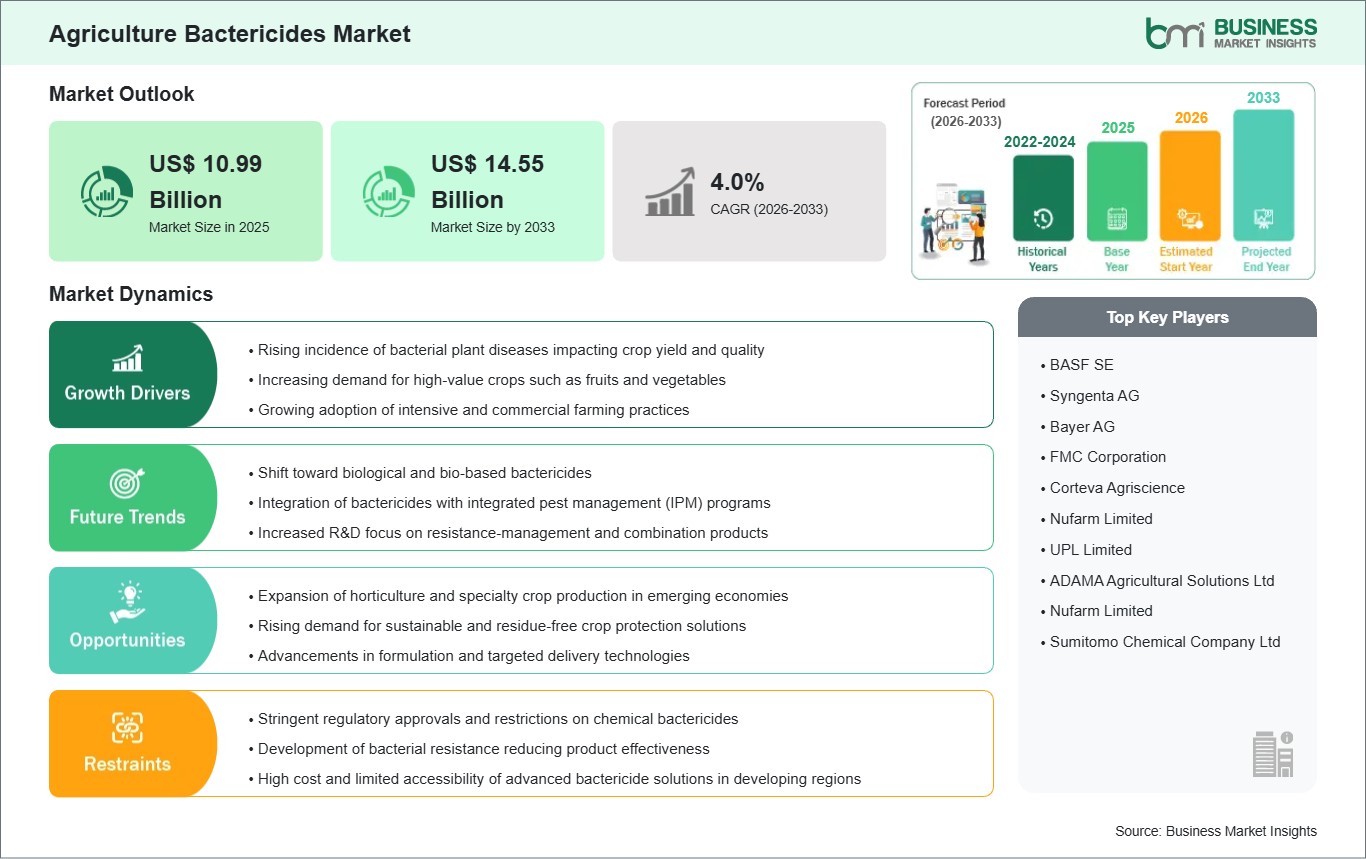
The agriculture bactericides market size is expected to reach US$ 14.55 billion by 2033 from US$ 10.99 billion in 2025. The market is estimated to record a CAGR of 4.0% from 2026 to 2033.
Agriculture bactericides are chemical or biological agents that protect plants from infections. These products include synthetic bactericidal compounds, naturally derived antimicrobial substances, and bio-based formulations designed to target specific bacterial pathogens that affect fruits, vegetables, cereals, and other agricultural goods. Bactericides are applied through foliar sprays, seed treatments, or soil applications, depending on the crop's needs and disease management approach. Using bactericides effectively helps maintain crop health, supports integrated pest management programs, and contributes to overall farm productivity and sustainability.
The market for agriculture bactericides is driven by the rising global food demand and the need to reduce crop losses from bacterial diseases. More farmers are adopting modern practices and focusing on higher yields, which encourages investment in effective disease control solutions. Regulatory approvals for new and safer bactericidal products, along with advances in agrochemical research that produce targeted and environmentally friendly formulations, further boost market growth. Moreover, the growing awareness of plant health management and stricter phytosanitary standards in export markets increases the demand for high-performance bactericides around the world.

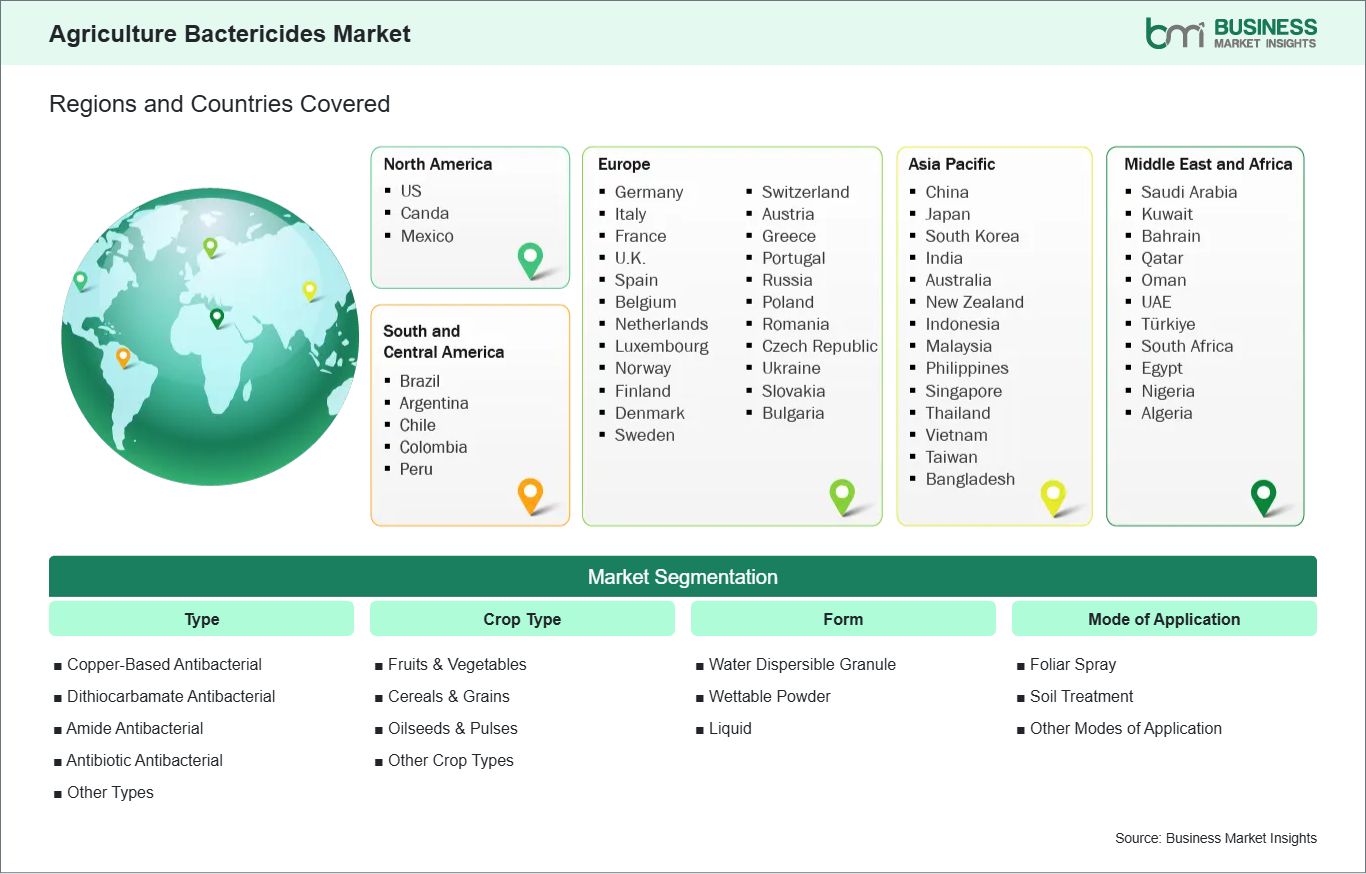
Key segments that contributed to the derivation of the agriculture bactericides market analysis are type, crop type, form, and mode of application.
Crops like fruits, vegetables, cereals, and oilseeds are vulnerable to bacterial infections from pathogens such as Xanthomonas, Pseudomonas, and Erwinia. If these infections are not controlled, they can cause serious yield losses and economic harm. Climate changes, including higher humidity and unpredictable rainfall, have made the spread and severity of these diseases worse.
Consequently, farmers are increasingly turning to effective bactericidal solutions to protect their crops and maintain productivity. The use of copper-based, amide-based, and other effective bactericides is growing because they are easy to apply and work well with integrated pest management practices. Additionally, stricter food safety rules and quality standards, especially in export-oriented agriculture, push growers to manage bacterial diseases actively. This mix of farming issues, climate changes, and regulations continues to boost the demand for agriculture bactericides worldwide.
A significant growth opportunity in the agriculture bactericides market is the increasing use of modern crop protection practices in emerging economies, especially in Asia Pacific, South and Central America, and Africa. Rapid population growth, rising food demand, and the need to boost agricultural productivity are driving investments in disease management solutions. In these areas, smallholder and commercial farmers are slowly using new bactericidal formulations, such as wettable powders, water-dispersible granules, and foliar sprays, to protect high-value crops like fruits, vegetables, and oilseeds.
Furthermore, government programs that promote sustainable agriculture, integrated pest management (IPM), and better access to agrochemicals are helping the market expand. Growth is also supported by increased awareness of the economic and quality benefits of proactive disease control, especially for export-oriented crops that must meet international phytosanitary standards. As infrastructure, distribution networks, and farmer education improve, emerging markets are set to play an important role in the global agriculture bactericides market.

The agriculture bactericides market demonstrates steady growth, with size and share analysis highlighting evolving trends and competitive dynamics among key players. The report further examines subsegments categorized by type, crop type, form, and mode of application, offering insights into their contribution to overall market performance.
For instance, the foliar spray segment within the mode of application category holds a significant market share. This is due to its widespread use in fruits, vegetables, cereals, and other crops, where it delivers bactericidal agents directly to infected plant surfaces for rapid disease control. The segment benefits from the ease of application, uniform coverage, and compatibility with standard spraying equipment, making it a preferred choice for farmers and agricultural professionals.
| Report Attribute | Details |
|---|---|
| Market size in 2025 | US$ 10.99 Billion |
| Market Size by 2033 | US$ 14.55 Billion |
| Global CAGR (2026 - 2033) | 4.0% |
| Historical Data | 2022-2024 |
| Forecast period | 2026-2033 |
| Segments Covered | By Type
|
| Regions and Countries Covered | North America
|
| Market leaders and key company profiles |
|
The " Agriculture Bactericides Market Size and Forecast (2022–2033)" report provides a detailed analysis of the market covering below areas:
The geographical scope of the agriculture bactericides market report is divided into five regions: North America, Asia Pacific, Europe, the Middle East & Africa, and South & Central America. The agriculture bactericides market in Asia Pacific is poised for substantial growth over the forecast period. This expansion is driven by the region’s extensive agricultural base, diverse crop portfolio, and the rising demand for food to support rapidly increasing populations. Major producers such as China, India, Japan, and several Southeast Asian countries cultivate a wide range of fruits, vegetables, cereals, and oilseeds—crops that are highly susceptible to bacterial infections. Frequent outbreaks of bacterial diseases, combined with climatic conditions that favor pathogen proliferation, have amplified the need for effective bactericidal solutions to safeguard yield and quality.
Market growth is further supported by the rising adoption of modern farming practices across the region. Technologies such as integrated pest management (IPM) and precision agriculture are gaining traction, accelerating the use of advanced bactericide formulations, including copper‑based, amide‑based, and wettable powder products. Government-led initiatives aimed at enhancing agricultural productivity, subsidizing crop protection chemicals, and promoting sustainable farming practices are also contributing to increased market uptake.
In addition, strong distribution networks and the presence of both regional and multinational agrochemical manufacturers ensure broad accessibility to bactericidal products. Growing awareness of food safety standards—driven by both domestic consumption needs and export requirements—further reinforces the demand. Collectively, these factors position Asia Pacific as the leading and most dynamic market for agricultural bactericides.

The agriculture bactericides market is evaluated by gathering qualitative and quantitative data post-primary and secondary research, which includes important corporate publications, association data, and databases. A few of the key developments in the agriculture bactericides market are:
The Agriculture Bactericides Market is valued at US$ 10.99 Billion in 2025, it is projected to reach US$ 14.55 Billion by 2033.
As per our report Agriculture Bactericides Market, the market size is valued at US$ 10.99 Billion in 2025, projecting it to reach US$ 14.55 Billion by 2033. This translates to a CAGR of approximately 4.0% during the forecast period.
The Agriculture Bactericides Market report typically cover these key segments-
The historic period, base year, and forecast period can vary slightly depending on the specific market research report. However, for the Agriculture Bactericides Market report:
The Agriculture Bactericides Market is populated by several key players, each contributing to its growth and innovation. Some of the major players include:
The Agriculture Bactericides Market report is valuable for diverse stakeholders, including:
Essentially, anyone involved in or considering involvement in the Agriculture Bactericides Market value chain can benefit from the information contained in a comprehensive market report.
Please tell us your area of interest
(Market Segments/ Regions and Countries/ Companies)