
Wood Veneers Market Outlook: Size, Share, Trends, Growth Analysis, Competitive Landscape & Forecast, 2026-2033

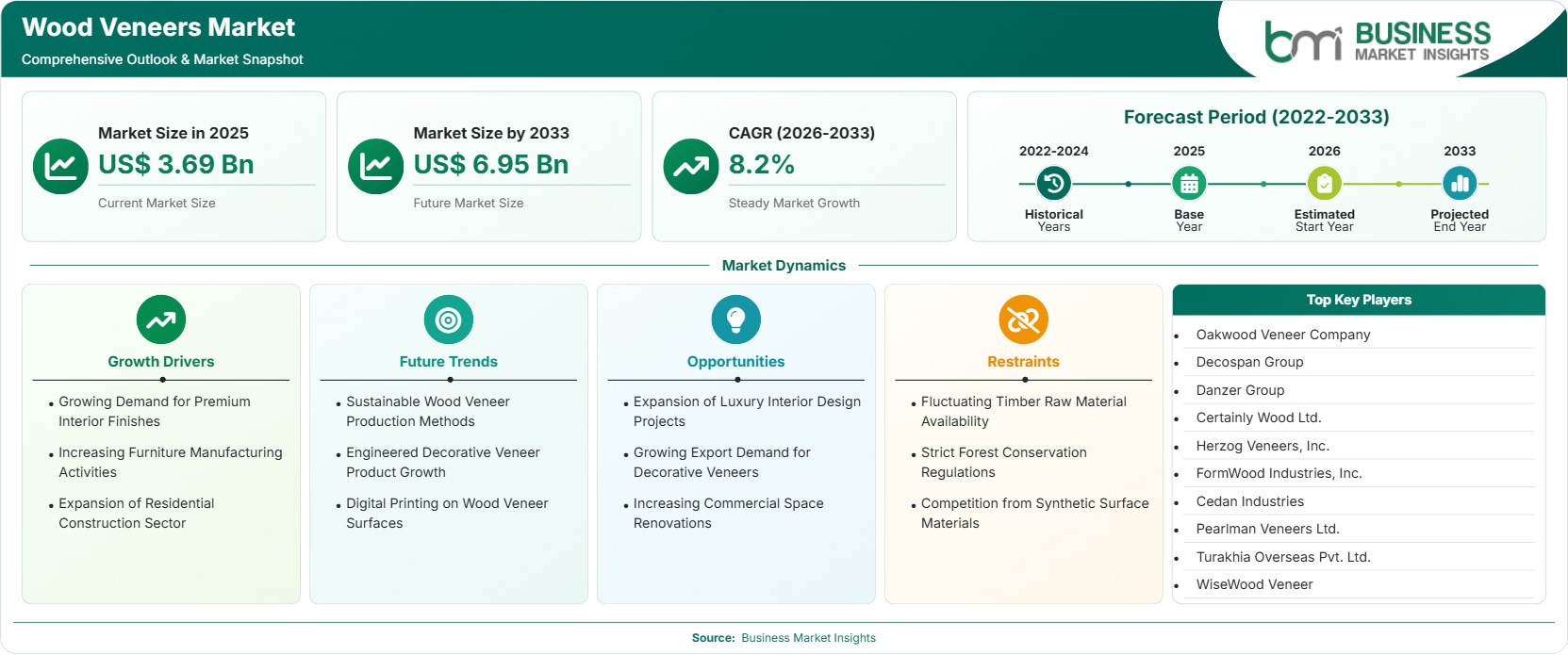
The Wood Veneers Market size was valued at US$ 3.69 billion in 2025 and is projected to reach US$ 6.95 billion by 2033, growing at a CAGR of 8.2% from 2026 to 2033. Rising demand for premium interior finishes, increasing furniture production, expansion of residential construction, and growing preference for sustainable wood-based decorative materials are driving market development while creating opportunities across residential, commercial, and hospitality applications.

Report Coverage
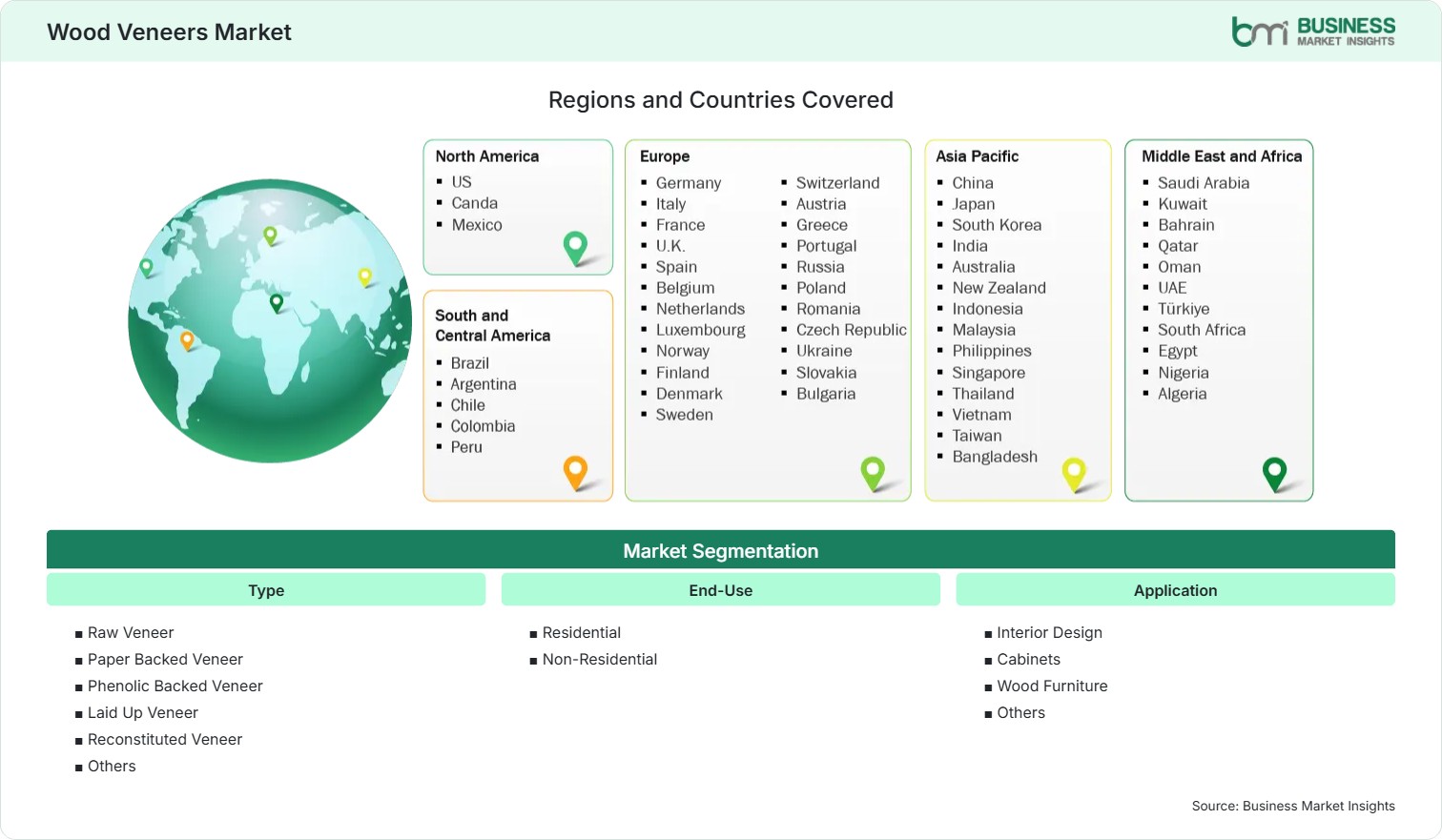
  • Type: Raw Veneer, Paper Backed Veneer, Phenolic Backed Veneer, Laid Up Veneer, Reconstituted Veneer, Others
  • End-Use: Residential, Non-Residential
  • Application: Interior Design, Cabinets, Wood Furniture, Others
US$ 3.69 Bn Market size in 2025
US$ 6.95 Bn Market Size by 2033
8.2% CAGR, 2026 - 2033
2026-2033 Forecast Period

01 AI Overview

Wood Veneers Market Summary

  • North America Region: North America accounts for approximately 24%–27% market share in 2025 and is projected to grow at a CAGR of 7.5%–8.0% from 2026–2033, supported by remodeling activities, premium furniture demand, sustainable building practices, and increasing adoption of natural wood aesthetics. The US market benefits from strong residential renovation activity, luxury interior projects, and demand for customized furniture solutions, supporting a CAGR of 7.6%–8.1% during the forecast period.
  • Fastest Growing Region: Asia Pacific represents approximately 38%–41% market share in 2025 and is projected to expand at a CAGR of 9.0%–9.5% from 2026–2033, driven by urbanization, residential construction growth, expanding furniture manufacturing, rising disposable income, and increasing adoption of decorative wood materials.
  • Leading Segment: Residential end-use holds approximately 58%–61% market share in 2025 and is expected to grow at a CAGR of 8.0%–8.4% from 2026–2033, supported by housing development, renovation projects, customized interiors, and consumer preference for premium wood finishes.
  • High Growth Segment: Interior Design application represents approximately 32%–35% market share in 2025 and is projected to grow at a CAGR of 8.8%–9.3% from 2026–2033, driven by luxury interiors, hospitality projects, commercial spaces, and increasing demand for aesthetically appealing natural surfaces.
  • Key Market Opportunity: Expansion of luxury interior projects, rising international demand for decorative veneers, and commercial renovation activities are creating opportunities for veneer manufacturers through sustainable sourcing, innovative designs, and customized product development.
  • Major Market Players: Oakwood Veneer Company; Decospan Group; Danzer Group; Certainly Wood Ltd.; Herzog Veneers, Inc.; FormWood Industries, Inc.; Cedan Industries; Pearlman Veneers Ltd.; Turakhia Overseas Pvt. Ltd.; WiseWood Veneer.
02 Strategic Insights

Wood Veneers Market: Strategic Insights

wood-veneers-market-market-strategic-framework
FREE PDF
Request your free sample
Request free sample
03 Stakeholder View

Key Takeaways

  • The market value chain is transitioning toward integrated sourcing and manufacturing models that combine timber procurement, veneer processing, finishing technologies, and distribution networks.
  • Premium interior applications and customized furniture manufacturing represent major growth opportunities as architects, designers, and consumers increasingly prefer natural wood aesthetics over synthetic alternatives.
  • Product innovation is focused on advanced surface treatments, engineered veneer solutions, digital wood pattern matching, and sustainable alternatives that maximize timber utilization.
  • Asia Pacific offers strong investment potential due to rapid urban development, expanding furniture manufacturing hubs, increasing housing construction, and growing demand for premium interior materials.
  • Competitive strategies are increasingly centered around sustainable sourcing, international expansion, and customized solutions.
  • Growing emphasis on green building certifications and responsible material sourcing is influencing procurement decisions across commercial and residential construction sectors.
04 Geographic Outlook

Wood Veneers Market Regional Highlights

North America Wood Veneers Market

North America represents approximately 24%–27% of the global Wood Veneers Market share in 2025 and is projected to grow at a CAGR of 7.5%–8.0% from 2026–2033. The region benefits from strong renovation activity, established furniture industries, premium interior design demand, and increasing preference for sustainable wood materials.

  • Rising residential renovation activities are increasing demand for decorative wood surfaces, particularly in kitchens, living spaces, flooring applications, and customized furniture installations.
  • Furniture manufacturers are adopting veneers to achieve premium wood appearances while improving material efficiency and reducing reliance on solid timber.
  • Sustainable building initiatives are encouraging the use of responsibly sourced veneer products with verified forestry certifications.
  • Commercial hospitality developments are supporting demand for customized veneer solutions in hotels, restaurants, and premium public spaces.

US Wood Veneers Market

The US Wood Veneers Market accounts for approximately 19%–21% of global demand in 2025 and is expected to expand at a CAGR of 7.6%–8.1% from 2026–2033. Growth is supported by residential remodeling, luxury interior projects, furniture manufacturing, and increasing demand for environmentally responsible materials. Designers and builders are incorporating veneers into premium spaces because they provide natural wood appearances with improved resource efficiency.

  • Home renovation expenditure continues supporting veneer demand across cabinetry, furniture, wall panels, and customized interior applications.
  • Luxury residential developments are increasing adoption of high-quality veneers for unique architectural and decorative finishes.
  • Furniture producers are utilizing veneer materials to balance premium appearance, production efficiency, and material cost management.

Europe Wood Veneers Market

Europe holds approximately 27%–30% market share in 2025 and is projected to register a CAGR of 7.8%–8.3% from 2026–2033. The region benefits from established woodworking industries, strong furniture manufacturing capabilities, and consumer preference for sustainable interior materials. Germany, Italy, and France remain key markets, while Scandinavian countries continue demonstrating demand for minimalist natural wood designs and environmentally responsible construction solutions.

  • Germany maintains strong veneer demand through advanced furniture manufacturing, woodworking expertise, and sustainable construction initiatives.
  • Italy continues driving premium veneer consumption through luxury furniture production, interior design innovation, and high-end architectural projects.
  • France is experiencing demand growth through hospitality renovations and increasing adoption of natural decorative materials.
  • Scandinavian markets emphasize sustainable materials and modern interior aesthetics, supporting premium veneer applications.
  • European regulations promoting responsible forestry practices are encouraging certified veneer sourcing and transparent supply chains.

Asia Pacific Wood Veneers Market

Asia Pacific represents approximately 38%–41% of global demand in 2025 and is the fastest-growing region with a CAGR of 9.0%–9.5% from 2026–2033. The region benefits from rapid urbanization, housing development, furniture manufacturing expansion, and increasing consumer spending on premium interiors. China, India, Japan, and Southeast Asian economies are supporting growth through construction activity and expanding decorative material demand.

  • China remains a major market due to large furniture manufacturing capacity, construction growth, and established wood-processing industries.
  • India is witnessing increasing veneer adoption through residential development, hospitality expansion, and rising demand for customized interiors.
  • Southeast Asian countries are becoming important manufacturing hubs due to furniture exports and growing construction investments.
  • Japan continues to support premium veneer demand through high-quality craftsmanship and interior design applications.
  • Regional manufacturers are investing in processing technology and export capabilities to strengthen global competitiveness.

Rest of World Wood Veneers Market

Rest of World contributes approximately 9%–12% of the global Wood Veneers Market share in 2025 and is projected to grow at a CAGR of 7.0%–7.6% from 2026–2033. Latin America, Middle East, and Africa are experiencing increasing demand due to construction development, hospitality investments, and rising interest in decorative interior materials. Brazil, UAE, and South Africa represent important growth markets.

  • Latin American countries are benefiting from furniture manufacturing activities and availability of diverse wood resources.
  • Brazil is supporting veneer production through established forestry resources and wood-processing capabilities.
  • Middle Eastern markets are increasing veneer consumption through luxury hospitality projects and premium commercial developments.
  • African construction growth is creating opportunities for decorative wood material suppliers in urban development projects.
  • Regional distributors are expanding networks to improve availability of imported and locally processed veneer products.
global-market-geography
FREE PDF
Request your free sample
Request free sample
05 Segment Analysis

Wood Veneers Market Segmentation

Type

Type segmentation covers multiple veneer formats designed for different manufacturing requirements, aesthetic preferences, and application environments. Raw Veneer represents approximately 42%–45% of the market in 2025 and is projected to grow at a CAGR of 7.8%–8.2% from 2026–2034, supported by furniture manufacturing, customized woodworking, and architectural applications. The Wood Veneers Market scope is expanding as manufacturers adopt diverse veneer solutions that balance design flexibility, durability, processing efficiency, and sustainable material utilization across residential and commercial projects.

  • Raw Veneer: Raw veneer remains widely used in furniture, cabinetry, and interior applications due to its natural appearance and processing flexibility. Manufacturers prefer this format for customized designs, staining options, and premium wood finishes.
  • Paper Backed Veneer: Paper backed veneer is gaining adoption because of improved handling, reduced cracking risk, and easier installation. It is increasingly used in interior decoration projects requiring consistent quality and flexible application.
  • Phenolic Backed Veneer: Phenolic backed veneer provides enhanced stability and durability, making it suitable for applications requiring improved moisture resistance and structural performance. Demand is increasing in commercial interiors and demanding architectural environments.
  • Laid Up Veneer: Laid up veneer supports customized patterns, decorative designs, and large-scale interior applications. Manufacturers utilize this format for premium furniture, wall panels, and specialized design projects requiring unique visual characteristics.
  • Reconstituted Veneer: Reconstituted veneer is expanding due to consistent patterns, uniform appearance, and efficient resource utilization. It enables designers to achieve specific wood aesthetics while supporting sustainable material management practices.

End-Use

The end-use-based segmentation focuses on the usage of the product in residential and non-residential construction industries. The share of the residential usage segment holds around 58% to 61% of the market share in 2025, and it is projected that this segment will show a CAGR growth of 8.0% to 8.4% from 2026 to 2034, owing to increased demand for home renovation, luxury home construction, and customizing interior space. Non-residential applications continue to expand across hospitality, commercial offices, retail spaces, and institutional construction, requiring durable and visually appealing wood finishes.

  • Residential: Residential demand is driven by increasing preference for premium interiors, customized furniture, luxury kitchens, and decorative wall applications. Homeowners and designers are adopting veneers for natural aesthetics combined with efficient material usage.
  • Non-Residential: Non-residential adoption is supported by commercial construction, hospitality developments, office renovations, and public infrastructure projects. Architects increasingly specify veneers for creating sophisticated interiors with sustainable material characteristics.

Application

Application segmentation demonstrates the diverse use of veneers in interior design, cabinetmaking, furniture, and other decorative purposes. Interior Design holds a market share of about 32%–35% in 2025 and is projected to grow at a CAGR of 8.8%–9.3% from 2026-2034, driven by increased demand for luxurious interior designs, hospitality, and architectural customization. The Wood Veneers Market trends are driven by increasing demand for natural textures and sustainability.

  • Interior Design: Interior designers increasingly utilize veneers for wall panels, flooring elements, decorative surfaces, and architectural features. Demand is supported by luxury residential projects, hospitality developments, and commercial space modernization.
  • Cabinets: Cabinet manufacturers use veneers to deliver premium wood appearances with improved cost efficiency compared with solid wood alternatives. Wood Veneers Market growth is supported by kitchen renovation trends and demand for customized storage solutions.
  • Wood Furniture: Furniture manufacturers adopt veneers to create high-quality designs while optimizing raw material usage. Rising demand for stylish, durable, and sustainable furniture products continues supporting veneer consumption.
06 Market Forces

Wood Veneers Market Dynamics

Key Market Drivers

Growing Demand for Premium Interior Finishes

The growing demand for quality looks among consumers and business establishments is driving the increasing popularity of wood veneers in residential, hospitality, and office settings. Architects and designers are choosing to use natural wood surfaces owing to the sophisticated look they offer, along with efficient use of wood. New demands for veneer solutions from luxury home complexes, expensive hotels, and individual interior designs with distinctive grain, texture, and finish are emerging. Advances in technology for veneering, finishing, and design customization enable producers to offer unique products that can meet new demands in architecture. The trend towards individuality and aesthetically pleasing interiors continues to drive demand for high-quality veneer materials.

Increasing Furniture Manufacturing Activities

The expansion in the production of furniture on a global scale is leading to greater use of veneers as companies are in search of materials that will offer the best appearance, productivity, and cost-effectiveness. Veneers are used by furniture makers to produce tables, cabinets, panels, and even decor, creating a wood-like look while minimizing the use of solid wood. Demand for residential, export, and custom furniture is driving greater use of veneers. Production centers in Asia Pacific and Europe are making greater use of advanced woodworking machinery and technology, thereby increasing demand for consistently high-quality veneer products. The ability of veneers to deliver design flexibility and efficient material utilization is strengthening their role in modern furniture production.

Expansion of Residential Construction Sector

The increase in residential construction is driving continuous demand for wood veneers owing to the increased usage in flooring, cabinets, wall panels, and other custom interior applications. The growing trend of urbanization, housing construction, and renovations is motivating contractors and homeowners to invest in interior materials that add value to their properties. Wood veneers offer the perfect blend of high-quality aesthetics and material efficiency, making them ideal for residential buildings. Luxurious apartment buildings and customized houses, combined with sustainable construction materials, will play an important role in market development. Construction firms and interior designers are increasingly adopting veneer products to provide high-quality finishes and to meet changing trends in natural and sustainable construction materials.

Key Market Opportunities

Expansion of Luxury Interior Design Projects

As the number of luxury interior design projects increases, this trend presents opportunities for veneer manufacturers, especially as high-end residential, hospitality, and commercial buildings become more inclined to customize their decorative solutions. Architects and interior designers specializing in luxury homes are turning to natural wood finishes to create distinctive environments with enhanced aesthetics. The growing trend among luxury hotels, branded homes, and premium offices will present demand for specialty veneers that offer special textures and finishes. There are opportunities for manufacturers that offer custom designs, certification, and finishing services to capitalize on this expanding market. Rising investment in experiential interiors is encouraging greater adoption of decorative veneers as a premium architectural material, according to World Wood Veneers Market forecasts.

Growing Export Demand for Decorative Veneers

Increasing international demand for decorative veneers is creating opportunities for manufacturers with strong forestry resources, advanced processing capabilities, and export networks. Furniture-producing countries and interior material suppliers are expanding cross-border trade to meet demand from construction and design markets worldwide. Growth in global furniture exports, luxury interiors, and customized architectural projects is supporting demand for high-quality veneer products.

Increasing Commercial Space Renovations

Renovation work for commercial purposes has opened up new avenues for wood veneer manufacturers, as firms renovate their offices, retail outlets, hospitality establishments, and institutions. Today's offices and business settings are emphasizing interiors that create aesthetically pleasing environments and positive experiences. Veneers are now used in walls, furnishings, reception areas, and architectural components for their high aesthetic appeal.

Market Restraints and Challenges

Fluctuating Timber Raw Material Availability

Availability fluctuations of timber resources create challenges for veneer manufacturers by affecting production consistency, pricing stability, and supply-chain planning. Factor: Changes in timber supply caused by climate conditions, harvesting limitations, transportation challenges, and increasing competition for raw materials can disrupt veneer production operations. Impact: Limited raw material availability may increase manufacturing costs, create supply uncertainties, and pressure profit margins across the value chain.

Strict Forest Conservation Regulations

Forest conservation regulations influence veneer production by increasing compliance requirements related to timber sourcing, harvesting practices, and environmental responsibility. Factor: Governments and international organizations are implementing stricter forestry policies, certification requirements, and traceability standards to protect forest resources and reduce illegal logging activities. Impact: Compliance costs may increase operational expenses, restrict access to certain timber species, and require manufacturers to invest in certified supply chains.

07 Company Analysis

Competitive Landscape

The Wood Veneers Market analysis suggests that leading players are focusing on sustainable timber sourcing, innovative veneer production technology, customization, and entry into foreign markets. Market players have been diversifying, working with architects and furniture makers, and adopting sustainable forest policies in response to the high demand for quality wood products.

Company Name

Overview

Products and Services relevant to this market

Oakwood Veneer Company

A US-based veneer manufacturer specializing in decorative wood veneer products for furniture and architectural applications.

Provides natural wood veneers, custom veneer matching, decorative panels, and specialty veneer solutions.

Decospan Group

A global wood solutions company focused on decorative veneer products and engineered wood surfaces.

Offers veneer panels, furniture surfaces, interior finishing materials, and customized wood solutions.

Danzer Group

An international wood processing company specializing in premium hardwood products and decorative veneer manufacturing.

Produces sliced wood veneers, specialty surfaces, timber products, and design-focused veneer solutions.

Certainly Wood Ltd.

A UK-based veneer supplier offering natural wood veneer products for design and manufacturing industries.

Provides flexible veneers, decorative wood sheets, architectural veneers, and custom veneer services.

Herzog Veneers, Inc.

A veneer manufacturer providing decorative wood solutions for furniture, cabinetry, and architectural markets.

Supplies natural veneers, specialty veneer products, custom matching, and woodworking materials.

FormWood Industries, Inc.

A manufacturer specializing in flexible wood veneer and decorative wood surface solutions.

Offers flexible veneers, architectural surfaces, custom finishes, and interior design materials.

Cedan Industries

A wood veneer company providing decorative veneer products for furniture and interior applications.

Manufactures wood veneers, specialty panels, and customized veneer solutions for commercial users.

Pearlman Veneers Ltd.

A UK-based supplier of decorative veneers serving furniture makers and interior design professionals.

Provides natural veneers, rare wood selections, veneer sheets, and design-oriented surface materials.

Turakhia Overseas Pvt. Ltd.

An Indian veneer supplier involved in manufacturing and exporting decorative wood products.

Offers natural veneers, engineered veneer products, wood panels, and international supply solutions.

WiseWood Veneer

A veneer provider focused on decorative wood materials and customized interior applications.

Supplies wood veneers, architectural finishes, furniture surfaces, and specialty veneer products.

08 Industry Activity

Recent Developments

May 2026

Danzer AG announced the "One Tree, One Townhouse, One Signature" project, showcasing the use of premium hardwood veneers in sustainable architectural applications and demonstrating innovative veneer solutions for high-end interiors.

August 2025

Danzer AG showcased Danzer Freeform, Black Birch, Fumed Larch, and new decorative veneer solutions at the International Woodworking Fair (IWF) 2025, expanding its portfolio for furniture, cabinetry, and interior design applications.

April 2025

F/LIST GmbH introduced the world's first fully heat-release-compliant real wood veneer for premium commercial aircraft cabins at Aircraft Interiors Expo (AIX) 2025. The innovation enables airlines to use natural wood veneers while complying with stringent aviation fire safety standards.

January 2025

Natural Veneers by Turakhia introduced its 2025 Wood Veneer Collection, featuring new 3D textured veneers, hybrid veneers, fluted panels, and colored veneer designs for architectural and furniture applications.

10 Trust & Transparency

Research Methodology

The market analysis combines proprietary research with secondary data from government agencies, company disclosures, regulatory filings, industry databases and expert interviews. Market estimates are validated through data triangulation, cross-market benchmarking and analyst review.

View Full Research Methodology

11 Questions Answered

Frequently Asked Questions

What does the Wood Veneers Market Report analyze?

The market Report analyzes market size, growth trends, segmentation, regional developments, competitive strategies, opportunities, challenges, and future industry outlook from 2026 to 2033.

Why are veneers preferred over solid wood materials?

Veneers provide natural wood appearance, design flexibility, efficient timber usage, and cost advantages compared with solid wood while enabling manufacturers to create premium decorative surfaces.

How are sustainability trends affecting veneer production?

Sustainability trends are encouraging manufacturers to adopt responsible forestry practices, certified timber sourcing, efficient processing technologies, and engineered veneer solutions that improve resource utilization.

Which segment has the largest share in the Market?

Residential end-use represents the leading segment due to strong demand from housing projects, renovation activities, customized interiors, cabinetry, and premium furniture applications.

What is driving growth in the Wood Veneers Market?

Growth is driven by increasing demand for premium interior finishes, expanding furniture manufacturing, residential construction growth, luxury design projects, and rising preference for sustainable wood-based decorative materials.

Access the Full Wood Veneers Market Report

Get segment-level forecasts, regional estimates, competitive benchmarking, company profiles and downloadable Excel datasets.

Access the full Wood Veneers Market Report
350 pages PDF & Excel | 2026-07-29