Veterinary Artificial Insemination Market Regional Highlights
North America Veterinary Artificial Insemination Market
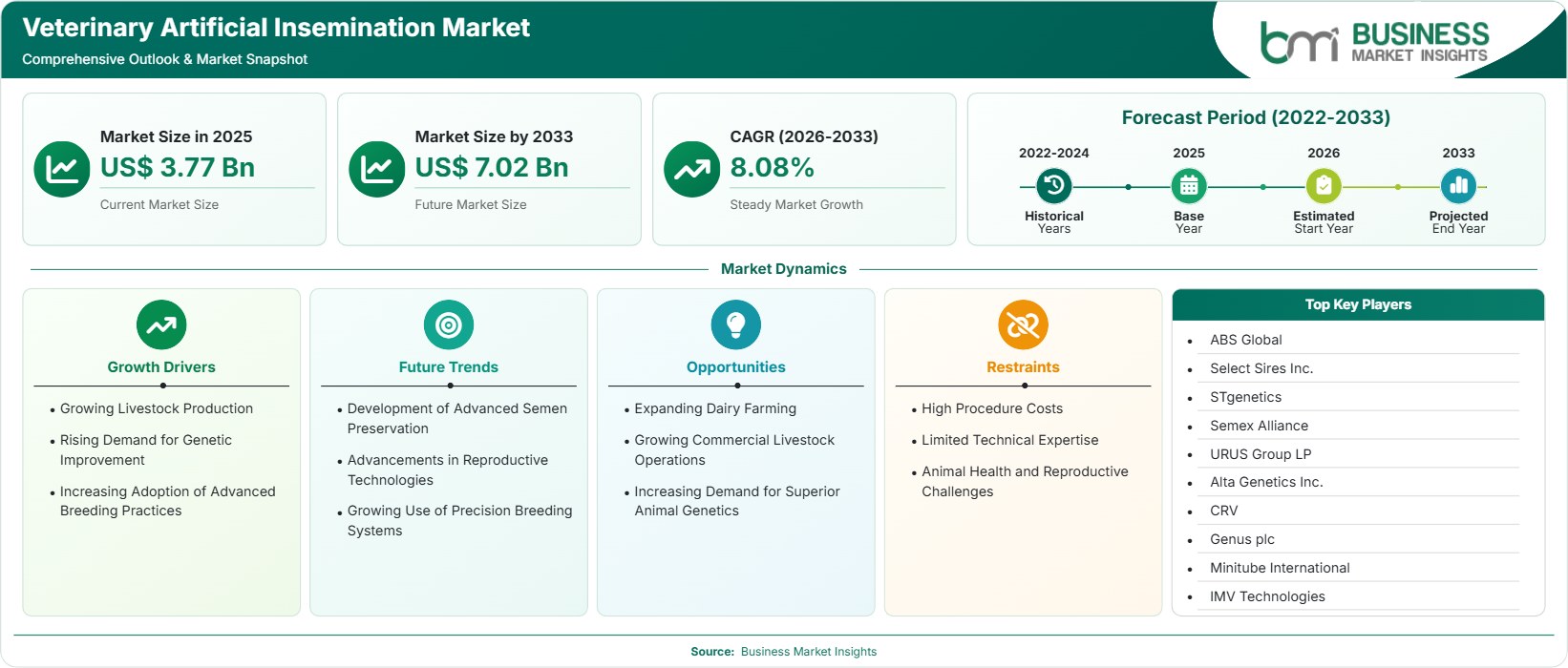
North America accounted for 34%–37% of global revenue in 2025 and is projected to expand at a CAGR of 7.4%–8.2% through 2033. The region maintains leadership due to highly commercialized livestock industries, advanced breeding infrastructure, widespread adoption of genetic improvement programs, and strong veterinary support networks. Veterinary Artificial Insemination Market share remains concentrated in dairy and beef cattle operations utilizing advanced reproductive technologies to improve productivity and herd quality. Continued investments in sexed semen, genomic selection, and precision livestock management further support long-term market expansion.
- Commercial dairy operations continue increasing adoption of reproductive technologies to improve milk productivity and breeding consistency while minimizing disease transmission risks across large herds.
- Strong presence of genetics companies, semen processing facilities, and breeding organizations supports broad access to premium livestock genetics and reproductive services.
- Beef producers increasingly utilize artificial insemination to accelerate genetic improvement and improve feed efficiency across breeding programs.
- Digital herd management systems and reproductive monitoring tools are improving breeding success rates and operational decision-making capabilities.
- Expanding use of genomic selection technologies supports production of higher-performing livestock across dairy and beef sectors.
US Veterinary Artificial Insemination Market
The United States represents approximately 76%–80% of regional demand and is expected to record a CAGR of 7.5%–8.3% through 2033. Strong dairy and beef cattle industries, large-scale livestock operations, and broad adoption of genetic enhancement technologies support market expansion. Veterinary Artificial Insemination Market growth benefits from integrated breeding programs, advanced veterinary infrastructure, and rising producer focus on reproductive efficiency. Continuous technological advancements in semen processing and fertility management are strengthening breeding outcomes across commercial operations.
- Large commercial dairy enterprises remain among the most significant users of artificial insemination technologies for productivity-focused herd management.
- Increasing investments in genomic testing programs are improving animal selection accuracy and enhancing breeding efficiency.
- Advanced cold-storage and semen distribution networks support reliable access to premium genetics nationwide.
- Growing producer awareness regarding reproductive performance metrics continues encouraging technology adoption.
Europe Veterinary Artificial Insemination Market
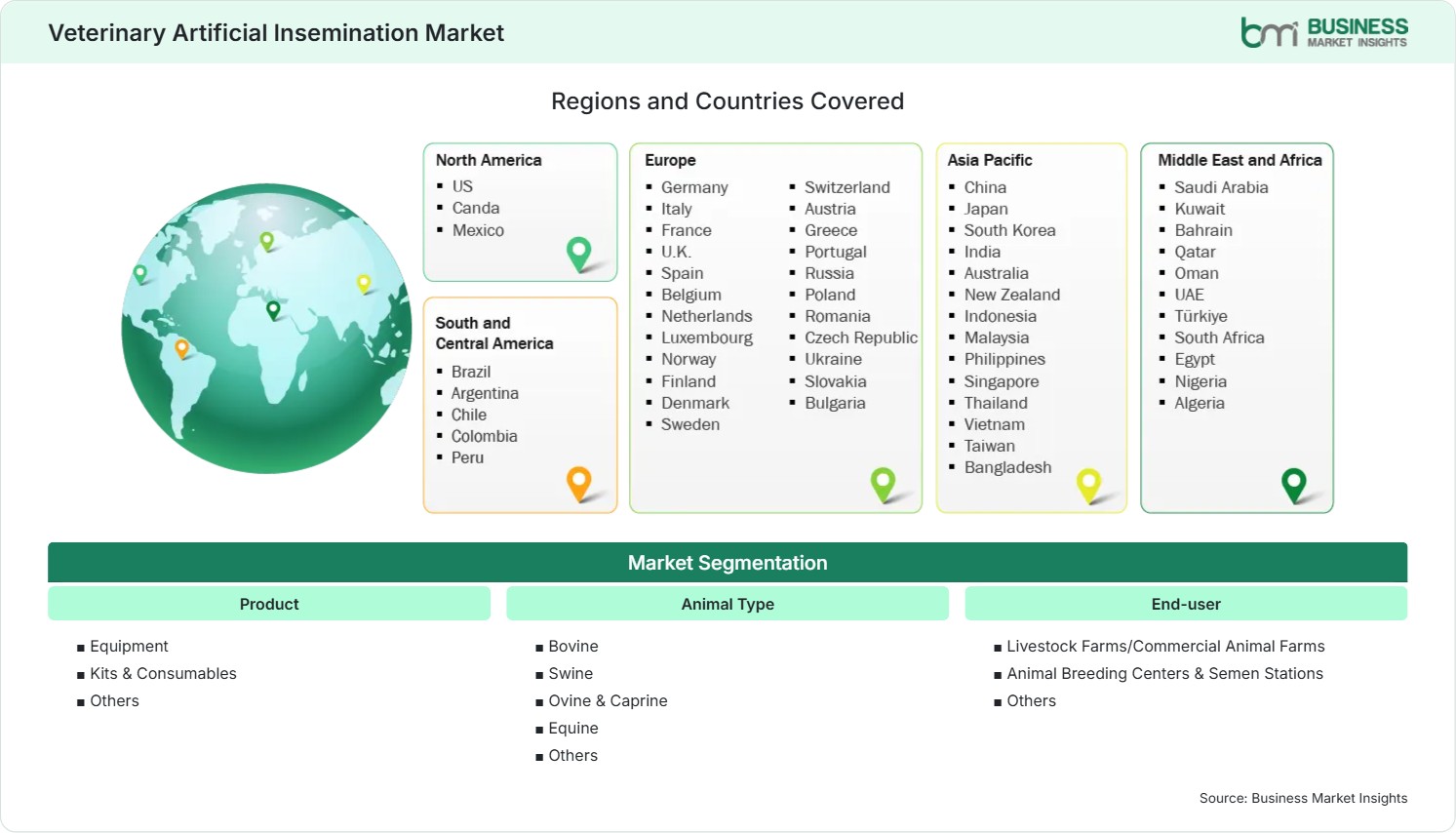
Europe captured 25%–28% of global revenue in 2025 and is expected to expand at a CAGR of 7.6%–8.4% through 2033. The region benefits from established livestock breeding traditions, stringent animal health standards, and strong emphasis on genetic improvement. Germany, France, and the Netherlands remain leading markets due to advanced breeding programs and extensive dairy production. Spain and Poland are emerging as higher-growth countries, supported by expanding livestock commercialization and modernization of agricultural production systems.
- European breeding organizations continue emphasizing genetic performance, fertility optimization, and disease-resistant livestock development.
- Germany remains the leading regional market owing to strong dairy productivity initiatives and sophisticated livestock genetics programs.
- Spain demonstrates strong growth potential through increasing investment in commercial livestock operations and reproductive technologies.
- The Netherlands supports innovation through advanced breeding research and international genetics distribution activities.
- Animal welfare regulations encourage adoption of controlled breeding techniques and reproductive monitoring solutions.
Asia Pacific Veterinary Artificial Insemination Market
Asia Pacific held 28%–31% of Veterinary Artificial Insemination Market revenue in 2025 and is forecast to grow at a CAGR of 9.2%–10.0% through 2033, making it the fastest-growing regional market. Rising protein consumption, dairy modernization initiatives, and expanding commercial livestock operations continue driving demand. China leads regional adoption through large-scale breeding programs, while India demonstrates rapid expansion supported by dairy development initiatives. Japan, Australia, and Southeast Asian countries increasingly utilize advanced reproductive technologies to improve livestock productivity.
- China remains the dominant market due to extensive livestock populations and large-scale genetic improvement initiatives.
- India continues expanding artificial insemination programs across dairy farming communities to enhance milk production efficiency.
- Growing investment in modern livestock production systems is increasing demand for professional breeding services.
- Regional governments are supporting livestock productivity improvement through breeding infrastructure development.
- Increasing awareness of superior genetics is encouraging adoption among commercial animal producers.
Rest of World Veterinary Artificial Insemination Market
Rest of World accounted for 8%–10% of global revenue in 2025 and is expected to advance at a CAGR of 8.0%–8.8% through 2033. South and Central America benefit from strong cattle industries and expanding genetic improvement programs. In the Middle East and Africa, livestock modernization and food security initiatives are encouraging adoption of assisted breeding technologies. Brazil remains the leading market in this region, while Saudi Arabia demonstrates some of the strongest growth prospects through agricultural development programs.
- Brazil's large cattle industry continues driving strong demand for artificial insemination and advanced genetic solutions.
- Argentina supports adoption through commercial beef production and productivity-focused breeding strategies.
- Saudi Arabia is increasing investments in livestock productivity and reproductive technology infrastructure.
- South Africa remains an important market supported by commercial livestock operations and improving veterinary services.
- Regional food security initiatives are encouraging greater use of breeding technologies to improve animal productivity.