Analysis By Product Type (Aquatic Plants, Fish, Crustaceans, Mollusca, and Others) and Culture Environment (Fresh Water, Brackish Water, and Marine Water)
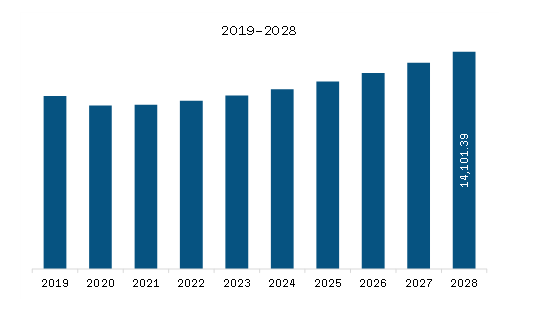
The aquaculture market in SAM is expected to grow from US$ 10,643.46 million in 2021 to US$ 14,101.39 million by 2028; it is estimated to grow at a CAGR of 4.1% from 2021 to 2028.
Seafood, specifically fish, is part of traditional food in many regions. Also, fish is largely consumed owing to its nutritional benefits and several health benefits. It is considered a good source of fatty acids, vitamins, minerals, protein, and essential micronutrients. An increase in disposable income and spending power of consumers encourage them to spend on animal proteins such as seafood. Currently, high growth in population and increased popularity of seafood as a healthy source of protein have fueled the growth of the aquaculture market. Wild fisheries are not sufficient to meet the total seafood demand generated in SAM, and the issue can be addressed by acquiring aquaculture practices. Aquaculture is the practice of farming aquatic animals such as fish, crustaceans, and mollusks in a controlled environment in man-made tanks and ponds, or water bodies in coastal areas. The yield of aquaculture accounts for more than half of the seafood consumption across the region. Overfishing in the oceans has created a need for the development of alternative methods for the production of seafood. Aquaculture is a sustainable solution that has emerged as an environmentally friendly alternative to wild fishing. It is the controlled process of farming aquatic organisms in inland and coastal areas. Aquaculture is carried out by multinational companies as well as small-scale fisheries. Also, the Food and Agriculture Organization (FAO) has predicted that fish consumption by humans is expected to increase by 50% in the next 15 years.
Brazil has reported the highest number of COVID-19 confirmed cases in SAM, followed by Argentina, Peru, Chile, and Ecuador. Governments have taken several actions to protect their citizens and contain the spread of SARS-CoV-2. Containment measures in several SAM countries reduced economic activity in the manufacturing sector in 2020. However, as the economies are recovering from losses, the aquaculture market is also projected to witness resurgence in the next few years. Moreover, with the growing demand for seafood from both the food retail and foodservice sector in the region, the aquaculture market is projected to grow at a notable pace during the forecast period.
With the new features and technologies, vendors can attract new customers and expand their footprints in emerging markets. This factor is likely to drive the SAM aquaculture market at a good CAGR during the forecast period.
SAM AquacultureMarket Revenue and Forecast to 2028 (US$ Million)
SAM Aquaculture Market Segmentation
Market, by Product
Aquatic Plants
Fish
Crustaceans
Mollusca
Others
Market, byCulture Environment
Fresh Water
Brackish Water
Marine Water
Market, by Country
Brazil
Argentina
Rest of SAM
Companies Mentioned
Cermaq Group AS
JBS S.A.
Mowi ASA
Thai Union Group PCL
South America Aquaculture Market Strategic Insights
Get more information on this report
South America Aquaculture Market Segmentation Analysis
South America Aquaculture Market Report Highlights
South America Aquaculture Report Scope
Report Attribute
Details
Market size in 2021
US$ 10,643.46 Million
Market Size by 2028
US$ 14,101.39 Million
CAGR (2021 - 2028)
4.1%
Historical Data
2019-2020
Forecast period
2022-2028
Segments Covered
By Product Type
Aquatic Plants
Fish
Crustaceans
Mollusca
By Culture Environment
Fresh Water
Brackish Water
Marine Water
Regions and Countries Covered
South and Central America
Brazil, Argentina, Rest of South and Central America
Market leaders and key company profiles
Cermaq Group AS
JBS S.A.
Mowi ASA
Thai Union Group PCL
Get more information on this report
South America Aquaculture Market Country and Regional Insights
Get more information on this report
Identical Market Reports with other Region/Countries
The List of Companies - South America Aquaculture Market
Cermaq Group ASJBS S.A.Mowi ASAThai Union Group PCL
Frequently Asked Questions
How big is the South America Aquaculture Market?
The South America Aquaculture Market is valued at US$ 10,643.46 Million in 2021, it is projected to reach US$ 14,101.39 Million by 2028.
What is the CAGR for South America Aquaculture Market by (2021 - 2028)?
As per our report South America Aquaculture Market, the market size is valued at US$ 10,643.46 Million in 2021, projecting it to reach US$ 14,101.39 Million by 2028. This translates to a CAGR of approximately 4.1% during the forecast period.
What segments are covered in this report?
The South America Aquaculture Market report typically cover these key segments-
Product Type (Aquatic Plants, Fish, Crustaceans, Mollusca)
What is the historic period, base year, and forecast period taken for South America Aquaculture Market?
The historic period, base year, and forecast period can vary slightly depending on the specific market research report. However, for the South America Aquaculture Market report:
Historic Period : 2019-2020
Base Year : 2021
Forecast Period : 2022-2028
Who are the major players in South America Aquaculture Market?
The South America Aquaculture Market is populated by several key players, each contributing to its growth and innovation. Some of the major players include:
Cermaq Group AS
JBS S.A.
Mowi ASA
Thai Union Group PCL
Who should buy this report?
The South America Aquaculture Market report is valuable for diverse stakeholders, including:
Investors: Provides insights for investment decisions pertaining to market growth, companies, or industry insights. Helps assess market attractiveness and potential returns.
Industry Players: Offers competitive intelligence, market sizing, and trend analysis to inform strategic planning, product development, and sales strategies.
Suppliers and Manufacturers: Helps understand market demand for components, materials, and services related to concerned industry.
Researchers and Consultants: Provides data and analysis for academic research, consulting projects, and market studies.
Financial Institutions: Helps assess risks and opportunities associated with financing or investing in the concerned market.
Essentially, anyone involved in or considering involvement in the South America Aquaculture Market value chain can benefit from the information contained in a comprehensive market report.




 Get Free Sample For South America Aquaculture Market