Analysis By Product Type (Aquatic Plants, Fish, Crustaceans, Mollusca, and Others) and Culture Environment (Fresh Water, Brackish Water, and Marine Water)
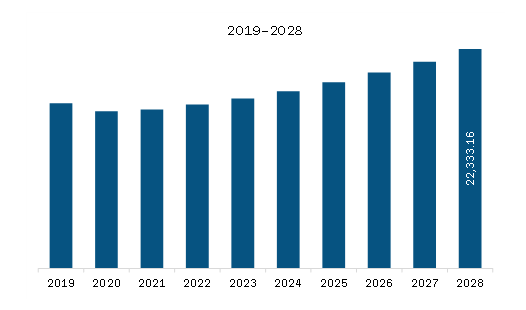
The aquaculture market in the MEA is expected to grow from US$ 16,125.65 million in 2021 to US$ 22,333.16 million by 2028; it is estimated to grow at a CAGR of 4.8% from 2021 to 2028.
Aquaculture is an efficient method of fish production, which is ecologically effective and involves lower costs, as these ventures can be operated at a large as well as a small scale. Currently, the aquaculture business is hampered by concerns regarding its contribution to water pollution, adverse impact on the environment, and threat to coastal ecosystems. However, advancements in technologies facilitating effective disease management and environmental management, and genetic improvements in cultured species are expected to bring significant changes in the field of aquaculture in the coming years.
The high growth in demand for fish oil, which is largely used as a dietary supplement in the healthcare, pharmaceuticals, and food industries, is highlighting the need for scaling up fish production. Fish oil is an efficient source of vitamin A and D and is considered the most significant source of vitamins for human consumption, after wild fish. Currently, fish oil accounts for a small percentage of total edible oil production. However, the percentage is expected to rise in the coming years owing to the health benefits of fish oil. Due to its omega-3 fatty acids content, fish oil is widely used in dietary supplements. It also reduces the level of triglyceride in the body, and minimizes the chances of heart disease and stroke. In the cosmetics industry, fish oil helps overcome skin disorders such as dermatitis, skin cancer, and allergy. In medical applications, it helps maintain heart health, prevent mental disorders, shred weight, enhance eye health, support healthy skin, and manage depression-related symptoms. Fish oil is considered as the fastest-growing protein source segment in the MEA food supply chain. It is also widely replacing genetically modified (GM) plant oil.
South Africa has recorded the highest number of COVID-19 cases in the MEA, followed by Saudi Arabia and the UAE. Due to the lockdown in countries in this region, the distribution network was significantly disrupted in 2020, affecting the sales of companies operating in the aquaculture market. However, the circumstances improved to some extent in 2021. The marketplace is experiencing positive recovery signs, and the sales of seafood products have surged. Moreover, the UAE is the center of tourist attractions and has a well-established hospitality industry. With the easing of the lockdown restrictions and travel bans, the demand for seafood from the hospitality sector is projected to grow significantly in the coming years, thereby driving the aquaculture market growth.
With the new features and technologies, vendors can attract new customers and expand their footprints in emerging markets. This factor is likely to drive the MEA aquaculture market at a good CAGR during the forecast period.
MEA AquacultureMarket Revenue and Forecast to 2028 (US$ Million)
MEA Aquaculture Market Segmentation
Market, by Product
Aquatic Plants
Fish
Crustaceans
Mollusca
Others
Market, byCulture Environment
Fresh Water
Brackish Water
Marine Water
Market, by Country
Saudi Arabia
South Africa
UAE
Rest of MEA
Companies Mentioned
Cermaq Group AS
JBS S.A.
Mowi ASA
Stolt-Nielsen Limited
Thai Union Group PCL
Middle East and Africa Aquaculture Market Strategic Insights
Get more information on this report
Middle East and Africa Aquaculture Market Segmentation Analysis
Middle East and Africa Aquaculture Market Report Highlights
Middle East and Africa Aquaculture Report Scope
Report Attribute
Details
Market size in 2021
US$ 16,125.65 Million
Market Size by 2028
US$ 22,333.16 Million
CAGR (2021 - 2028)
4.8%
Historical Data
2019-2020
Forecast period
2022-2028
Segments Covered
By Product Type
Aquatic Plants
Fish
Crustaceans
Mollusca
By Culture Environment
Fresh Water
Brackish Water
Marine Water
Regions and Countries Covered
Middle East and Africa
South Africa, Saudi Arabia, UAE, Rest of Middle East and Africa
Market leaders and key company profiles
Cermaq Group AS
JBS S.A.
Mowi ASA
Stolt-Nielsen Limited
Thai Union Group PCL
Get more information on this report
Middle East and Africa Aquaculture Market Country and Regional Insights
Get more information on this report
Identical Market Reports with other Region/Countries
The List of Companies - Middle East and Africa Aquaculture Market
Cermaq Group ASJBS S.A.Mowi ASAStolt-Nielsen LimitedThai Union Group PCL
Frequently Asked Questions
How big is the Middle East and Africa Aquaculture Market?
The Middle East and Africa Aquaculture Market is valued at US$ 16,125.65 Million in 2021, it is projected to reach US$ 22,333.16 Million by 2028.
What is the CAGR for Middle East and Africa Aquaculture Market by (2021 - 2028)?
As per our report Middle East and Africa Aquaculture Market, the market size is valued at US$ 16,125.65 Million in 2021, projecting it to reach US$ 22,333.16 Million by 2028. This translates to a CAGR of approximately 4.8% during the forecast period.
What segments are covered in this report?
The Middle East and Africa Aquaculture Market report typically cover these key segments-
Product Type (Aquatic Plants, Fish, Crustaceans, Mollusca)
What is the historic period, base year, and forecast period taken for Middle East and Africa Aquaculture Market?
The historic period, base year, and forecast period can vary slightly depending on the specific market research report. However, for the Middle East and Africa Aquaculture Market report:
Historic Period : 2019-2020
Base Year : 2021
Forecast Period : 2022-2028
Who are the major players in Middle East and Africa Aquaculture Market?
The Middle East and Africa Aquaculture Market is populated by several key players, each contributing to its growth and innovation. Some of the major players include:
Cermaq Group AS
JBS S.A.
Mowi ASA
Stolt-Nielsen Limited
Thai Union Group PCL
Who should buy this report?
The Middle East and Africa Aquaculture Market report is valuable for diverse stakeholders, including:
Investors: Provides insights for investment decisions pertaining to market growth, companies, or industry insights. Helps assess market attractiveness and potential returns.
Industry Players: Offers competitive intelligence, market sizing, and trend analysis to inform strategic planning, product development, and sales strategies.
Suppliers and Manufacturers: Helps understand market demand for components, materials, and services related to concerned industry.
Researchers and Consultants: Provides data and analysis for academic research, consulting projects, and market studies.
Financial Institutions: Helps assess risks and opportunities associated with financing or investing in the concerned market.
Essentially, anyone involved in or considering involvement in the Middle East and Africa Aquaculture Market value chain can benefit from the information contained in a comprehensive market report.




 Get Free Sample For Middle East and Africa Aquaculture Market