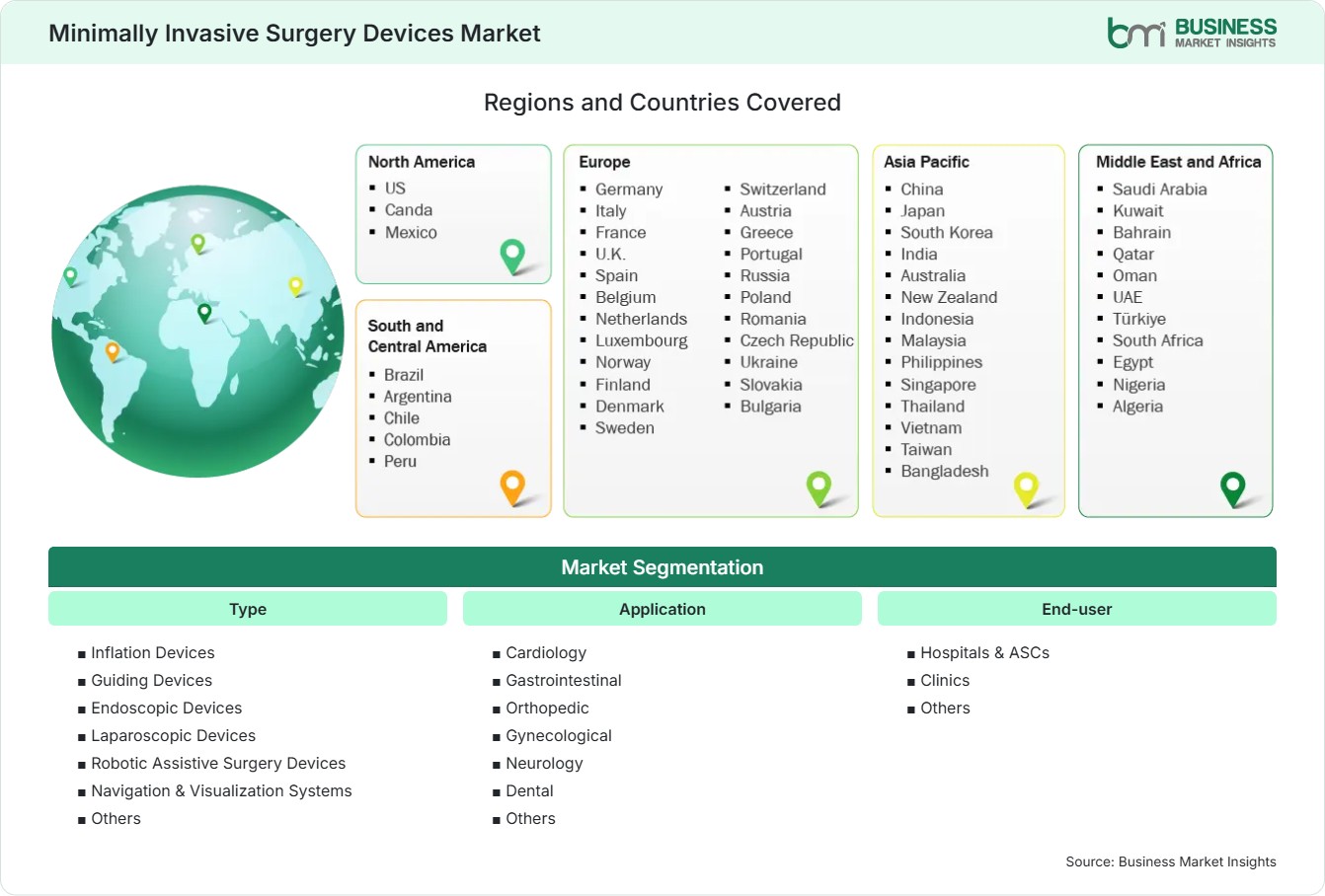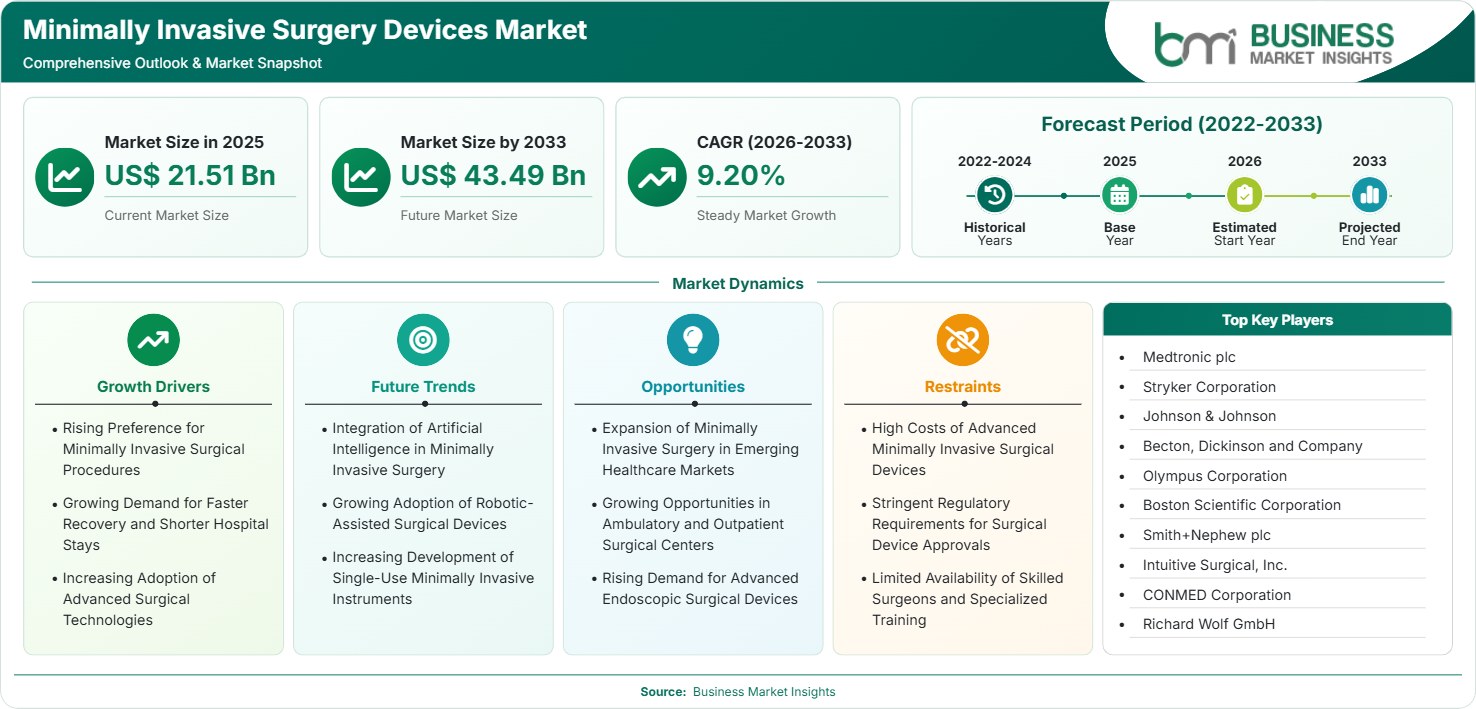
Minimally Invasive Surgery Devices Market Regional Highlights
North America Minimally Invasive Surgery Devices Market
North America accounted for a 38%–42% share in 2025 and North America minimally invasive surgery devices market forecast to grow at a 8.0%–9.5% CAGR through 2033. The region benefits from sophisticated healthcare infrastructure, high procedure volumes, strong reimbursement systems, and established adoption of advanced surgical technologies.
- Hospitals and ambulatory surgical centers are increasingly investing in advanced minimally invasive platforms to improve surgical efficiency, reduce inpatient utilization, and support migration of suitable procedures toward outpatient settings.
- Robotic-assisted surgery is gaining adoption as healthcare providers seek improved precision, dexterity, visualization, and procedural consistency across complex minimally invasive interventions.
- Advanced endoscopy is benefiting from increasing gastrointestinal procedure volumes and demand for technologies that improve visualization, diagnosis, therapeutic intervention, and recovery outcomes.
US Minimally Invasive Surgery Devices Market
The US minimally invasive surgery devices market represented approximately 90%–94% of North American demand in 2025 and is projected to grow at a 8.2%–9.7% CAGR through 2033. High surgical volumes, advanced hospital infrastructure, strong medical technology adoption, and expansion of ambulatory surgery are supporting demand.
- Ambulatory surgery centers are expanding their procedural capabilities, increasing demand for compact, efficient, and technologically advanced devices suited to outpatient minimally invasive interventions.
- Robotic-assisted procedures continue gaining attention as hospitals seek greater precision and enhanced visualization for complex surgeries across multiple specialties.
- Gastrointestinal and colorectal procedures are supporting demand for advanced endoscopic technologies that enable minimally invasive diagnosis and treatment with reduced recovery requirements.
Europe Minimally Invasive Surgery Devices Market
Europe minimally invasive surgery devices market held a 25%–29% share in 2025 and is projected to grow at a 7.5%–9.0% CAGR through 2033. Germany, the United Kingdom, France, Italy, and Spain represent leading markets, while Germany is projected to grow at a 8.0%–9.5% CAGR. Aging populations, increasing surgical requirements, healthcare modernization, and cost-containment priorities are supporting minimally invasive approaches.
- Germany remains a leading market due to its advanced hospital infrastructure, established surgical capabilities, and increasing investment in sophisticated minimally invasive technologies.
- The United Kingdom and France are supporting adoption through healthcare modernization, increasing outpatient procedure capacity, and efforts to improve surgical efficiency and reduce hospital resource utilization.
- Aging populations are increasing demand for surgical interventions while strengthening interest in techniques that can reduce postoperative recovery requirements and improve healthcare system efficiency.
- Robotic and advanced visualization technologies are gaining attention among healthcare providers seeking greater precision and improved procedural capabilities for complex minimally invasive interventions.
Asia Pacific Minimally Invasive Surgery Devices Market
Asia Pacific minimally invasive surgery devices market represented a 20%–24% share in 2025 and is projected to achieve a 10.5%–12.5% CAGR through 2033, making it the fastest-growing region. China, Japan, India, South Korea, and Australia are major markets, while India is projected to grow at a 12.0%–14.0% CAGR.
- China remains a major opportunity as healthcare modernization, increasing surgical volumes, and investment in advanced hospitals support adoption of minimally invasive surgical technologies.
- India provides strong growth potential through expanding healthcare infrastructure, private hospital development, increasing medical tourism, and greater availability of laparoscopic and endoscopic procedures.
- Japan and South Korea benefit from sophisticated healthcare systems, aging populations, and established adoption of advanced surgical technologies, including robotics and high-definition visualization.
- Southeast Asian countries are developing opportunities through private healthcare investment, medical tourism, hospital modernization, and increasing demand for specialized minimally invasive procedures.
- Australia supports adoption through advanced healthcare infrastructure, established surgical standards, and increasing demand for technologies that improve procedural efficiency and patient recovery.
Rest of World Minimally Invasive Surgery Devices Market
South and Central America minimally invasive surgery devices market accounted for a 5%–7% share in 2025 and is projected to grow at a 7.0%–9.0% CAGR through 2033. Brazil and Mexico represent leading markets, supported by expanding private healthcare infrastructure, increasing surgical volumes, and growing availability of advanced medical technologies. The Middle East and Africa represented a 6%–8% share in 2025 and is projected to grow at a 8.0%–10.5% CAGR through 2033.
- Brazil remains a leading regional market as private hospitals and specialty centers expand access to laparoscopic, endoscopic, and advanced surgical procedures.
- Mexico offers opportunities through healthcare modernization, private hospital investment, medical tourism, and increasing demand for technologies that improve surgical efficiency and reduce recovery periods.
- Saudi Arabia and the UAE are investing in advanced healthcare infrastructure and specialized hospitals, creating demand for robotic, endoscopic, navigation, and visualization technologies.
- South Africa provides opportunities through private healthcare networks and specialist surgical facilities seeking advanced technologies for complex procedures and improved patient outcomes.