Analysis By Product (Adult Patient Simulator, Infant Simulator, and Childbirth Simulator) and End User (Academic Institutes, Hospitals, and Military Organizations)
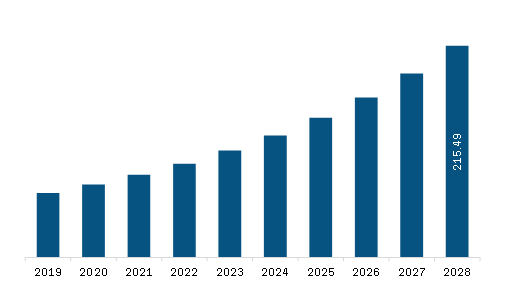
The Middle East & Africa patient simulators market is expected to grow from US$ 95.47 million in 2022 to US$ 215.49 million by 2028. It is estimated to register a CAGR of 14.5% from 2022 to 2028.
Growing Technological Advancements in Patient Simulators Fueling Middle East & Africa Patient Simulators Market Growth
There have been rapid advancements in healthcare technologies over the last few decades with the emergence of technologies such as virtual reality, augmented reality, artificial intelligence, robotics, 3D printing, and nanotechnology; and these will continue to shape the future of healthcare in the years to come. Advanced technology has made it possible that computer software can be integrated into manikins. The organs of one of these lifelike medical simulators, including their heart, blood vessels, lungs, and gastrointestinal tract, can also be made to respond to various human interventions during clinical simulation engagements. The computer software allows human patient simulators to replicate normal and abnormal bodily responses for educational and training purposes. Often these responses are initiated by several physical events, such as an asthma attack. Therapeutic interventions can also be replicated under certain circumstances, including representing a side effect of a medication. More advanced simulators allow learners to use mixed reality viewer lenses to visualize the internal anatomy of a simulated patient. With these lenses, students can learn skills through observation and remote active participation. For instance, Gaumard's most advanced product combines mixed reality technology with a high-fidelity birthing simulator. With mixed reality goggles, a learner can visualize the baby and cardinal movements during decent while engaging in the hands-on exercise of delivering the baby. In the event of a complication, the learner can observe the mother's and baby's anatomy. Suppose the baby is not descending through the birth canal. In that case, learners can now manipulate the simulator in a specific way and receive visual feedback indicating that their legs have been moved to the proper position. With patient simulators, learners can practice these skills repeatedly to gain the muscle memory and critical thinking skills needed to react quickly during complicated procedures. Thus, the growing technological advancement in simulation is expected to introduce new trends to the Middle East & Africa patient simulator market.
Middle East & Africa Patient Simulators Market Overview
The Middle East & Africa patient simulators market has been segmented into the UAE, Saudi Arabia, South Africa, and the Rest of Middle East & Africa. South Africa is expected to account for the largest market share and develop moderately in the Middle East & Africa. With the iSTAN patient sims and a LapVR interventional simulator for laparoscopic surgery training, the Sunskill Laboratory at Stellenbosch University in South Africa has poised to transform healthcare education in the Sub-Saharan region. Medical students can now train on high-fidelity medical simulators while receiving state-of-the-art practice in virtual reality and simulated patient care. The sunskill simulation laboratory at Stellenbosch University is a result of a multimillion-dollar partnership between the university and global tech firm Medtronic. The penetration of patient simulators across several end-user applications is expected to increase product developments during the forecast period. Such conducive factors are anticipated to offer a favorable environment in the South Africa market by 2028.
Middle East & Africa Patient Simulators Market Revenue and Forecast to 2028 (US$ Million)
Middle East & Africa Patient Simulators Market Segmentation
The Middle East & Africa patient simulators market is segmented based on product, end user, and country.
Based on product, the Middle East & Africa patient simulators market is segmented into adult patient simulator, infant simulator, and childbirth simulator. The adult patient simulator segment held the largest Middle East & Africa patient simulators market share in 2022.
Based on end user, the Middle East & Africa patient simulators market is segmented into academic institutes, hospitals, and military organizations. The academic institutes segment held the largest Middle East & Africa patient simulators market share in 2022.
Based on country, the Middle East & Africa patient simulators market has been categorized into the UAE, Saudi Arabia, South Africa, and the Rest of Middle East & Africa. South Africa dominated the Middle East & Africa patient simulators market in 2022.
CAE Inc, Gaumard Scientific Co Inc, Kyoto Kagaku Co Ltd, Laerdal Medical AS, Limbs & Things Ltd, Mentice AB, Simulab Corp, Surgical Science Sweden AB, and VirtaMed AG are among the leading companies operating in the Middle East & Africa patient simulators market.
Middle East & Africa Patient Simulators Market Strategic Insights
Get more information on this report
Middle East & Africa Patient Simulators Market Segmentation Analysis
Middle East & Africa Patient Simulators Market Report Highlights
Middle East & Africa Patient Simulators Report Scope
Report Attribute
Details
Market size in 2022
US$ 95.47 Million
Market Size by 2028
US$ 215.49 Million
CAGR (2022 - 2028)
14.5%
Historical Data
2020-2021
Forecast period
2023-2028
Segments Covered
By Product
Adult Patient Simulator
Infant Simulator
Childbirth Simulator
By End User
Academic Institutes
Hospitals
Military Organizations
Regions and Countries Covered
Middle East and Africa
South Africa, Saudi Arabia, UAE, Rest of Middle East and Africa
Market leaders and key company profiles
CAE Inc
Gaumard Scientific Co Inc
Kyoto Kagaku Co Ltd
Laerdal Medical AS
Limbs & Things Ltd
Mentice AB
Simulab Corp
Surgical Science Sweden AB
VirtaMed AG
Get more information on this report
Middle East & Africa Patient Simulators Market Country and Regional Insights
Get more information on this report
Identical Market Reports with other Region/Countries
The List of Companies - Middle East & Africa Patient Simulators Market
CAE IncGaumard Scientific Co IncKyoto Kagaku Co LtdLaerdal Medical ASLimbs & Things LtdMentice ABSimulab Corp Surgical Science Sweden AB VirtaMed AG
Frequently Asked Questions
How big is the Middle East & Africa Patient Simulators Market?
The Middle East & Africa Patient Simulators Market is valued at US$ 95.47 Million in 2022, it is projected to reach US$ 215.49 Million by 2028.
What is the CAGR for Middle East & Africa Patient Simulators Market by (2022 - 2028)?
As per our report Middle East & Africa Patient Simulators Market, the market size is valued at US$ 95.47 Million in 2022, projecting it to reach US$ 215.49 Million by 2028. This translates to a CAGR of approximately 14.5% during the forecast period.
What segments are covered in this report?
The Middle East & Africa Patient Simulators Market report typically cover these key segments-
End User (Academic Institutes, Hospitals, Military Organizations)
What is the historic period, base year, and forecast period taken for Middle East & Africa Patient Simulators Market?
The historic period, base year, and forecast period can vary slightly depending on the specific market research report. However, for the Middle East & Africa Patient Simulators Market report:
Historic Period : 2020-2021
Base Year : 2022
Forecast Period : 2023-2028
Who are the major players in Middle East & Africa Patient Simulators Market?
The Middle East & Africa Patient Simulators Market is populated by several key players, each contributing to its growth and innovation. Some of the major players include:
CAE Inc
Gaumard Scientific Co Inc
Kyoto Kagaku Co Ltd
Laerdal Medical AS
Limbs & Things Ltd
Mentice AB
Simulab Corp
Surgical Science Sweden AB
VirtaMed AG
Who should buy this report?
The Middle East & Africa Patient Simulators Market report is valuable for diverse stakeholders, including:
Investors: Provides insights for investment decisions pertaining to market growth, companies, or industry insights. Helps assess market attractiveness and potential returns.
Industry Players: Offers competitive intelligence, market sizing, and trend analysis to inform strategic planning, product development, and sales strategies.
Suppliers and Manufacturers: Helps understand market demand for components, materials, and services related to concerned industry.
Researchers and Consultants: Provides data and analysis for academic research, consulting projects, and market studies.
Financial Institutions: Helps assess risks and opportunities associated with financing or investing in the concerned market.
Essentially, anyone involved in or considering involvement in the Middle East & Africa Patient Simulators Market value chain can benefit from the information contained in a comprehensive market report.





 Get Free Sample For Middle East & Africa Patient Simulators Market