Market Summary
Executive Summary and Global Market Analysis
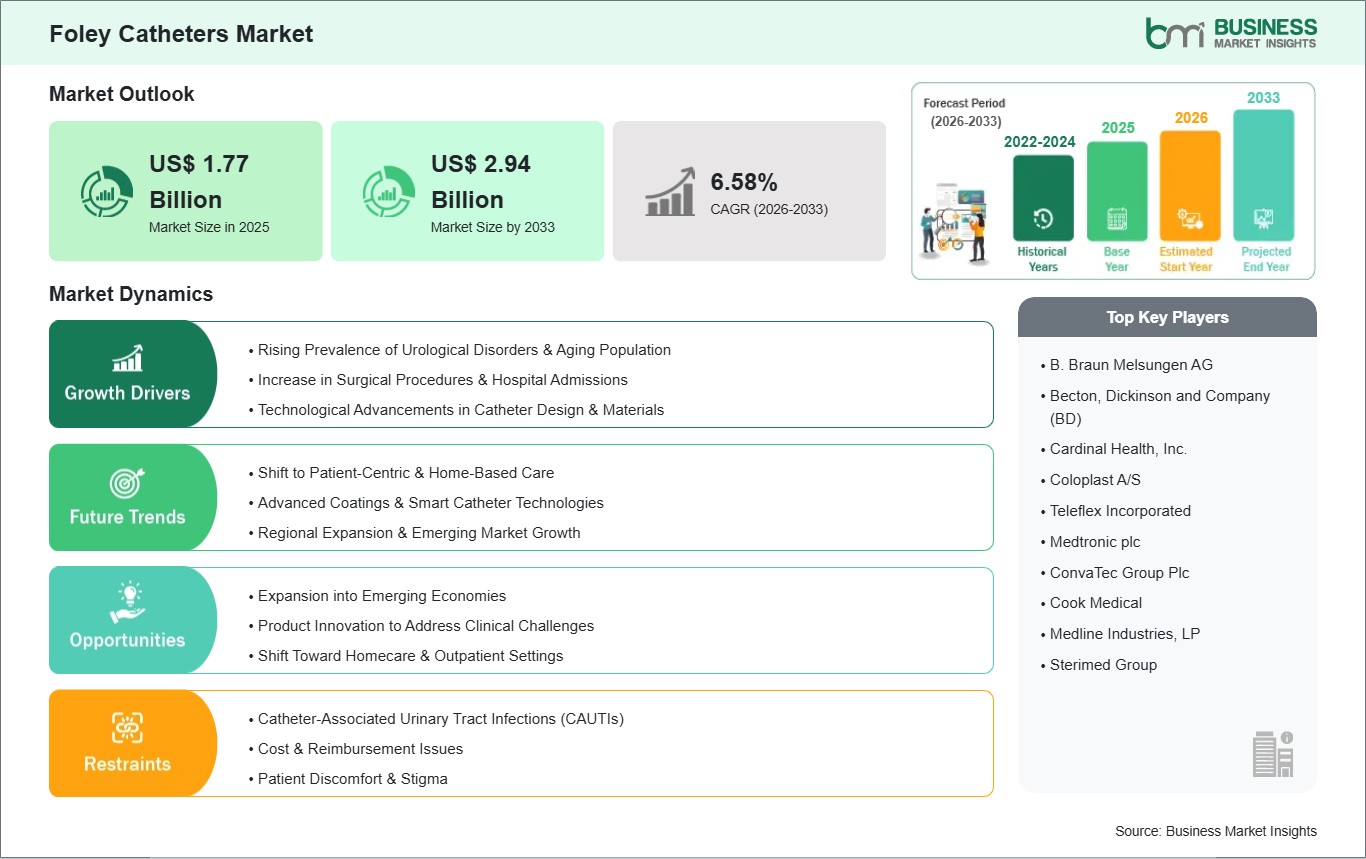
The global Foley catheter market is a mature segment of the medical devices industry, as a result of the increasing number of urological disorders, an aging population, and a constant need for both acute and long-term care facilities. Worldwide, the ongoing demand for Foley catheters (for urinary drainage during surgical interventions, critical care environments, and management of chronic illness) continues to support demand at the level of the base line. Technological advances that have been achieved in the area of silicone materials, antimicrobial and hydrophilic coatings, and improved catheter designs will improve patient comfort and minimize catheter-associated urinary tract infections (CAUTIs) and contribute to the differentiation of product offerings and premium pricing in the market. The North American region leads the global Foley catheter market due to high levels of healthcare spending, well-established hospitals and broad acceptance of infection prevention technologies, while Europe follows closely behind with higher levels of regulatory compliance and clinical utilization pertaining to Foley catheters.
The growth rate in the Asia Pacific region will be the highest during the forecast period due to recent investments made for expanding clinic facilities in parts of Asia Pacific, increased interest among physicians for learning about urinary conditions, higher numbers of surgeries performed, and increased distribution of medical devices in Asian countries such as China and India. Even though the market has many good reasons to expect continued growth both in Asia and worldwide, it is limited by factors that may drive the market to slow down. On the other hand, although the total market has historically increased moderately, few countries will continue to experience new product launches due to the growth of homecare facilities, outpatient care, and greater demand from patients wanting consumer-friendly solutions. In conclusion, the worldwide Foley Catheter Market has a future with steady demand, consistent technology advancements, and increased penetration into emerging markets resulting in moderate, long-term growth over the next several years.
Segment Analysis
Foley Catheters Market Segmentation
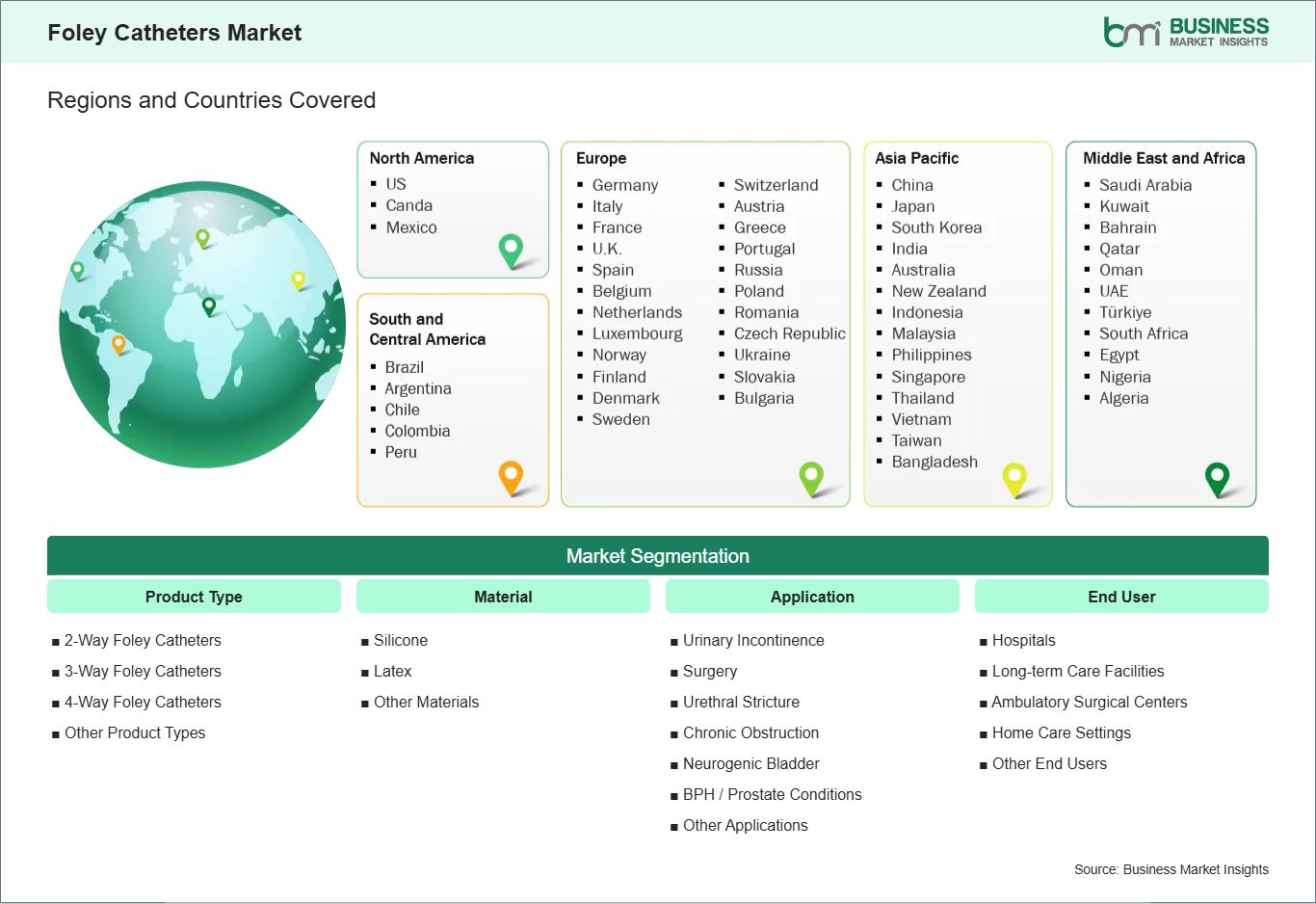
Key segments that contributed to the derivation of the Foley Catheters market analysis are product type, material, application, and end user.
- By product type, the foley catheters market is segmented into 2-way foley catheters, 3-way foley catheters, 4-way foley catheters, others. The 2-way foley catheters segment dominated the market in 2025.
- By material, the market is segmented into silicone, latex, and other. The silicone segment held the largest share of the market in 2025.
- By application, the market is segmented into urinary incontinence, surgery, urethral stricture, chronic obstruction, neurogenic bladder, BPH / prostate conditions, others. The surgery segment held the largest share of the market in 2025.
- By end user, the market is segmented into hospitals, long-term care facilities, ambulatory surgical centers, home care settings, others. The hospitals segment held the largest share of the market in 2025.
Market Forces
Foley Catheters Market Drivers and Opportunities
Growing Geriatric Population and Rising Urological Disorders
The factor affecting the Foley catheters market is the increasing number of people suffering from urological problems due to the ageing population worldwide. Urinary incontinence, urinary retention, benign prostatic hypertrophy, neurogenic bladders and post-operative complications are increasing, especially in elderly patients. There is an increasing need for long-term solutions for urinary management as people are living longer and there are larger numbers of people aged 65 and over. Essential elements in managing urine drainage of patients treated in hospitals, long-term care facilities, and increasingly at home remain to be Foley catheters. The rise in surgical procedures such as urological, gynecological, orthopedic and oncological will support increasing usage because of the use of perioperative catheterization for monitoring recovery. There will continue to be growing demand for these devices due to their ongoing use for patients with diabetes, spinal cord injury and/or neurological disorders. The demand from these two populations, both demographically and from the diseases themselves, gives the Foley catheter market a solid base to stand on against economic volatility over the short term, and distinguishes this segment from other segments of the medical device industry.
Expansion of Home Healthcare and Patient-Centric Catheter Solutions
There are significant growth opportunities for manufacturers participating in the global Foley catheter market related to the growing trend toward the proliferation of at-home and patient-centered approaches to urinary care in the healthcare system globally. There is a rapid transition away from hospital-based inpatient care toward outpatient care and at-home care. This trend is being driven by the need to reduce healthcare costs, decrease hospital overcrowding and improve patient quality of life. Healthcare providers require Foley catheters that are easy to use and provide comfort and safety for patients who will either manage their catheter long-term or perform self-catheterization. Manufacturers that develop and sell innovative catheter solutions that are made from silicone, have antimicrobial and/or hydrophilic coatings, or have pre-lubricated packaging to limit infection and improve patient compliance, have the potential for success in the Foley catheter market. In addition, manufacturers are presented with opportunities related to increased awareness of urinary health around the world; therefore, access to medical devices in many developing countries is limited, creating another avenue for manufacturers to grow their Foley catheter sales. This is particularly true for manufacturers looking to sell Foley catheters in regions with expanding healthcare infrastructures such as Asia Pacific, Latin America and the Middle East because the demand for affordable, yet high-quality Foley catheters will continue to increase in these markets. Manufacturers that are able to balance innovation and cost while also satisfying the regulatory requirements of each region will be best positioned to capture Foley catheter market share. Partnerships with homecare facilities, digital health platforms and long-term care facilities will also be highly beneficial to manufacturers to improve brand loyalty and create and/or strengthen distribution networks.
Size and Share Analysis
Foley Catheters Market Size and Share Analysis
By product type, the foley catheters market is segmented into 2-way foley catheters, 3-way foley catheters, 4-way foley catheters, others. The 2-way foley catheters segment dominated the market in 2025. Their dominance is largely driven by widely used for routine urinary drainage in hospitals and long-term care due to simplicity, cost-effectiveness, and broad clinical applicability.
By material, the market is segmented into silicone, latex, and other. The silicone segment held the largest share of the market in 2025. The segment's expansion is attributed to the long-term catheterization because of superior biocompatibility, lower allergy risk, and reduced encrustation compared to latex.
By application, the foley catheters market is segmented into urinary incontinence, surgery, urethral stricture, chronic obstruction, neurogenic bladder, BPH / prostate conditions, and others. The surgery segment dominated the market in 2025. The growth is driven by the high and consistent use in perioperative and postoperative care for accurate urine output monitoring during and after surgical procedures.
By end user, the market is segmented into hospitals, long-term care facilities, ambulatory surgical centers, home care settings, and others. The hospitals segment held the largest share of the market in 2025. This growth is supported by the high patient admissions, surgical volumes, critical care needs, and standardized catheterization protocols.
Report Coverage
Foley Catheters Market Report Coverage and Deliverables
The "Foley Catheters Market Size and Forecast (2022-2033)" report provides a detailed analysis of the market covering below areas:
- Foley Catheters market size and forecast at global, regional, and country levels for all the key market segments covered under the scope
- Foley Catheters market trends, as well as market dynamics such as drivers, restraints, and key opportunities
- Foley Catheters market analysis covering key market trends, global and regional framework, major players, regulations, and recent market developments
- Industry landscape and competition analysis covering market concentration, heat map analysis, prominent players, and recent developments for the Foley Catheters market
- Detailed company profiles, including SWOT analysis
Geographic Insights
Foley Catheters Market Geographic Insights
The geographical scope of the Foley Catheters market report is divided into five regions: North America, Asia Pacific, Europe, Middle East & Africa, and South & Central America. The Foley Catheters market in Asia Pacific is expected to grow significantly during the forecast period.
The Asia-Pacific Foley Catheters market is segmented into China, Japan, South Korea, India, Australia, New Zealand, Indonesia, Malaysia, the Philippines, Singapore, Thailand, Vietnam, Taiwan, Bangladesh, and the Rest of Asia. The Foley catheter industry in Asia-Pacific is likely to grow rapidly due to advancing healthcare systems, an increasing older generation, and high rates of urinary incontinence, benign prostatic hyperplasia (BPH), and complications from diabetes, as well as postoperative urinary retention. Countries such as China, India, Japan, and South Korea have seen a rise in urinary incontinence, which is increasing the need for Foley catheters over time. One of the factors driving demand for Foley catheters in this area is the growing population of senior citizens, who typically have more medical needs and require longer-term urinary catheterization. As surgical procedures increase and the government invests in improving facilities, this trend is expected to continue. The expanded use of silicone and antimicrobial Foley catheters in cities due to increased understanding of preventing infections, coupled with more access to medical devices through urban healthcare facilities, is increasing the number of hospitals that purchase silicone and antimicrobial Foley catheters (as opposed to older, more traditional types). Moreover, as the trend continues towards home care and long-term care, there will be an increase in the need for patient-oriented catheters that are easy to use in places such as Australia and Japan. The expansion of insurance coverage, favorable government programs, and greater amounts of medical tourism throughout Southeastern Asia all lead to the increased potential for growth within this region. The Asia Pacific Foley catheter market will have high demand volumes with an increase in quality of product standards and strong long-term growth potential, making it a key focus of both global and regional manufacturers.
Industry Activity
Recent Developments
The Foley Catheters market is evaluated by gathering qualitative and quantitative data post primary and secondary research, which includes important corporate publications, association data, and databases. A few of the key developments in the foley catheters market are:
- In July 2025, Amsino launched newly upgraded AMSure Foley Catheter Trays now enhanced to include dual antiseptic skin prep, an updated SteriGuide IFU, and Bedal's flexGRIP Securement Device.
- In January 2023, Coloplast launched its SpeediCath Flex Set in the US. Designed for people living with bladder and urinary problems, the new SpeediCath Flex Set with a “no touch dry sleeve” and an omni-directional tip is available as a catheter and bag solution, also called a Closed System.
Trust & Transparency
Research Methodology
The market analysis combines proprietary research with secondary data from government agencies, company disclosures, regulatory filings, industry databases and expert interviews. Market estimates are validated through data triangulation, cross-market benchmarking and analyst
review.
View Full Research Methodology
Key Sources Referred:
World Bank - Global Trade IndicatorsWorld Trade Organization (WTO)(International Monetary Fund )IMFInternational Trade Administration (ITA)Company websiteCompany annual reportsCompany investor presentations