Analysis – by Wood, Cotton, Flax, Kenaf, Hemp, and Others), Technology (Injection Molding, Compression Molding, Pultrusion, and Others), and End User (Automotive & Aerospace, Building & Construction, Electrical & Electronics, Sporting Goods, and Others)
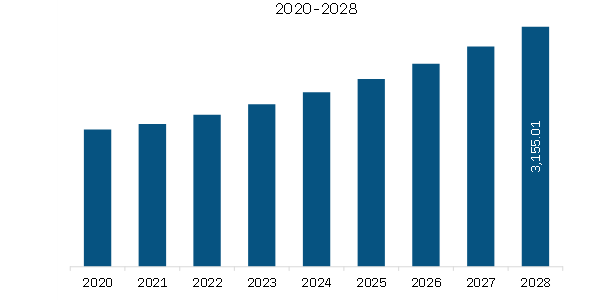
The Europe natural fiber composites market is expected to grow from US$ 1,998.59 million in 2022 to US$ 3,155.01 million by 2028. It is estimated to grow at a CAGR of 7.9% from 2022 to 2028.
Increasing Demand for Natural Fiber Composites from Automotive Industry in Europe Natural Fiber Composites Market
Advanced materials are crucial for boosting the fuel economy of modern automobiles while ensuring safety and performance. Substituting cast iron and traditional steel components with lightweight materials such as high-strength natural fiber composites reduces the weight of a vehicle body and chassis, thereby reducing the fuel consumption of a vehicle. Moreover, natural fiber composites are suitable for the manufacturing of nonstructural interior components, seat backs, headliners, interior panels, and dashboards. The utilization of natural fiber-reinforced composites is increasing in automotive applications due to legislation and regulations forcing manufacturers to use sustainable and recycled materials to manufacture fuel-efficient and lightweight vehicles. Moreover, several automotive manufacturers use natural fiber composites for interior and exterior applications. In 2020, Dr. Ing. h.c. F. Porsche AG launched Porsche 718 Cayman GT4 Clubsport MR, featuring a car body kit made of natural fiber composite materials made from farmed flax fibers. This natural fiber composite is used to develop front and rear aprons; front spoilers; front and rear lids; mudguards; and diffusers, including aerodynamic fins. In 2022, Mercedes-Benz Group and its development partners, HWA AG and Bcomp Ltd, developed front bumpers engineered from natural fiber composite for Mercedes-AMG GT4 race cars. In 2022, Bayerische Motoren Werke AG and Bcomp Ltd formed a development alliance to utilize renewable raw materials for vehicle components. Furthermore, Bcomp Ltd developed powerRibs and ampliTex reinforcement solutions made from natural composite materials. These solutions have been used in DTM touring cars from BMW M Motorsport to substitute selected carbon fiber-reinforced plastic components. Therefore, the increasing use of natural fiber composites in the automotive industry drives the market growth. Also, the rising adoption of electric vehicles (EVs) drives the natural fiber composites market.
Europe Natural Fiber Composites Market Overview
The surge in investments by European governments and private companies in infrastructure building and construction projects is anticipated to drive the growth of the natural fiber composites market in Europe during the forecast period. The high acceptance of eco-friendly natural fiber composites by automotive industries, supported by government organizations, and the growth of small-scale eco-friendly composite companies are projected to boost the market growth in the coming years. According to the European Construction Industry Federation, in 2020, the European Union (EU) invested US$ 1.4 trillion in the construction industry, and the investment in the industry was reported to increase by 4.2% in 2021. Germany, France, the UK, Italy, and Spain accounted for more than 70% of the EU’s total investments in the construction of buildings and other structures.
Europe Natural Fiber Composites market Revenue and Forecast to 2028 (US$ Million)
Europe Natural Fiber Composites market Segmentation
The Europe natural fiber composites market is segmented on the basis of raw material, technology, and end user. On the basis of raw material, the Europe natural fiber composites market is segmented into wood, cotton, flax, kenaf, hemp, and others. The wood segment registered a larger market share in 2022.
Based on technology, the Europe natural fiber composites market is further segmented into injection molding, compression molding, pultrusion, and others. The injection molding segment registered a larger market share in 2022.
Based on end user, the Europe natural fiber composites market is segmented into automotive & aerospace, building & construction, electrical & electronics, sporting goods, and others. The building & construction registered the largest market share in 2022.
Based on country, the Europe natural fiber composites market is segmented into Germany, France, Italy, UK, Russia, and the Rest of Europe. The Rest of Europe dominated the market share in 2022.
Amorim Cork Composites SA, Bcomp Ltd, Cobra Advanced Composites Co Ltd, Lanxess AG, Plasthill Oy Ltd, Polyvlies Franz Beyer GmbH, Tecnaro GmbH, and UPM-Kymmene Corp are the leading companies operating in the Europe natural fiber composites market.
Europe Natural Fiber Composites Market Strategic Insights
Get more information on this report
Europe Natural Fiber Composites Market Segmentation Analysis
Europe Natural Fiber Composites Market Report Highlights
Europe Natural Fiber Composites Report Scope
Report Attribute
Details
Market size in 2022
US$ 1,998.59 Million
Market Size by 2028
US$ 3,155.01 Million
CAGR (2022 - 2028)
7.9%
Historical Data
2020-2021
Forecast period
2023-2028
Segments Covered
By Wood, Cotton, Flax, Kenaf, Hemp)By Technology
Injection Molding
Compression Molding
Pultrusion
By End User
Automotive & Aerospace
Building & Construction
Electrical & Electronics
Sporting Goods
Regions and Countries Covered
Europe
UK, Germany, France, Russia, Italy, Rest of Europe
Market leaders and key company profiles
Amorim Cork Composites SA
Bcomp Ltd
Cobra Advanced Composites Co Ltd
Lanxess AG
Plasthill Oy Ltd
Polyvlies Franz Beyer GmbH
Tecnaro GmbH
UPM-Kymmene Corp
Get more information on this report
Europe Natural Fiber Composites Market Country and Regional Insights
Get more information on this report
Identical Market Reports with other Region/Countries
The List of Companies - Europe Natural Fiber Composites Market
Amorim Cork Composites SABcomp LtdCobra Advanced Composites Co LtdLanxess AGPlasthill Oy LtdPolyvlies Franz Beyer GmbHTecnaro GmbHUPM-Kymmene Corp
Frequently Asked Questions
How big is the Europe Natural Fiber Composites Market?
The Europe Natural Fiber Composites Market is valued at US$ 1,998.59 Million in 2022, it is projected to reach US$ 3,155.01 Million by 2028.
What is the CAGR for Europe Natural Fiber Composites Market by (2022 - 2028)?
As per our report Europe Natural Fiber Composites Market, the market size is valued at US$ 1,998.59 Million in 2022, projecting it to reach US$ 3,155.01 Million by 2028. This translates to a CAGR of approximately 7.9% during the forecast period.
What segments are covered in this report?
The Europe Natural Fiber Composites Market report typically cover these key segments-
End User (Automotive & Aerospace, Building & Construction, Electrical & Electronics, Sporting Goods)
What is the historic period, base year, and forecast period taken for Europe Natural Fiber Composites Market?
The historic period, base year, and forecast period can vary slightly depending on the specific market research report. However, for the Europe Natural Fiber Composites Market report:
Historic Period : 2020-2021
Base Year : 2022
Forecast Period : 2023-2028
Who are the major players in Europe Natural Fiber Composites Market?
The Europe Natural Fiber Composites Market is populated by several key players, each contributing to its growth and innovation. Some of the major players include:
Amorim Cork Composites SA
Bcomp Ltd
Cobra Advanced Composites Co Ltd
Lanxess AG
Plasthill Oy Ltd
Polyvlies Franz Beyer GmbH
Tecnaro GmbH
UPM-Kymmene Corp
Who should buy this report?
The Europe Natural Fiber Composites Market report is valuable for diverse stakeholders, including:
Investors: Provides insights for investment decisions pertaining to market growth, companies, or industry insights. Helps assess market attractiveness and potential returns.
Industry Players: Offers competitive intelligence, market sizing, and trend analysis to inform strategic planning, product development, and sales strategies.
Suppliers and Manufacturers: Helps understand market demand for components, materials, and services related to concerned industry.
Researchers and Consultants: Provides data and analysis for academic research, consulting projects, and market studies.
Financial Institutions: Helps assess risks and opportunities associated with financing or investing in the concerned market.
Essentially, anyone involved in or considering involvement in the Europe Natural Fiber Composites Market value chain can benefit from the information contained in a comprehensive market report.





 Get Free Sample For Europe Natural Fiber Composites Market