Dental Cad Cam Market Regional Highlights
North America Dental CAD CAM Market
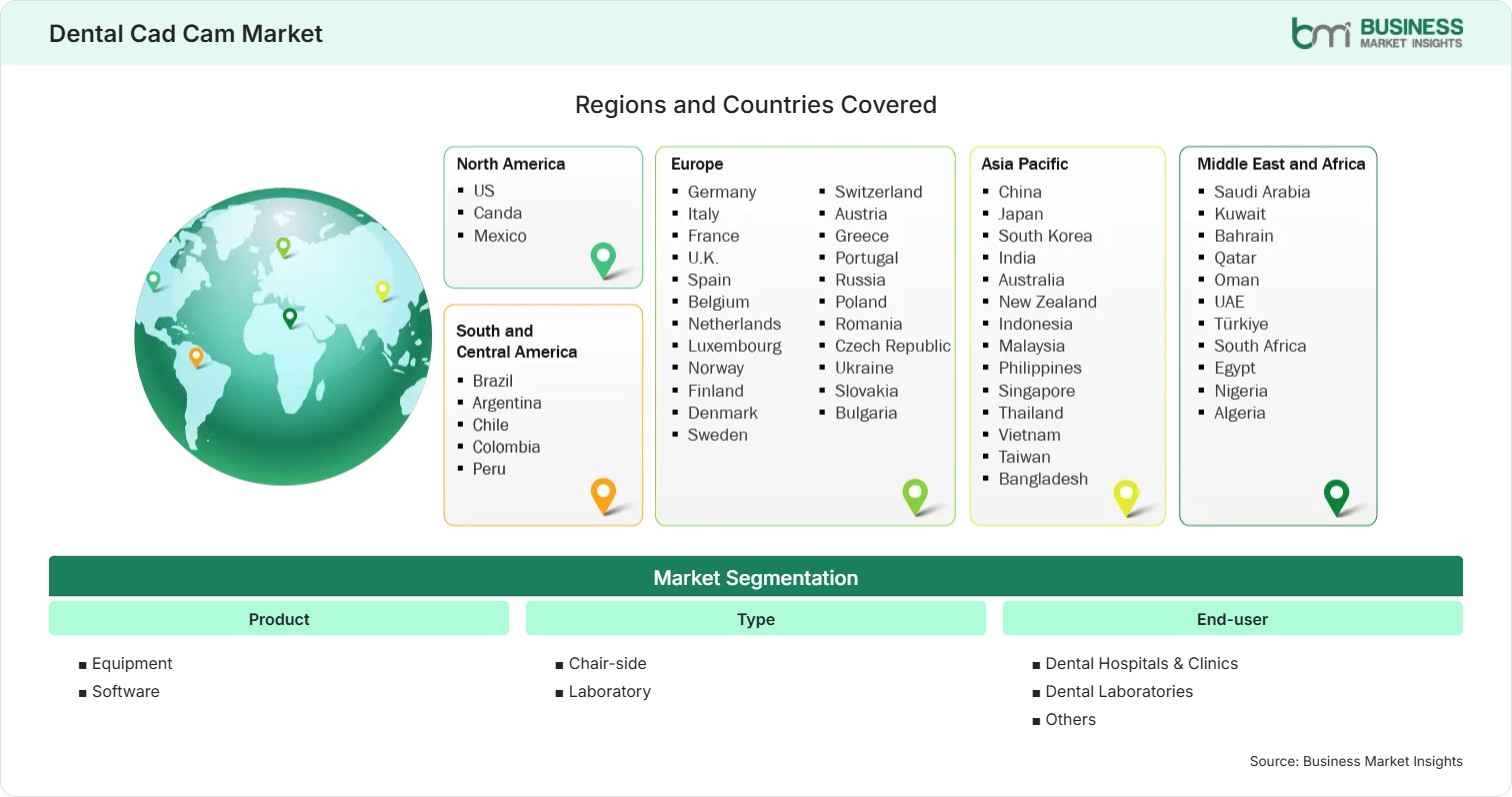
North America accounted for 37%–41% of global revenue in 2025 and is projected to expand at a CAGR of 10.2%–10.8% through 2033. The region maintains market leadership due to advanced dental infrastructure, strong technology adoption, increasing restorative procedures, and presence of major dental technology providers. The Dental CAD CAM Market share remains substantial as clinics and laboratories increasingly prioritize digital workflows, automation, and precision-based treatment solutions.
- Growing adoption of intraoral scanners is improving workflow efficiency and increasing demand for integrated digital restoration systems.
- Dental clinics are investing in chair-side CAD CAM solutions to reduce treatment time and improve patient convenience.
- Strong presence of dental technology companies supports innovation and faster commercialization of advanced solutions.
- Increasing cosmetic dentistry procedures are creating demand for digitally designed and manufactured restorations.
US Dental CAD CAM Market
The United States represents the largest contributor within North America, accounting for 83%–87% of regional revenue and growing at a CAGR of 10.3%–10.9% during 2026–2033. High dental technology adoption, strong purchasing capacity among dental practices, and increasing demand for efficient restorative procedures continue supporting market expansion.
- Dental clinics are increasingly adopting chair-side systems for faster restoration production and improved patient experiences.
- Growing investments in digital dentistry education are improving professional familiarity with CAD CAM technologies.
- Advanced dental laboratories are upgrading automation capabilities to improve production efficiency and accuracy.
Europe Dental CAD CAM Market
Europe represented 28%–32% of global revenue in 2025 and is expected to grow at a CAGR of 10.5%–11.1% through 2033. The region benefits from established dental technology adoption, strong laboratory networks, and increasing demand for digital treatment solutions. Germany leads regional revenue generation, while Switzerland and the United Kingdom demonstrate strong adoption due to advanced dental care systems.
- Dental laboratories are increasingly implementing automated manufacturing workflows to improve productivity.
- Growing demand for aesthetic restorations supports adoption of digital design technologies.
- Strong healthcare infrastructure enables faster integration of advanced dental equipment.
- Regulatory support for digital healthcare innovation encourages technology investments.
Asia Pacific Dental CAD CAM Market
Asia Pacific accounted for 24%–28% of global revenue in 2025 and is projected to register the fastest expansion at a CAGR of 12.0%–12.8% through 2033. Increasing dental care accessibility, rising disposable income, expanding dental tourism, and growing awareness of advanced restorative treatments are accelerating adoption. China leads regional contribution, while India and Southeast Asian countries demonstrate strong growth potential.
- Expanding dental clinics are investing in digital equipment to improve treatment capabilities.
- Rising dental tourism is encouraging adoption of advanced restoration technologies.
- Growing healthcare modernization programs are supporting digital dentistry infrastructure development.
- Increasing availability of affordable scanners and software solutions is improving technology accessibility.
Rest of World Dental CAD CAM Market
The Rest of World region accounted for 6%–9% of global revenue in 2025 and is forecast to grow at a CAGR of 10.8%–11.5% through 2033. South America and the Middle East are experiencing increasing adoption due to improving dental infrastructure, rising awareness of cosmetic dentistry, and healthcare modernization initiatives. Brazil leads South American demand, while the UAE and Saudi Arabia show increasing investment in advanced dental technologies.
- Growing private dental practices are supporting demand for digital treatment solutions.
- Healthcare investments are improving access to advanced dental equipment.
- International dental technology companies are expanding regional distribution networks.
- Increasing patient expectations for faster treatments are encouraging digital workflow adoption.