
AI-Enabled Medical Devices Market Outlook: Size, Share, Trends, Growth Analysis, Competitive Landscape & Forecast, 2026-2033

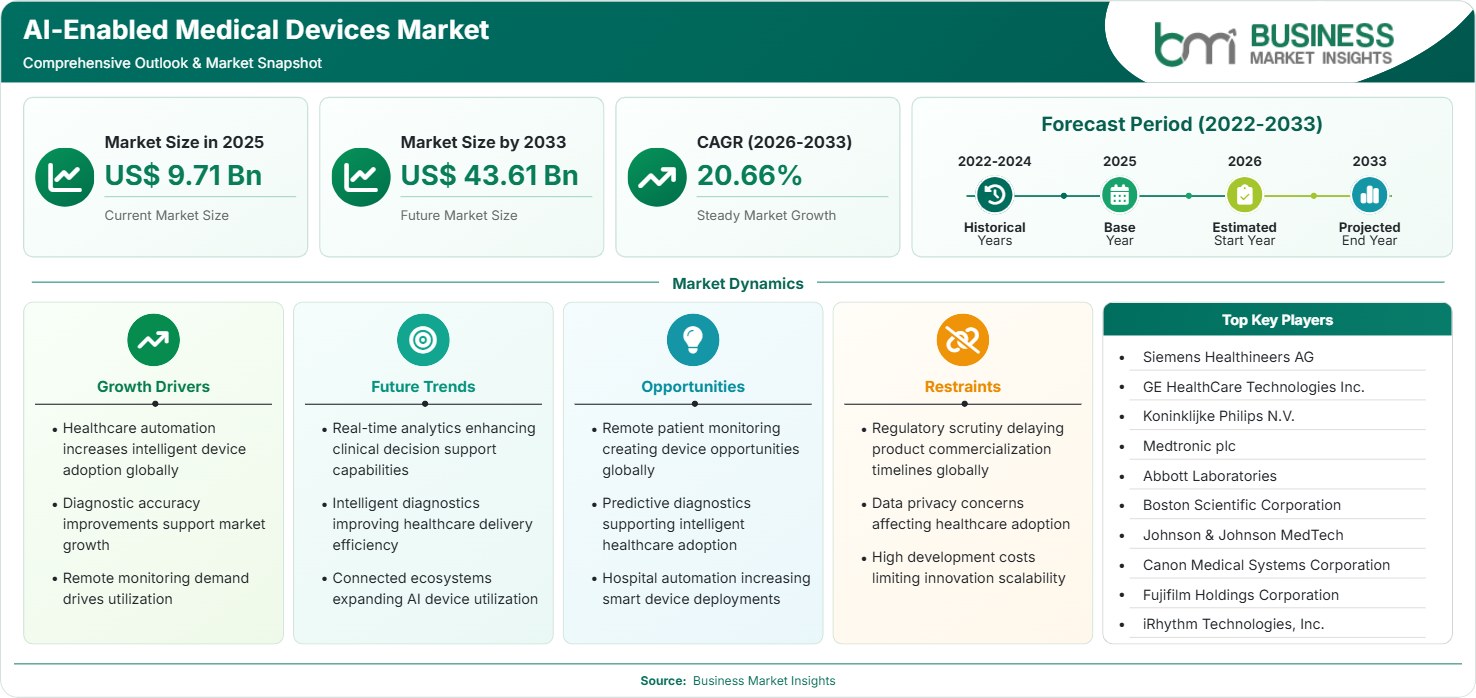
The AI-Enabled Medical Devices Market size was valued at US$ 9.71 Billion in 2025 and is projected to reach US$ 43.61 Billion by 2033, growing at a CAGR of 20.66% during 2026–2033. Increasing adoption of AI-assisted diagnostics, expanding regulatory clearances, rising healthcare data volumes, and growing demand for precision medicine are accelerating commercialization opportunities across imaging, monitoring, and clinical decision-support applications.

Report Coverage
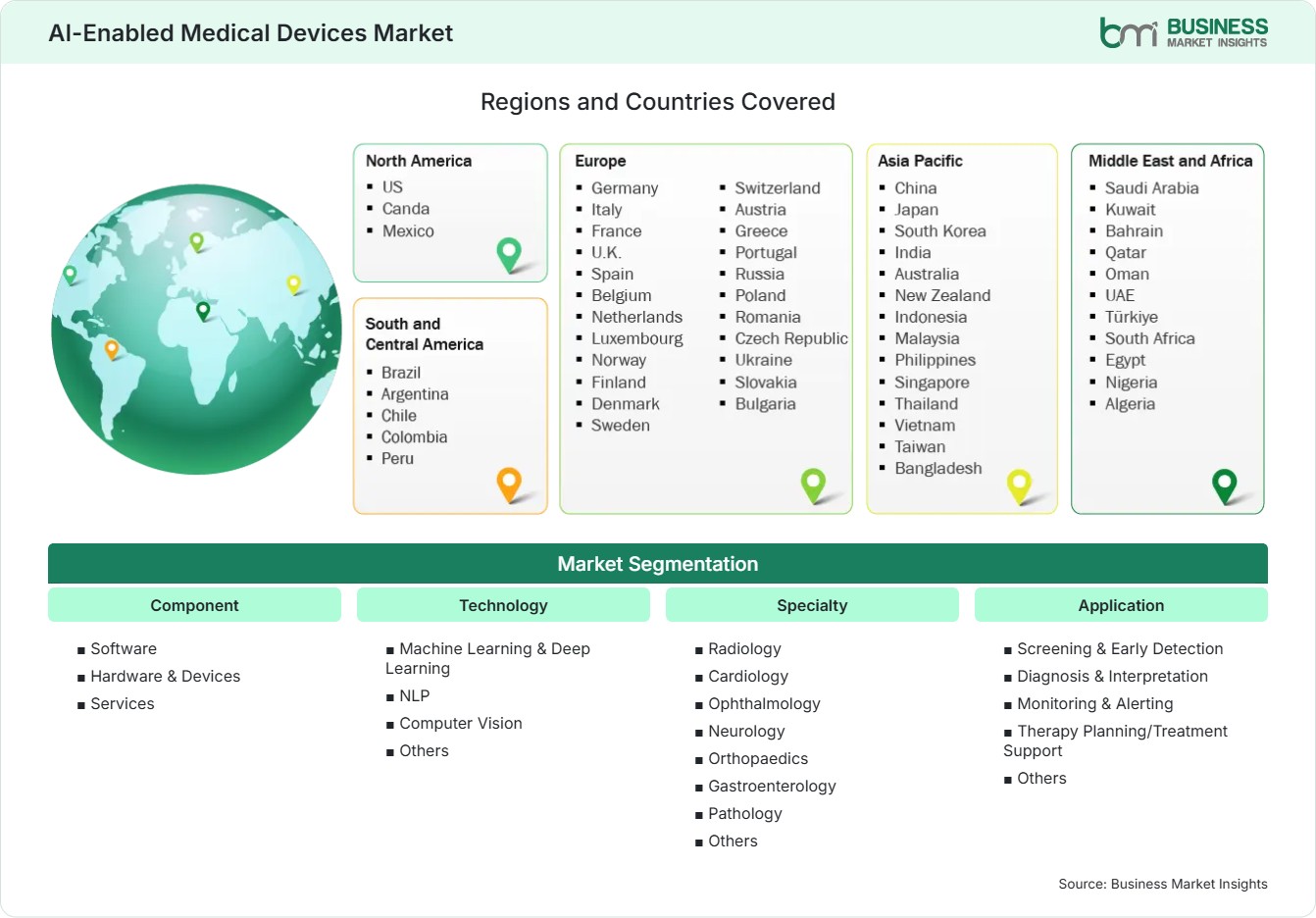
  • Component: Software, Hardware & Devices, Services
  • Technology: Machine Learning & Deep Learning, NLP, Computer Vision, Others
  • Specialty: Radiology, Cardiology, Ophthalmology, Neurology, Orthopaedics, Gastroenterology, Pathology, Others
  • Application: Screening & Early Detection, Diagnosis & Interpretation, Monitoring & Alerting, Therapy Planning/Treatment Support, Others
  • End User: Hospitals & ASCs, Specialty Clinics, Others
US$ 9.71 Bn Market size in 2025
US$ 43.61 Bn Market Size by 2033
20.66% CAGR, 2026 - 2033
2026-2033 Forecast Period

AI Overview

AI-Enabled Medical Devices Market Summary

  • North America Region: North America holds a market share of 38%–41% in 2025, growing with a CAGR of 19.0%–21.0% during 2026–2033. Strong reimbursement frameworks, extensive hospital digitization, FDA clearances, imaging modernization programs, and healthcare AI investments continue creating commercialization opportunities across diagnostics, monitoring, workflow optimization, and clinical decision support. The U.S. commands most regional revenue and is projected to expand at a CAGR of 19.5%–21.5% through 2033.
  • Fastest Growing Region: Asia Pacific holds a market share of 24%–27% in 2025, growing with a CAGR of 22.5%–24.5% during 2026–2033. Expanding healthcare infrastructure, rising chronic disease burden, government digital-health programs, growing medical imaging installations, and increasing AI startup activity support accelerated device deployment across major healthcare systems.
  • Leading Segment: Software holds a AI-Enabled Medical Devices Market share of 44%–47% in 2025, growing with a CAGR of 20.5%–22.5% during 2026–2033. Healthcare providers increasingly prioritize algorithm upgrades, workflow integration, cloud deployment, and image analytics capabilities that enhance productivity, diagnostic consistency, clinical decision support, and operational efficiency.
  • High Growth Segment: Monitoring and Alerting holds a market share of 18%–21% in 2025, growing with a CAGR of 23.5%–25.5% during 2026–2033. Expansion of remote patient monitoring, connected sensors, predictive analytics, hospital-at-home models, and real-time intervention systems drives stronger adoption throughout acute and chronic care environments.
  • Key Market Opportunity: Integration of multimodal AI platforms across imaging, pathology, cardiology, and patient monitoring environments creates opportunities for scalable clinical intelligence, improved workflow orchestration, enhanced outcomes, and healthcare cost optimization.
  • Major Market Players: Siemens Healthineers AG, GE HealthCare Technologies Inc., Koninklijke Philips N.V., Medtronic plc, Abbott Laboratories, Boston Scientific Corporation, Johnson & Johnson MedTech, Canon Medical Systems Corporation, Fujifilm Holdings Corporation, and iRhythm Technologies, Inc.
Strategic Insights

AI-Enabled Medical Devices Market: Strategic Insights

AI-Enabled Medical Devices Market Strategic Framework
FREE PDF
Request your free sample
Request free sample
Stakeholder View

Key Takeaways

  • The value chain increasingly combines semiconductor suppliers, cloud infrastructure providers, AI developers, medical device manufacturers, and healthcare systems, creating a highly collaborative ecosystem with significant interoperability requirements.
  • Monitoring, predictive analytics, and remote care applications offer the strongest revenue upside as providers seek continuous patient engagement and earlier intervention capabilities.
  • Product development is shifting toward multimodal intelligence that combines imaging, clinical records, sensor data, and physiological measurements to improve diagnostic precision and workflow efficiency.
  • China, India, and Southeast Asian healthcare systems present compelling investment opportunities due to expanding digital infrastructure, growing patient volumes, and supportive innovation initiatives.
  • Strategic acquisitions increasingly focus on software platforms, algorithm developers, and digital diagnostics specialists, reflecting growing demand for integrated healthcare intelligence capabilities.
  • Future competitive advantage will depend on data quality, algorithm explainability, regulatory compliance, cybersecurity resilience, and seamless integration with hospital information systems.
Geographic Outlook

AI-Enabled Medical Devices Market Regional Highlights

North America AI-Enabled Medical Devices Market

North America accounted for 38%–41% of global revenue in 2025 and is projected to expand at a 19.0%–21.0% CAGR through 2033. The region benefits from advanced healthcare infrastructure, strong digital health adoption, favorable funding conditions, and accelerated regulatory clearances. The AI-Enabled Medical Devices Market share remains concentrated in imaging, cardiology, and monitoring solutions. Large hospital networks continue adopting integrated clinical decision-support platforms, while device manufacturers increasingly embed AI functionality into next-generation systems to improve diagnostic efficiency and patient outcomes.

  • FDA-cleared AI applications continue expanding across radiology, cardiology, and pathology, enabling faster workflow automation and broader provider acceptance throughout major healthcare institutions.
  • High healthcare expenditure supports rapid procurement of advanced imaging equipment, predictive monitoring systems, and intelligent diagnostic technologies across both public and private healthcare networks.
  • Strategic collaborations between academic medical centers and technology companies are accelerating commercialization of clinically validated AI-powered device solutions.
  • Demand for workflow optimization technologies remains strong due to clinician shortages and increasing diagnostic imaging volumes across healthcare facilities.
  • Cybersecurity investment and interoperability initiatives encourage broader integration with electronic health record ecosystems and hospital information platforms.

US AI-Enabled Medical Devices Market

The United States represented approximately 81%–84% of the AI-Enabled Medical Devices Market revenue in North America in 2025 while advancing at a 19.5%–21.5% CAGR through 2033. Adoption is driven by large-scale healthcare digitization programs, extensive imaging infrastructure, and strong innovation activity among medical technology developers. Hospitals increasingly deploy intelligent monitoring, image analysis, and predictive care solutions. Reimbursement evolution and growing acceptance of software-driven clinical support tools strengthen commercialization prospects, particularly across diagnostic imaging, cardiovascular care, and acute patient monitoring applications.

  • Academic health systems remain key early adopters, validating clinical utility and driving procurement decisions across broader healthcare networks.
  • Rising prevalence of cardiovascular disease and cancer supports demand for AI-enhanced screening and interpretation technologies across specialized care settings.
  • Venture-backed health technology firms continue contributing innovation in remote monitoring, wearable diagnostics, and predictive healthcare analytics.
  • Cloud-enabled medical infrastructure supports scalable integration of intelligent solutions across multi-site healthcare organizations.

Europe AI-Enabled Medical Devices Market

Europe AI-Enabled Medical Devices Market held 27%–30% of global revenue in 2025 and is anticipated to grow at a 18.5%–20.5% CAGR during 2026–2033. This is driven by the presence of well-developed diagnostic infrastructure, efficient medical technology production, and rapid integration of artificial intelligence into clinical processes. Germany remains the leading national market, with rapid adoption in Spain and some Nordic countries. The industry continues to invest in upgrading imaging systems and automating clinical processes to improve the efficiency and effectiveness of population health management.

  • Germany accounts for the largest regional contribution, supported by strong hospital infrastructure, medical technology leadership, and extensive deployment of intelligent imaging systems across public and private healthcare networks.
  • Spain represents one of the faster-growing markets, advancing at an estimated CAGR of 20.5%–22.5%, supported by healthcare digitization initiatives and modernization investments.
  • European AI governance frameworks encourage trustworthy deployment and validation of clinical algorithms, improving healthcare provider confidence and procurement activity.
  • Rising demand for precision diagnostics is accelerating implementation of AI-supported solutions in radiology, cardiology, pathology, and oncology departments.
  • Cross-border digital health initiatives are improving data accessibility, interoperability, and collaboration across healthcare institutions throughout the region.

Asia Pacific AI-Enabled Medical Devices Market

Asia Pacific market accounted for 24%-27% of worldwide revenues in 2025 and is projected to see the highest growth rate, with a CAGR of 22.5%-24.5% by 2033. The factors driving adoption include expanding healthcare infrastructure, a middle-class population, investment in smart hospitals, and government-supported digital health initiatives. The China market leads the region in revenue, whereas the Indian market is highly promising.

  • China remains the largest regional market due to extensive healthcare digitization programs, significant AI investment, and strong domestic medical device manufacturing capabilities.
  • India is projected to advance at a CAGR of 24.0%–26.0%, supported by telemedicine expansion, healthcare modernization, and increasing AI-based diagnostic deployments.
  • Japan continues adopting intelligent medical technologies to address aging demographics and workforce limitations across healthcare facilities.
  • Southeast Asian nations are increasing investments in connected healthcare infrastructure, expanding long-term opportunities for international vendors.
  • Local technology companies and healthcare providers increasingly collaborate to develop region-specific diagnostic and monitoring solutions.

Rest of World AI-Enabled Medical Devices Market

Rest of World accounted for 8%–11% of global AI-Enabled Medical Devices Market revenue in 2025 and is projected to grow at a 20.0%–22.0% CAGR during 2026–2033. South and Central America benefit from increasing healthcare digitization and private hospital investments. Brazil remains the leading market within the region.

Middle East and Africa markets continue expanding through government-backed healthcare modernization programs and hospital infrastructure development. Saudi Arabia and the United Arab Emirates are leading adoption, while South Africa demonstrates notable long-term growth potential through expanding digital health initiatives.

  • Brazil leads regional adoption owing to investments in diagnostic imaging infrastructure and broader utilization of intelligent healthcare technologies.
  • Saudi Arabia is advancing at an estimated CAGR of 21.5%–23.5%, supported by healthcare transformation initiatives and smart hospital projects.
  • The United Arab Emirates continues deploying advanced digital health ecosystems to improve operational efficiency and patient care delivery.
  • Private healthcare providers across Latin America increasingly adopt AI-enhanced monitoring and diagnostic systems to differentiate service offerings.
  • Healthcare workforce shortages across several emerging economies support stronger adoption of intelligent clinical support solutions.
Global Market Geography
FREE PDF
Request your free sample
Request free sample
Segment Analysis

AI-Enabled Medical Devices Market Segmentation

Component

Components were among the most critical elements for market development. Software accounted for about 44%-47% of the market during 2025 and is expected to grow at a CAGR of 20.5%-22.5% through 2033. In terms of AI-Enabled Medical Devices Market scope, it continues to increase as healthcare organizations place greater focus on analytics and smart device integration.

  • Software: Software solutions enable algorithm deployment, image analysis, predictive risk assessment, workflow optimization, and clinical decision support, benefiting from recurring upgrades and expanding interoperability requirements across healthcare environments.
  • Hardware & Devices: Intelligent imaging systems, monitoring equipment, wearable sensors, and embedded AI platforms support real-time diagnostics, automation, and enhanced clinical performance across diverse healthcare settings.
  • Services: Service offerings include implementation, integration, training, validation, maintenance, and compliance support required for successful deployment and lifecycle management of intelligent healthcare technologies.

Technology

Technology adoption is shaped by growing requirements for automation, image interpretation, predictive analytics, and natural language understanding. Machine Learning & Deep Learning represented the leading technology segment with nearly 41%–44% share in 2025 and is expected to advance at a 21.5%–23.5% CAGR through 2033 due to expanding clinical deployment.

  • Machine Learning & Deep Learning: These technologies support pattern recognition, risk prediction, image classification, and clinical decision-making, forming the foundation of most advanced intelligent medical applications.
  • Natural Language Processing: Natural language technologies help extract insights from clinical documentation, physician notes, and patient interactions, improving workflow efficiency and healthcare information accessibility.
  • Computer Vision: Computer vision enables image interpretation, lesion detection, surgical guidance, and automated analysis across radiology, pathology, ophthalmology, and specialty diagnostic workflows.

Specialty

Specialty-focused deployment has also been growing, with providers seeking clinically proven solutions for specific disease pathways. In 2025, Radiology accounted for the largest segment, with about 30%–33% of the AI-Enabled Medical Devices Market share, owing to rising imaging volume and the need for efficient workflows. The segment is forecasted to post a 20.0%–22.0% CAGR over the forecast period.

  • Radiology: Radiology applications improve image prioritization, lesion detection, workflow management, and diagnostic consistency across increasingly complex imaging environments.
  • Cardiology: Cardiology solutions support arrhythmia detection, cardiovascular risk assessment, imaging interpretation, and remote cardiac monitoring initiatives.
  • Ophthalmology: Ophthalmology applications enable automated retinal screening, early disease identification, and enhanced diagnostic support for large patient populations.
  • Neurology: Neurology deployments assist stroke evaluation, neurodegenerative disease assessment, and interpretation of complex neurological imaging studies.
  • Orthopaedics: Orthopaedic solutions support surgical planning, implant positioning, imaging interpretation, and patient-specific treatment optimization.
  • Gastroenterology: Gastroenterology applications assist endoscopic analysis, polyp detection, procedural efficiency, and improved diagnostic accuracy.
  • Pathology: Pathology implementation focuses on digital slide analysis, biomarker identification, workflow automation, and enhanced laboratory productivity.

Application

The demand for the application arises from an increasing focus on early diagnosis, continuous monitoring, and optimized treatment solutions. Diagnostics & Interpretation accounted for the largest revenue contribution, with around 35%–38% market share in 2025, and is expected to grow at a CAGR of 20.0%–22.0% through 2033. Healthcare providers are increasingly using AI-based applications to gain clinical assurance and increase efficiency.

  • Screening and Early Detection: Early detection applications identify disease indicators sooner, supporting preventive interventions and improved patient outcomes across multiple specialties.
  • Diagnosis and Interpretation: Automated interpretation technologies improve consistency, accelerate reporting timelines, and support clinicians handling growing diagnostic workloads.
  • Monitoring and Alerting: Monitoring and Alerting represents the fastest-growing application area, leveraging real-time analytics, predictive insights, and connected devices for proactive care delivery.
  • Therapy Planning/Treatment Support: Treatment-support technologies assist physicians with personalized intervention strategies and evidence-based care recommendations.

End User

End-User demand remains centered on large healthcare organizations due to their infrastructural capabilities and the availability of clinical data. Hospitals & ASCs accounted for around 60% - 63% of the AI-Enabled Medical Devices Market in 2025 and are projected to register a 20.0% - 22.0% CAGR through 2033.

  • Hospitals & ASCs: These facilities drive adoption through large patient volumes, advanced diagnostic infrastructure, and strong requirements for workflow optimization and clinical efficiency.
  • Specialty Clinics: Specialty clinics increasingly deploy targeted intelligent solutions focused on disease-specific diagnosis, monitoring, patient management, and treatment optimization.
Market Forces

AI-Enabled Medical Devices Market Dynamics

Key Market Drivers

Rising Regulatory Approvals for AI-Based Clinical Applications

More health organizations are developing pathways for the approval of AI-based diagnostic and clinical decision support technologies, contributing to market penetration across various disciplines. Hundreds of AI-based medical devices have been approved by the U.S. Food and Drug Administration, with radiology being the major area due to the proven clinical efficacy of these products. Rising approvals from regulatory bodies are making it easier to enter the market and increasing providers' confidence. AI-imaging, pathology, and cardiovascular devices are now a part of the clinical setting. The continuous generation of clinical evidence on improved diagnostic efficiency, reduced interpretation variability, and early disease detection is contributing to this. All of these are augmenting AI-Enabled Medical Devices Market trends and creating sustainable demand worldwide.

Growing Burden of Chronic Diseases and Diagnostic Workloads

The global rise in cardiovascular disease, cancer, neurological disorders, diabetes, and age-related conditions is creating unprecedented demand for diagnostic and monitoring technologies. There is an increased imaging demand coupled with shortages of staff among radiologists, cardiologists, pathologists, and specialist doctors. Intelligent technology in medicine assists in prioritizing emergency patients, improving workflow management, and decision-making. Automatic image processing and predictive monitoring enable healthcare providers to meet patients' needs without increasing staffing levels. This creates greater efficiencies in resource management and patient care. One of the main factors for the industry's further growth will be an increase in the prevalence of chronic diseases.

Expansion of Connected Care and Remote Monitoring Ecosystems

Continuous monitoring, preventive interventions, and remote patient monitoring have become hallmarks of modern approaches to healthcare delivery. Connected sensors, wearable technology, cloud computing, and predictive algorithms can help collect valuable clinical data without requiring patients to visit traditional hospitals. In light of the growing trend of home-based healthcare, it becomes possible to develop sophisticated monitoring systems that detect risks of deterioration and take measures before any acute conditions occur. Modern healthcare providers are aware of the financial advantages of eliminating avoidable hospital admissions and effectively managing chronic diseases. Therefore, remote patient monitoring is increasingly common in areas such as cardiology, pulmonology, neurology, and the treatment of metabolic conditions. This will impact the AI-Enabled Medical Devices Market growth by creating broader usage opportunities.

Key Market Opportunities

Multimodal Clinical Intelligence Platforms Across Specialties

The modern trend in healthcare is the use of integrated platforms that enable the integration of data from imaging, physiological monitoring, genomics, laboratory tests, and EHR into clinical workflow. In developing cross-specialty intelligence ecosystems, there are tremendous benefits associated with improved diagnostic accuracy and reduced physician workload. Multimodal platforms appear especially beneficial in oncology, cardiology, neurology, and critical care settings, where multiple sources of information must be considered to make an accurate decision. With advances in interoperability standards, large healthcare organizations will show greater interest in enterprise-wide implementations. The trends present great opportunities for software providers and medical device manufacturers.

Expansion Opportunities in Emerging Healthcare Markets

The rapid development of healthcare infrastructure in the Asia-Pacific, Latin America, and the Middle East is paving the way for the adoption of advanced medical devices. There is ongoing government investment in intelligent hospitals, digital health solutions, and diagnostic innovation initiatives. Healthcare systems face a shortage of doctors and an uneven distribution of specialists; hence, there is a strong need for decision support. Technologies such as mobile diagnostics, cloud computing, and AI-based image analysis can be very useful in addressing healthcare accessibility challenges. The AI-Enabled Medical Devices Market Forecasts report says that the contribution of developing countries will grow significantly in the coming years.

Personalized Therapy Planning and Precision Medicine Adoption

A trend in the medical field is that healthcare organizations are leaning towards personalized treatment regimens tailored to patients' clinical profiles. The development of AI-based solutions that can detect disease patterns, predict treatment outcomes, and help optimize therapy is an attractive market niche. Specialties such as oncology, cardiology, neurology, and rare diseases are very promising because treatment choices depend on clinical parameters. Precision medicine is an increasing need, and collaborations among pharmaceutical firms, healthcare facilities, and device makers are becoming common practice to create precision medicine ecosystems.

Market Restraints and Challenges

Data Privacy Requirements and Cybersecurity Risks

Factor: The artificial intelligence-enabled healthcare ecosystem needs vast amounts of clinical, imaging, and patient data. Impact: Compliance issues, cybersecurity risks, and regulatory changes can cause delays and increase costs associated with implementing the system. There is still considerable hesitation among healthcare institutions regarding the storage, transfer, and use of patient data in a digitally integrated ecosystem. Large players in the healthcare market are becoming more demanding in implementing new intelligent software and need to be assured of the governance structure and security measures in place.

Algorithm Bias, Validation Complexity, and Clinical Acceptance

Factor: Algorithms for clinical use must undergo extensive validation before being used widely across diverse demographics, medical environments, and diseases. Impact: Algorithm generalizability and transparency could undermine clinicians' confidence, making it difficult to adopt such an algorithm in clinical practice. For health care organizations to adopt new technology, they need to be shown evidence that it works in the real world. Biases introduced during algorithm training could degrade diagnostic accuracy across demographics, leading to regulatory and ethical issues.

Company Analysis

Competitive Landscape

The competitive environment is defined by a combination of established medical technology manufacturers, diagnostic imaging leaders, digital health innovators, and AI-specialized healthcare companies. Current AI-Enabled Medical Devices Market analysis indicates that vendors are increasingly prioritizing software-centric platforms, clinical decision-support capabilities, cloud connectivity, and multimodal diagnostic intelligence. Strategic partnerships between healthcare providers and technology developers continue enhancing algorithm validation, regulatory compliance, and commercialization efficiency.

Company Name

Overview

Products and Services relevant to this market

Siemens Healthineers AG

Global healthcare technology leader with extensive diagnostic imaging, digital health, and intelligent workflow capabilities across hospitals and healthcare networks.

AI-Rad Companion, imaging systems, clinical decision-support solutions, intelligent diagnostics, radiology workflow automation, and integrated digital healthcare platforms.

GE HealthCare Technologies Inc.

Major provider of imaging, ultrasound, patient monitoring, and precision care technologies supporting healthcare institutions worldwide.

AI-enabled imaging systems, Edison platform, patient monitoring technologies, workflow analytics, diagnostic intelligence, and clinical optimization software.

Koninklijke Philips N.V.

Leading healthcare technology company focused on connected care, imaging, patient monitoring, and healthcare informatics solutions.

Intelligent monitoring systems, image-guided therapy platforms, AI-enabled diagnostics, connected care technologies, and clinical informatics software.

Medtronic plc

Global medical device manufacturer with strong capabilities across cardiovascular, neurological, surgical, and diabetes care technologies.

AI-enhanced monitoring solutions, smart medical devices, surgical navigation platforms, remote patient management, and predictive healthcare technologies.

Abbott Laboratories

Diversified healthcare organization with extensive diagnostics, monitoring, cardiovascular, and digital health portfolios.

Continuous monitoring systems, cardiovascular devices, diagnostic platforms, connected healthcare technologies, and clinical data management solutions.

Boston Scientific Corporation

Medical technology company focused on minimally invasive therapies and advanced patient management solutions.

Cardiac monitoring devices, diagnostic technologies, healthcare analytics integration, intelligent therapy support, and connected patient management systems.

Johnson & Johnson MedTech

Healthcare technology division delivering surgical, orthopedic, and interventional solutions globally.

Digital surgery platforms, robotic-assisted systems, intelligent procedural guidance technologies, and data-driven clinical support solutions.

Canon Medical Systems Corporation

Diagnostic imaging specialist focused on advanced visualization, imaging analytics, and workflow optimization technologies.

AI-powered imaging systems, ultrasound platforms, diagnostic software, medical visualization tools, and radiology productivity solutions.

Fujifilm Holdings Corporation

Healthcare imaging and diagnostics provider supporting advanced clinical workflows and digital healthcare transformation.

AI-assisted imaging systems, healthcare IT solutions, diagnostic informatics, image management platforms, and workflow automation technologies.

iRhythm Technologies, Inc.

Digital healthcare company specializing in cardiac monitoring and data-driven diagnostic services.

AI-supported arrhythmia detection, cardiac monitoring services, wearable diagnostics, predictive analytics, and remote patient monitoring solutions.

Trust & Transparency

Research Methodology

The market analysis combines proprietary research with secondary data from government agencies, company disclosures, regulatory filings, industry databases and expert interviews. Market estimates are validated through data triangulation, cross-market benchmarking and analyst review.

View Full Research Methodology

Questions Answered

Frequently Asked Questions

Which emerging regions offer the strongest future opportunities?

Asia Pacific offers the strongest growth potential due to healthcare modernization, expanding digital infrastructure, rising patient populations, government support for AI innovation, and increasing investments in advanced medical technologies.

What does the AI-Enabled Medical Devices Market Report evaluate?

The Market Report evaluates market size, growth drivers, competitive dynamics, regional opportunities, segmentation performance, technology trends, regulatory developments, and strategic opportunities influencing industry expansion through 2033.

How will reimbursement policies influence future market adoption?

Improving reimbursement pathways for digital health solutions, remote monitoring technologies, and software-assisted diagnostics are expected to support broader commercial adoption and encourage healthcare provider investments in intelligent systems.

Which specialty accounts for the largest adoption of intelligent medical technologies?

Radiology represents the leading specialty due to high imaging volumes, extensive algorithm validation, and strong clinical demand for automated image interpretation, workflow prioritization, and reporting efficiency improvements.

What are the primary benefits of AI-Enabled Medical Devices Market?

AI-Enabled Medical Devices Market improve diagnostic accuracy, reduce clinician workload, enhance workflow efficiency, support earlier disease detection, and enable real-time monitoring across diverse healthcare environments. They also facilitate data-driven clinical decision-making and personalized patient care.

Access the Full AI-Enabled Medical Devices Market Report

Get segment-level forecasts, regional estimates, competitive benchmarking, company profiles and downloadable Excel datasets.

Access the full AI-Enabled Medical Devices Market Report
350 pages PDF & Excel | 2026-11-10
Similar Research

Related Market Reports