Market Summary
Executive Summary and Global Market Analysis
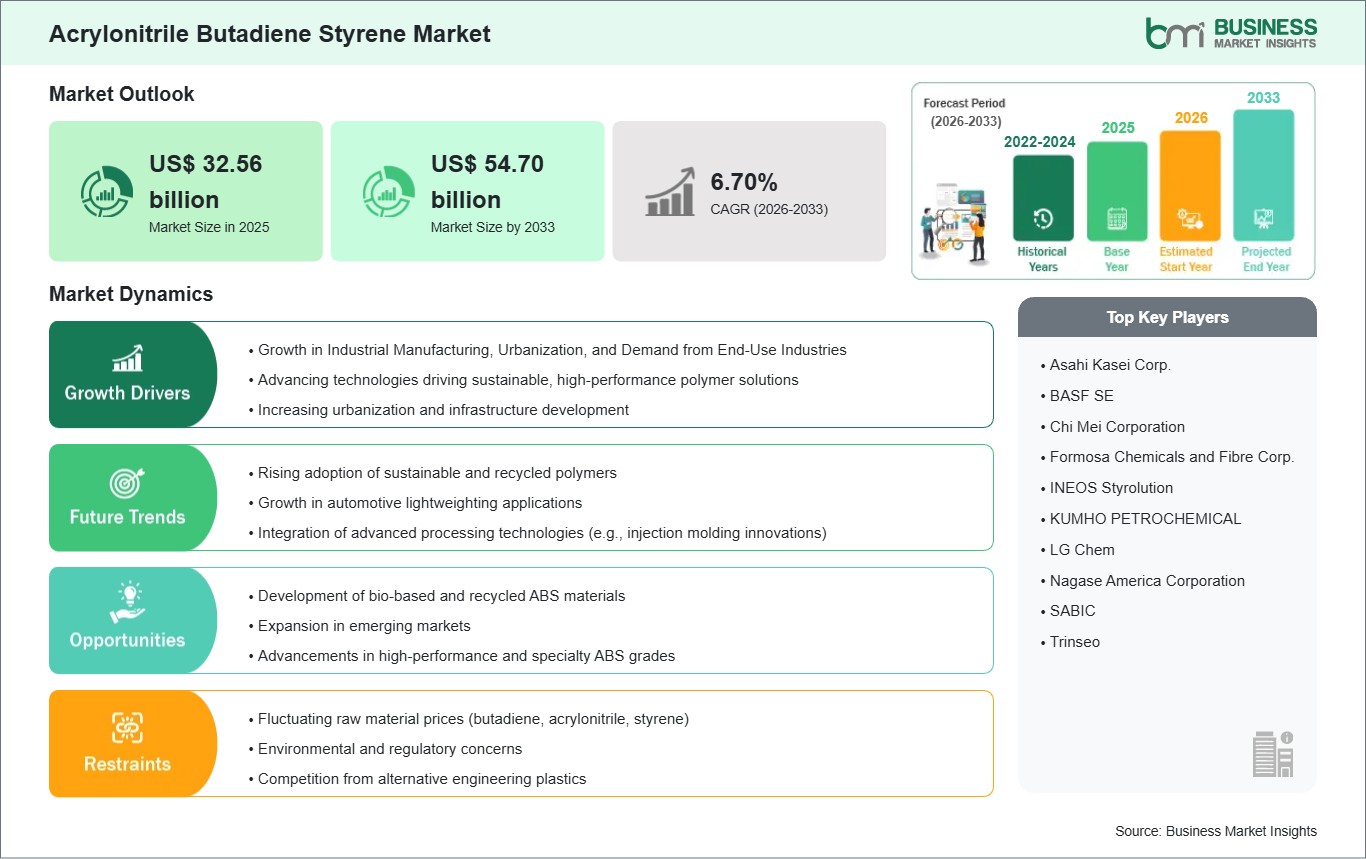
Acrylonitrile butadiene styrene (ABS) is a critical engineering thermoplastic that underpins a wide range of industrial value chains. Its robust production capacity and extensive application base make it fundamental to sectors such as automotive, electronics, consumer goods, construction, home appliances, medical devices, and packaging. These industries collectively represent the core demand drivers of the global ABS market. Known for its high impact strength, toughness, dimensional stability, heat resistance, and superior surface finish, ABS plays a strategic role in downstream manufacturing processes—including molding, fabrication, assembly, and performance enhancement of finished products. Globally, the material is widely utilized in automotive interior and exterior components, electrical and electronic housings, household and industrial appliances, toys, piping systems, and various everyday consumer products. Both mature and emerging markets continue to exhibit strong demand for ABS, supported by rapid urbanization, industrial expansion, infrastructure development, and rising consumption of durable goods. As a result, ABS remains a preferred material choice across diverse end-use applications, reinforcing its importance in global manufacturing ecosystems.
The growth of the automotive and electronics sectors, along with a rising demand for lightweight, strong materials and durable plastic parts, is a key driver of the acrylonitrile butadiene styrene market. The need for better product aesthetics, design flexibility, and affordable mass production has led to a wide use of ABS in injection molding and extrusion. Additionally, the increased focus on product durability, safety, and performance has boosted the use of ABS in high-impact and structural applications. Improvements in polymer mixing, fire-resistant grades, and high-heat ABS options have further broadened its applications. Consequently, manufacturers are concentrating on better material properties, improved processing efficiency, and specialized ABS grades designed for specific uses.
Furthermore, the growing focus on sustainability, meeting regulations, and energy-efficient manufacturing has spurred interest in recyclable ABS, low-emission production methods, and bio-based or recycled-content ABS grades. However, the market faces several challenges, such as fluctuations in raw material prices, reliance on petrochemical feeds, and strict environmental laws regarding plastic waste and emissions can affect production costs and supply stability. Despite these hurdles, the market outlook is positive owing to ongoing research into recycled ABS solutions, innovations in lightweight materials, and better processing technologies. The global ABS market is expected to grow steadily, fueled by technological advancements, expanding end-use industries, and rising demand for durable, high-performance, and sustainable thermoplastic materials across various sectors.
Segment Analysis
Acrylonitrile Butadiene Styrene Market Segmentation
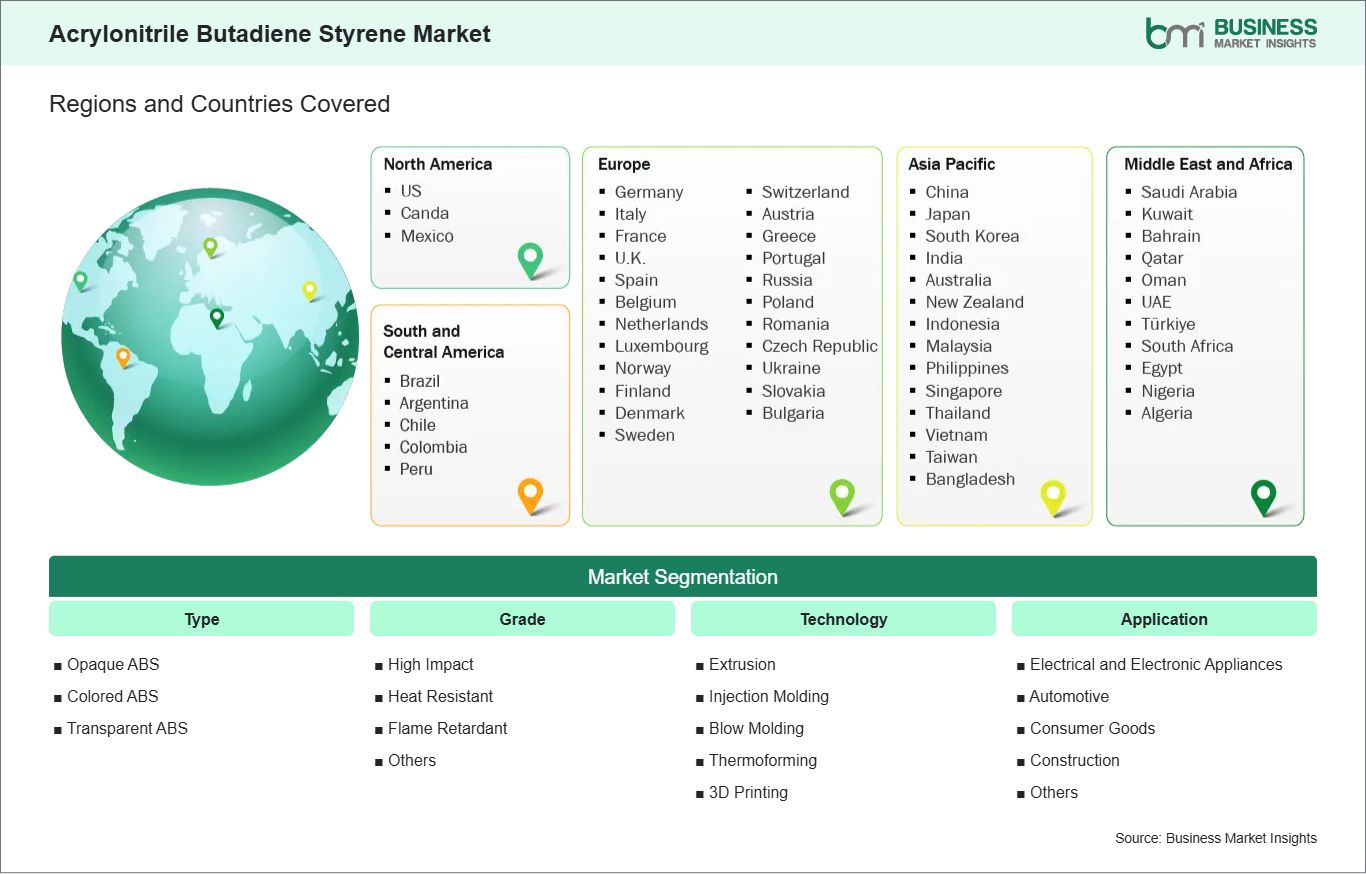
Key segments that contributed to the derivation of the Acrylonitrile Butadiene Styrene market analysis are type, grade, technology, and application.
- By type, the Acrylonitrile Butadiene Styrene market is segmented into opaque ABS, colored ABS, and transparent ABS. The opaque ABS segment dominated the market in 2025.
- By grade, the Acrylonitrile Butadiene Styrene market is segmented into high impact, heat resistant, flame retardant, and others. The high impact segment dominated the market in 2025.
- By technology, the Acrylonitrile Butadiene Styrene market is segmented into extrusion, injection molding, blow molding, thermoforming, and 3D printing. The injection molding segment dominated the market in 2025.
- By application, the market is segmented into electrical and electronic appliances, automotive, consumer goods, construction, and others. The automotive segment held the largest share of the market in 2025.
Market Forces
Acrylonitrile Butadiene Styrene Market Drivers and Opportunities
Growth in Industrial Manufacturing, Urbanization, and Demand from End-Use Industries
End-use industries like automotive, electronics, construction, consumer appliances, packaging, and industrial equipment are steadily expanding. This growth leads to higher consumption of ABS-based components, including interior and exterior automotive parts, electronic housings, pipes and fittings, and consumer goods. The rise in industrial production and consumer product manufacturing has created strong demand for ABS due to its high impact resistance, toughness, dimensional stability, and excellent surface finish. ABS improves product performance by providing durability, lightweight properties, heat resistance, and design flexibility while supporting efficient large-scale manufacturing processes such as injection molding and extrusion.
Across industrial and consumer applications, the demand for high-performance materials, lightweight solutions, and cost-effective formulations has risen significantly. This trend, along with increased investment in modern manufacturing facilities and infrastructure projects, has sped up the use of ABS in global markets. Rapid industrialization in emerging economies, combined with steady demand from developed regions, further supports market growth. The rising use of ABS in automotive components, electrical and electronic devices, construction materials, and household products is driving steady growth as industrial output and urban development continue worldwide.
Technological Advancements and Shift Toward Sustainable and High-Performance Polymer Solutions
The growing focus on modern polymer technologies and sustainability is heavily influencing the global ABS market. Manufacturers are adopting better polymerization techniques, improved compounding methods, and new material formulations to boost mechanical strength, thermal stability, processability, and energy efficiency. There is a rising emphasis on developing flame-retardant ABS, high-heat-resistant grades, recycled-content ABS, and low-emission production processes that meet environmental and regulatory standards. These innovations aim to lessen environmental impact while ensuring high strength, durability, and functional performance.
In industries such as automotive, electronics, construction, and consumer goods, where quality, safety, and regulatory compliance matter, high-performance ABS materials are becoming increasingly popular. Additionally, the global shift toward lighter components, recyclable plastics, and energy-efficient manufacturing has increased the demand for sustainable ABS solutions. As environmental regulations become stricter and industries move toward greener and more efficient production practices, the demand for high-quality and environmentally responsible ABS materials is expected to grow steadily across global markets.
Size and Share Analysis
Acrylonitrile Butadiene Styrene Market Size and Share Analysis
The opaque ABS segment held the largest share of the acrylonitrile butadiene styrene market. This is due to its strong impact resistance, easy coloring, great surface finish, and wide range of uses for injection-molded parts. It is extensively used in automotive interiors, consumer appliances, electronics housings, and industrial parts. In these areas, aesthetics, durability, and cost efficiency are crucial, which has driven strong demand.
The automotive segment led the acrylonitrile butadiene styrene market. This is because of the growing need for lightweight, durable, and high-performance materials in vehicle manufacturing. ABS is commonly used in dashboards, trims, panels, and interior parts. Its strength, heat resistance, design flexibility, and ability to reduce overall vehicle weight while keeping safety and aesthetic standards contribute to its popularity.
Report Coverage
Acrylonitrile Butadiene Styrene Market Report Coverage and Deliverables
The "Acrylonitrile Butadiene Styrene Market Size and Forecast (2022–2033)" report provides a detailed analysis of the market covering below areas:
- Acrylonitrile Butadiene Styrene market size and forecast at global, regional, and country levels for all the key market segments covered under the scope
- Acrylonitrile Butadiene Styrene market trends, as well as market dynamics such as drivers, restraints, and key opportunities
- Acrylonitrile Butadiene Styrene market analysis covering key market trends, global and regional framework, major players, regulations, and recent market developments
- Industry landscape and competition analysis covering market concentration, heat map analysis, prominent players, and recent developments for the Acrylonitrile Butadiene Styrene market
- Detailed company profiles, including SWOT analysis
Geographic Insights
Acrylonitrile Butadiene Styrene Market Geographic Insights
The geographical scope of the Acrylonitrile Butadiene Styrene market report is divided into five regions: North America, Asia Pacific, Europe, Middle East & Africa, and South & Central America. The Acrylonitrile Butadiene Styrene market in the Asia Pacific is expected to grow significantly during the forecast period.
The Asia Pacific Acrylonitrile Butadiene Styrene market is segmented into China, Japan, South Korea, India, Australia, New Zealand, Indonesia, Malaysia, the Philippines, Singapore, Thailand, Vietnam, Taiwan, Bangladesh, and the Rest of Asia Pacific.
The Asia Pacific market is expanding steadily due to rapid industrialization, rising manufacturing activity, increasing urbanization, and strong economic growth across the region. China, Japan, South Korea, and India dominate the acrylonitrile butadiene styrene (ABS) market, supported by significant investments in automotive manufacturing and electronics assembly. Growing demand from automotive, consumer electronics, appliances, construction, packaging, and industrial goods sectors is driving ABS consumption throughout Asia Pacific. In addition, population growth, improving living standards, and increasing demand for durable and affordable consumer products are boosting the use of ABS in automotive interiors, electronic housing, household appliances, and everyday consumer items across the region.
The adoption of advanced manufacturing technologies and capacity expansion is another major trend shaping the regional market. Producers are focusing on improved polymerization processes, enhanced compounding technologies, and cost-efficient raw material utilization to improve output, consistency, and material performance. The establishment of local ABS production facilities, stronger supply chain integration, and improved logistics networks are contributing to better cost efficiency and supply reliability. Furthermore, rising investments in sustainable plastics manufacturing, increased emphasis on recycled and low-emission ABS grades, and strong export demand for ABS resins and finished components are positioning Asia Pacific as a key production and distribution hub in the global ABS market. Supportive government policies, favorable industrial regulations, and continuous growth in automotive, electronics, and consumer goods industries are reinforcing the overall market outlook in the region.
Industry Activity
Recent Developments
The Acrylonitrile Butadiene Styrene market is evaluated by gathering qualitative and quantitative data post primary and secondary research, which includes important corporate publications, association data, and databases. A few of the key developments in the Acrylonitrile Butadiene Styrene market are:
- In January 2026, Mutares SE & Co. KGaA (ISIN: DE000A2NB650) signed a landmark agreement to acquire the regional Engineering Thermoplastics business in the Americas and Europe (“the ETP Business”) of SABIC for an Enterprise Value of USD 450 million. The transaction is expected to close in the second half of 2026, subject to customary approvals. The ETP Business is the world’s second-largest producer of PC, the leading ABS producer in the United States and the sole producer of PBT in the United States—underlining its strong competitive position across key engineering thermoplastics categories.
- In January 2026, Japanese materials supplier Toray Industries developed a highly antistatic version of Toyolacparel acrylonitrile butadiene styrene (ABS) resin. The surface resistivity is 109Ω/sq (one billion ohms per square), which is one-fifth of the company’s conventional counterpart.
Trust & Transparency
Research Methodology
The market analysis combines proprietary research with secondary data from government agencies, company disclosures, regulatory filings, industry databases and expert interviews. Market estimates are validated through data triangulation, cross-market benchmarking and analyst
review.
View Full Research Methodology
Key Sources Referred:
World Bank – Global Trade IndicatorsWorld Trade Organization (WTO)International Trade Administration (ITA)Company WebsitesCompany Annual ReportsCompany Investor Presentations