
Transrectal Ultrasound Trus Market Outlook: Size, Share, Trends, Growth Analysis, Competitive Landscape & Forecast, 2026-2033

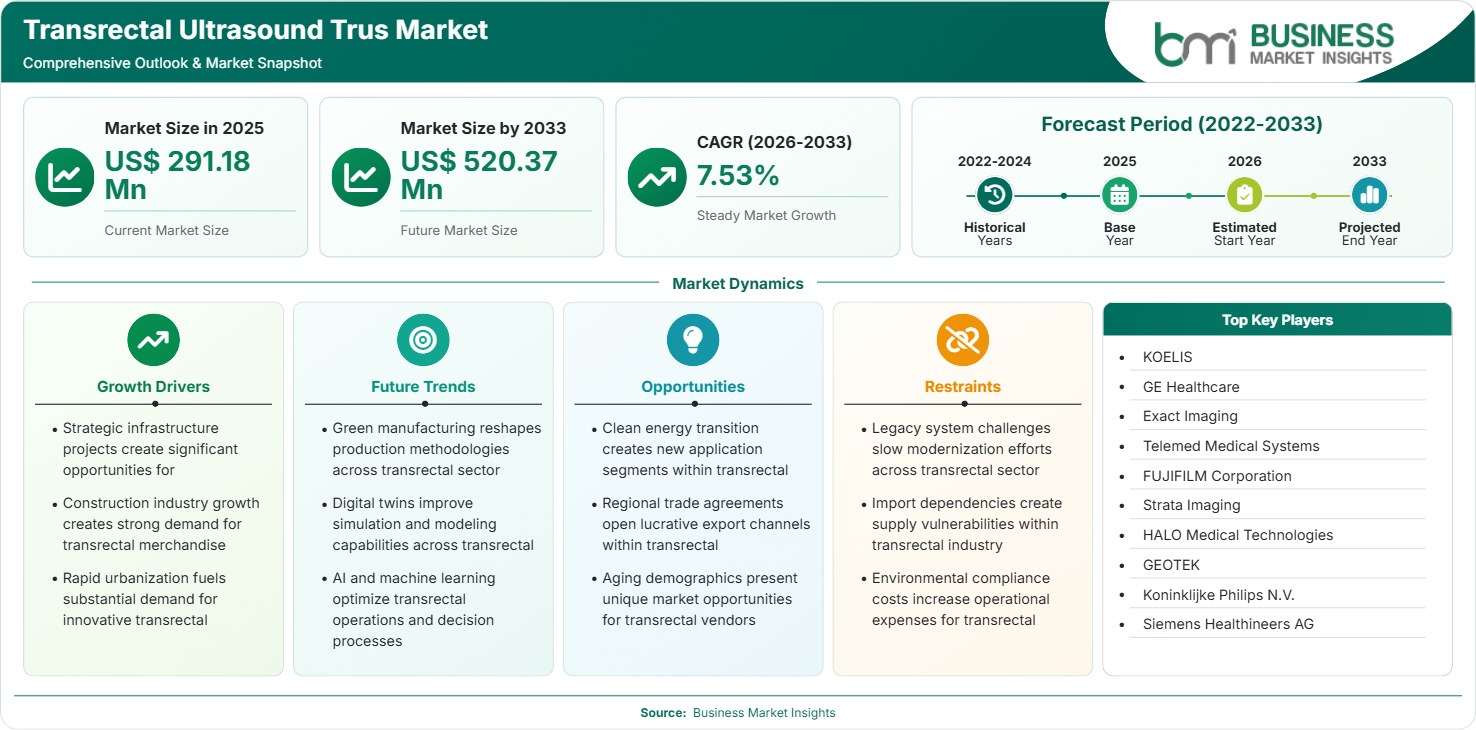
The Transrectal Ultrasound Trus Market size was valued at US$ 291.18 million in 2025 and is projected to reach US$ 520.37 million by 2033, growing at a CAGR of 7.53% during 2026–2033. Rising prostate cancer screening programs, increasing adoption of minimally invasive image-guided procedures, technological advancements in ultrasound systems, and expanding healthcare investments are creating substantial opportunities for manufacturers developing high-resolution, AI-assisted, and portable transrectal ultrasound solutions.

Report Coverage
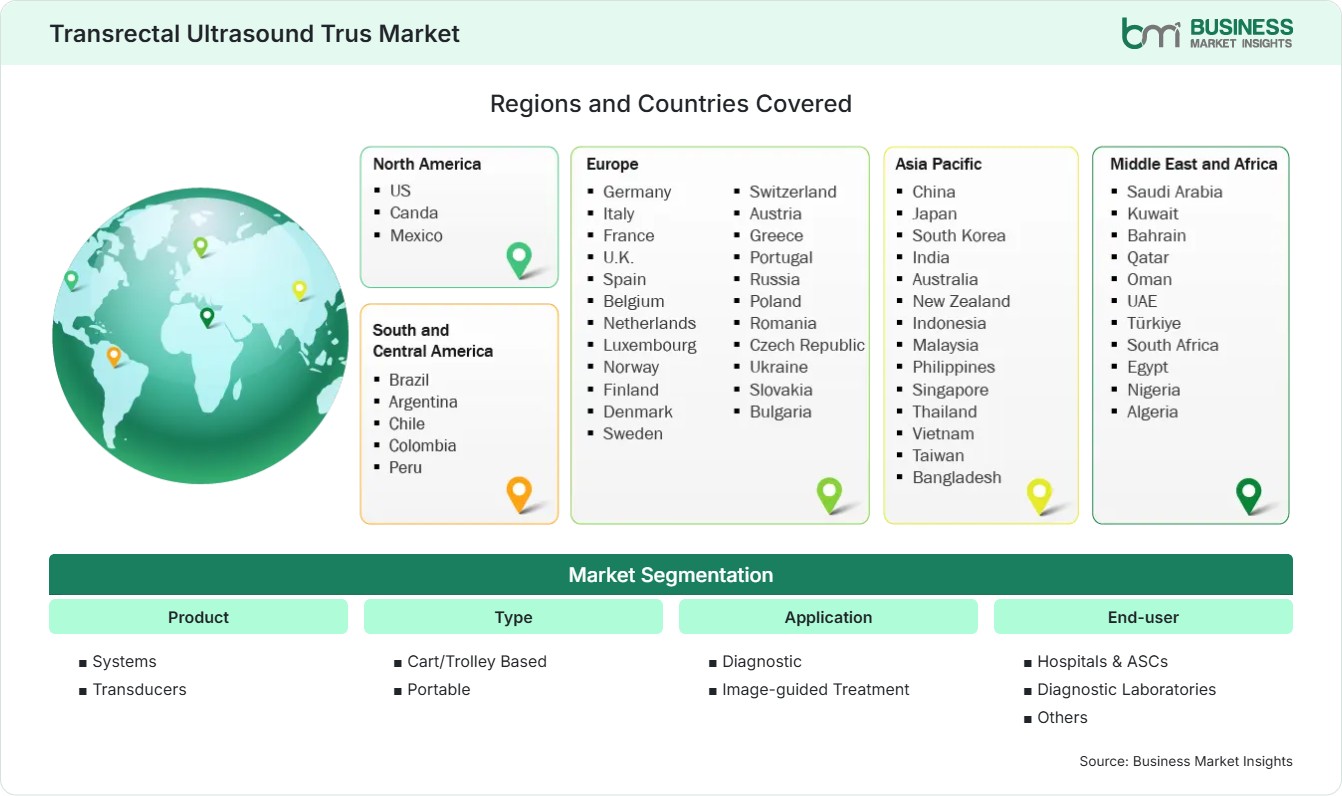
  • Product: Systems, Transducers
  • Type: Cart/Trolley Based, Portable
  • Application: Diagnostic, Image-guided Treatment
  • End-user: Hospitals & ASCs, Diagnostic Laboratories, Others
US$ 291.18 Mn Market size in 2025
US$ 520.37 Mn Market Size by 2033
7.53% CAGR, 2026 - 2033
2026-2033 Forecast Period

01 AI Overview

Transrectal Ultrasound Trus Market Summary

  • North America Region: North America holds 36%–39% market share in 2025 and is projected to grow at a 6.8%–7.4% CAGR during 2026–2033. Strong reimbursement policies, widespread prostate cancer screening, advanced imaging infrastructure, and increasing adoption of fusion-guided biopsy technologies continue supporting market expansion across hospitals and specialty diagnostic centers. The U.S. represents the dominant regional market with a projected 6.9%–7.5% CAGR, supported by strong clinical adoption, advanced healthcare infrastructure, and increasing prostate imaging procedures.
  • Fastest Growing Region: Asia Pacific accounts for 24%–27% market share in 2025 and is anticipated to register a 9.0%–9.8% CAGR through 2033. Expanding healthcare infrastructure, increasing prostate disease awareness, improving diagnostic accessibility, growing medical investments, and favorable government healthcare initiatives continue accelerating demand for advanced ultrasound imaging systems.
  • Leading Segment: Systems hold 58%–61% market share in 2025 while advancing at a 7.2%–7.8% CAGR through 2033. Continuous product innovation, superior imaging quality, workflow integration, increasing replacement demand, and hospital investments support strong adoption across diagnostic and image-guided treatment applications globally.
  • High Growth Segment: Portable systems account for 31%–34% market share in 2025 and are expected to expand at a 9.1%–9.9% CAGR during 2026–2033. Demand continues rising because of improved mobility, point-of-care diagnostics, outpatient procedures, lower ownership costs, and increasing adoption across ambulatory healthcare settings worldwide.
  • Key Market Opportunity: Integration of artificial intelligence with fusion imaging, cloud-enabled workflow management, portable diagnostic platforms, and precision-guided prostate interventions presents significant commercial opportunities for manufacturers addressing evolving clinical efficiency and diagnostic accuracy requirements.
  • Major Market Players: KOELIS; BK Medical Holding Company, Inc. (GE HealthCare Technologies Inc.); Exact Imaging; Telemed Medical Systems; FUJIFILM Corporation; Strata Imaging, Inc.; HALO Medical Technologies; GEOTEK Ltd.; Koninklijke Philips N.V.; Siemens Healthineers AG.
02 Strategic Insights

Transrectal Ultrasound Trus Market: Strategic Insights

Transrectal Ultrasound Trus Market Strategic Framework
FREE PDF
Request your free sample
Request free sample
03 Stakeholder View

Key Takeaways

  • The market ecosystem is becoming increasingly integrated as ultrasound manufacturers, software developers, AI solution providers, healthcare institutions, and urology specialists collaborate to improve imaging precision, diagnostic workflows, and patient management throughout the prostate care pathway.
  • The strongest commercial opportunities are concentrated in portable imaging platforms, MRI-ultrasound fusion-guided biopsy systems, and image-guided treatment applications, supported by growing demand for minimally invasive procedures and earlier prostate disease detection.
  • Product innovation is shifting toward artificial intelligence-enabled image interpretation, three-dimensional visualization, automated lesion localization, cloud-connected workflow management, and compact ultrasound systems that enhance clinical productivity and diagnostic accuracy.
  • Asia Pacific presents one of the most attractive long-term investment destinations due to expanding healthcare infrastructure, increasing prostate cancer awareness, rising healthcare expenditure, and government initiatives supporting advanced diagnostic imaging technologies across major economies.
  • Strategic partnerships, acquisitions, and technology licensing agreements are strengthening competitive positioning as manufacturers seek to integrate software intelligence, precision imaging capabilities, and digital healthcare platforms into comprehensive prostate imaging solutions.
  • Future competitive differentiation will depend on improving workflow automation, reducing procedural variability, expanding outpatient imaging capabilities, and delivering cost-effective ultrasound systems capable of supporting precision-guided diagnosis and treatment in diverse clinical environments.
04 Geographic Outlook

Transrectal Ultrasound Trus Market Regional Highlights

North America Transrectal Ultrasound Trus Market

North America accounted for 36%–39% of the global market in 2025 and is projected to expand at a 6.8%–7.4% CAGR during 2026–2033. The region benefits from established urology care networks, widespread prostate cancer screening, high healthcare expenditure, and rapid adoption of MRI-ultrasound fusion biopsy technologies. Continuous investments in digital imaging platforms and favorable reimbursement frameworks further strengthen the regional ecosystem. The Transrectal Ultrasound Trus Market share remains highest in North America owing to strong clinical infrastructure, early diagnosis initiatives, and continuous technological innovation.

  • Increasing incidence of prostate cancer and aging demographics continue driving demand for high-resolution transrectal ultrasound systems, while hospitals expand investments in precision imaging technologies to improve biopsy accuracy and treatment planning.
  • Adoption of MRI-ultrasound fusion biopsy platforms is accelerating across leading healthcare institutions, enhancing lesion localization, reducing unnecessary repeat biopsies, and improving physician confidence during image-guided procedures.
  • Strong reimbursement support and established clinical guidelines encourage hospitals and ambulatory surgical centers to modernize imaging infrastructure with advanced portable and cart-based ultrasound solutions for prostate diagnostics.
  • Continuous research collaborations between medical device manufacturers, academic hospitals, and urology centers support innovation in artificial intelligence-assisted imaging, workflow optimization, and precision-guided intervention technologies.
  • Growing emphasis on outpatient procedures and minimally invasive treatment pathways encourages healthcare providers to invest in compact imaging platforms that improve procedural efficiency while maintaining diagnostic quality.

US Transrectal Ultrasound Trus Market

The United States represents the largest contributor within North America, accounting for 78%–82% of the regional Transrectal Ultrasound Trus Market during 2025 while advancing at a 6.9%–7.5% CAGR through 2033. Strong diagnostic infrastructure, high prostate cancer awareness, continuous technology upgrades, and increasing adoption of fusion-guided biopsy systems sustain long-term expansion. Leading medical device manufacturers and favorable reimbursement policies continue supporting widespread implementation of advanced ultrasound technologies across hospitals, specialty clinics, and ambulatory surgical centers.

  • Large integrated healthcare systems continue adopting AI-assisted imaging software that enhances workflow efficiency, lesion characterization, and physician productivity during prostate biopsy procedures across high-volume medical centers.
  • Government-supported cancer awareness initiatives and clinical screening recommendations encourage earlier diagnosis, increasing procedural volumes for ultrasound-guided prostate imaging throughout the country.
  • Continuous replacement of aging ultrasound equipment with advanced three-dimensional imaging systems supports higher diagnostic confidence while improving patient experience and clinical outcomes.
  • Ongoing collaboration between healthcare providers and imaging technology companies accelerates commercialization of innovative biopsy guidance platforms designed to improve procedural precision and operational efficiency.

Europe Transrectal Ultrasound Trus Market

Europe captured 27%–30% of the global Transrectal Ultrasound Trus Market in 2025 and is expected to register a 7.1%–7.7% CAGR through 2033. Advanced public healthcare systems, increasing adoption of precision diagnostics, and favorable regulatory standards support market expansion. Germany leads regional demand because of strong medical technology adoption, while the United Kingdom demonstrates one of the fastest growth trajectories with a 7.6%–8.2% CAGR, supported by expanding prostate cancer screening initiatives and digital healthcare investments.

  • Growing implementation of multiparametric imaging protocols across European hospitals strengthens demand for high-performance ultrasound platforms supporting accurate prostate diagnosis and targeted interventions.
  • Germany maintains regional leadership through advanced healthcare infrastructure, strong domestic medical device manufacturing capabilities, and widespread utilization of image-guided urology procedures.
  • The United Kingdom records robust expansion as healthcare providers modernize diagnostic equipment and increase investment in precision oncology and minimally invasive treatment technologies.
  • European Union medical device regulations continue encouraging manufacturers to introduce clinically validated imaging technologies emphasizing safety, performance, and interoperability with hospital information systems.
  • Research collaborations among academic institutions, hospitals, and imaging companies accelerate innovation in artificial intelligence-assisted diagnostics and next-generation ultrasound visualization technologies.

Asia Pacific Transrectal Ultrasound Trus Market

Asia Pacific accounted for 24%–27% of the global Transrectal Ultrasound Trus Market in 2025 and is forecast to grow at the fastest pace with a 9.0%–9.8% CAGR between 2026 and 2033. Rising healthcare investments, expanding diagnostic infrastructure, increasing awareness of prostate disorders, and improving access to advanced imaging technologies are accelerating regional adoption. Japan leads the regional market, while India records one of the fastest growth rates at 9.6%–10.2% CAGR, supported by expanding healthcare capacity and rising diagnostic demand.

  • Increasing government investments in healthcare modernization encourage hospitals to adopt advanced ultrasound imaging systems capable of supporting precision-guided prostate diagnosis and treatment.
  • Japan remains the leading regional market due to advanced medical technology adoption, experienced clinical specialists, and widespread utilization of sophisticated diagnostic imaging equipment.
  • India demonstrates exceptional expansion as private healthcare providers increase investments in specialized diagnostic centers and advanced imaging platforms for early disease detection.
  • Medical tourism growth across several Asia Pacific countries supports demand for cost-effective, technologically advanced diagnostic solutions that improve clinical quality and operational efficiency.
  • Expanding domestic manufacturing capabilities and favorable regulatory reforms improve equipment availability while reducing procurement costs across emerging healthcare markets.

Rest of World Transrectal Ultrasound Trus Market

The Rest of World region represents 8%–11% of the global Transrectal Ultrasound Trus Market in 2025 and is projected to expand at a 7.4%–8.1% CAGR during the forecast period. South & Central America continue benefiting from expanding private healthcare investments and improved diagnostic accessibility. Meanwhile, the Middle East & Africa experience increasing adoption supported by healthcare modernization programs, specialized oncology centers, and growing government investments in advanced medical imaging infrastructure across major economies.

  • Brazil leads South & Central America through expanding diagnostic imaging networks, increasing healthcare expenditure, and growing awareness regarding early prostate disease detection.
  • Saudi Arabia records strong regional momentum as healthcare transformation initiatives encourage procurement of advanced diagnostic imaging equipment across public and private hospitals.
  • Rising private sector investment throughout Latin America improves accessibility to specialized urology services and advanced ultrasound-guided diagnostic procedures for broader patient populations.
  • Healthcare infrastructure development across Gulf Cooperation Council countries supports adoption of premium imaging technologies capable of improving procedural efficiency and clinical outcomes.
  • International medical technology partnerships continue strengthening regional distribution networks, technical support capabilities, clinician training programs, and long-term adoption of innovative prostate imaging solutions.
Global Market Geography
FREE PDF
Request your free sample
Request free sample
05 Segment Analysis

Transrectal Ultrasound Trus Market Segmentation

Product

The Product segment accounted for the largest contribution to the market in 2025, with Systems collectively holding 58%–61% of total revenue, while the overall segment is projected to expand at a 7.2%–7.8% CAGR through 2033. The Transrectal Ultrasound Trus Market scope continues expanding as healthcare providers replace conventional imaging platforms with advanced ultrasound systems offering higher image resolution, AI-enabled workflow support, and enhanced biopsy guidance capabilities.

  • Systems: Advanced ultrasound systems remain the primary revenue contributor because of superior image quality, integrated fusion imaging capabilities, artificial intelligence-assisted workflow optimization, and increasing deployment across hospitals and specialized urology centers.
  • Transducers: Growing preference for high-frequency transducers supports improved visualization of prostate anatomy, enhanced lesion localization, greater procedural precision, and compatibility with next-generation ultrasound platforms used during diagnostic and therapeutic procedures.

Type

The Type segment continues evolving as healthcare facilities balance imaging performance with operational flexibility. Cart/Trolley Based systems maintain the dominant position with 64%–67% Transrectal Ultrasound Trus Market share in 2025 and are expected to register a 7.0%–7.6% CAGR during the forecast period. Rising demand for portable imaging solutions across outpatient settings is reshaping purchasing decisions while encouraging manufacturers to develop compact, high-performance ultrasound platforms.

  • Cart/Trolley Based: Comprehensive imaging functionality, superior processing capability, seamless integration with hospital information systems, and extensive utilization during complex prostate diagnostic procedures continue supporting widespread adoption across tertiary healthcare facilities.
  • Portable: Portable ultrasound solutions are gaining momentum because of improved mobility, point-of-care imaging capabilities, simplified workflow, reduced infrastructure requirements, and increasing utilization within ambulatory surgical centers and outpatient diagnostic clinics.

Application

The Application segment remains central to industry expansion as healthcare providers increasingly emphasize early disease detection and precision-guided intervention. Diagnostic applications accounted for 69%–72% of total market share in 2025 and are projected to grow at a 7.1%–7.7% CAGR through 2033. The Transrectal Ultrasound Trus Market trends indicate increasing adoption of fusion-guided imaging technologies supporting both routine diagnosis and minimally invasive therapeutic procedures.

  • Diagnostic (Prostate Cancer, Benign Prostatic Hyperplasia): Diagnostic imaging remains the largest application because of increasing prostate cancer screening, growing prevalence of benign prostatic hyperplasia, improved imaging accuracy, and broader adoption of MRI-ultrasound fusion biopsy technologies.
  • Image-guided Treatment: Rising utilization of minimally invasive therapies, targeted biopsy procedures, focal treatment planning, and real-time ultrasound guidance continues expanding demand for advanced imaging systems supporting therapeutic precision and procedural efficiency.

End-user

The End-user segment is primarily driven by healthcare institutions seeking advanced imaging technologies that improve clinical outcomes and operational efficiency. Hospitals & ASCs represented 60%–63% of total Transrectal Ultrasound Trus Market revenue in 2025 and are anticipated to expand at a 7.3%–7.9% CAGR during 2026–2033. Increasing investments in diagnostic infrastructure, specialized urology departments, and precision imaging solutions continue supporting sustained market expansion across institutional healthcare providers.

  • Hospitals & ASCs: Hospitals and ambulatory surgical centers remain the principal end users owing to higher procedural volumes, availability of specialized clinicians, integrated imaging infrastructure, and continuous investment in advanced diagnostic technologies.
  • Diagnostic Laboratories: Independent diagnostic laboratories increasingly adopt advanced ultrasound equipment to enhance diagnostic accuracy, reduce patient referral timelines, support early disease detection, and expand specialized prostate imaging services across regional healthcare networks.
06 Market Forces

Transrectal Ultrasound Trus Market Dynamics

Key Market Drivers

Growing Burden of Prostate Cancer and Urological Disorders

The increasing prevalence of prostate cancer and benign prostatic hyperplasia continues to strengthen demand for advanced transrectal ultrasound imaging worldwide. According to the World Health Organization (WHO), prostate cancer remains among the most frequently diagnosed cancers in men, while GLOBOCAN estimates reported more than 1.4 million new prostate cancer cases globally in recent years. Earlier diagnosis through targeted screening programs and improved clinical awareness has increased the number of ultrasound-guided biopsy procedures performed annually. The Transrectal Ultrasound Trus Market growth is therefore supported by healthcare providers investing in high-resolution imaging systems capable of improving lesion localization, procedural accuracy, and treatment planning while reducing unnecessary repeat biopsies and enhancing patient outcomes.

Advancements in MRI-Ultrasound Fusion and Artificial Intelligence

Innovations within imaging technologies are revolutionizing the prostate diagnosis process through the integration of high-resolution ultrasound, magnetic resonance imaging fusion, and artificial intelligence image analysis. This is because of the improved visualization of suspicious lesions, automation of processes, and guidance of doctors in performing biopsy procedures. Continuous research collaborations between medical technology companies and academic institutions further accelerate the commercialization of precision imaging platforms. Integration into digital hospital information systems also makes workflow more efficient, thus making next-generation transrectal ultrasound systems more attractive to hospitals that need greater clinical efficiency and increased accuracy of diagnoses.

Increasing Adoption of Minimally Invasive Image-Guided Procedures

Healthcare systems worldwide continue shifting toward minimally invasive diagnostic and therapeutic procedures because they reduce recovery time, procedural complications, and healthcare costs. The technology of transrectal ultrasound has turned into an indispensable tool for guided procedures such as prostate biopsy, focused treatment, brachytherapy, and many others. Increased investment in ASCs and outpatient clinics is another driver that boosts the need for the device. As technology develops in terms of mobile ultrasound machines and advanced software, it is possible to carry out highly accurate procedures outside hospitals. These developments contribute to the continued growth of the market by enabling effective diagnosis and treatment of patients.

Key Market Opportunities

Expansion of AI-Enabled Precision Imaging Platforms

There are various benefits that can be achieved through the application of artificial intelligence in the development of intelligent ultrasound technology that can help to automate the detection of lesions. AI algorithms in imaging segmentation, anatomical recognition, and biopsy targeting have played a major role in making it easier for operators to perform their jobs and making diagnoses more consistent. The Transrectal Ultrasound Trus Market Forecasts indicate that those firms that invest in software enabled with artificial intelligence, predictive analytics, and imaging platforms would gain a competitive edge in the market along with responding to the increasing demand for precision medicine and personalized prostate cancer treatment.

Rising Healthcare Investments Across Emerging Economies

Economies in emerging countries such as those in the Asia Pacific region, Latin America, and Middle East continue expanding their investment in healthcare infrastructure, oncology clinics, and diagnostic technologies. Early cancer detection and increased access to diagnostic devices present significant growth opportunities for ultrasound equipment manufacturers. The private healthcare facilities are adopting the most modern ultrasound equipment within their radiology departments in view of coping with an increasing number of patients. Local manufacturers’ collaboration, technology licensing agreements, and expansion of distribution networks ensure better availability of products that help organizations gain access to new healthcare markets and sustain growth.

Growth of Outpatient Urology and Ambulatory Care Centers

The expanding role of ambulatory surgical centers and specialized outpatient urology clinics is creating favorable conditions for compact, portable, and cost-efficient ultrasound solutions. A trend that has been gaining ground among health care practitioners is that of adopting imaging systems which are both functional, flexible, and affordable. Ultrasound scanning machines that are portable are able to not only perform diagnostic work but also deliver minimally invasive treatment in addition to being highly efficient in the process. Companies which have the potential to deliver imaging software that is coupled with wireless technology and ergonomic design stand to gain from the trend.

Market Restraints and Challenges

High Capital Investment and Equipment Ownership Costs

Factor: Modern transrectal ultrasound devices that include MRI fusion technology, artificial intelligence software, and sophisticated imaging equipment necessitate high upfront costs, maintenance, training, and software upgrading.

Impact: Financial constraints hinder the adoption process for smaller hospitals, diagnostic labs, and health institutions that are faced with limited budget constraints. The inability to replace old devices and procurement constraints hinder the process of proliferation, especially in developing nations where health care expenditure is low. The financial constraints also hinder the implementation of high-end imaging technologies amid increasing demand for image-guided diagnosis of the prostate in clinical settings.

Shortage of Skilled Imaging Specialists and Procedural Variability

Factor: Prostate imaging through transrectal ultrasound and targeted prostate biopsy need trained radiologists and urologists who have expertise in image interpretation and procedural methods.

Impact: Workforce shortages and varying operator expertise contribute to inconsistent diagnostic performance, prolonged learning curves, and procedural variability across healthcare institutions. Healthcare establishments of lower sizes find it difficult to have highly trained specialists available. The manufacturers have to train clinicians about the use of technology through better educational programs, software that is user-friendly and supported by AI, and complete training programs for the optimal use of such technologies.

07 Company Analysis

Competitive Landscape

The Transrectal Ultrasound Trus Market analysis indicates a competitive ecosystem shaped by global imaging technology leaders, specialized prostate imaging companies, and healthcare solution providers focused on improving diagnostic accuracy. Companies are investing in AI integration, fusion imaging capabilities, portable ultrasound platforms, and software-driven workflow solutions to strengthen their market position.

Company Name

Overview

Products and Services relevant to this market

KOELIS

KOELIS develops precision urology solutions focused on prostate cancer diagnosis through advanced navigation and imaging technologies.

Offers Trinity fusion biopsy platforms, prostate mapping solutions, and image-guided technologies supporting targeted prostate procedures.

GE HealthCare Technologies Inc.

GE HealthCare is a global medical technology company providing advanced imaging and healthcare solutions across multiple clinical applications.

Provides BK Medical ultrasound systems, transducers, and intraoperative imaging solutions used in urology and prostate procedures.

Exact Imaging

Exact Imaging specializes in high-resolution micro-ultrasound technology designed specifically for prostate imaging applications.

Develops ExactVu micro-ultrasound systems enabling real-time visualization, targeted biopsy guidance, and improved prostate cancer detection.

Telemed Medical Systems

Telemed Medical Systems develops ultrasound technologies and diagnostic imaging solutions for healthcare professionals globally.

Provides ultrasound scanners, probes, and imaging platforms supporting diagnostic applications including urological examinations.

FUJIFILM Corporation

FUJIFILM delivers medical imaging solutions combining advanced hardware, software, and digital healthcare technologies.

Offers ultrasound imaging systems and diagnostic solutions supporting clinical workflows and precision healthcare applications.

Strata Imaging, Inc.

Strata Imaging provides healthcare imaging solutions designed to improve diagnostic workflows and accessibility.

Supplies ultrasound imaging equipment, refurbished systems, and healthcare technology services for clinical environments.

HALO Medical Technologies

HALO Medical Technologies focuses on innovative healthcare technologies supporting advanced diagnostic procedures.

Provides medical imaging technologies and specialized solutions designed for improving clinical diagnostic capabilities.

GEOTEK Ltd.

GEOTEK develops medical imaging technologies and ultrasound-related solutions for healthcare applications.

Offers ultrasound systems and diagnostic imaging equipment supporting medical professionals across multiple specialties.

Koninklijke Philips N.V.

Philips is a global healthcare technology company offering connected imaging and diagnostic solutions.

Provides ultrasound systems, advanced imaging software, and integrated healthcare platforms supporting diagnostic and therapeutic procedures.

Siemens Healthineers AG

Siemens Healthineers develops medical imaging technologies focused on precision diagnosis and healthcare digitalization.

Provides ultrasound imaging systems, clinical workflow solutions, and advanced healthcare technologies used in diagnostic environments.

10 Trust & Transparency

Research Methodology

The market analysis combines proprietary research with secondary data from government agencies, company disclosures, regulatory filings, industry databases and expert interviews. Market estimates are validated through data triangulation, cross-market benchmarking and analyst review.

View Full Research Methodology

11 Questions Answered

Frequently Asked Questions

What is covered in the Transrectal Ultrasound Trus Market Report?

The Transrectal Ultrasound Trus Market Report covers market size analysis, growth trends, segmentation, regional insights, competitive landscape, technological developments, opportunities, challenges, and forecast analysis from 2026–2033.

Why are emerging markets important for future growth?

Emerging markets offer opportunities due to expanding healthcare infrastructure, increasing awareness of prostate disorders, rising diagnostic investments, and government initiatives improving access to advanced medical technologies.

Which product type is expected to witness stronger adoption?

Portable ultrasound systems are expected to experience faster adoption because they provide mobility, lower infrastructure requirements, point-of-care capabilities, and improved accessibility across outpatient healthcare environments.

How is artificial intelligence influencing prostate ultrasound imaging?

AI improves image interpretation, lesion detection, workflow automation, and procedural accuracy by assisting clinicians with advanced visualization tools and reducing variability during prostate diagnostic procedures.

What factors are driving demand for transrectal ultrasound systems?

Demand is increasing due to rising prostate cancer screening, growing adoption of minimally invasive biopsy procedures, improved imaging technologies, and healthcare investments supporting early diagnosis and precision-guided treatment.

Access the Full Transrectal Ultrasound Trus Market Report

Get segment-level forecasts, regional estimates, competitive benchmarking, company profiles and downloadable Excel datasets.

Access the full Transrectal Ultrasound Trus Market Report
350 pages PDF & Excel | 2026-08-17