Market Summary
Executive Summary and Market Analysis
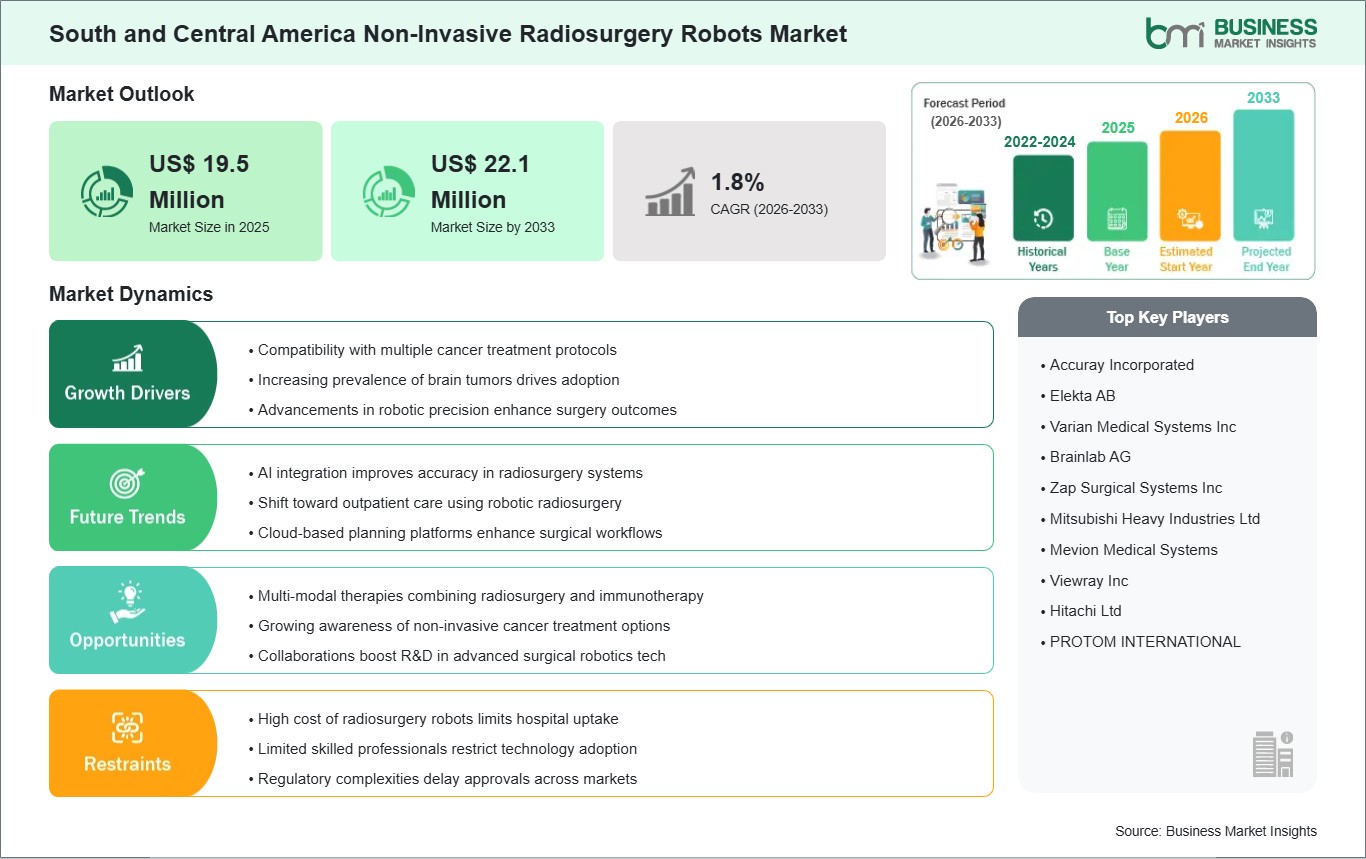
The South and Central America Non-Invasive Radiosurgery Robots market is emerging as a dynamic segment within the broader healthcare technology landscape, driven by rising demand for precision oncology and neurosurgical interventions. Hospitals and specialized treatment centers in countries across the region are increasingly adopting robotic radiosurgery systems to deliver high-precision radiation therapy for complex brain, spinal, and other oncological cases. These systems reduce invasiveness, improve patient safety, and enable accelerated recovery compared to conventional surgical procedures. Market dynamics are shaped by a combination of international robotics manufacturers, regional distributors, and local technology integrators. Adoption is concentrated in urban tertiary hospitals and high-volume cancer centers that possess advanced imaging infrastructure and trained clinical personnel. Private hospitals are leading deployment to differentiate services and attract both domestic and international patients, while public hospitals are gradually integrating robotic systems through government-supported programs and pilot projects. Key market drivers include growing awareness of minimally invasive therapies, increasing incidence of cancer and neurological disorders, and a focus on enhancing clinical outcomes. Challenges include high upfront capital requirements, a limited pool of skilled specialists, and regulatory heterogeneity across countries, which can delay procurement and deployment. Additionally, hospitals must navigate workflow integration, infrastructure limitations, and staff training to fully leverage robotic systems. Despite these challenges, the clinical advantages of robotic radiosurgery—enhanced precision, reduced complication rates, and operational efficiency—position it as a strategic investment. Overall, South and Central America presents a promising growth environment for non-invasive radiosurgery robots, where early adoption by leading hospitals establishes benchmarks for clinical excellence and sets the stage for wider regional expansion.
Segment Analysis
South and Central America Non-Invasive Radiosurgery Robots Market Segmentation
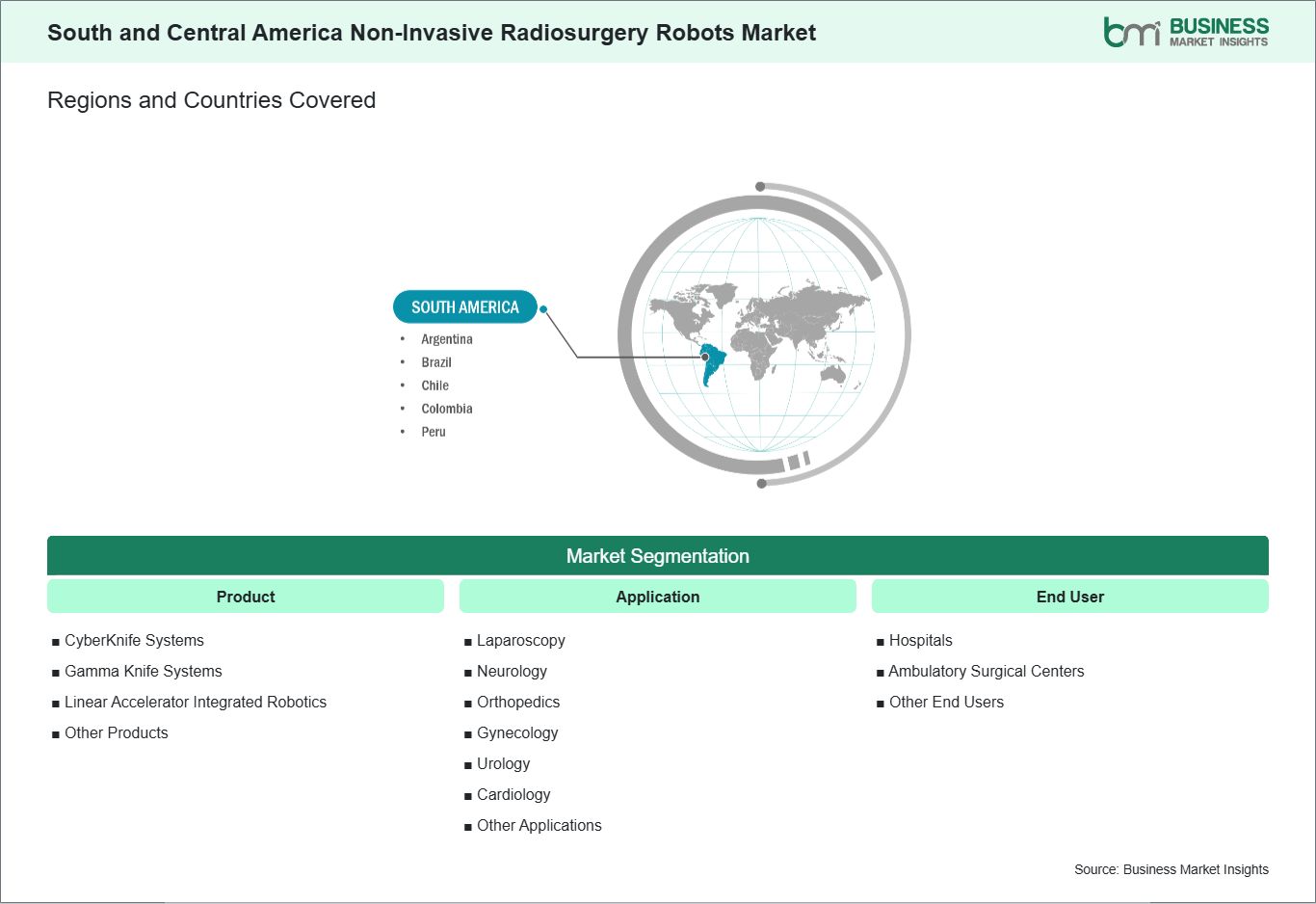
Key segments that contributed to the derivation of the South and Central America non-invasive radiosurgery robots market analysis are product, application, and end user.
- By product, the non-invasive radiosurgery robots market is segmented into cyberknife systems, gamma knife systems, linear accelerator (linac) integrated robotics and other products. The medication cyberknife systems segment dominated the market in 2025.
- In terms of application, the non-invasive radiosurgery robots market is categorized into laparoscopy, neurology, orthopedics, gynecology, urology, cardiology and other applications. The laparoscopy segment dominated the market in 2025.
- Based on end user, the market is classified into hospitals, ambulatory surgical centers and other end users. The hospitals segment dominated the market in 2025.
Market Forces
South and Central America Non-Invasive Radiosurgery Robots Market Drivers and Opportunities
Compatibility with multiple cancer treatment protocols
The South and Central America non-invasive radiosurgery robots market is growing due to the technology’s compatibility with a wide range of cancer treatment protocols. Hospitals and oncology centers in the region are increasingly seeking versatile solutions that can be integrated with existing radiotherapy, chemotherapy, and surgical approaches. Robotic radiosurgery systems allow clinicians to deliver highly precise radiation therapy while maintaining flexibility to adjust treatment plans based on tumor type, size, and location. This compatibility ensures that patients receive personalized, evidence-based care while reducing the need for multiple invasive procedures, which is particularly valuable in regions where healthcare resources may be limited. In South and Central America, hospitals are using non-invasive radiosurgery robots to complement conventional oncology protocols, enabling clinicians to treat tumors in sensitive or complex anatomical areas such as the brain, spine, and head and neck regions. The ability to integrate robotic radiosurgery with ongoing chemotherapy or targeted therapy programs provides a coordinated treatment approach that improves outcomes while minimizing adverse effects. Clinics benefit from the adaptability of these systems, which allow for rapid adjustments in treatment schedules and doses depending on patient response. This flexibility helps streamline oncology workflows and maximizes the clinical value of each intervention. Furthermore, the adoption of multi-protocol-compatible radiosurgery robots supports capacity-building in regional healthcare systems. By offering versatile treatment options, hospitals can treat a broader spectrum of cancer cases without requiring separate specialized equipment for each protocol. This capability also reduces the learning curve for clinical teams, allowing radiation oncologists and technicians to operate a single platform effectively across multiple tumor types. Overall, the compatibility of non-invasive radiosurgery robots with diverse treatment protocols is enhancing patient care and driving adoption across South and Central America.
Multi-modal therapies combining radiosurgery and immunotherapy
The South and Central America non-invasive radiosurgery robots market is also being shaped by the growing interest in multi-modal cancer therapies that combine radiosurgery with immunotherapy. Oncologists in the region are exploring synergistic treatment approaches, where precise radiation delivered by robotic systems enhances the body’s immune response to tumors. By combining high-accuracy radiosurgery with immunotherapy, clinicians aim to improve local tumor control while stimulating systemic anti-cancer activity. This integrated strategy represents a cutting-edge approach to oncology care, particularly for patients with advanced or difficult-to-treat cancers. Hospitals in major urban centers of South and Central America are increasingly implementing coordinated treatment plans that pair robotic radiosurgery with immunotherapy protocols. The precision of robotic systems ensures that radiation is delivered exactly to tumor sites, minimizing damage to surrounding tissue and allowing the immune system to respond more effectively. This combination not only increases the likelihood of successful treatment outcomes but also expands options for patients who may not tolerate traditional surgery or high-dose radiation. Clinics are investing in multidisciplinary teams to monitor patient responses and optimize the timing and dosage of both radiosurgery and immunotherapy interventions. Moreover, multi-modal therapies encourage clinical research and collaboration within the region, fostering innovation in cancer treatment. Hospitals and academic institutions are conducting studies to evaluate the efficacy of combining radiosurgery with immunotherapy across various tumor types, generating evidence that supports best practices and protocol development. The ability to deliver integrated therapies with robotic precision also enhances patient confidence and treatment accessibility, strengthening the overall adoption of advanced oncology technologies. As South and Central America continue to develop infrastructure for specialized cancer care, multi-modal approaches combining radiosurgery and immunotherapy are expected to drive growth in the regional market.
Size and Share Analysis
South and Central America Non-Invasive Radiosurgery Robots Market Size and Share Analysis
The South and Central America non-invasive radiosurgery robots market demonstrates steady growth, with size and share analysis highlighting evolving trends and competitive dynamics among key players. The report examines subsegments categorized within product, application, and end user, offering insights into their contribution to overall market performance.
By product, the medication cyberknife systems segment dominated the market in 2025, driven by increasing demand for high‑precision, image‑guided radiosurgery that enables effective non‑invasive tumor treatment with minimal harm to surrounding healthy tissue.
In terms of application, the laparoscopy subsegment dominated the market in 2025, driven by growing adoption of minimally invasive procedures that offer reduced recovery times, fewer complications, and better patient outcomes.
Based on end user, the hospitals subsegment dominated the market in 2025, driven by expanding oncology services and investments in advanced healthcare infrastructure that support acquisition and use of robotic radiosurgery systems.
Report Coverage
South and Central America Non-Invasive Radiosurgery Robots Market Report Coverage and Deliverables
The "South and Central America Non-Invasive Radiosurgery Robots Market Size and Forecast (2022–2033)" report provides a detailed analysis of the market covering below areas:
- South and Central America Non-Invasive Radiosurgery Robots Market size and forecast at regional and country levels for all segments covered under the scope
- South and Central America Non-Invasive Radiosurgery Robots Market trends, as well as drivers, restraints, and opportunities
- South and Central America Non-Invasive Radiosurgery Robots Market analysis covering key trends, regional framework, major players, regulations, and recent developments
- Industry landscape and competition analysis covering market concentration, heat map analysis, prominent players, and recent developments for the South and Central America Non-Invasive Radiosurgery Robots Market
- Detailed company profiles, including SWOT analysis
Geographic Insights
South and Central America Non-Invasive Radiosurgery Robots Market Geographic Insights
The geographical scope of the South and Central America Non-Invasive Radiosurgery Robots Market report is divided into Brazil, Argentina, Peru, Chile, and Colombia. Brazil held the largest share in 2025.
Country-level adoption of non-invasive radiosurgery robots in South and Central America is highly influenced by healthcare infrastructure, hospital specialization, and investment capacity. Brazil emerges as the dominant market, with hospitals in São Paulo, Rio de Janeiro, and Brasília leading deployment due to advanced tertiary hospitals, robust private healthcare networks, and strong government-supported training initiatives. Brazilian hospitals leverage robotic radiosurgery to enhance treatment precision, operational efficiency, and patient outcomes, making it the primary driver of regional market growth. Mexico represents another key market, with urban hospitals in Mexico City, Monterrey, and Guadalajara implementing robotic systems to strengthen oncology and neurosurgery capabilities while gradually expanding access to patients through referral networks. Argentina, Chile, Peru, and Colombia are emerging markets, with adoption concentrated in tertiary hospitals and specialized cancer centers. These hospitals prioritize accurate treatment delivery, patient safety, and workflow efficiency while leveraging partnerships with vendors for technical training and support. Across all countries, successful adoption is supported by flexible financing options, ongoing vendor support, and structured professional training programs. High-volume urban hospitals act as innovation hubs, setting clinical and operational benchmarks, while smaller regional hospitals often rely on shared-service or referral models to provide patient access. Brazil’s dominance reflects its larger healthcare infrastructure, higher investment capacity, and concentration of advanced tertiary hospitals, while other countries provide incremental opportunities as awareness and healthcare modernization continue to expand across the region.
Industry Activity
Recent Developments
The South and Central America Non-Invasive Radiosurgery Robots Market is evaluated by gathering qualitative and quantitative data post primary and secondary research, which includes important corporate publications, association data, and databases. A few of the key developments in the South and Central America non-invasive radiosurgery robots market are:
- In November 2025, ZAP Surgical’s ZAP‑Axon Radiosurgery Planning System a key component integrated with the ZAP‑X Gyroscopic Radiosurgery platform received both U.S. FDA 510(k) clearance and EU CE certification, authorising clinical use of advanced planning software that complements robotic radiosurgery workflows. This dual approval enhances the broader ZAP‑X ecosystem’s regulatory credentials, supporting global clinical deployments including Latin America. With planning and delivery software now cleared, institutions can more easily adopt and integrate ZAP‑X systems into radiosurgery programs. This regulatory milestone strengthens confidence among purchasers and clinicians.
- In January 2025, a safety/tecnovigilancia communication from Accuray Brasil concerning the “Sistema de Aplicacao do Tratamento CyberKnife” mentions that the product holds ANVISA registration (Registro N- 81399020003) and was under active distribution in Brazil, confirming that the CyberKnife robotic radiosurgery system is registered with ANVISA for legal clinical use.
Trust & Transparency
Research Methodology
The market analysis combines proprietary research with secondary data from government agencies, company disclosures, regulatory filings, industry databases and expert interviews. Market estimates are validated through data triangulation, cross-market benchmarking and analyst
review.
View Full Research Methodology
Key Sources Referred:
World Health Organization (WHO)Organisation for Economic Cooperation and Development (OECD)The World Bank GroupWorldometerThe LancetInternational Bar AssociationInternational Trade Administration