Analysis By Product (40 Microns and 70 Microns, 100 Microns and 170 Microns, and Others), Material (Polycarbonate, Polyester, ABS, and Others), Application (Blood Processing and Blood Transfusion), and End User (Blood Banks, Hospitals, and Others)
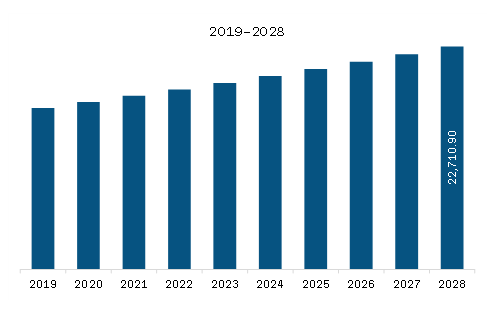
The blood filter market in South and Central America is expected to grow from US$ 17,667.87 thousand in 2021 to US$ 22,710.90 thousand by 2028; it is estimated to grow at a CAGR of 3.7% from 2021 to 2028.
Aging population and lifestyle changes are leading to a steady increase in the prevalence of chronic medical conditions. The rapidly growing middle-class population and urbanization are driving the adoption of a sedentary lifestyle. The modernization of facilities reduces physical activities among people, while various personal, professional, and societal factors are adding to their stress levels. Arthritis; cardiovascular diseases, e.g., heart attacks and stroke; breast and colon cancer; diabetes; epilepsy and seizures; obesity; and oral health problems are among the leading chronic diseases reported among elderlies in developed countries. Chronic diseases affect public health, societies, and economies in various countries. Blood filters are widely used in various surgical procedures, such as cardiac surgery and other invasive procedures. Chronic diseases such as cancer, cardiovascular diseases, and renal disorders are the major causes of human death. These conditions are generally treated via surgical procedures, which are associated with a chance of excessive blood loss. Thus, these procedures are followed by the infusion of fresh blood to patients or reinfusion of their own blood. Blood filters are used during the blood infusion or reinfusion processes. Therefore, the South and Central America blood filter market is growing with the rapid increase in the burden of chronic diseases.
In South and Central America, Brazil, Peru, Chile, Ecuador, and Venezuela have reported a large number of COVID-19 cases. Many countries in South America have underdeveloped healthcare infrastructure. For instance, Peru has less than 1000 intensive care unit beds for its 32 million inhabitants. Supply chain disruptions caused due to the congestion of ports and disturbances in other transport means had a substantial impact on the distribution of associated devices in the region. All these factors considerably deterred the growth of the South and Central America blood filter market. Further, with the redirected focus on managing COVID-19 cases, the non-urgent medical procedures were delayed in hospitals in South and Central American countries. Several clinics have postponed or dropped numerous elective surgeries, especially those that are considered non-urgent. This led to reduced demand for blood filters due to the lowered blood transfusion procedures.
South and Central America Blood Filter Market Revenue and Forecast to 2028 (US$ Thousand)
South and Central America Blood Filter Market Segmentation
South and Central America Blood Filter Market – By Product
40 Microns and 70 Microns
100 Microns and 170 Microns
Others
South and Central America Blood Filter Market – By Material
Polycarbonate
Polyester
ABS
Others
South and Central America Blood Filter Market – ByApplication
Blood Processing
Blood Transfusion
Whole Blood
Red Cell
Plasma and Platelet Filtration
South and Central America Blood Filter Market – ByEnd User
Blood Banks
Hospitals
Others
South and Central America Blood Filter Market– By Country
Brazil
Argentina
Rest of South and Central America
South and Central America Blood Filter Market-Companies Mentioned
Asahi Kasei Corporation
Fresenius Kabi AG
Haemonetics Corporation
KANEKA CORPORATION
Kawasumi laboratories. Inc.
Macopharma
Nanjing Shuangwei Biotechnology Co., Ltd.
Sefar AG
Shandong Zhongbaokang Medical Implements Co., Ltd
South and Central America Blood Filter Market Strategic Insights
Get more information on this report
South and Central America Blood Filter Market Segmentation Analysis
South and Central America Blood Filter Market Report Highlights
South and Central America Blood Filter Report Scope
Report Attribute
Details
Market size in 2021
US$ 17,667.87 thousand
Market Size by 2028
US$ 22,710.90 thousand
CAGR (2021 - 2028)
3.7%
Historical Data
2019-2020
Forecast period
2022-2028
Segments Covered
By Product
40 Microns and 70 Microns
100 Microns and 170 Microns
By Material
Polycarbonate
Polyester
ABS
By Application
Blood Processing
Blood Transfusion
By End User
Blood Banks
Hospitals
Regions and Countries Covered
South and Central America
Brazil, Argentina, Rest of South and Central America
Market leaders and key company profiles
Asahi Kasei Corporation
Fresenius Kabi AG
Haemonetics Corporation
KANEKA CORPORATION
Kawasumi laboratories. Inc.
Macopharma
Nanjing Shuangwei Biotechnology Co., Ltd.
Sefar AG
Shandong Zhongbaokang Medical Implements Co., Ltd
Get more information on this report
South and Central America Blood Filter Market Country and Regional Insights
Get more information on this report
Identical Market Reports with other Region/Countries
The List of Companies - South and Central America Blood Filter Market
Asahi Kasei CorporationFresenius Kabi AGHaemonetics CorporationKANEKA CORPORATIONKawasumi laboratories. Inc.MacopharmaNanjing Shuangwei Biotechnology Co., Ltd.Sefar AGShandong Zhongbaokang Medical Implements Co., Ltd
Frequently Asked Questions
How big is the South and Central America Blood Filter Market?
The South and Central America Blood Filter Market is valued at US$ 17,667.87 thousand in 2021, it is projected to reach US$ 22,710.90 thousand by 2028.
What is the CAGR for South and Central America Blood Filter Market by (2021 - 2028)?
As per our report South and Central America Blood Filter Market, the market size is valued at US$ 17,667.87 thousand in 2021, projecting it to reach US$ 22,710.90 thousand by 2028. This translates to a CAGR of approximately 3.7% during the forecast period.
What segments are covered in this report?
The South and Central America Blood Filter Market report typically cover these key segments-
Product (40 Microns and 70 Microns, 100 Microns and 170 Microns)
Material (Polycarbonate, Polyester, ABS)
Application (Blood Processing, Blood Transfusion)
End User (Blood Banks, Hospitals)
What is the historic period, base year, and forecast period taken for South and Central America Blood Filter Market?
The historic period, base year, and forecast period can vary slightly depending on the specific market research report. However, for the South and Central America Blood Filter Market report:
Historic Period : 2019-2020
Base Year : 2021
Forecast Period : 2022-2028
Who are the major players in South and Central America Blood Filter Market?
The South and Central America Blood Filter Market is populated by several key players, each contributing to its growth and innovation. Some of the major players include:
Asahi Kasei Corporation
Fresenius Kabi AG
Haemonetics Corporation
KANEKA CORPORATION
Kawasumi laboratories. Inc.
Macopharma
Nanjing Shuangwei Biotechnology Co., Ltd.
Sefar AG
Shandong Zhongbaokang Medical Implements Co., Ltd
Who should buy this report?
The South and Central America Blood Filter Market report is valuable for diverse stakeholders, including:
Investors: Provides insights for investment decisions pertaining to market growth, companies, or industry insights. Helps assess market attractiveness and potential returns.
Industry Players: Offers competitive intelligence, market sizing, and trend analysis to inform strategic planning, product development, and sales strategies.
Suppliers and Manufacturers: Helps understand market demand for components, materials, and services related to concerned industry.
Researchers and Consultants: Provides data and analysis for academic research, consulting projects, and market studies.
Financial Institutions: Helps assess risks and opportunities associated with financing or investing in the concerned market.
Essentially, anyone involved in or considering involvement in the South and Central America Blood Filter Market value chain can benefit from the information contained in a comprehensive market report.




 Get Free Sample For South and Central America Blood Filter Market