Analysis By Crop Type (Tomato, Leafy Greens, Herbs, and Others), End-Use (Food Retail, and Food Service), and Farming Technique (Hydroponics, Aeroponics, and Aquaponics)
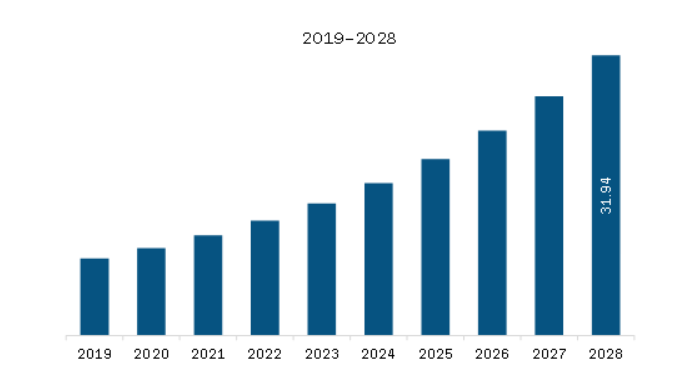
The vertical farming crops market in South America is expected to grow from US$ 31.94 million in 2021 to US$ 11.43 million by 2028; it is estimated to grow at a CAGR of 15.8% from 2021 to 2028.
Vertical farming is a massively promising agricultural technique that aims to produce more food to meet the growing population. Vertical farming includes growing crops in vertical frames or high-rise farms, saving ground space while relocating farms into urban areas, and producing nutritious crops without topsoil. The rising demand for organic food among the population triggers market growth. High usage of synthetic chemical fertilizers and pesticides in food products often leads to several health issues, including cancer, obesity, and other congenital disabilities. These factors are driving the consumers' inclination toward locally grown organic produce. Furthermore, due to the increasing focus on health and nutrition, consumers' demand for pesticide-free food products has grown exponentially. This, in turn, is fueling the demand for vertically farmed crops as they are cultivated with extreme hygiene, free of pesticides, and delivered to the retail stores within hours of harvest. Furthermore, especially in metropolitan areas, consumers are becoming more conscious about the techniques used for growing the crops and prefer food free from chemical pesticides and genetically modified organisms, thereby driving the demand for vertical farming crops across the region. Moreover, the essential nutrients in fruits and vegetables are reduced considerably during import and export. Also, most conventionally grown produce is sprayed with pesticides and fungicides. These factors drive the consumers’ inclination toward locally grown produce free from chemical fertilizers and pesticides. Besides, the food produced in vertical farms is fresh, local, suitable for environmental air quality, and pesticide-free. Therefore, the rise in demand for fresh, pesticide-free, and locally grown produce will provide huge market opportunities over the projected period.
Brazil had the highest number of COVID-19 cases, followed by Ecuador, Chile, Peru, and Argentina. South America's government had taken an array of actions to protect its citizens against the COVID-19 spread. South America faced lower export revenues, both from the drop-in commodity prices and reduction in export volumes, especially to China, Europe, and the U.S, which are important trade partners. In several South American countries, containment measures reduced economic activity in the agriculture sector for at least the next quarter. However, the players in the area come up with opportunities. For instance, to respond to the COVID-19 pandemic, Pink Farms shifted its sales online and developed a new product line, "microgreens," early-harvest leaf vegetables packed with nutrients and flavor. Pink Farms is the first vertical farm in Sao Paulo, Brazil. Such strategies are projected to uplift market growth in the coming years.
Vendors attract new customers and expand their footprints in emerging markets with the new features and technologies, thereby driving the South America vertical farming crops market. The South America vertical farming crops market is expected to grow at a significant CAGR during the forecast period.
South America Vertical Farming Crops Market Revenue and Forecast to 2028 (US$ Million)
South America Vertical Farming Crops Market Segmentation
South America Vertical Farming Crops Market – ByCrop Type
Tomato
Leafy Greens
Herbs
Others
South America Vertical Farming Crops Market – ByEnd-Use
Food Service
Food Retail
South America Vertical Farming Crops Market – ByFarming Technique
Hydroponics
Aeroponics
Aquaponics
South America Vertical Farming Crops Market – ByCountry
Brazil
Argentina
Rest of SAM
South America Vertical Farming Crops Market – Companies Mentioned
AeroFarms
CropOne
Plantlab
Gotham Greens
South America Vertical Farming Crops Market Strategic Insights
Get more information on this report
South America Vertical Farming Crops Market Segmentation Analysis
South America Vertical Farming Crops Market Report Highlights
South America Vertical Farming Crops Report Scope
Report Attribute
Details
Market size in 2021
US$ 31.94 Million
Market Size by 2028
US$ 11.43 Million
CAGR (2021 - 2028)
15.8%
Historical Data
2019-2020
Forecast period
2022-2028
Segments Covered
By Crop Type
Tomato
Leafy Greens
Herbs
By End-Use
Food Retail
Food Service
By Farming Technique
Hydroponics
Aeroponics
Aquaponics
Regions and Countries Covered
South and Central America
Brazil, Argentina, Rest of South and Central America
Market leaders and key company profiles
AeroFarms
CropOne
Plantlab
Gotham Greens
Get more information on this report
South America Vertical Farming Crops Market Country and Regional Insights
Get more information on this report
Identical Market Reports with other Region/Countries
The List of Companies - South America Vertical Farming Crops Market
AeroFarms CropOne Plantlab Gotham Greens
Frequently Asked Questions
How big is the South America Vertical Farming Crops Market?
The South America Vertical Farming Crops Market is valued at US$ 31.94 Million in 2021, it is projected to reach US$ 11.43 Million by 2028.
What is the CAGR for South America Vertical Farming Crops Market by (2021 - 2028)?
As per our report South America Vertical Farming Crops Market, the market size is valued at US$ 31.94 Million in 2021, projecting it to reach US$ 11.43 Million by 2028. This translates to a CAGR of approximately 15.8% during the forecast period.
What segments are covered in this report?
The South America Vertical Farming Crops Market report typically cover these key segments-
What is the historic period, base year, and forecast period taken for South America Vertical Farming Crops Market?
The historic period, base year, and forecast period can vary slightly depending on the specific market research report. However, for the South America Vertical Farming Crops Market report:
Historic Period : 2019-2020
Base Year : 2021
Forecast Period : 2022-2028
Who are the major players in South America Vertical Farming Crops Market?
The South America Vertical Farming Crops Market is populated by several key players, each contributing to its growth and innovation. Some of the major players include:
AeroFarms
CropOne
Plantlab
Gotham Greens
Who should buy this report?
The South America Vertical Farming Crops Market report is valuable for diverse stakeholders, including:
Investors: Provides insights for investment decisions pertaining to market growth, companies, or industry insights. Helps assess market attractiveness and potential returns.
Industry Players: Offers competitive intelligence, market sizing, and trend analysis to inform strategic planning, product development, and sales strategies.
Suppliers and Manufacturers: Helps understand market demand for components, materials, and services related to concerned industry.
Researchers and Consultants: Provides data and analysis for academic research, consulting projects, and market studies.
Financial Institutions: Helps assess risks and opportunities associated with financing or investing in the concerned market.
Essentially, anyone involved in or considering involvement in the South America Vertical Farming Crops Market value chain can benefit from the information contained in a comprehensive market report.





 Get Free Sample For South America Vertical Farming Crops Market