Analysis By Crop Type (Tomato, Leafy Greens, Herbs, and Others), End-Use (Food Retail, and Food Service), and Farming Technique (Hydroponics, Aeroponics, and Aquaponics)
No. of Pages:95
Report Code:
TIPRE00028735
Category:
Consumer Goods
Middle East and Africa Vertical Farming Crops Market
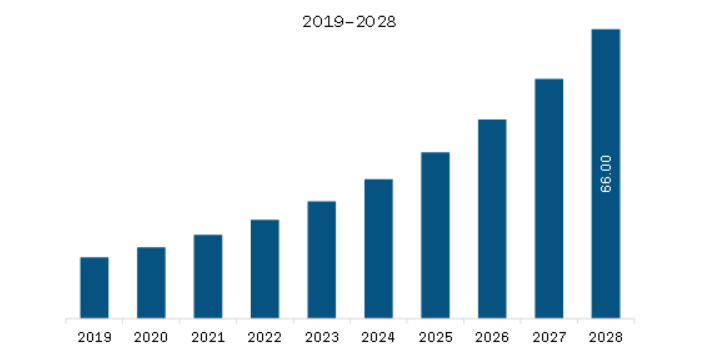
The vertical farming crops market in the Middle East & Africa(MEA) is expected to grow from US$ 19.12 million in 2021 to US$ 66.00 million by 2028; it is estimated to grow at a CAGR of 19.4% from 2021 to 2028.
The growth of the population, combined with a looming water crisis, is moving the Earth toward a major food crisis. The impact of climate change is variable and unpredictable, thereby adding pressure on the food system. For example, higher CO2 levels increase some crop yields but reduce their nutritional values. Further, warmer temperatures lead to the growth of many new pests and weeds. In addition, extreme temperatures lead to droughts or excessive rainfall, thereby preventing crops from growing. Vertical farming can be part of the solution as it uses less water and allows farmers to control the climate needed for the crops. For instance, the UAE is building the world's largest indoor farm. The country's dry climate, low soil quality, and occasional locust plagues make indoor farming a more economical and feasible alternative. Vertical farms do not use soil for farming. They use little water (compared to traditional agricultural practices) and a combination of natural and artificial lighting. Also, the manufacturers' strategic activities are further driving the adoption of vertical farming. For instance, companies such as Signify and Valoya are developing better lighting solutions, resulting in a decrease in the costs of running a vertical farm.
Saudi Arabia had the highest COVID-19 cases in the MEA region and is followed by Turkey and the UAE. The UAE was the first country in the Middle East and Africa to report a confirmed case of COVID-19. However, support by the government during the COVID-19 outbreak will offer opportunities in the region. For instance, in October 2020, FAO launched a pioneering project to provide capacity building and technical support for Jordan's Integrated Agri-Aquaculture (IAA) farming systems. The project was designed to train unemployed agricultural engineer graduates and farmers, set up a knowledge base, and research “Hydroponics and Aquaponics” farming units. Furthermore, it aimed to support youth and women's employment by creating employment opportunities in aquaponics and hydroponics.
Vendors can attract new customers and expand their footprints in emerging markets with the new features and technologies, thereby driving the Middle East & Africa vertical farming crops market. The Middle East & Africa vertical farming crops market is expected to grow at a significant CAGR during the forecast period.
Middle East & Africa Vertical Farming Crops Market Revenue and Forecast to 2028 (US$ Million)
Middle East & Africa Vertical Farming Crops Market Segmentation
Middle East & Africa Vertical Farming Crops Market – ByCrop Type
Tomato
Leafy Greens
Herbs
Others
Middle East & Africa Vertical Farming Crops Market – ByEnd-Use
Food Service
Food Retail
Middle East & Africa Vertical Farming Crops Market – ByFarming Technique
Hydroponics
Aeroponics
Aquaponics
Middle East & Africa Vertical Farming Crops Market – ByCountry
UAE
Saudi Arabia
South Africa
Rest of MEA
Middle East & Africa Vertical Farming Crops Market – Companies Mentioned
AeroFarms
CropOne
Plantlab
Gotham Greens
Middle East and Africa Vertical Farming Crops Market Strategic Insights
Get more information on this report
Middle East and Africa Vertical Farming Crops Market Segmentation Analysis
Middle East and Africa Vertical Farming Crops Market Report Highlights
Middle East and Africa Vertical Farming Crops Report Scope
Report Attribute
Details
Market size in 2021
US$ 19.12 Million
Market Size by 2028
US$ 66.00 Million
CAGR (2021 - 2028)
19.4%
Historical Data
2019-2020
Forecast period
2022-2028
Segments Covered
By Crop Type
Tomato
Leafy Greens
Herbs
By End-Use
Food Retail
Food Service
By Farming Technique
Hydroponics
Aeroponics
Aquaponics
Regions and Countries Covered
Middle East and Africa
South Africa, Saudi Arabia, UAE, Rest of Middle East and Africa
Market leaders and key company profiles
AeroFarms
CropOne
Plantlab
Gotham Greens
Get more information on this report
Middle East and Africa Vertical Farming Crops Market Country and Regional Insights
Get more information on this report
Identical Market Reports with other Region/Countries
The List of Companies - Middle East and Africa Vertical Farming Crops Market
AeroFarms CropOne Plantlab Gotham Greens
Frequently Asked Questions
How big is the Middle East and Africa Vertical Farming Crops Market?
The Middle East and Africa Vertical Farming Crops Market is valued at US$ 19.12 Million in 2021, it is projected to reach US$ 66.00 Million by 2028.
What is the CAGR for Middle East and Africa Vertical Farming Crops Market by (2021 - 2028)?
As per our report Middle East and Africa Vertical Farming Crops Market, the market size is valued at US$ 19.12 Million in 2021, projecting it to reach US$ 66.00 Million by 2028. This translates to a CAGR of approximately 19.4% during the forecast period.
What segments are covered in this report?
The Middle East and Africa Vertical Farming Crops Market report typically cover these key segments-
What is the historic period, base year, and forecast period taken for Middle East and Africa Vertical Farming Crops Market?
The historic period, base year, and forecast period can vary slightly depending on the specific market research report. However, for the Middle East and Africa Vertical Farming Crops Market report:
Historic Period : 2019-2020
Base Year : 2021
Forecast Period : 2022-2028
Who are the major players in Middle East and Africa Vertical Farming Crops Market?
The Middle East and Africa Vertical Farming Crops Market is populated by several key players, each contributing to its growth and innovation. Some of the major players include:
AeroFarms
CropOne
Plantlab
Gotham Greens
Who should buy this report?
The Middle East and Africa Vertical Farming Crops Market report is valuable for diverse stakeholders, including:
Investors: Provides insights for investment decisions pertaining to market growth, companies, or industry insights. Helps assess market attractiveness and potential returns.
Industry Players: Offers competitive intelligence, market sizing, and trend analysis to inform strategic planning, product development, and sales strategies.
Suppliers and Manufacturers: Helps understand market demand for components, materials, and services related to concerned industry.
Researchers and Consultants: Provides data and analysis for academic research, consulting projects, and market studies.
Financial Institutions: Helps assess risks and opportunities associated with financing or investing in the concerned market.
Essentially, anyone involved in or considering involvement in the Middle East and Africa Vertical Farming Crops Market value chain can benefit from the information contained in a comprehensive market report.





 Get Free Sample For Middle East and Africa Vertical Farming Crops Market